
Navigating the bureaucratic landscape of vehicle registration can often feel like deciphering an ancient scroll, especially when you’re dealing with a state as vast and diverse as Texas. For both long-time residents and newcomers alike, understanding the ins and outs of registering a vehicle is a crucial step in legally operating your automobile within the Lone Star State. This process, while seemingly straightforward, involves several key components, from initial requirements to ongoing renewals and potential penalties for non-compliance. Ensuring your vehicle is properly registered not only keeps you on the right side of the law but also contributes to vital state services like road maintenance and public safety initiatives.
The Essentials of Initial Vehicle Registration
Before you can legally drive your newly purchased or recently moved-into vehicle on Texas roads, you must complete the registration process. This typically involves a few fundamental requirements, designed to verify ownership, ensure the vehicle is roadworthy, and collect necessary fees and taxes. Understanding these prerequisites will streamline your visit to a county tax assessor-collector’s office or authorized third-party vendor.
Proof of Ownership and Identity
The cornerstone of any vehicle registration is establishing that you are indeed the rightful owner. This is primarily achieved through the presentation of a valid title. If you’ve purchased a new vehicle, this would be the Manufacturer’s Statement of Origin (MSO). For used vehicles, it’s the previous owner’s signed title. If you are bringing a vehicle from out of state, you will need the out-of-state title. Alongside the title, proof of your identity is also required, usually in the form of a government-issued photo ID, such as a driver’s license or state-issued identification card.
Texas Vehicle Inspection Requirement
A critical and often unique aspect of Texas vehicle registration is the mandatory Texas Department of Public Safety (DPS) vehicle inspection. This inspection, conducted at authorized inspection stations, ensures your vehicle meets minimum safety and environmental standards. These standards cover areas such as brakes, lights, tires, mirrors, seat belts, and emissions (in certain counties). You must obtain a passing inspection certificate before you can complete your registration. The inspection must be completed within 90 days prior to your registration expiration date.
Proof of Financial Responsibility (Insurance)
Operating a vehicle without adequate insurance is a serious offense in Texas. To register your vehicle, you must demonstrate proof of financial responsibility, which typically means carrying at least the state-minimum liability coverage. This coverage includes $30,000 for bodily injury per person, $60,000 for bodily injury per accident, and $25,000 for property damage per accident. Acceptable proof includes an insurance binder, policy declaration page, or a letter from your insurance company. Your insurance policy must be issued by a company licensed to do business in Texas.
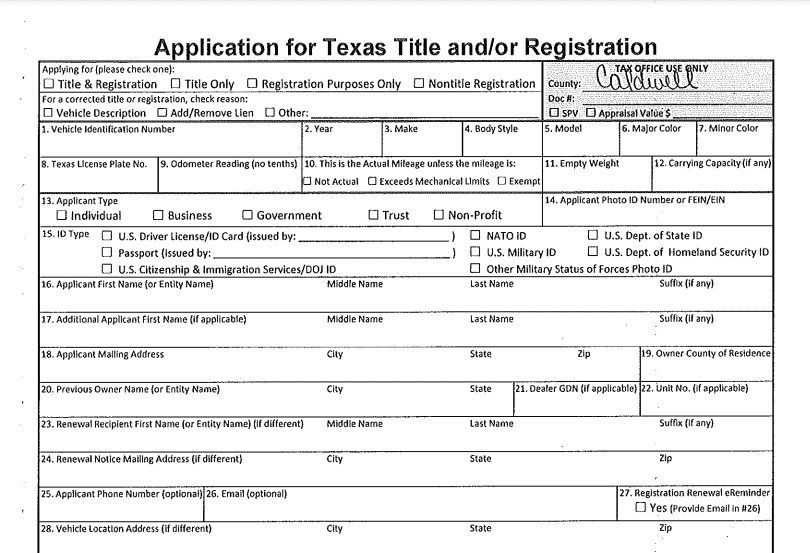
Application for Texas Title and/or Registration
You will need to complete an Application for Texas Title and/or Registration (Form 130-U). This comprehensive form collects all the necessary information about you, the vehicle, and the transaction. It’s essential to fill this out accurately and completely to avoid delays. The form can be downloaded from the Texas Department of Motor Vehicles (TxDMV) website or obtained at the county tax assessor-collector’s office.
Fees and Taxes Associated with Registration
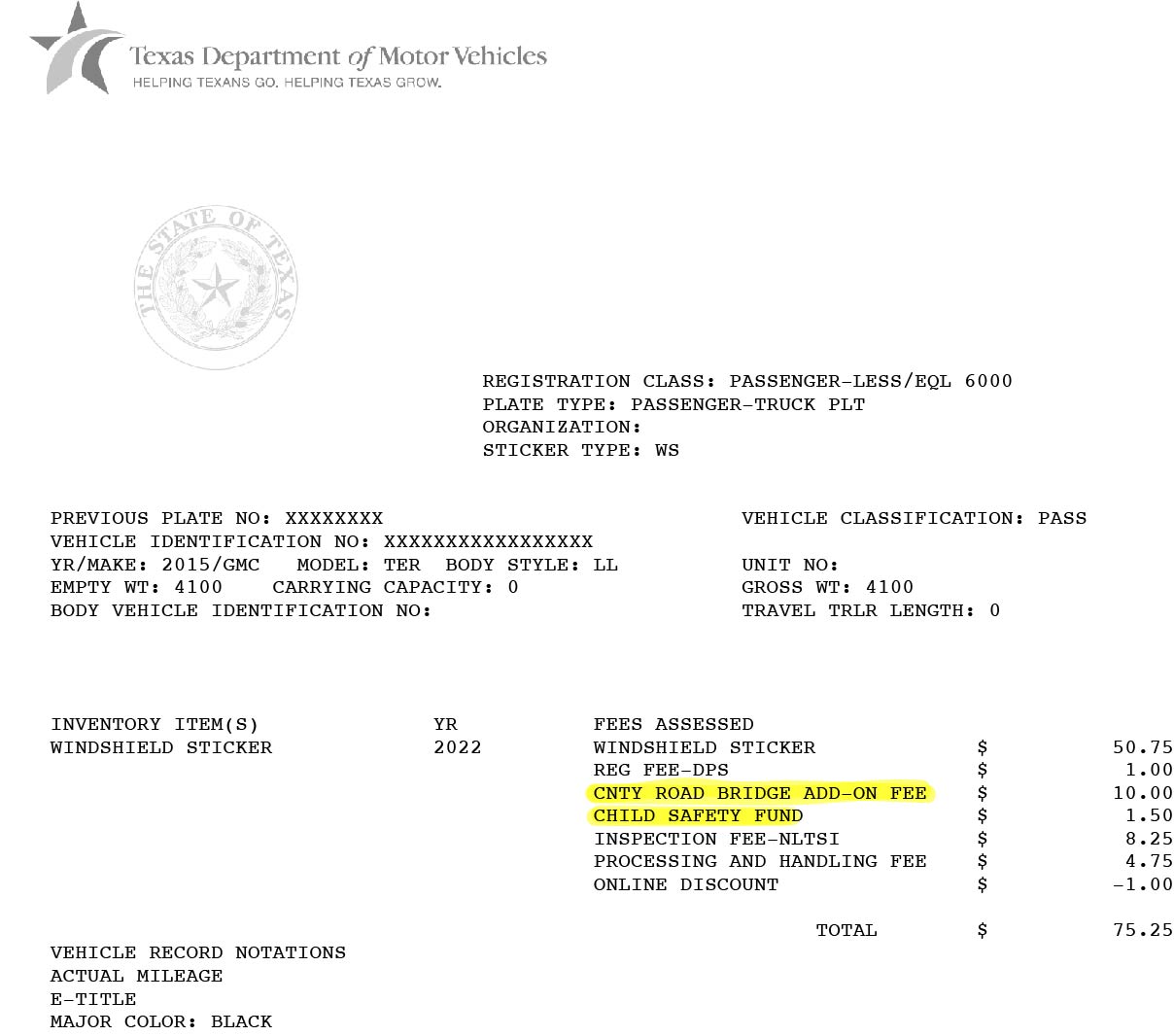
The cost of registering a vehicle in Texas is not a one-size-fits-all figure. It is determined by a combination of factors, including the type of vehicle, its weight, its age, and where you reside within the state. Understanding these fee structures can help you budget accordingly.
Registration Fees
The base registration fee varies depending on the vehicle type. For passenger cars and light trucks, the fee is generally lower than for larger vehicles or motorcycles. Specialty vehicles, such as RVs or trailers, may have different fee structures. The TxDMV website provides detailed fee schedules for various vehicle classes.
Local Fees and County Use Tax
In addition to the state registration fee, Texas counties often impose additional fees for registration. These fees can vary significantly from county to county and are used to fund local road projects and other services. Furthermore, if you purchased your vehicle in Texas, you will likely pay a county use tax, which is collected at the time of registration and is based on the purchase price of the vehicle. This tax is similar to sales tax and helps fund local government services. If you purchased the vehicle out of state and are registering it in Texas, you may have already paid a similar tax in the state of purchase, and Texas will typically credit that amount towards your county use tax.
Special Plate Fees
For those who opt for specialty license plates, such as those supporting charities, universities, or specific causes, there is usually an additional fee associated with these personalized plates. These fees contribute to the funding of the respective programs or organizations.
The Registration Renewal Process
Once your vehicle is initially registered, the process doesn’t end there. Vehicle registration in Texas is typically valid for a period of one year, and renewing it is a recurring necessity. Timely renewal ensures your vehicle remains legally plated and avoids potential penalties.
Renewal Notices
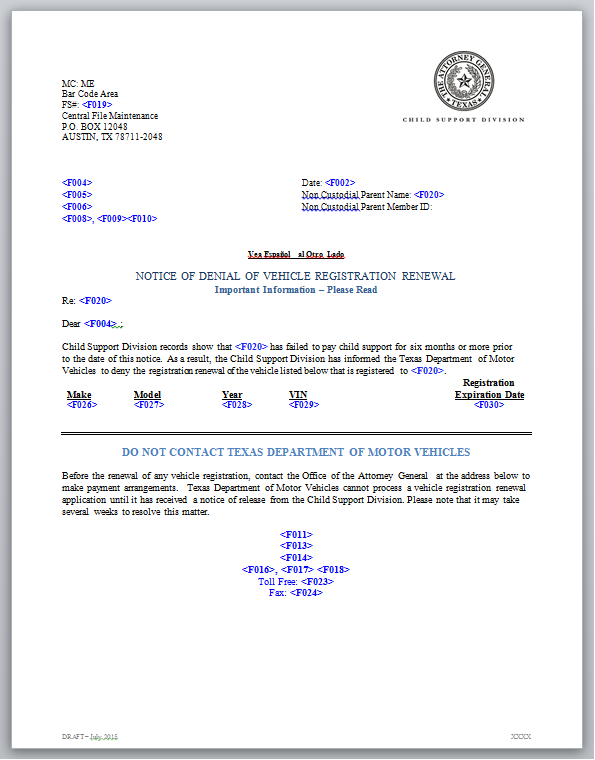
The Texas Department of Motor Vehicles (TxDMV) typically mails renewal notices to registered owners a few weeks before their current registration is set to expire. These notices serve as a reminder and usually include information on how to renew, along with the applicable fees. It’s important to keep your mailing address updated with the TxDMV to ensure you receive these notices.
Renewal Methods
Texas offers several convenient ways to renew your vehicle registration. The most common methods include:
- Online Renewal: The TxDMV provides an online renewal portal, allowing you to complete the process from the comfort of your home. This is often the quickest and most convenient option, provided you meet all the renewal requirements, including a recent inspection.
- Mail-In Renewal: You can also renew your registration by mail. This involves sending your renewal notice, payment, and any required documentation to the address specified on the notice.
- In-Person Renewal: For those who prefer face-to-face interaction or need assistance, renewal can be done in person at your local county tax assessor-collector’s office. It is advisable to check the operating hours and accepted payment methods of your local office beforehand.
- Renewal Stations: In some areas, designated renewal stations may be available.
What You Need to Renew
To successfully renew your registration, you will generally need:
- Your current registration renewal notice or your license plate number.
- Proof of a current Texas vehicle inspection (if required for your vehicle and county).
- Proof of financial responsibility (insurance).
- Payment for the renewal fees and any applicable taxes.
Consequences of Non-Compliance
Operating a vehicle with expired registration in Texas carries significant consequences. Law enforcement officers can issue citations, and accumulating violations can lead to more severe penalties.
Tickets and Fines
Driving with expired registration is a traffic violation, and you can be pulled over and issued a citation. The fines for expired registration can vary depending on the duration the registration has been expired and local ordinances. Beyond the initial fine, you will also be required to pay the overdue registration fees and potentially late penalties.
Late Penalties and Fees
If you fail to renew your registration within the grace period (typically the end of the month in which it expires), late penalties will be assessed. These penalties are added to the standard registration fee and increase the longer the registration remains unrenewed. It’s always best to renew on time to avoid these additional costs.
Vehicle Impoundment
In certain circumstances, particularly with prolonged periods of expired registration or repeated offenses, law enforcement may have the authority to impound your vehicle. This means you would not only face fines and back fees but also incur significant towing and storage charges to retrieve your vehicle.
Special Considerations for Different Vehicle Types and Situations
While the core principles of vehicle registration in Texas remain consistent, certain situations and vehicle types have unique requirements that motorists should be aware of.
New Texas Residents
If you are moving to Texas from another state, you have a limited time to register your vehicle. Generally, you must register your vehicle within 30 days of establishing residency in Texas. This process will involve obtaining a Texas title for your vehicle, passing a Texas vehicle inspection, and then completing the registration at a county tax assessor-collector’s office. You will need to surrender your out-of-state title to obtain a Texas title.
Commercial Vehicles
Commercial vehicles, such as trucks, buses, and other heavy-duty vehicles used for business purposes, often have different registration requirements and fee structures. These vehicles may be subject to additional weight fees, commercial registration permits, and specific inspection protocols designed to ensure their safe operation on public roadways.
Motorcycles and Recreational Vehicles
Motorcycles have their own registration categories and fees. Similarly, recreational vehicles (RVs), trailers, and other types of specialty vehicles have specific rules regarding titling and registration. Some smaller trailers may not require a title, but they will still need license plates and registration.
By understanding these nuances, Texas drivers can ensure they are compliant with all state and local regulations, allowing them to enjoy the open roads of Texas without interruption. The process, while detailed, is designed to contribute to the safety and maintenance of the state’s transportation infrastructure.
LifeOutOfTheBox is a participant in the Amazon Services LLC Associates Program, an affiliate advertising program designed to provide a means for sites to earn advertising fees by advertising and linking to Amazon.com. Amazon, the Amazon logo, AmazonSupply, and the AmazonSupply logo are trademarks of Amazon.com, Inc. or its affiliates. As an Amazon Associate we earn affiliate commissions from qualifying purchases.