
The presence of invasive species is a significant ecological challenge, and in Florida, the Burmese python stands as a prime example. These massive constrictors, native to Southeast Asia, have become a formidable threat to the native wildlife of the Everglades National Park and surrounding areas. While their predatory prowess is well-documented – they decimate populations of mammals, birds, and even other reptiles – the question of what preys on them is equally crucial for understanding their impact and potential control mechanisms. This inquiry delves into the natural predators and environmental factors that can affect Burmese python populations in the unique ecosystem of South Florida.

Apex Predators and Natural Controls
While Burmese pythons are formidable predators, they are not entirely without natural enemies. Their size and resilience mean that potential threats are typically limited to species that are either large and powerful enough to take them down, or possess specific hunting strategies that can overcome their defenses. The harsh realities of the Everglades present a complex web of interactions where even an invasive apex predator can become prey.
Alligators: The Native Rivals
Perhaps the most significant natural predator of Burmese pythons in Florida is the American alligator. These ancient reptiles, themselves a symbol of the Everglades, share the same habitat and compete for resources. Encounters between alligators and Burmese pythons are not uncommon, and they often result in dramatic confrontations. Alligators, with their powerful jaws and armored bodies, are well-equipped to defend themselves and even hunt larger pythons.
The Dynamics of Confrontation
The outcome of a fight between an alligator and a Burmese python depends on several factors. The alligator’s sheer size and aggressive nature can often be enough to deter or even kill a python. Conversely, a large, well-fed python might pose a threat to a smaller or juvenile alligator. Documented instances of alligators consuming pythons, including both juveniles and adults, highlight the significant role they play in regulating python numbers. These interactions are not merely predator-prey dynamics; they are also a struggle for dominance within the ecosystem. Researchers have observed pythons preying on young alligators, further complicating this intricate relationship. However, when faced with a mature alligator, a Burmese python often finds itself on the defensive. The alligator’s thick hide provides excellent protection, and its powerful bite can inflict fatal wounds.
Other Potential Predators and Threats
While alligators are the most prominent natural predators, other animals and environmental factors can also contribute to python mortality. These include less frequent encounters with other large predators and the inherent challenges of surviving in a new and competitive environment.
Birds of Prey and Mammalian Scavengers
Larger birds of prey, such as the endangered Everglade snail kite or various species of hawks and owls, can prey on very young, small Burmese pythons. However, once the pythons reach a substantial size, these avian predators are no longer a viable threat. Mammals like bobcats and panthers, though capable of taking down smaller snakes, are unlikely to routinely target adult Burmese pythons due to the snake’s size and defensive capabilities.
Scavenging plays a role, too. While not direct predation, carcasses of pythons, whether from natural causes, disease, or failed hunts, can become food sources for opportunistic scavengers such as vultures and raccoons. This process, while not reducing the live population directly, contributes to nutrient cycling within the ecosystem.
Environmental Factors and Human Intervention
Beyond direct predation, several environmental factors and human-driven interventions contribute to the mortality of Burmese pythons in Florida, playing a critical role in managing their invasive impact.
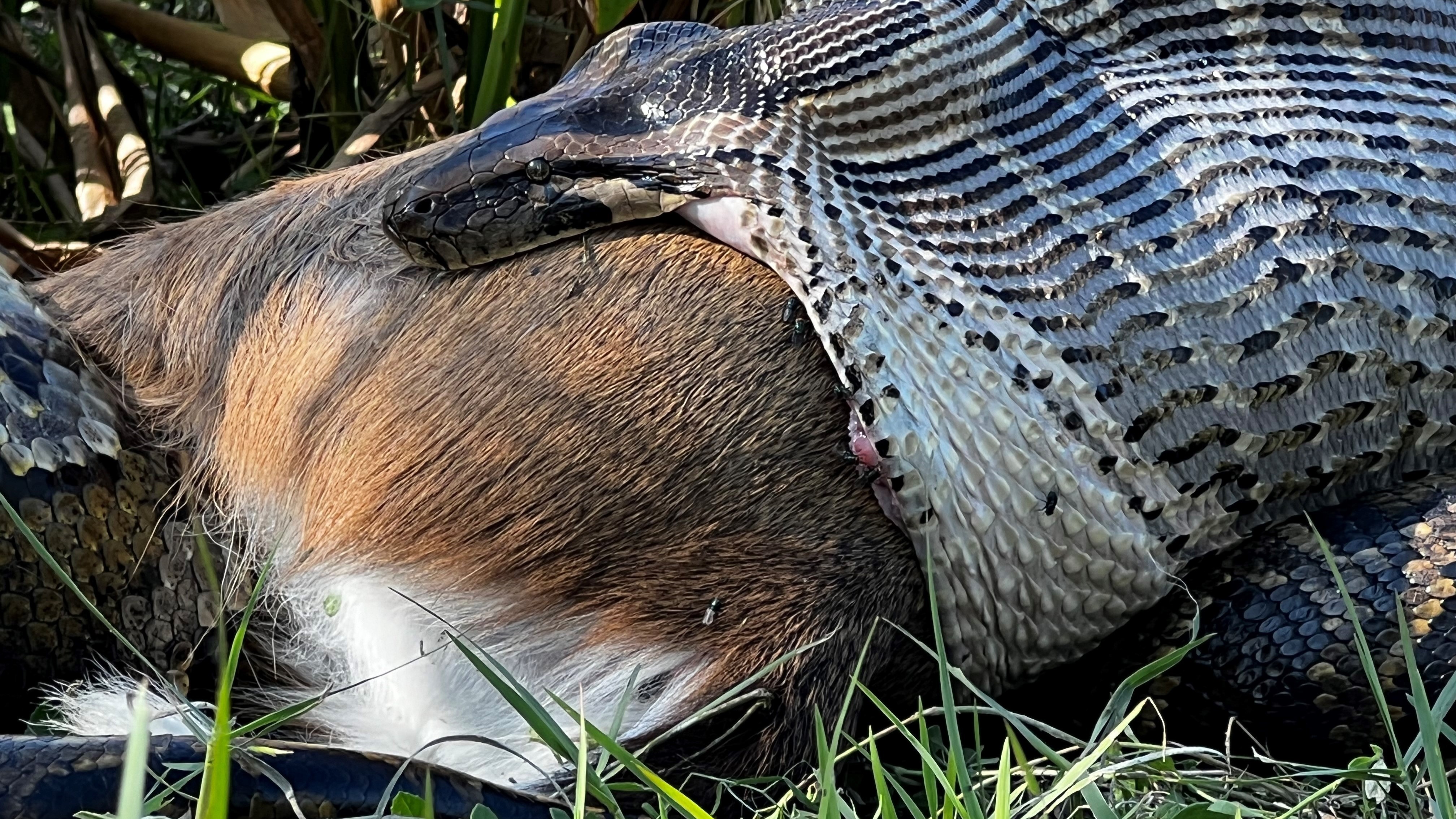
The Harsh Realities of Florida’s Climate and Environment
Florida’s environment, while seemingly hospitable, presents its own set of challenges for a species adapted to a tropical climate. Burmese pythons are ectothermic, meaning they rely on external sources of heat to regulate their body temperature. While South Florida’s climate is generally warm, occasional cold snaps can be detrimental to these non-native snakes.
Cold Stunning and Disease
Severe cold fronts, though infrequent, can lead to “cold stunning” in reptiles, rendering them immobile and vulnerable. In extreme cases, prolonged exposure to freezing temperatures can be fatal to Burmese pythons, particularly juveniles or those unable to find adequate shelter. Furthermore, like any animal population, Burmese pythons are susceptible to diseases and parasites. While research into specific pathogens affecting invasive python populations is ongoing, the introduction of new diseases into an established population can lead to significant die-offs. The dense population of pythons, often clustered in areas with abundant prey, can facilitate the rapid spread of infectious agents.
Human Efforts: From Culling to Conservation
Human intervention has become a crucial component in managing the Burmese python invasion. While some efforts are focused on direct removal, others aim to understand and support the natural ecological balance.
The Python Removal Program and Scientific Research
The Florida Fish and Wildlife Conservation Commission (FWC) has implemented various programs to control Burmese python populations. These include incentivized hunting programs and specialized capture teams. These efforts not only reduce the number of invasive snakes but also provide valuable data for scientific research. By studying captured pythons, scientists can learn about their diet, reproductive habits, health, and genetic makeup, which are all critical pieces of information for developing effective management strategies. The collection of carcasses also allows for necropsies, which can reveal causes of death and identify any diseases that may be impacting the population. This proactive approach is essential for mitigating the ecological damage caused by these invasive predators.
The Broader Ecological Implications
The presence of Burmese pythons has profound implications for the Everglades ecosystem, affecting not only the wildlife they consume but also the intricate relationships between native species. Understanding what eats Burmese pythons is a vital part of a larger puzzle aimed at restoring ecological balance.
Impact on Native Wildlife and Food Webs
The unchecked proliferation of Burmese pythons has led to alarming declines in populations of native mammals, birds, and reptiles within the Everglades. This disruption of the food web can have cascading effects throughout the ecosystem. For example, a decrease in rabbit populations, a common prey item for pythons, can impact predators that rely on rabbits, as well as the vegetation that rabbits consume. The competition for resources between native predators and invasive pythons also creates additional stress on already vulnerable species.
Restoring Balance Through Predator-Prey Dynamics
The role of natural predators, particularly the American alligator, in controlling Burmese python populations is a hopeful sign for ecological resilience. When native predators can effectively prey on invasive species, they can act as a natural check and balance, helping to prevent an unchecked population explosion. Supporting and protecting native predator populations, therefore, becomes an indirect but vital strategy in the fight against invasive species. The health of the alligator population is directly linked to the potential for regulating Burmese python numbers, underscoring the importance of conservation efforts for native Florida wildlife. The intricate balance of the Everglades ecosystem relies on the successful functioning of these natural predator-prey relationships.

The Ongoing Challenge and Future Outlook
The Burmese python invasion in Florida remains a significant conservation challenge. While natural predation, particularly by alligators, offers a degree of control, the sheer reproductive capacity and adaptability of the python mean that continued human intervention and scientific research are indispensable. The long-term success in managing this invasive species will likely depend on a multifaceted approach that combines active removal efforts with strategies that bolster the resilience of the native ecosystem and its natural predators. The story of what eats Burmese pythons in Florida is, in many ways, a story of ecological struggle and the persistent hope for restoration.