
Understanding the Heartland’s Growing Environment
When planning a lush landscape or a bountiful vegetable plot in the heart of the American Midwest, understanding local climate classifications is the single most important step for success. Gardeners across the region often ask about the specific planting zones that dictate when to sow seeds, which perennials will survive the winter, and how to maximize the harvest. Kansas presents a fascinating study in horticultural diversity, bridging the gap between the humid eastern woodlands and the semi-arid high plains of the west.
The USDA Hardiness Scale Explained
The United States Department of Agriculture divides the country into distinct geographical regions based on average annual minimum winter temperatures. This classification system spans zones 1 through 13, with each zone representing a 10-degree Fahrenheit differential, further subdivided into ‘a’ and ‘b’ halves. For anyone cultivating flora in North America, referencing this map ensures that money and effort spent on landscaping translate into thriving, perennial growth rather than seasonal disappointment.
Climate Influences Across the Plains
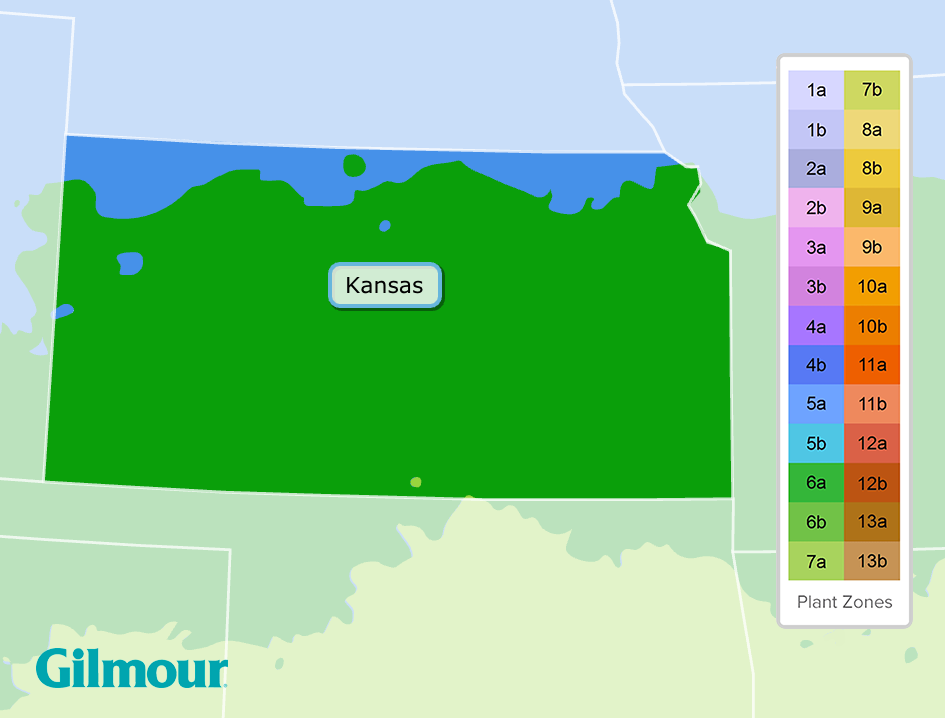
The geography of the Sunflower State plays a massive role in determining its thermal profiles. Flat expanses leave the terrain vulnerable to sweeping arctic air masses from the north during winter, yet intense summer heat radiates across the prairies. Elevation also gradually increases from east to west, dropping winter temperatures slightly in higher western locations despite lower overall humidity. Consequently, the state does not fall under a single uniform classification, requiring gardeners to pay close attention to county lines and hyper-local microclimates.
Breaking Down Kansas Plant Hardiness Zones
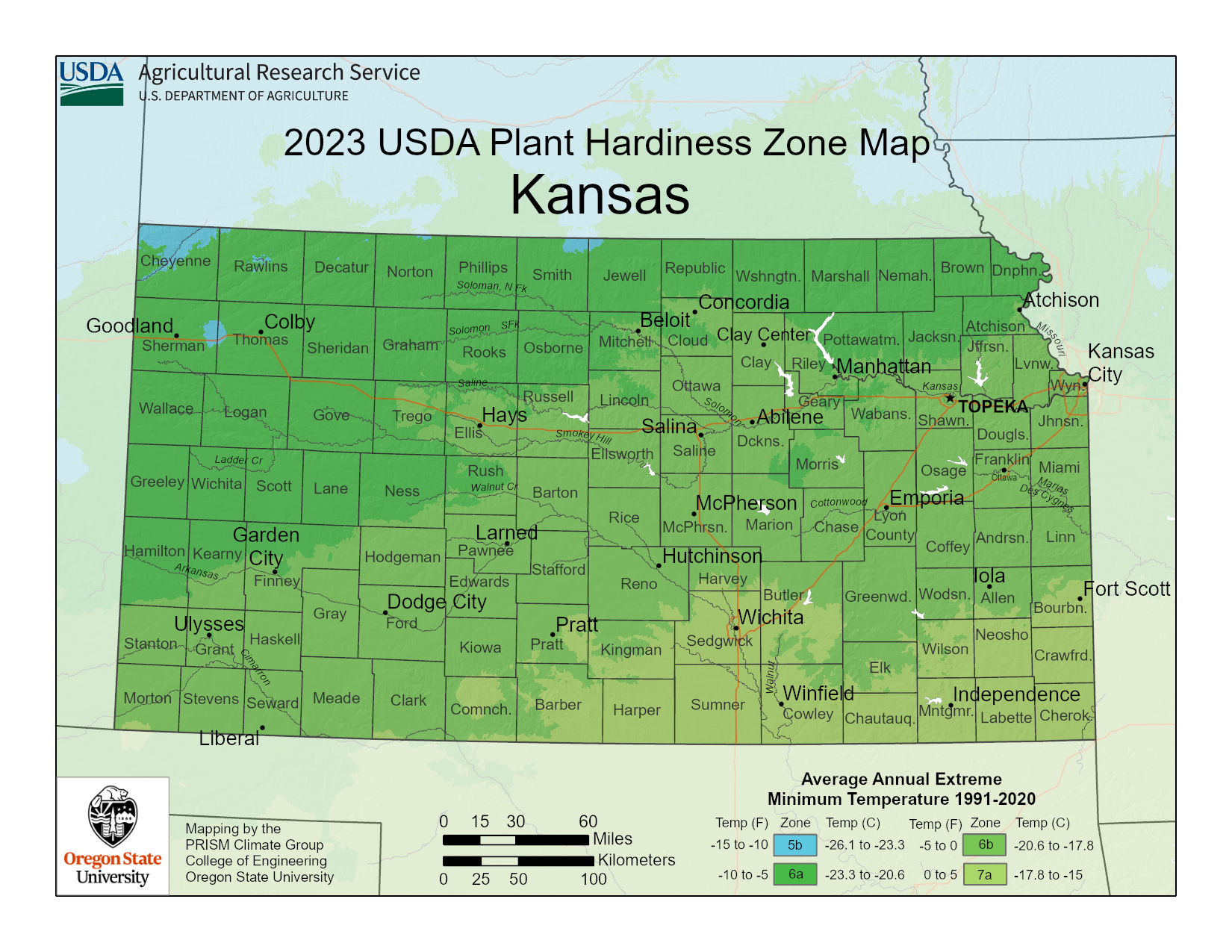
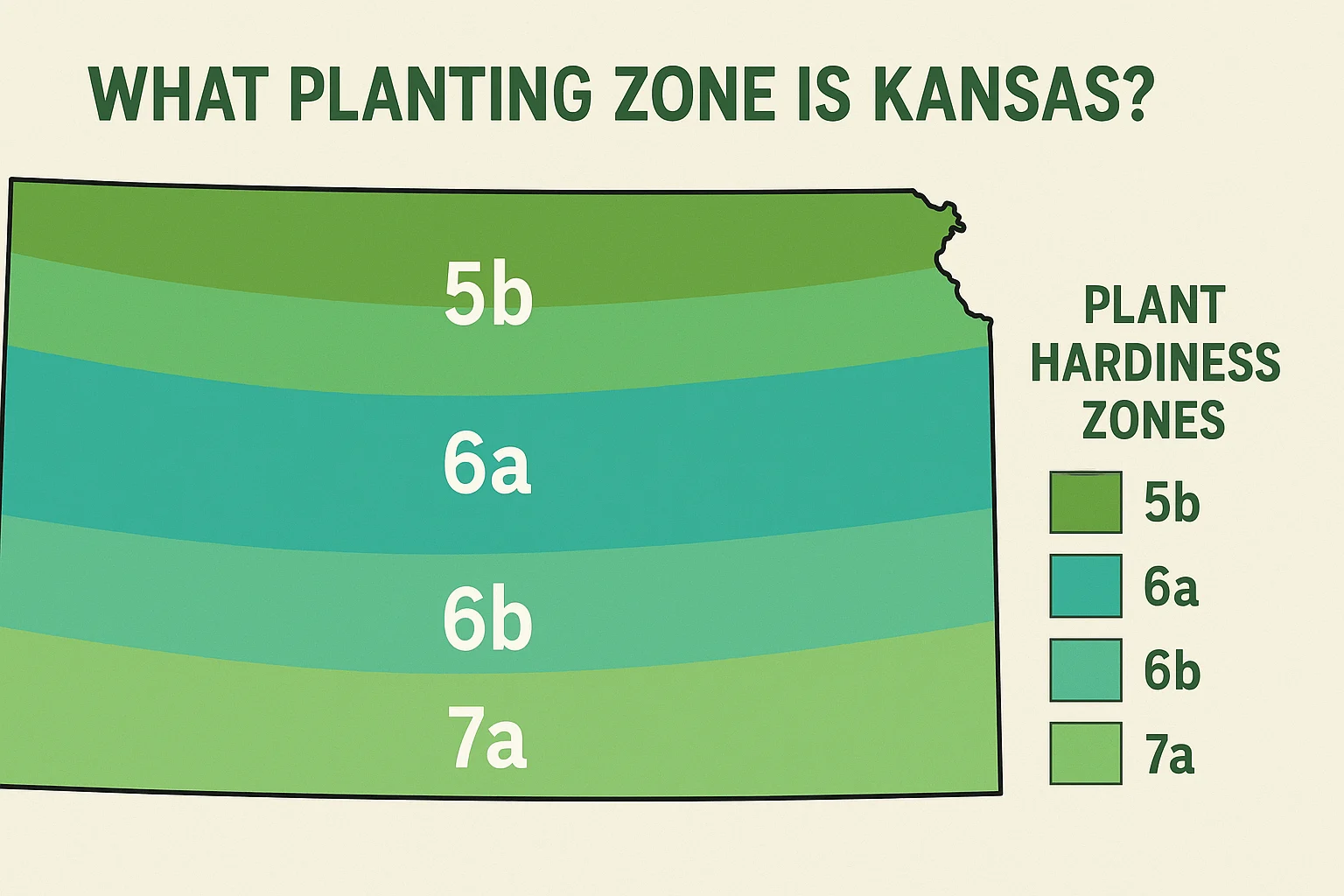
Navigating the planting landscape of this region requires a careful look at the specific zones mapped out by agricultural experts. From the fertile river bottoms in the east to the high plains bordering Colorado, the state encompasses four distinct hardiness zones, ranging from zone 5a in the northwest corner to zone 8a in the extreme south-central and southeastern counties.
Eastern Kansas: Zones 6b to 7b
The eastern third of the state enjoys a more temperate, moisture-rich environment compared to its western counterpart. Cities like Kansas City and Topeka primarily rest within Zone 6b and Zone 7a, where average annual minimum temperatures hover between -5 and 5 degrees Fahrenheit. Further south, historic towns like Fort Scott and communities near the Ozark Plateau gently push into Zone 7b.
- Average Winter Lows: -5°F to 10°F
- Growing Season Length: Approximately 180 to 200 frost-free days
- Ideal Plant Selections: Broadleaf evergreens, delicate fruit trees like peaches and cherries, and a wide variety of moisture-loving perennials thrive here.
Central Kansas: Zones 6a to 6b
Moving toward the geographic middle of the state, encompassing agricultural hubs such as Salina and Wichita, the climate transitions into a stable Zone 6 designation. Winter temperatures here are moderately more severe, and summer winds can dry out unprotected topsoil rapidly. Gardeners in this corridor must focus heavily on windbreaks and drought-tolerant cultivars, though traditional Midwestern staples flourish with proper soil enrichment.
- Average Winter Lows: -10°F to -5°F
- Prevalence of Prairie Winds: Requires strategic placement of shrubs and fencing to protect tender shoots.
- Soil Composition: Generally heavier clay soils mixed with rich loess, demanding careful aeration and organic matter addition.
Western Kansas: Zones 5a to 5b
The high plains of western regions—including Garden City, Dodge City, and Goodland—experience the most rigorous winters and lowest annual precipitation levels in the state. Falling primarily into Zone 5, winter lows can occasionally plunge past -15 degrees Fahrenheit. Gardening here shares many characteristics with neighboring Nebraska and eastern Wyoming, where water conservation and cold-hardy root systems are paramount.
- Average Winter Lows: -20°F to -10°F
- Water Management: Supplemental irrigation and rainwater harvesting are almost mandatory for successful vegetable production.
- Resilient Flora: Native grasses, cold-hardy conifers, and deeply rooted perennials dominate the landscape.
Microclimates and Urban Heat Islands
While regional USDA zones provide a reliable baseline, local gardeners quickly discover that yard-specific conditions can alter survival rates. Urban centers like Overland Park and Lawrence often function as microclimates, storing daytime heat within concrete, asphalt, and brick structures. This urban heat island effect can effectively bump a specific backyard into a half-zone warmer classification, allowing tender ornamentals to survive the winter when they would otherwise perish in open rural fields.
Topography, Slope, and Aspect
The physical layout of a residential or agricultural plot dramatically impacts frost patterns and moisture retention. South-facing slopes absorb maximum sunlight during the shorter winter days, causing snow to melt faster and warming the soil earlier in spring. Conversely, low-lying frost pockets collect dense, cold air flowing down from surrounding elevations, making them hazardous for early-blooming fruit trees.
- South-Facing Slopes: Receive intense sun exposure, great for heat-loving vegetables and herbs, but prone to winter desiccation.
- North-Facing Slopes: Retain moisture longer and stay cooler, making them suitable for shade gardens and cool-season greens.
- Windward vs. Leeward Sides: Planting on the leeward side of structures, barns, or heavy timber lines protects vulnerable plants from punishing northwesterly winter gales.
Adapting Gardening Practices to Local Conditions
Knowing the exact garden zone is merely the starting point for cultivating a thriving landscape. Success across the plains requires pairing this knowledge with regional weather patterns, soil types, and moisture availability. By aligning planting calendars with local frost dates, cultivators can maximize their yields and protect investments in perennial shrubbery.
Timing the Growing Season
Frost dates dictate the rhythm of the year for growers in the region. The last spring frost typically occurs anywhere from late April in the southern and eastern sectors to mid-may in the colder western and northern stretches. Similarly, the first autumn frost can strike as early as late September in the high plains or stretch well into late October near the Missouri River basin.
- Spring Seed Starting: Indoor seed starting usually begins in February and March for tomatoes, peppers, and eggplants, ensuring robust transplants ready for outdoor deployment once soil temperatures exceed 60 degrees Fahrenheit.
- Fall Harvests: Cool-season crops such as spinach, kale, lettuce, and brassicas experience a glorious resurgence during the crisp autumn months, often surviving light freezes well into November.
Selecting Drought-Resilient and Native Species
Because precipitation patterns fluctuate wildly from year to year—with severe droughts occasionally testing even the most experienced caretakers—incorporating native plants and drought-tolerant cultivars guarantees long-term landscape resilience. Deep-rooted prairie species such as coneflowers, black-eyed Susans, switchgrass, and bluestem naturally withstand dry summer spells while providing essential habitats for local pollinators like the monarch butterfly.
Ultimately, mastering the garden zones of the region transforms a challenging climate into an exciting opportunity for horticultural creativity. Whether nurturing a suburban flower bed or managing a sprawling rural acreage, understanding these environmental boundaries ensures a vibrant, flourishing outdoor space season after season.
LifeOutOfTheBox is a participant in the Amazon Services LLC Associates Program, an affiliate advertising program designed to provide a means for sites to earn advertising fees by advertising and linking to Amazon.com. Amazon, the Amazon logo, AmazonSupply, and the AmazonSupply logo are trademarks of Amazon.com, Inc. or its affiliates. As an Amazon Associate we earn affiliate commissions from qualifying purchases.