
A 3-day eviction notice in Florida is a serious legal document that can initiate the process of a landlord regaining possession of their rental property. Understanding the implications and the subsequent steps is crucial for both landlords and tenants navigating this often stressful situation. While the notice itself signifies a breach of the lease agreement, typically due to non-payment of rent, the eviction process is not instantaneous. It involves a series of legal procedures designed to ensure fairness and due process for all parties involved.
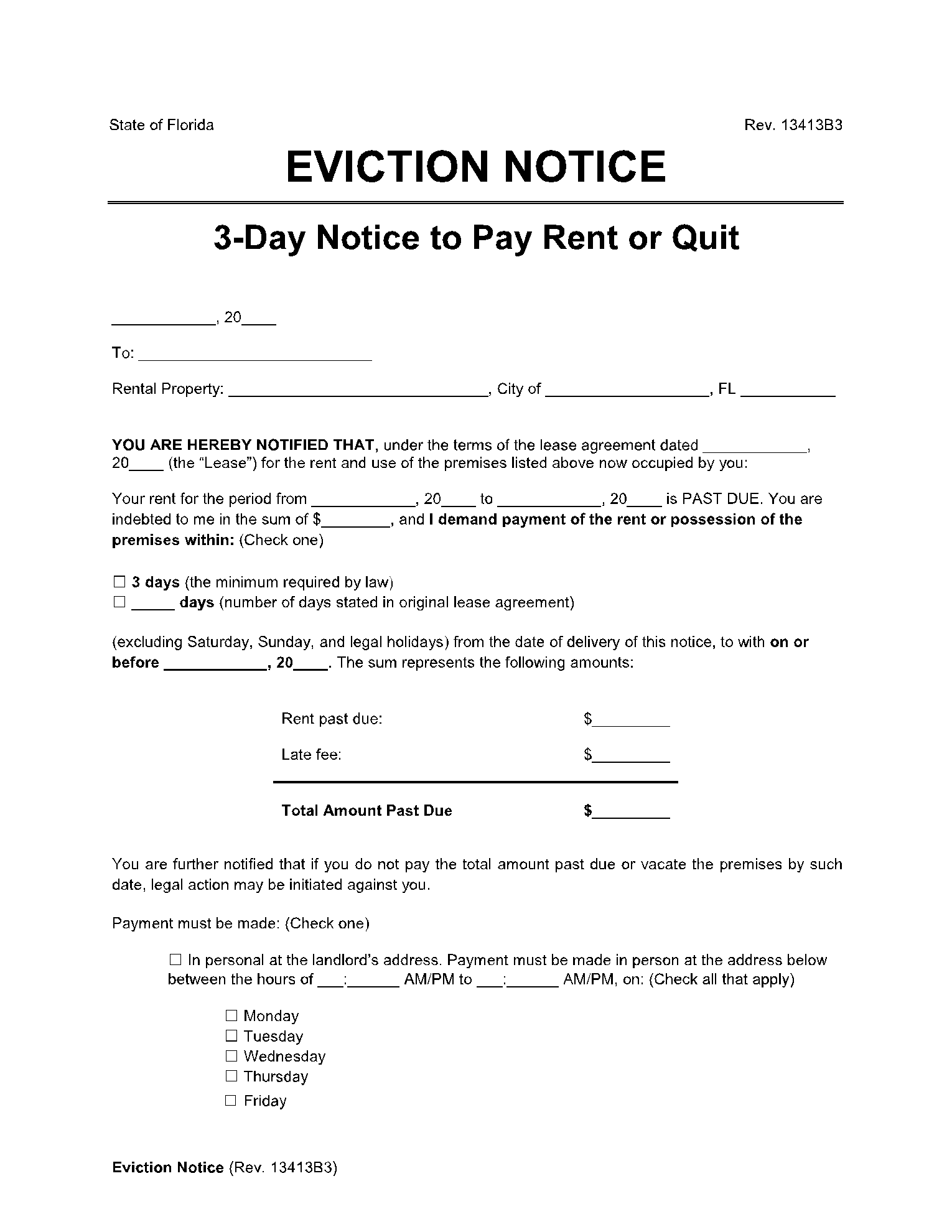
The 3-day notice, officially known as a “Notice to Pay Rent or Vacate,” gives the tenant a strict deadline to either settle their outstanding rent balance or move out of the property. Failure to comply with either of these options within the stipulated three days empowers the landlord to proceed with filing an eviction lawsuit in the appropriate court. This article will delve into the stages that follow the issuance of such a notice, outlining the legal framework, tenant rights, and landlord responsibilities in the context of a Florida eviction.

Understanding the 3-Day Eviction Notice
The foundation of any eviction process in Florida begins with a legally sound notice. For non-payment of rent, the standard procedure is the 3-day notice. This notice must be properly served to the tenant, meaning it must be delivered according to specific legal requirements. Common methods of service include personal delivery, leaving it with a resident over 15 years old at the dwelling, or posting it on the door if other methods are unsuccessful. The notice must clearly state the amount of rent due, the date by which it must be paid, and the consequence of non-compliance – the initiation of eviction proceedings.
It is vital for tenants to understand that the 3-day count typically excludes weekends and legal holidays. Therefore, if a notice is served on a Friday, the three days would not include Saturday or Sunday. This nuance is critical for tenants attempting to meet the deadline for payment or vacating. Similarly, landlords must ensure the notice is meticulously accurate in its details, as any errors can invalidate the notice and potentially delay or dismiss the eviction case.
Key Components of a Valid Notice
- Tenant Identification: Full names of all tenants on the lease agreement.
- Property Address: The complete address of the rental unit.
- Landlord Identification: Full name and contact information of the landlord or their authorized agent.
- Amount of Rent Due: A precise breakdown of the overdue rent. This generally does not include late fees or other charges unless the lease agreement specifically allows for their inclusion in a pay-or-quit notice.
- Demand to Pay or Vacate: A clear statement requiring the tenant to pay the rent within three days or vacate the premises.
- Date of Service: The date the notice was officially served to the tenant.
- Landlord’s Signature: The notice should be signed by the landlord or their representative.
What Constitutes “Rent Due”?
In Florida, a 3-day eviction notice is specifically for the non-payment of rent. This means that the landlord cannot use this notice to evict a tenant for other lease violations, such as damaging the property, disturbing neighbors, or having unauthorized pets, unless the lease agreement has a specific clause that allows for it, or if the lease has been terminated for other reasons. However, the most common and straightforward application of the 3-day notice is for delinquent rent payments.
The Legal Process Following Non-Compliance
If the tenant does not pay the full amount of rent due or vacate the property within the three days, the landlord’s next step is to file a lawsuit for eviction, known as an “Unlawful Detainer” action, in the appropriate county court. This formal legal process is initiated by filing a complaint with the court and serving the tenant with a summons and a copy of the complaint.
Filing the Eviction Lawsuit
The landlord’s attorney, or the landlord themselves if they are representing themselves, will draft and file the complaint. This document outlines the reasons for the eviction, detailing the lease agreement, the issuance of the 3-day notice, and the tenant’s failure to comply. Along with the complaint, a summons is issued by the court clerk. This summons officially notifies the tenant that they are being sued and have a specific timeframe to respond to the court.
Serving the Tenant with a Summons and Complaint
Similar to the initial 3-day notice, the summons and complaint must be properly served on the tenant. The rules for service are stringent and typically involve a sheriff’s deputy or a certified process server delivering the documents. The method of service usually mirrors that of the initial notice, aiming for personal delivery. If personal service is not possible after diligent effort, alternative methods like leaving the documents with a resident over 15 at the property or posting and mailing might be permitted.
The Tenant’s Response (Answer)
Once served, the tenant has a limited period, usually five business days (excluding weekends and legal holidays), to file a formal response with the court, known as an “answer.” In their answer, the tenant can admit or deny the allegations made in the complaint and can also raise any defenses they may have. If the tenant fails to file an answer within the prescribed time, the landlord can request a default judgment from the court, which would then proceed towards granting the eviction.
Tenant Defenses and Potential Delays
While the eviction process is designed to be efficient, tenants do have rights and avenues to defend themselves against an eviction. The validity of the 3-day notice, the accuracy of the rent amount claimed, or claims of retaliation by the landlord are common defenses. If a tenant believes they have grounds to contest the eviction, they must present these defenses in their answer to the court.
Common Tenant Defenses
- Improper Notice: If the 3-day notice was not served correctly or contains material errors, the tenant can argue that the eviction process was not legally initiated.
- Rent Payment Disputes: The tenant may argue that the rent was paid in full and on time, or that the landlord accepted partial payment without waiving the right to full payment, which can complicate the landlord’s claim.
- Habitability Issues: In some cases, if the rental property has significant habitability issues that the landlord has failed to address despite proper notice, a tenant might be able to use this as a defense, although this often requires specific procedures to be followed by the tenant.
- Retaliation: If the tenant believes the eviction is in retaliation for the tenant exercising a legal right (e.g., reporting code violations or requesting repairs), this can be a defense.
- Landlord Discrimination: Eviction based on discriminatory reasons is illegal and can be a defense.
The Importance of Seeking Legal Counsel
Navigating the complexities of an eviction lawsuit can be overwhelming for both parties. Tenants facing eviction are strongly advised to seek legal counsel from a qualified attorney who specializes in landlord-tenant law in Florida. An attorney can help tenants understand their rights, evaluate potential defenses, and represent them in court. Similarly, landlords should engage legal counsel to ensure all procedures are followed correctly, thereby avoiding potential pitfalls that could derail the eviction process.
The Court Hearing and Judgment
If the tenant files an answer and raises defenses, the court will typically schedule a hearing. This hearing allows both the landlord and the tenant to present their case, evidence, and witnesses to the judge. The judge will then review the evidence and make a ruling.
Default Judgment
As mentioned, if the tenant fails to respond within the allotted time, the landlord can seek a default judgment. In this scenario, the court presumes the landlord’s claims are true and may issue an order for eviction without a hearing.
Eviction Hearing
During an eviction hearing, the judge will listen to both sides. The landlord must prove that they followed all legal procedures, including proper service of the notice and complaint, and that the tenant failed to comply. The tenant will have the opportunity to present their defenses and any supporting evidence.
Writ of Possession
If the judge rules in favor of the landlord, an order for eviction, often referred to as a “Writ of Possession,” will be issued. This is a court order directed to the sheriff, commanding them to remove the tenant from the property.
After the Writ of Possession
Once the Writ of Possession is issued, it is given to the sheriff’s office to execute. The sheriff will typically post a final notice on the tenant’s door, informing them of the exact date and time they must vacate the premises. This is the tenant’s final opportunity to leave voluntarily.
The Sheriff’s Role
The sheriff is responsible for physically removing the tenant and their belongings if they do not vacate by the date specified on the final notice. This process is carried out by law enforcement officers and is the legal mechanism to restore possession of the property to the landlord. Landlords cannot physically remove tenants themselves or change the locks before the sheriff executes the Writ of Possession; doing so would be illegal and could result in penalties.

Landlord’s Responsibilities for Tenant Belongings
Florida law outlines specific procedures for handling a tenant’s abandoned property. After the eviction, if the tenant leaves personal belongings behind, the landlord must make a reasonable effort to store them and notify the tenant of their location and terms for retrieval. If the property remains unclaimed after a specified period, the landlord may be able to dispose of it.
In conclusion, the 3-day eviction notice in Florida is the initial step in a structured legal process. While it signals a serious breach of the lease, it is not an immediate expulsion. Both landlords and tenants must understand the subsequent legal requirements, timelines, and rights to navigate this process effectively and lawfully. Adhering to these legal guidelines is paramount to ensuring a fair resolution for all parties involved in residential tenancy disputes.
LifeOutOfTheBox is a participant in the Amazon Services LLC Associates Program, an affiliate advertising program designed to provide a means for sites to earn advertising fees by advertising and linking to Amazon.com. Amazon, the Amazon logo, AmazonSupply, and the AmazonSupply logo are trademarks of Amazon.com, Inc. or its affiliates. As an Amazon Associate we earn affiliate commissions from qualifying purchases.