
When the topic of welfare investigations in California arises, it often conjures images of intrusive governmental scrutiny. However, the reality of these investigations, particularly within the context of child welfare services, is far more nuanced and designed with the ultimate goal of ensuring the safety and well-being of children. These investigations are initiated when there are concerns about a child’s living situation, and they involve a systematic process aimed at gathering information, assessing risks, and implementing necessary interventions to protect vulnerable individuals. Understanding the steps involved can demystify the process and highlight the critical role these investigations play in safeguarding the lives of children across the Golden State.

The initiation of a welfare investigation is typically triggered by a report, often referred to as a referral, made to the local child protective services agency. These referrals can come from a variety of sources, including concerned family members, school personnel, healthcare providers, neighbors, or even anonymous individuals. Once a referral is received, the agency has a strict timeframe within which to respond and begin an assessment. This initial response is crucial, as it determines the immediacy of the potential danger to the child. The focus is always on the welfare of the child, and the investigation process is a structured approach to addressing any reported concerns.
The Stages of a Welfare Investigation in California
A welfare investigation in California is not a single event but rather a multi-stage process. Each stage is designed to build upon the information gathered previously and to ensure a comprehensive understanding of the situation. The primary objective throughout is to determine if a child is safe and, if not, to take appropriate action. This process is guided by state laws and agency protocols, ensuring consistency and adherence to legal standards.
Initial Referral and Assessment
The journey of a welfare investigation begins with the submission of a referral. This referral details the specific concerns that have led to the report. Upon receiving the referral, the child protective services agency, often part of the Department of Social Services in various counties like Los Angeles or San Diego, must act swiftly. The urgency of the response is categorized based on the perceived level of risk to the child. High-risk referrals demand immediate intervention, often within 24 hours, while lower-risk referrals may allow for a slightly longer assessment period, typically within a few days.
The initial assessment is conducted by a trained social worker. This is a critical phase where the social worker gathers preliminary information. This may involve speaking with the reporter of the concern (if their identity is known and they are willing to share), conducting interviews with the child and the parents or guardians, and observing the living environment. The social worker will assess for signs of abuse (physical, sexual, or emotional) or neglect (failure to provide basic necessities like food, shelter, medical care, or supervision). During this phase, the social worker is also looking for any immediate safety threats that might necessitate the removal of the child from the home.
The social worker’s role during this initial assessment is to be objective and impartial. They are not there to accuse but to gather facts and assess the situation based on established criteria for child abuse and neglect. They will document all findings, including interviews, observations, and any evidence collected. This documentation forms the foundation for subsequent decisions and actions. The goal is to quickly determine if there is a credible basis for the concerns and whether further investigation is warranted.
The Investigative Process and Evidence Gathering
If the initial assessment indicates a credible concern for a child’s safety, the investigation moves into a more in-depth phase. This stage involves a more thorough examination of the allegations and the overall family dynamics. Social workers will conduct more extensive interviews with the child, parents, and any other individuals who may have relevant information, such as teachers, doctors, or other family members. The aim is to corroborate or refute the initial concerns through a variety of sources.
Evidence gathering is a key component of this phase. This can include reviewing medical records, school records, or any other documentation that sheds light on the child’s well-being and the family’s circumstances. The social worker will also observe the parent-child interactions, the condition of the home, and the child’s overall demeanor. In cases involving allegations of sexual abuse, forensic interviews may be conducted by specially trained professionals. The process is designed to be sensitive to the child’s experience while diligently seeking the truth.
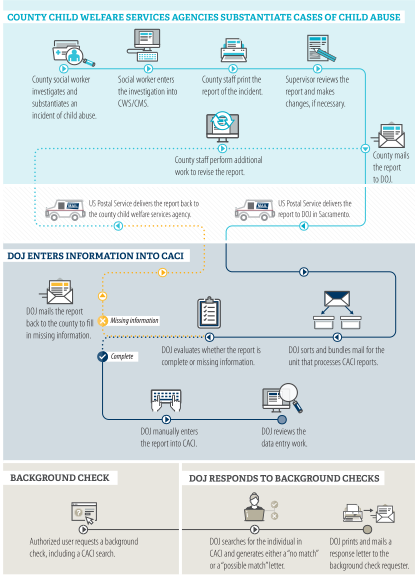
The legal framework governing these investigations in California provides social workers with specific powers to access information and conduct their work. This may include the ability to conduct home visits without prior notice if there are immediate safety concerns. The social worker’s findings are meticulously documented in case files, which are crucial for decision-making, potential court proceedings, and future reference. The thoroughness of the evidence-gathering process directly impacts the accuracy of the investigation’s conclusions and the appropriateness of any subsequent interventions.
Outcomes and Interventions
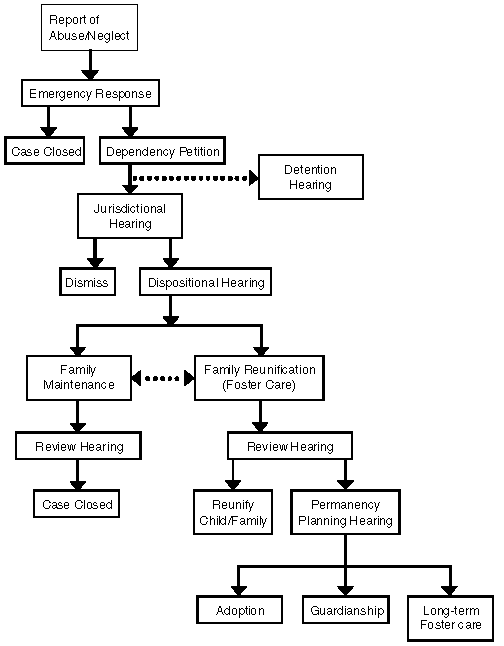
Following the completion of the investigation, the child protective services agency will make a determination regarding the allegations. There are typically three possible outcomes:
- Unfounded: If the investigation finds no evidence of abuse or neglect, the case is closed, and no further action is taken.
- Inconclusive: If the evidence is insufficient to either prove or disprove the allegations, the case may be closed, but the agency might offer voluntary services to the family if there are underlying concerns about their well-being.
- Substantiated: If the investigation finds sufficient evidence to support the allegations of abuse or neglect, the case is substantiated. This outcome necessitates further intervention to ensure the child’s safety.
When a case is substantiated, the focus shifts to providing support and services to the family. The goal is to address the issues that led to the abuse or neglect and to prevent future harm. Interventions can vary widely depending on the nature and severity of the concerns. They can include:
- Family Preservation Services: These services aim to keep the family intact by providing in-home support, parenting classes, counseling, and substance abuse treatment. The idea is to equip parents with the skills and resources they need to provide a safe and nurturing environment for their children.
- Out-of-Home Care: In situations where the child’s safety cannot be ensured in the home, even with services, temporary or long-term placement outside the home may be necessary. This could involve placing the child with relatives (kinship care), in foster care, or in group homes. The priority in these situations is always to find the most stable and loving environment for the child.
- Court Intervention: For more serious cases or when parents are unwilling or unable to participate in services, the agency may petition the court to intervene. This can lead to court-ordered services, supervision, and potentially changes in custody arrangements. The court plays a vital role in ensuring legal oversight and the protection of the child’s rights.
Throughout the intervention phase, the child protective services agency continues to monitor the family’s progress and the child’s well-being. The ultimate aim is to reunify families whenever it is safe to do so, or to ensure the child’s permanent safety through adoption or guardianship if reunification is not possible. The process is often challenging, but it is driven by a commitment to the best interests of the child. The success of these interventions can significantly impact a child’s future, offering them the opportunity to grow up in a safe, stable, and supportive environment.