
The pursuit of a Boston Marathon qualifying time, affectionately known as a “BQ,” represents a pinnacle aspiration for countless amateur and professional runners worldwide. It’s more than just achieving a certain pace over 26.2 miles; it’s an emblem of dedication, a testament to endurance, and an entry ticket to one of the most storied and revered road races on the planet. For many, the journey to earn a Boston Marathon entry transforms their running into a lifestyle, intertwining rigorous training with strategic travel, careful accommodation planning, and an appreciation for the cultural significance of this iconic event. This guide will demystify the Boston Marathon qualifying standards, explore the path to achieving them, and delve into the comprehensive travel and tourism experience that awaits qualifiers in the vibrant city of Boston, Massachusetts.
The Allure of the Boston Marathon: A Global Running Pilgrimage
Founded in 1897, the Boston Marathon holds the distinction of being the world’s oldest annual marathon, deeply rooted in the history and tradition of American road racing. It is not merely a competition but a cultural phenomenon, drawing spectators in their hundreds of thousands and attracting an elite field alongside a massive cohort of dedicated amateur athletes. The prestige associated with running Boston stems from its challenging course, its rich heritage, and critically, its unique qualification system, which ensures a field of genuinely committed and capable runners. For many, simply participating in the Boston Marathon is a lifelong dream, marking a significant milestone in their athletic journey and offering an unparalleled travel experience.
A Legacy of Excellence and Athletic Achievement
The Boston Marathon, organized by the Boston Athletic Association (BAA), is one of the six World Marathon Majors, a prestigious series that includes the New York City Marathon, Chicago Marathon, London Marathon, Berlin Marathon, and Tokyo Marathon. What sets Boston apart is its stringent qualification process. Unlike many other major marathons that offer lottery entries or charity bibs as primary entry methods, Boston prioritizes runners who have achieved specific time standards in a certified marathon. This emphasis on performance creates a culture of aspiration and achievement, where runners across the globe train with a singular focus: to earn their spot on the start line in Hopkinton.
The race route itself is legendary, a point-to-point course that begins in the rural town of Hopkinton and traverses through several charming New England towns—Ashland, Framingham, Natick, Wellesley, and Newton—before culminating in the heart of Boston on Boylston Street near Copley Square. It’s famous for its rolling hills, most notably the dreaded Heartbreak Hill in Newton, which presents a formidable challenge in the latter stages of the race. Successfully navigating this course, often under variable New England spring weather, adds another layer of accomplishment to the Boston experience.
More Than Just a Race: A Travel and Cultural Experience
For those who secure a Boston Marathon entry, the event transcends the 26.2 miles of the race itself. It becomes a comprehensive travel and cultural immersion. Runners, often accompanied by family and friends, embark on a journey to Boston, transforming their trip into a memorable vacation. The city of Boston offers an incredible backdrop, steeped in American history and vibrant contemporary culture.
Planning this trip involves not just race logistics but also a thoughtful consideration of accommodation, local attractions, and culinary experiences. From the moment participants arrive at Boston Logan International Airport, they are enveloped in the buzz of Marathon Monday. Hotels across the city, from luxury suites near the finish line in Copley Square to charming boutique hotels in historic neighborhoods, become hubs of athletic camaraderie. Many runners opt for hotels in downtown Boston or the Back Bay, providing convenient access to expo events, pre-race pasta dinners, and public transportation to the start line. Others might prefer a more serene long-term stay in an apartment or villa, allowing for a relaxed build-up to the big day. Regardless of choice, securing accommodation well in advance is crucial, as demand surges during marathon week.
The race weekend offers a unique opportunity for tourism. Families can explore historical landmarks like the Freedom Trail, visit world-class museums such as the Museum of Fine Arts, or catch a game at Fenway Park. The city’s rich culinary scene, from classic New England seafood to diverse international cuisine, provides ample options for fueling before and celebrating after the race. This blend of athletic challenge and cultural exploration makes the Boston Marathon experience truly unique, cementing its status as a premier destination for runner-travelers.
Decoding the Boston Marathon Qualifying Standards
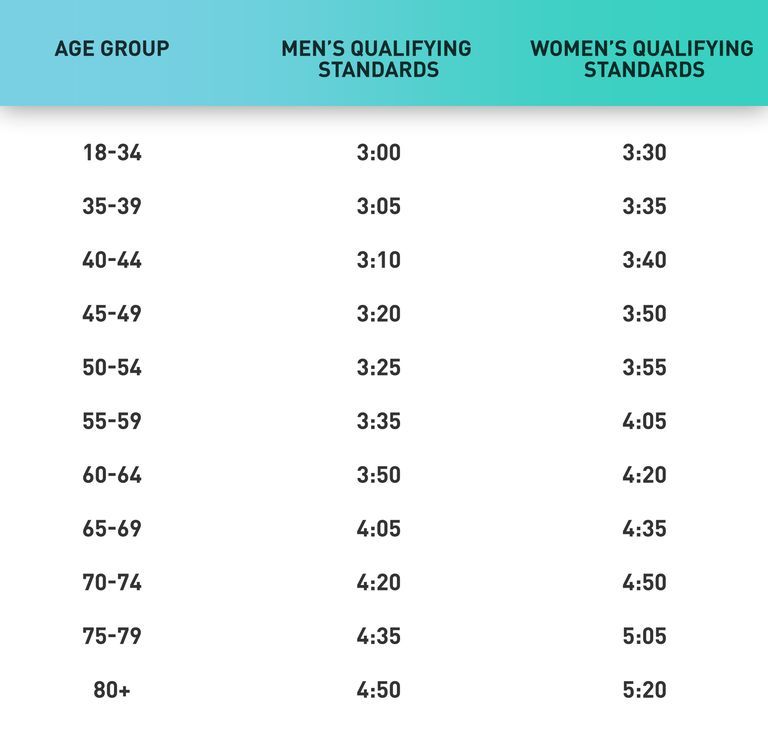
At the heart of the Boston Marathon’s mystique are its qualifying standards. These are specific time requirements that runners must meet in a certified marathon within a designated qualifying window. The standards are age-group and gender-specific, ensuring that participants compete against peers of similar age and physiological capabilities. Understanding these benchmarks is the first crucial step on the path to Boston.
Age-Group Specific Times: Understanding Your Target
The Boston Athletic Association (BAA) publishes a table of qualifying times, which typically remains consistent for several years but can be adjusted. These times are categorized by gender and then broken down into five-year age groups. For example, a male runner aged 18-34 might need a time of 3 hours 00 minutes 00 seconds, while a male runner aged 45-49 might need 3 hours 20 minutes 00 seconds. Similarly, a female runner aged 18-34 might require 3 hours 30 minutes 00 seconds, with a 45-49-year-old female needing 3 hours 50 minutes 00 seconds. It’s imperative for aspiring qualifiers to consult the official BAA website for the exact, most up-to-date standards for their target race year. The age group is determined by the runner’s age on the day of the Boston Marathon itself, not on the day of their qualifying race. This detail is important for those whose birthdays fall within the qualifying window.
The “Buffer Time” Phenomenon: Why Faster is Always Better
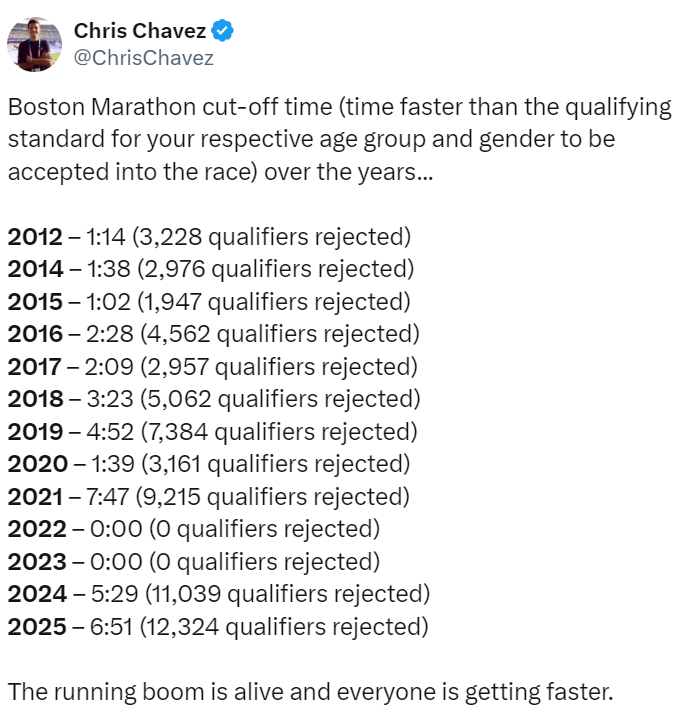
While the official qualifying times provide a clear target, simply meeting the standard is often not enough to guarantee entry. Due to the overwhelming popularity of the Boston Marathon and the fixed number of available spots, the BAA frequently has to implement a “buffer time.” This means that only those runners who have run faster than their age-group standard by a certain margin are accepted. This buffer time can vary from year to year, depending on the number of applicants and the overall speed of the field. In some years, a buffer of several minutes (e.g., 5 minutes or even more) might be required, while in others, it could be a minute or less.
This phenomenon underscores the competitive nature of the qualification process. It’s not enough to barely scrape by; runners must aim to significantly beat their age-group standard to feel confident about their chances of acceptance. This competitive environment pushes athletes to strive for personal bests, transforming the qualification process into an even greater test of will and speed. The application period usually opens in September for the following April’s race, and runners are encouraged to apply as soon as possible once the window opens, as entries are processed from the fastest submitted times downwards until the field is full.
Certified Courses and Official Results: Ensuring Your BQ Counts
To be considered valid, a qualifying race must meet specific criteria. It must be a full marathon (26.2 miles or 42.195 kilometers) and certified by a national governing body such as USATF (USA Track & Field) in the United States or the AIMS (Association of International Marathons and Distance Races) internationally. This certification ensures that the course distance is accurate and measured according to international standards, preventing any discrepancies that could invalidate a qualifying time.
Only official chip times from these certified races are accepted. Training runs, virtual races, or unofficial events do not count. The qualifying window is also crucial; typically, times must be achieved within a specific period (e.g., from September of the year before last to the registration closing date of the current year’s race). Runners must carefully check the BAA website for these precise dates. This meticulous attention to detail in course certification and official timing reinforces the Boston Marathon’s commitment to fairness and athletic integrity.
The Journey to Boston: Planning Your Qualifying Race and Trip

Earning a Boston Marathon qualifying time is a multi-faceted endeavor that extends beyond just physical training. It involves strategic planning around race selection, travel logistics, and accommodation, ensuring that all elements align for optimal performance and a smooth journey to the coveted start line. For many, this journey becomes a lifestyle choice, dictating diet, daily routines, and even vacation plans.
Strategic Race Selection: Finding Your Ideal BQ Course
Choosing the right qualifying marathon is a critical decision. Runners often seek out “fast” courses—those that are generally flat, have minimal turns, and are known for producing good times. While there are countless marathons certified by USATF or AIMS, some have gained reputations as excellent BQ races due to their favorable conditions. These might include races in New York City, Chicago, Berlin, London, Amsterdam, or smaller, lesser-known events designed specifically for speed.
Factors to consider when selecting a qualifying race include:
- Course Profile: Is it flat and fast, or does it have challenging hills? While Boston is known for its hills, many runners prefer to qualify on a flatter course to maximize their chances of hitting a fast time.
- Weather Conditions: Marathons run in cooler temperatures (e.g., fall or late spring) often yield faster times than those in hot, humid conditions.
- Logistics and Travel: How easy is it to get to the race location? What are the accommodation options? Will there be significant time zone changes to adjust to? Choosing a race that minimizes travel stress can be beneficial. Many runners from the United States opt for races within their region or a short flight away. International runners might plan a significant travel experience around a major European marathon like Berlin or London, turning the qualification attempt into a broader travel adventure.
- Race Size and Support: Some runners thrive on the energy of massive races, while others prefer smaller events with less crowd congestion at the start.
Careful research into past race results, course maps, and weather patterns for specific dates can greatly inform this strategic decision.
Travel and Accommodation Logistics for Aspiring Qualifiers
Once a runner has achieved their BQ, the focus shifts to planning the actual trip to Boston. This often becomes as intricate as the training plan itself, especially for international participants or those traveling with support crews. The Boston Marathon always takes place on Patriots’ Day, a Monday in April, which is a state holiday in Massachusetts. This fixed date means that flights and accommodations book up rapidly and often at premium rates.
Key travel considerations include:
- Flights: Booking flights to Boston Logan International Airport well in advance is essential. Comparing different airlines and considering layovers versus direct flights can help manage costs and travel time.
- Accommodation: This is perhaps the most critical logistical element after securing race entry. Boston offers a range of options, from luxurious hotels like The Fairmont Copley Plaza or the Boston Marriott Copley Place (often adjacent to the finish line and expo) to more budget-friendly hotels, suites, apartments, and even vacation rentals. Many runners prefer to stay close to the finish line in the Back Bay or downtown areas for ease of access to the expo, gear check buses to the start, and celebratory activities post-race. For a more unique experience, some might look into staying in charming boutique hotels in historic neighborhoods or consider apartment rentals for longer stays, offering a taste of local Boston life. Booking reviews and comparison sites are invaluable tools for finding the perfect spot.
- Local Transportation: Boston’s public transportation system, the “T,” is efficient. Runners should plan how they will get to the expo, the athletes’ village in Hopkinton on race morning (usually via official buses from Boston Common), and around the city for sightseeing.
- Pre-Race Logistics: Understanding where to pick up bibs, attend the expo, and find pre-race dinners is vital. Many hotels will offer special amenities for runners during marathon week, from early breakfast options to late checkout.
Thorough planning of these aspects ensures that the runner arrives in Boston feeling relaxed and ready, allowing them to focus entirely on the race and enjoy the surrounding atmosphere.
Experiencing Boston Beyond the Finish Line: A Runner’s Guide to the City
While the Boston Marathon is the undeniable highlight, the city of Boston itself presents an incredible array of attractions, culinary delights, and cultural experiences that enrich the entire trip. For runners and their accompanying cheer squads, Boston offers a chance to immerse themselves in history, art, and vibrant urban life, transforming a race weekend into a memorable travel adventure.
Iconic Landmarks and Attractions for Pre-Race Exploration
Boston is a city where every corner seems to whisper tales of American history. Before the adrenaline of race day takes over, or in the days following, exploring its famous landmarks is a must.
- The Freedom Trail: This 2.5-mile walking trail connects 16 historically significant sites, including the Massachusetts State House, Faneuil Hall Marketplace and Quincy Market, the Old North Church, and the site of the Boston Massacre. It’s an engaging way to learn about the American Revolution and see the city’s charming architecture.
- Fenway Park: For sports enthusiasts, a tour of America’s Most Beloved Ballpark, home to the Boston Red Sox, offers a glimpse into the city’s fervent baseball culture.
- Boston Common and Public Garden: These beautiful urban parks offer a serene escape, perfect for a gentle stroll or a pre-race relaxation session. The swan boats in the Public Garden are a delightful experience, especially for families.
- Museum of Fine Arts: One of the largest museums in the United States, the Museum of Fine Arts boasts an extensive collection spanning various cultures and periods, providing a rich artistic diversion.
- USS Constitution: “Old Ironsides,” the oldest commissioned warship afloat in the world, is docked in Charlestown Navy Yard and offers a fascinating look into naval history.
These landmarks, along with others like the Isabella Stewart Gardner Museum, the New England Aquarium, and simply walking along the Charles River Esplanade, provide a rich tapestry of experiences that appeal to diverse interests, making Boston a destination in itself.
Culinary Delights and Local Culture
Boston’s food scene is as diverse as its history. From traditional New England fare to world-class dining, there’s something to satisfy every palate, whether you’re carb-loading before the race or celebrating post-finish.
- Seafood: No trip to Boston is complete without indulging in fresh seafood. Lobster rolls, clam chowder, and oysters are local staples that can be found in casual clam shacks or upscale restaurants.
- Italian Food in the North End: Boston’s historic North End is a vibrant neighborhood renowned for its authentic Italian restaurants, bakeries, and cafes. It’s an ideal spot for a pre-race pasta dinner or a celebratory cannoli.
- Breweries and Craft Beer: Boston and the wider Massachusetts area boast a thriving craft beer scene, offering a chance to sample local brews in taprooms and pubs.
- International Cuisine: Reflecting its status as a global city and travel destination, Boston offers a vast array of international cuisines, from innovative fusion restaurants to traditional ethnic eateries.
Beyond food, experiencing Boston’s local culture means enjoying its neighborhoods, each with its distinct character. The charm of Beacon Hill with its cobblestone streets, the academic atmosphere of Cambridge across the Charles River, and the artistic vibe of the South End all contribute to the city’s unique appeal.
Lifestyle of a Marathoner: Balancing Training, Travel, and Relaxation
The lifestyle of an aspiring Boston Marathon qualifier is one of disciplined dedication. It involves months, sometimes years, of consistent training, strategic race planning, and a commitment to overall wellness. This extends to making choices about budget travel, finding suitable accommodation, and incorporating relaxation into a demanding schedule. For many, the journey to Boston becomes a defining period, shaping their personal fitness goals and broadening their travel horizons.
Upon arrival in Boston, the careful balance shifts from intense training to taper-week relaxation and race preparation. This is where lifestyle choices made during travel planning become paramount. Opting for a hotel with a good breakfast spread, convenient access to the race expo, and perhaps a pool or spa for light recovery, can make a significant difference. The atmosphere in Boston during marathon week is electric, but it’s crucial for runners to manage the excitement and stick to their pre-race routines, ensuring proper rest and nutrition.
Crossing the finish line on Boylston Street is not just the culmination of 26.2 miles, but the triumphant end of a dedicated lifestyle journey. It’s a moment of unparalleled joy and accomplishment, made even sweeter by the backdrop of one of the world’s most historic cities. For many, earning that Boston Marathon qualifying time and experiencing the race firsthand is a journey that changes them forever, forging memories that last a lifetime and often inspiring new travel and athletic goals. It’s a testament to the power of human endurance, strategic planning, and the incredible global appeal of a truly legendary event.
LifeOutOfTheBox is a participant in the Amazon Services LLC Associates Program, an affiliate advertising program designed to provide a means for sites to earn advertising fees by advertising and linking to Amazon.com. Amazon, the Amazon logo, AmazonSupply, and the AmazonSupply logo are trademarks of Amazon.com, Inc. or its affiliates. As an Amazon Associate we earn affiliate commissions from qualifying purchases.