
Hawaii, a jewel of the Pacific Ocean, is renowned globally for its breathtaking natural beauty, vibrant local culture, and unparalleled opportunities for travel and tourism. From the bustling streets of Honolulu to the serene landscapes of Kauai, and the volcanic wonders of Hawaii Island, the islands offer an idyllic escape for millions. While many visit for short-term stays, enjoying luxurious resorts and diverse accommodation options, a significant number of individuals dream of making the Aloha State their permanent home. For those considering a long-term stay or full relocation, understanding the intricacies of local governance and financial policies becomes paramount. Among these, the concept of a home exemption stands out as a crucial aspect of property ownership in Hawaii, profoundly impacting the lifestyle and financial planning of residents.
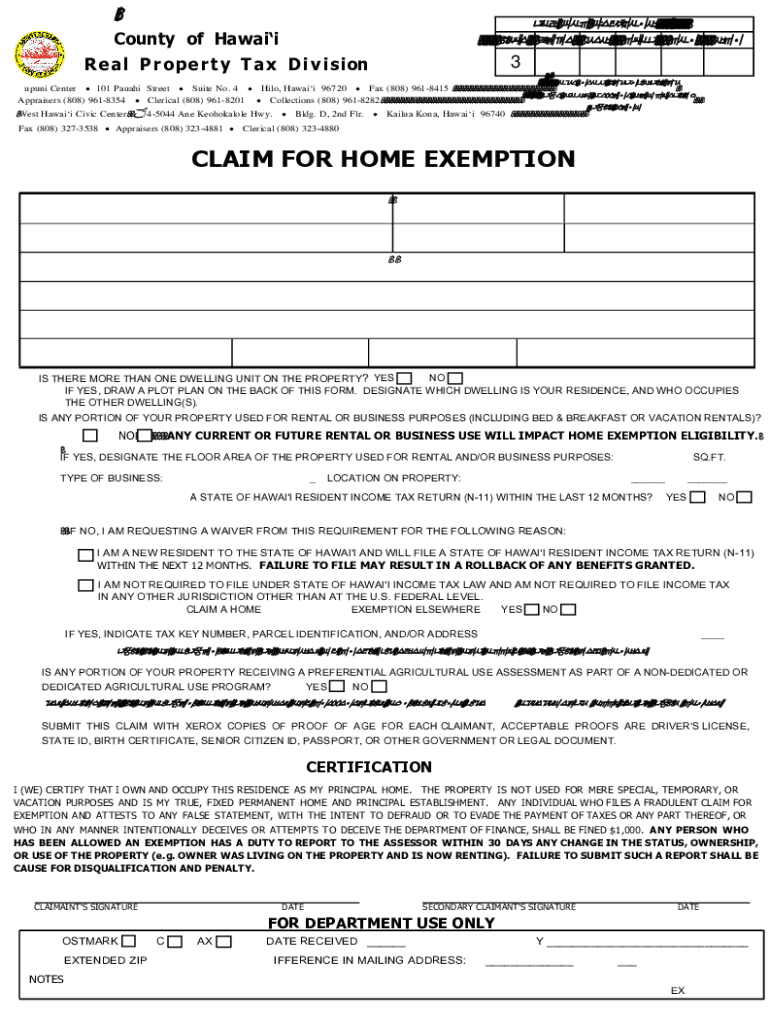
A home exemption in Hawaii is not merely a bureaucratic term; it represents a significant property tax reduction offered to homeowners who use their property as their primary residence. This policy is designed to alleviate the financial burden of property taxes for those who genuinely live on the islands, making homeownership more accessible and sustainable in a state with a notoriously high cost of living. For potential residents, especially those accustomed to different tax structures in other parts of the United States, comprehending this exemption is vital. It influences everything from budgeting for a new home to assessing the long-term viability of living in paradise. Our exploration will delve into what a home exemption entails, who qualifies for it, how to apply, and its broader implications for enjoying the unique lifestyle that Hawaii offers. Whether you’re contemplating buying a vacation villa, exploring long-term rental apartments, or firmly establishing roots, knowing about the home exemption is an indispensable piece of financial wisdom for navigating the Hawaii property landscape.
Understanding the Home Exemption in Hawaii
The allure of Hawaii often begins with its pristine beaches, world-class surfing at the North Shore of Oahu, and iconic landmarks like Diamond Head. Yet, beneath the surface of its stunning beauty lies a practical reality for those who call it home: the structure of property taxation. The home exemption serves as a cornerstone of property tax relief, a benefit that significantly influences the financial well-being of residents across all islands, from Maui to Hawaii County.
What Exactly is a Home Exemption?
At its core, a home exemption is a legal provision that allows a portion of a homeowner’s property value to be exempt from property taxes. In simpler terms, it reduces the taxable assessed value of a primary residence, thereby lowering the overall property tax bill. This mechanism is primarily designed to support owner-occupants, providing a financial incentive for establishing permanent residency. It distinguishes between properties used as primary homes and those used for other purposes, such as investment properties, second homes, or vacation rentals. While Hawaii thrives on tourism and short-term accommodation, the home exemption underscores the state’s commitment to fostering stable communities and long-term residency. For example, a home in Waikiki Beach that serves as a primary residence could benefit from an exemption, whereas a neighboring apartment rented out to tourists through various booking platforms would not. This distinction is crucial for anyone looking beyond temporary lodging and considering property ownership as part of their lifestyle in Hawaii. The exemption amount can vary substantially by county and even by specific owner characteristics, reflecting the diverse needs and tax policies of areas like Maui County and Kauai County.
Why it Matters for Residents and Long-Term Visitors
For many, the dream of living in Hawaii is synonymous with a certain lifestyle – one of relaxation, connection to nature, and vibrant local culture. However, the high cost of living, particularly housing, can be a daunting barrier. This is where the home exemption becomes a critical financial tool. For residents, it translates directly into tangible savings on their annual property tax bill, freeing up funds that can be allocated to other aspects of their lifestyle, from enjoying local food and activities to investing in family trips or simply managing daily expenses. It provides a measure of affordability in an otherwise expensive market.
For long-term visitors or individuals contemplating relocation, understanding the home exemption is an essential part of their due diligence. It can significantly influence the overall financial feasibility of moving to the islands and purchasing a home. While exploring destinations, attractions, and guides for experiences is part of the initial charm of Hawaii, the practicalities of accommodation and the costs associated with it define the long-term reality. The exemption encourages prospective homeowners to consider their residency status carefully, as establishing Hawaii as their primary domicile unlocks these tax benefits. This distinction is particularly relevant for those who might otherwise be drawn to purchasing a second home purely for investment or vacation purposes, as such properties typically do not qualify. By offering a financial incentive, the home exemption supports the establishment of a rooted community, helping to sustain the unique local culture and the true spirit of Aloha for its permanent inhabitants.
Eligibility and Application Process
Navigating the administrative landscape of Hawaii property tax, especially for newcomers, can seem intricate. However, the process for applying for a home exemption is designed to be straightforward, provided applicants meet the specific criteria and adhere to the established timelines. Understanding these requirements is essential, whether you are settling into a new home in Kailua-Kona or establishing roots in Maui.
Who Qualifies for a Hawaii Home Exemption?
Qualifying for a home exemption in Hawaii hinges primarily on the concept of primary residency and ownership. The fundamental requirement is that the property must be owned and occupied as the homeowner’s principal place of residence. This means it must be the place where one lives for the majority of the year, where mail is received, and where one is registered to vote, among other indicators of domicile. It’s not enough to simply own a property; one must genuinely live there. The ownership itself can be either fee simple or leasehold, which accommodates the diverse land tenure systems prevalent in Hawaii.
Specifically, homeowners must usually be residents of the State of Hawaii as of a particular date – typically December 31 of the year preceding the tax year for which the exemption is sought. For instance, to receive an exemption for the tax year beginning July 1, 2025, you would typically need to have been a resident homeowner on December 31, 2024. This firm deadline ensures consistency and prevents retroactive claims. Each of the four major counties – Honolulu (Oahu), Maui County (Maui, Lanai, Molokai), Kauai County (Kauai), and Hawaii County (Hawaii Island) – administers its own property tax system, so while the core principles are consistent, minor variations in specific rules or additional local requirements may apply. It’s crucial for homeowners to consult the respective county’s tax assessor’s office or website to ensure full compliance. For those considering long-term accommodation options, from purchasing a new home to securing long-term apartments, understanding these specific criteria is the first step toward significant tax savings.
Navigating the Application: Steps and Deadlines
The application process for a home exemption in Hawaii is fairly standardized across the counties, though forms and submission methods might differ slightly. The primary responsibility for applying rests with the homeowner.
- Obtain the Application Form: The necessary forms are typically available online through the respective county’s tax assessor’s website or in person at their offices. For instance, residents of Oahu would visit the City and County of Honolulu Department of Budget and Fiscal Services website.
- Complete the Form Accurately: The application will require detailed information about the property, the owner(s), and declarations of primary residency. This often includes proving your intent to reside permanently in Hawaii through various documents.
- Gather Required Documentation: To support your claim of primary residency, you will likely need to provide documentation such as:
- Proof of ownership (deed or title).
- Hawaii driver’s license or State of Hawaii identification.
- Voter registration card in Hawaii.
- Vehicle registration in Hawaii.
- Income tax returns filed from a Hawaii address.
- Utility bills for the property in question.
- Other supporting documents that establish the property as your principal dwelling.
- Submission Deadlines: This is arguably the most critical aspect of the application process. For most counties in Hawaii, the application for a home exemption must be filed by December 31 of the calendar year preceding the tax year for which the exemption is claimed. For example, to receive the exemption for the tax year starting July 1, 2025, you must file your application by December 31, 2024. Missing this deadline will generally result in the forfeiture of the exemption for that particular tax year, so strict adherence is necessary.
- Re-application (if necessary): In most cases, once a home exemption is granted, it automatically renews annually as long as the eligibility criteria continue to be met. However, if there are changes in ownership, residency, or property use, the exemption may need to be re-applied for or could be rescinded.
While the process requires attention to detail and adherence to deadlines, successfully applying for a home exemption is a significant step towards mitigating the costs of property ownership in Hawaii. It is an essential consideration for anyone looking to establish a long-term lifestyle on the islands, moving beyond the transient experience of tourism and into the realm of permanent residency and community building.
The Financial Benefits: Saving on Property Taxes
The primary appeal of the home exemption in Hawaii lies in its direct financial impact: significant savings on property taxes. For residents, this benefit can meaningfully improve the affordability of living in paradise, allowing more resources to be channeled into enjoying the unique lifestyle and rich local culture of the islands. Whether residing in a bustling urban center like Honolulu or a tranquil retreat on Kauai, the financial relief provided by an exemption is universally valued.

How Exemptions Reduce Your Tax Bill
To understand how a home exemption reduces your tax bill, it’s important to grasp the basic formula for property tax calculation: Taxable Assessed Value multiplied by the Tax Rate. Property taxes are levied by the county governments in Hawaii, and each county (Honolulu, Maui County, Kauai County, Hawaii County) sets its own tax rates and assesses property values.
Here’s how the exemption works:
- Assessed Value: The county tax assessor determines the fair market value of your property. This is your “assessed value.”
- Exemption Applied: If you qualify for a home exemption, a certain dollar amount is subtracted from your assessed value. This exempted portion is not subject to property taxes.
- Taxable Assessed Value: The result of subtracting the exemption from the assessed value is your “taxable assessed value.”
- Tax Calculation: Your property tax bill is then calculated by multiplying this lower taxable assessed value by the prevailing property tax rate for residential properties in your county.
Let’s consider a hypothetical example:
- A property in Maui has an assessed value of $800,000.
- The standard home exemption in Maui County for a qualified resident might be, for example, $200,000 (note: actual amounts vary and should be checked).
- The taxable assessed value becomes $800,000 – $200,000 = $600,000.
- If the residential tax rate is $2.80 per $1,000 of assessed value (0.28%), the tax would be $600,000 * 0.0028 = $1,680.
- Without the exemption, the tax would be $800,000 * 0.0028 = $2,240.
- In this scenario, the homeowner saves $560 annually.
This savings can be quite substantial, especially in a state where property values are high. The specific exemption amounts vary significantly by county, and they are also subject to legislative changes. For instance, Honolulu typically offers a base exemption, and some counties provide additional exemptions based on age, disability, or other factors. These savings directly contribute to the overall affordability of living in Hawaii, allowing residents to allocate more of their income to enriching experiences, family needs, or simply managing the higher cost of goods and services prevalent on the islands.
Beyond the Basic Exemption: Special Considerations
While the standard home exemption provides a valuable baseline of relief, Hawaii counties also offer additional, special exemptions for certain demographics, further reinforcing the state’s commitment to supporting its diverse population. These special considerations are crucial for eligible residents and can lead to even greater tax reductions, significantly impacting their lifestyle and financial stability.
Some common categories for special exemptions include:
- Seniors: Homeowners above a certain age (e.g., 65 or 70) often qualify for an increased exemption amount. This acknowledges that many seniors live on fixed incomes and may require additional financial relief to remain in their homes. The exact age requirement and the increased exemption amount can vary by county. For example, Hawaii County and Maui County have distinct senior exemption tiers.
- Disabled Veterans: Qualified veterans with service-connected disabilities may be eligible for very substantial, sometimes even full, property tax exemptions. This is a way for the state to honor and support those who have served the nation. Specific criteria regarding disability percentage and residency apply.
- Blind, Deaf, or Totally Disabled Persons: Homeowners who are legally blind, profoundly deaf, or certified as totally disabled often qualify for enhanced exemptions, providing crucial financial assistance to those facing unique challenges.
- Persons with Hansen’s Disease: There are specific exemptions for individuals with Hansen’s Disease, reflecting historical context and ongoing care needs.
These special exemptions are not automatically applied; eligible homeowners must typically file a separate application or provide additional documentation to prove their qualification. It is imperative to check the specific requirements and deadlines with the relevant county tax assessor’s office. These programs demonstrate a holistic approach to supporting the community, ensuring that various segments of the population can afford to maintain their homes and continue to be integral parts of Hawaii’s vibrant social fabric. For anyone planning a long-term stay or considering permanent residency, particularly those falling into these categories, understanding and leveraging these special exemptions can profoundly impact their financial outlook and overall quality of life on the islands.
Home Exemption in the Context of Hawaii’s Diverse Lifestyle and Accommodation Options
Hawaii is a destination of dreams, offering a mosaic of experiences from the historical significance of Pearl Harbor to the natural wonders of Waimea Canyon on Kauai and the scenic drives along the Hana Highway on Maui. Its diverse landscape also mirrors its diverse accommodation options, ranging from luxury hotels and resorts in Kaanapali Beach to quaint villas and long-term stay apartments. Within this rich tapestry, the home exemption plays a distinct role, primarily influencing those who seek to transition from being temporary visitors to permanent residents, deeply embedding themselves in the Hawaiian lifestyle.
Implications for Relocation and Long-Term Stays
For individuals and families contemplating a move to Hawaii, the home exemption is more than just a tax break; it’s a critical factor in their relocation strategy and long-term financial planning. Unlike booking a transient hotel or a short-term vacation rental, establishing permanent residency involves a deeper commitment and a more intricate understanding of local economic realities. The home exemption directly impacts the cost of living, which is a significant consideration given Hawaii’s reputation as one of the most expensive places to reside in the United States.
When someone decides to relocate, they are essentially choosing a new lifestyle. This might involve enjoying the outdoor adventures year-round, immersing in the rich Polynesian culture, or seeking a calmer pace of life. However, these aspirations must be balanced with the financial practicalities. The home exemption provides a tangible reduction in the cost of homeownership, making it more feasible for middle-income families, retirees, and professionals to settle down. This financial relief can be the deciding factor for many, tipping the scales towards making the dream of living in Hawaii a permanent reality. It encourages the purchase of a primary home rather than perpetual renting, fostering a sense of stability and investment in the local community. For those coming from regions with lower property taxes, the exemption helps to soften the sticker shock, facilitating a smoother transition into the Hawaiian economic landscape and allowing them to fully embrace their new long-term stay and lifestyle.
The Vacation Home vs. Primary Residence Dilemma
Hawaii’s economy heavily relies on tourism, and consequently, a substantial portion of its real estate market caters to vacation homes, second homes, and investment properties, often managed by various tourism and accommodation agencies. These properties, while contributing significantly to the state’s revenue through tourism, are generally not eligible for the home exemption. This distinction forms a critical dilemma for potential buyers and has broader implications for Hawaii’s housing market and local economy.
The home exemption is explicitly designed for primary residences. This means if a property is used primarily as a vacation home, rented out through short-term booking sites, or held purely as an investment, it will not qualify for the property tax reduction. This policy helps to ensure that the tax relief targets genuine residents, not absentee owners or those leveraging the market for commercial gain. For someone exploring the option of owning a property in Hawaii, this necessitates a clear decision from the outset: is this a place I intend to live in full-time, or is it a part-time retreat or income-generating asset?
The implications of this dilemma are far-reaching:
- Financial Planning: Buyers must factor in the full, un-exempted property tax amount for vacation homes, which can be significantly higher and influence profitability for rentals or simply the overall cost of ownership.
- Housing Market Dynamics: The distinction helps maintain a clearer divide between owner-occupied housing and tourism-related accommodation. While vacation rentals are essential for the tourism industry, the home exemption subtly encourages primary residency, which can help stabilize local communities and provide housing options for permanent residents amidst a highly competitive market.
- Lifestyle Choices: It steers individuals toward making a genuine commitment to the Hawaiian lifestyle as a resident rather than just a frequent visitor. Those who truly wish to integrate into the local culture and community are incentivized to establish their primary domicile.
Understanding this clear differentiation is vital for anyone engaging with Hawaii’s property market. It underscores the importance of honest self-assessment regarding one’s intentions for property use and its connection to the unique blend of tourism, accommodation, and residential living that defines the Aloha State.
The home exemption in Hawaii is far more than a technical tax detail; it is a fundamental aspect of property ownership that underpins the viability of permanent residency in this island paradise. For those drawn by the allure of Hawaii’s unique lifestyle, vibrant local culture, and stunning natural landmarks, understanding this exemption is critical. It offers substantial financial relief to residents who commit to making Hawaii their primary home, alleviating some of the burden of the state’s high cost of living. By reducing property tax obligations, the exemption empowers homeowners across Oahu, Maui, Kauai, and Hawaii Island to invest more in their quality of life and community.
For individuals and families contemplating relocation or a long-term stay, the home exemption should be a central consideration in their financial planning. It highlights the distinction between temporary tourist accommodation, such as hotels and resorts, and the deeper commitment of establishing a permanent residence. While the process of applying involves specific eligibility criteria and strict deadlines, the long-term benefits in terms of savings on property taxes are undeniable. Furthermore, special exemptions for seniors, disabled veterans, and other vulnerable populations underscore Hawaii’s commitment to supporting its diverse citizenry. Ultimately, the home exemption helps to cultivate stable, thriving communities by making homeownership more sustainable for those who truly call Hawaii home, allowing them to fully embrace the Aloha spirit in their daily lives. For precise and up-to-date information, consulting the specific county tax assessor’s office remains the best course of action.
LifeOutOfTheBox is a participant in the Amazon Services LLC Associates Program, an affiliate advertising program designed to provide a means for sites to earn advertising fees by advertising and linking to Amazon.com. Amazon, the Amazon logo, AmazonSupply, and the AmazonSupply logo are trademarks of Amazon.com, Inc. or its affiliates. As an Amazon Associate we earn affiliate commissions from qualifying purchases.