
Navigating the complexities of homeownership in the Lone Star State involves understanding various financial benefits designed to make property ownership more accessible and affordable. Among these, the homestead exemption stands out as a significant advantage for Texas residents. It’s a legal provision that protects a portion of your home’s value from property taxes and, crucially, from certain creditors. For anyone considering purchasing a home, investing in property, or simply seeking to understand their financial obligations as a homeowner in Texas, a homestead exemption is a vital concept to grasp. This article delves into what a homestead exemption is, who qualifies, how it works, and the significant benefits it offers to homeowners across Texas.
Understanding the Core Concept: Protection and Savings
At its heart, a homestead exemption in Texas is a form of property tax relief. It’s not a loophole to avoid taxes altogether, but rather a mechanism that reduces the taxable value of your primary residence. This, in turn, lowers your overall property tax bill. Beyond tax savings, the homestead exemption offers a powerful layer of protection against financial hardship, safeguarding your home from being seized and sold to satisfy certain debts. This dual benefit – financial relief and creditor protection – makes it an indispensable element of homeownership in Texas.
Property Tax Relief: Lowering Your Annual Burden
The most immediate and tangible benefit of a homestead exemption is the reduction it provides on your annual property tax assessment. Property taxes in Texas are calculated based on the assessed value of your home and the local tax rates set by various taxing entities, such as school districts, cities, and counties. Without a homestead exemption, the full assessed value of your home is subject to these taxes.
When you successfully claim a homestead exemption, a portion of your home’s value is effectively removed from the taxable calculation. The exact amount of this exemption can vary, but it is a significant figure that directly translates into lower tax payments. For instance, the state mandates a minimum homestead exemption of $40,000 for school district taxes. This means that even if your home is valued at $300,000, for the purpose of calculating school district taxes, it will be assessed as $260,000, leading to a noticeable reduction in your tax bill.
Furthermore, many local taxing units, like cities and counties, can choose to offer additional homestead exemptions above and beyond the state-mandated minimum. These “additional homestead exemptions” can further reduce the taxable value of your home, providing even greater financial relief. The availability and amount of these additional exemptions are determined by local voters and can significantly impact the overall tax burden for homeowners in a specific area. For example, a homeowner in a city that offers a generous additional homestead exemption will likely pay less in property taxes than a homeowner with a similarly valued property in an area with a smaller or no additional exemption.
This property tax relief is particularly impactful for long-term homeowners and those living on fixed incomes. It helps to mitigate the rising costs associated with property ownership, allowing individuals and families to allocate their financial resources to other essential needs or investments, such as saving for retirement, funding education, or enjoying leisure activities like traveling or dining out at local establishments. For those who dream of owning a vacation home in the Texas Hill Country or a stylish apartment in downtown Austin, understanding these tax implications is a crucial step in making those aspirations a reality.
Creditor Protection: Safeguarding Your Primary Residence
Beyond the financial savings on property taxes, the homestead exemption in Texas provides a robust shield against creditors. This protection is one of the most powerful aspects of the homestead law and is designed to prevent individuals and families from losing their homes due to unforeseen financial circumstances.
In Texas, your homestead is protected from forced sale to satisfy most types of debt. This means that if you owe money to creditors, they generally cannot compel the sale of your primary residence to collect on their claims. This protection is not absolute and has specific exceptions, but it covers a wide range of common debts.
The debts that are typically not protected by the homestead exemption include:
- Purchase Money Mortgages: The debt owed to the lender who financed the original purchase of your home.
- Property Taxes: Unpaid property taxes are a primary lien on your home, and the taxing authority can force a sale to collect these.
- Mechanic’s and Materialman’s Liens: These arise when work is done on your home, and the contractors or suppliers are not paid.
- Certain Home Equity Loans and Refinances: Loans secured by your home, provided they meet specific Texas legal requirements.
- Spousal or Child Support Obligations: Court-ordered payments for alimony or child support.
However, for the vast majority of unsecured debts, such as credit card debt, medical bills, or personal loans, your homestead is safe from seizure. This provides a crucial safety net, ensuring that even in times of severe financial distress, your family has a roof over its head. This peace of mind is invaluable, allowing homeowners to focus on rebuilding their financial stability without the immediate threat of losing their most significant asset. Imagine planning a family trip to Galveston Island or exploring the vibrant culture of San Antonio with the knowledge that your home is protected, offering a stable base from which to enjoy life’s adventures.
It’s important to note that the homestead protection applies specifically to your primary residence. You can only claim one homestead exemption. If you own multiple properties, only the one you occupy as your main home is eligible for this protection. This distinguishes it from investment properties or second homes, which do not receive the same legal safeguards.
Eligibility Requirements for a Texas Homestead Exemption
To benefit from the homestead exemption in Texas, you must meet certain eligibility criteria. These requirements are straightforward and designed to ensure that the exemption is utilized by bona fide residents who own and occupy their homes. Understanding these qualifications is the first step in applying for and receiving this valuable benefit.
Residency and Ownership: Your Primary Home
The cornerstone of homestead exemption eligibility is establishing your primary residence in Texas. This means the property must be your main home, the place you intend to return to whenever you are away. You cannot claim a homestead exemption on a property you do not occupy, such as a vacation rental or an investment property.
The law also requires that you own the property. This ownership can be fee simple (outright ownership) or through certain contractual arrangements where you have possessory rights. For example, if you have a contract to purchase a home and are living in it, you may be able to claim a homestead exemption once you begin occupying it as your primary residence, even if you haven’t fully completed the purchase.
Property Type and Size Limitations
The homestead exemption applies to a home used as a dwelling. This can include a traditional house, a condominium, a mobile home, or even a houseboat, as long as it is your primary residence. There are also limitations on the size of the property that can be claimed as a homestead.
- Urban Homesteads: For properties located within the limits of a city or town, or its platted suburbs, the homestead is limited to 10 acres of land together with any improvements on the land. This means the exemption applies to the land and any structures on it, up to the 10-acre limit.
- Rural Homesteads: For properties located outside of city limits, the homestead exemption is more generous in terms of acreage. It is limited to 200 acres of land for a single person, and 100 acres of land for a family, together with any improvements on the land. This allows for larger properties to be considered homesteads in rural settings.
These acreage limitations are important to consider if you own a substantial amount of land. The exemption applies to the value of the home and the structures on the land, as well as the land itself, up to the specified acreage.
Filing the Application: The Process and Deadlines
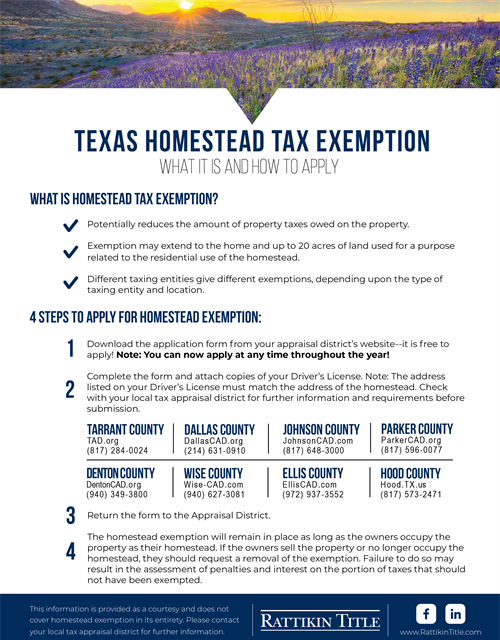
While the homestead exemption is automatic in its tax-saving effect once a property qualifies, you still need to formally claim it. This typically involves filing an application with your local county appraisal district. The application process is generally straightforward and designed to be accessible to homeowners.
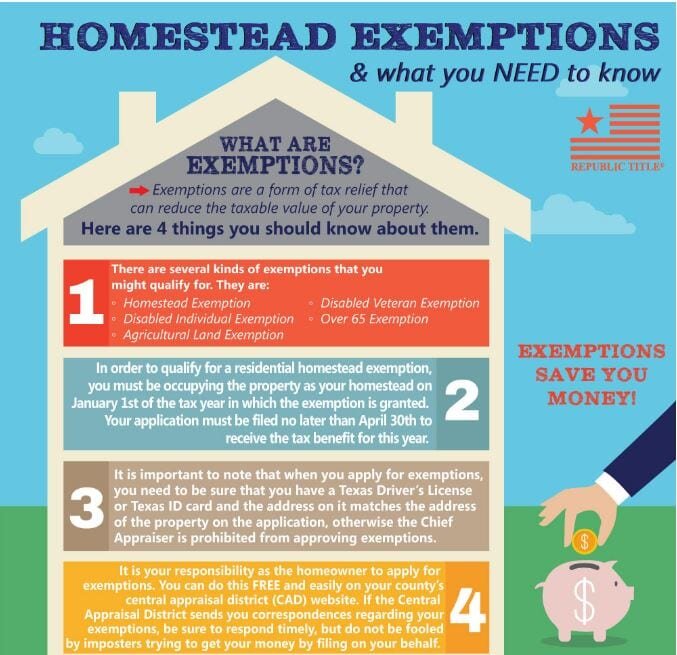
The deadline for filing your initial homestead exemption application is typically May 1st of the tax year for which you are seeking the exemption. If you file after May 1st but before June 30th, you may still be able to receive the exemption, but it might be prorated for that tax year. For subsequent tax years, if you continue to qualify and have filed an initial application, the exemption will typically renew automatically unless you move or your eligibility changes.
It is crucial to file your application with the correct county appraisal district. Each county in Texas has its own appraisal district responsible for appraising all property within that county for tax purposes. You can usually find the application forms on the website of your county appraisal district. Some districts may also offer online filing options, making the process even more convenient.
When filing, you will likely need to provide proof of your residency and ownership, such as a driver’s license with your Texas address, a voter registration card, or a copy of your deed. The appraisal district may request additional documentation if needed.
Types of Homestead Exemptions in Texas
Texas offers several types of homestead exemptions, catering to different circumstances and providing varying levels of benefit. Understanding these distinctions can help homeowners maximize their tax savings and leverage the protection offered by the law.
General Homestead Exemption
The most common type of homestead exemption is the general homestead exemption. This is the foundational exemption that all eligible homeowners can claim, providing the basic property tax reduction. As mentioned earlier, the state mandates a minimum exemption of $40,000 for school district taxes. This means that for every dollar of your home’s value above this amount, you will be taxed by the school district.
This exemption is available to all homeowners who meet the residency and ownership requirements for their primary residence. It is the first and most critical step in reducing your property tax liability.
Additional Homestead Exemptions
Beyond the general exemption, many taxing units in Texas have the authority to offer additional homestead exemptions. These are established by local voters and can provide an extra layer of tax relief. Common examples include:
- Additional Homestead Exemption for Age 65 or Older: Homeowners who are 65 years of age or older can qualify for a significant additional homestead exemption. This exemption is often set by local taxing units, but the state also provides a minimum exemption of $10,000 for school taxes. This is a crucial benefit for seniors on fixed incomes, helping them remain in their homes and communities.
- Additional Homestead Exemption for Disabled Individuals: Individuals who qualify as disabled, as defined by Texas law, can also receive an additional homestead exemption. Similar to the exemption for seniors, this is often set locally but has a state-mandated minimum of $10,000 for school taxes. This exemption aims to ease the financial burden for those facing challenges due to disability.
- Additional Homestead Exemption for Disabled Veterans: Texas offers robust protections and benefits for disabled veterans. For veterans who are 100% disabled or whose disability rating is 10% or higher and who are unable to work, there are significant additional homestead exemptions. The exemption amount for disabled veterans is substantial and can even lead to a complete exemption from property taxes on their primary residence if their disability is rated 100%.
These additional exemptions are crucial for specific populations and can result in substantial savings, making homeownership more sustainable for seniors, disabled individuals, and veterans.

Homestead Exemptions for Military Personnel
Recognizing the sacrifices of those serving in the armed forces, Texas also offers specific homestead exemption benefits for military personnel. While active duty military members stationed away from Texas due to their service can still claim a homestead exemption on their Texas property, there are also provisions related to exemptions for disabled veterans, which are particularly impactful.
For instance, a disabled veteran who is rated 100% disabled by the Department of Veterans Affairs can receive a full homestead exemption on their primary residence. Even for those with lower disability ratings, substantial exemptions are available. This is a testament to Texas‘s commitment to supporting its military members and veterans.
Understanding which homestead exemptions you qualify for is essential. You can typically find detailed information about the specific additional exemptions offered by your local taxing units on the website of your county appraisal district or by contacting them directly. This knowledge empowers you to make informed decisions about your property taxes and financial planning. Whether you are a young family buying your first home, a retiree looking to downsize, or a veteran seeking to utilize available benefits, the homestead exemption in Texas offers a valuable pathway to reduced taxes and enhanced financial security. It’s a cornerstone of homeowner protection in the state, contributing to the stability and affordability of residing in Texas, a state known for its diverse landscapes, from the bustling streets of Houston to the serene shores of the Gulf Coast.