
Embarking on a journey through the Golden State, whether you’re a seasoned resident, a first-time visitor, or someone considering a move to this vibrant region, understanding local regulations is key to a seamless experience. Among the many considerations, navigating the nuances of vehicle modifications, particularly window tinting, is surprisingly crucial. California, renowned for its sunny skies, iconic landmarks, and diverse landscapes ranging from the bustling streets of Los Angeles to the serene beaches of San Diego, presents specific laws regarding window tint. This guide aims to demystify what constitutes a legal tint in California, ensuring your adventures, business trips, or daily commutes are both comfortable and compliant.
For those venturing into California as part of an elaborate travel itinerary, perhaps renting a car to explore the scenic Pacific Coast Highway or winding through the vineyards of Napa Valley, awareness of these rules is paramount. Even a brief stay at a luxurious Beverly Hills resort like the Waldorf Astoria Beverly Hills might involve driving a rental car, and an unexpected traffic stop for illegal tint can quickly dampen the spirits of a relaxing holiday. Similarly, for digital nomads or remote workers considering a long-term stay in areas like Santa Monica or Palm Springs, purchasing a vehicle means delving into the local vehicle codes. Understanding these regulations is not just about avoiding fines; it’s about embracing the California lifestyle with confidence and ease, ensuring your ride complements the golden sunshine without crossing legal boundaries.
Understanding California’s Window Tint Laws
California’s vehicle code concerning window tint is designed to balance driver and passenger comfort with public safety and law enforcement visibility. The primary metric used to regulate window tint is Visible Light Transmission (VLT), which measures the percentage of light that passes through the tinted window. A higher VLT percentage means more light passes through, resulting in a lighter tint, while a lower VLT indicates a darker tint. The laws are quite specific about which windows can be tinted and to what degree, reflecting a careful consideration of safety, visibility, and practicality for drivers navigating diverse conditions, from the bright desert sun near Joshua Tree National Park to the sometimes foggy coastal roads leading to Big Sur.
The regulations differ significantly depending on the window in question. This differentiated approach acknowledges the varied roles each window plays in a driver’s visibility and the overall safety of the vehicle. For instance, the front side windows, which are critical for driver visibility and interaction with law enforcement, face stricter rules than the rear windows. This is a common practice across many states but has its own unique interpretation in California. As you plan your itinerary, perhaps involving a scenic drive through Yosemite National Park or a city tour through San Francisco, knowing these specifics can save you hassle. Imagine cruising past the Golden Gate Bridge in a stylish convertible with just the right level of tint – it enhances the experience without legal worries.
Specific Tint Regulations by Window
Navigating the vibrant cities and breathtaking natural wonders of California often involves extensive driving. Whether you’re exploring the cultural tapestry of San Francisco, the glitz of Hollywood in Los Angeles, or the laid-back charm of Santa Barbara, understanding the precise tint laws for each window of your vehicle is crucial.
-
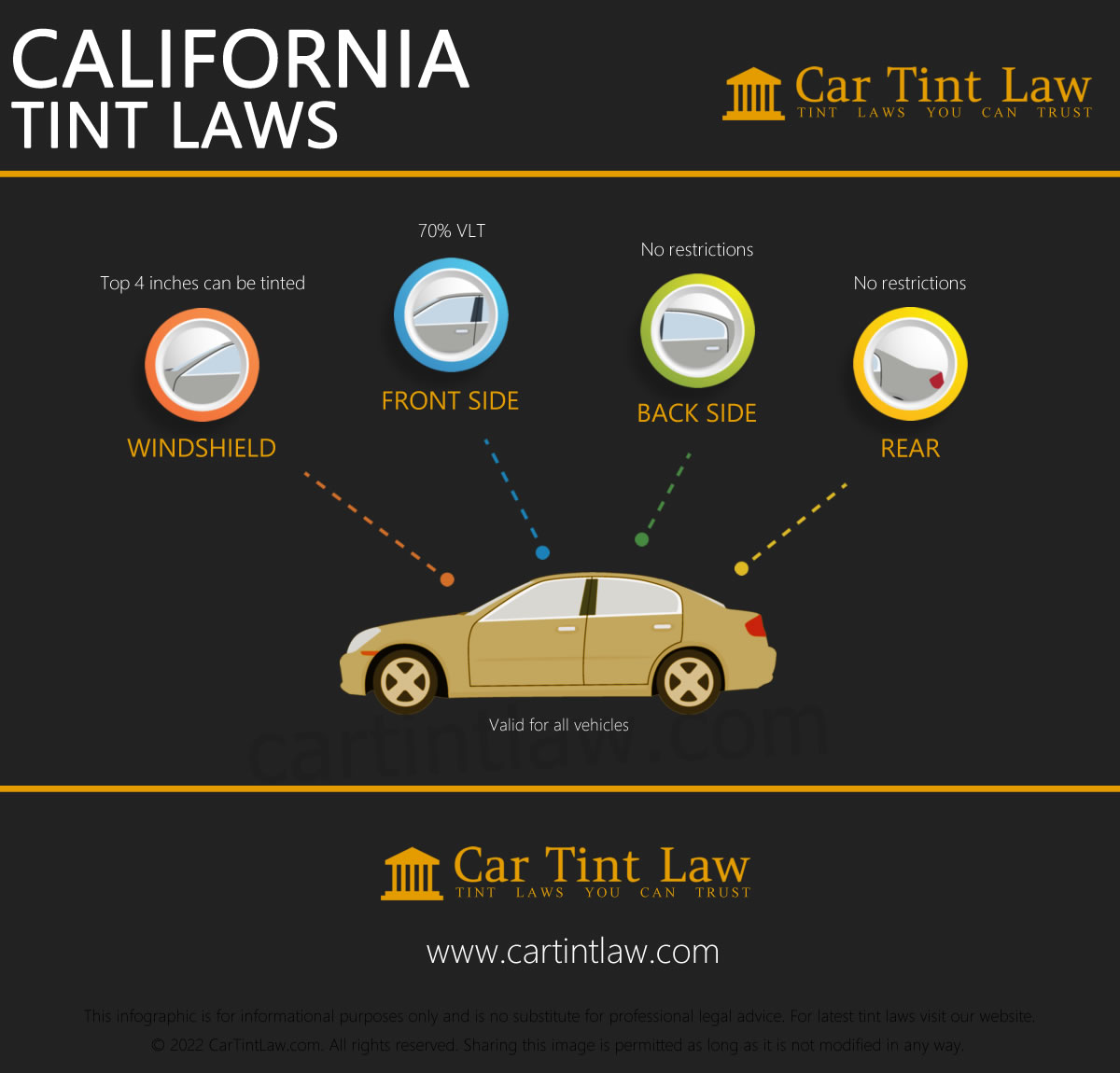
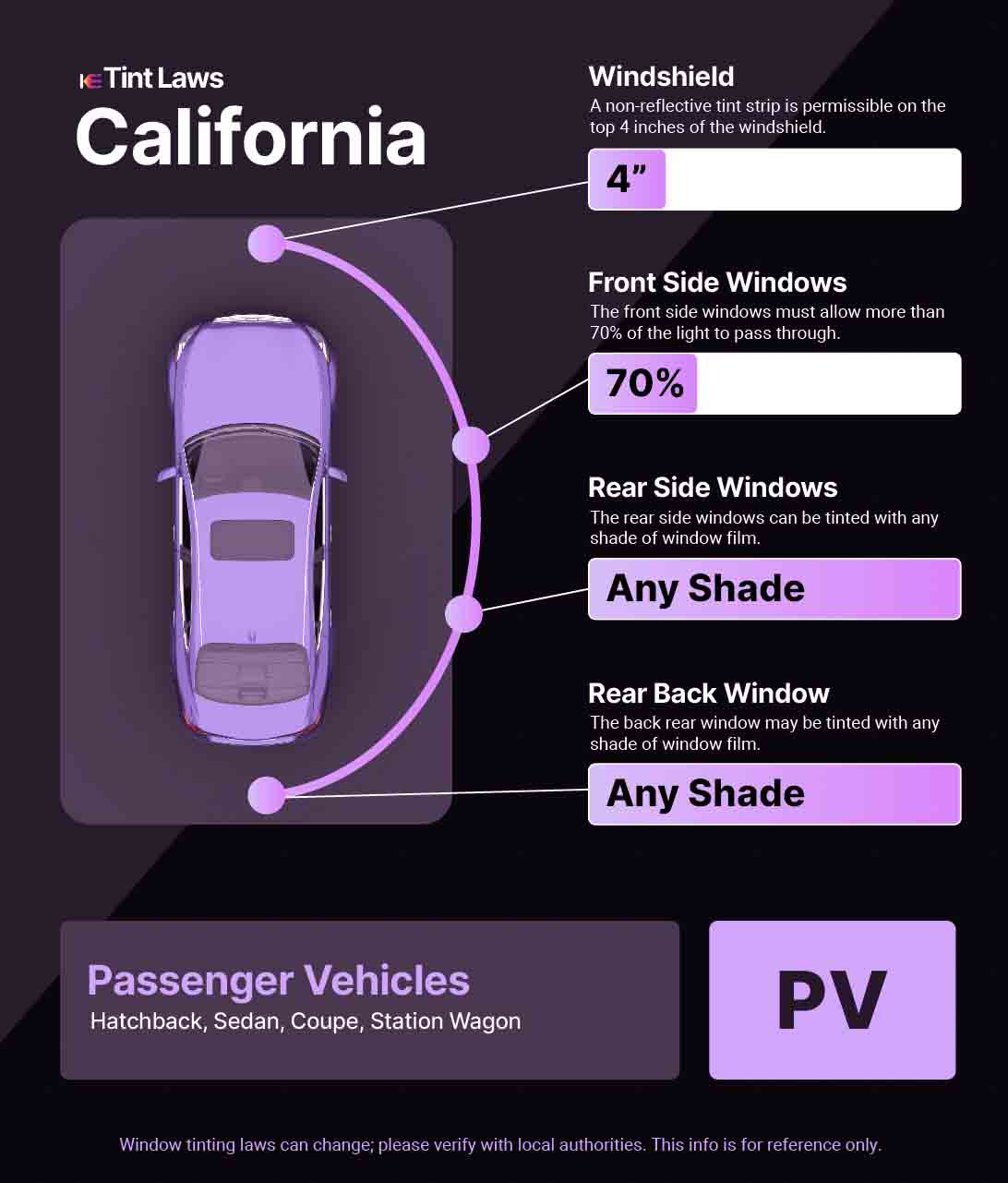
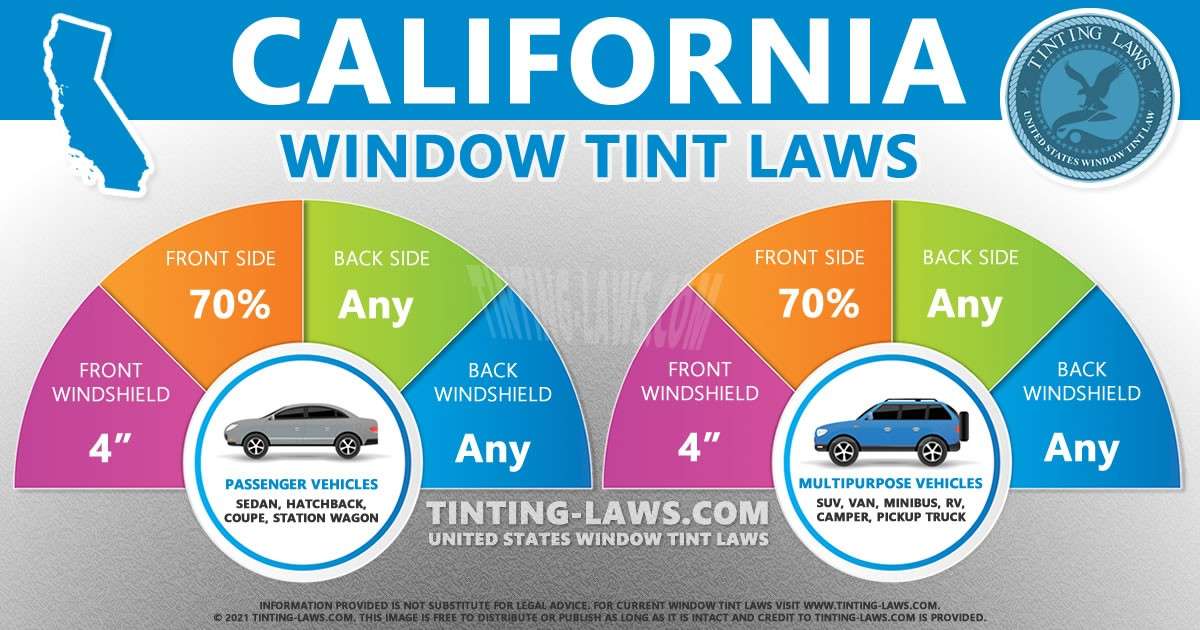
Front Windshield: This is perhaps the most restrictive area. California law permits non-reflective tinting only on the top 4 inches of the windshield, typically identified by the “AS-1 line” found on most vehicle windshields. This allowance is designed to reduce glare from the sun without impeding the driver’s primary field of vision. Anything beyond this designated strip is illegal. For tourists renting cars, this is usually not an issue as rental fleets typically adhere to standard regulations, but it’s good to be aware if you’re purchasing a vehicle or borrowing one from a friend.
-
Front Side Windows (Driver and Front Passenger): These windows are subject to strict VLT requirements. The law mandates that the front side windows must allow more than 70% of visible light to pass through. This effectively means that only a very light tint is permissible on these windows, and it must also be non-reflective. The rationale behind this is clear: ensuring that law enforcement officers can easily see into the vehicle for safety reasons, and maintaining the driver’s unobstructed side vision, which is critical for merging, changing lanes, and navigating urban environments like downtown San Diego or the intricate freeways of Los Angeles. This contrasts sharply with the privacy one might seek, but it’s a non-negotiable aspect of the California Vehicle Code.
-
Rear Side Windows and Rear Window: Here’s where the rules become much more flexible, offering a taste of the California lifestyle’s emphasis on personal preference and comfort. For the windows behind the driver’s seat, including all rear side windows and the back window, any level of darkness is generally permitted. This means you can have a very dark, limousine-style tint on these windows. However, there’s a crucial caveat: if the rear window is tinted to a degree that obstructs the driver’s view, the vehicle must be equipped with working dual side mirrors. This allowance for darker tints in the rear is particularly beneficial in California’s often intense sunlight, offering enhanced privacy, reduced heat buildup, and UV protection for passengers, especially children or pets. It’s a popular choice for families taking road trips to Disneyland or weekend getaways to a cozy Airbnb in Lake Tahoe.
Prohibited Tint Types and Characteristics
Beyond VLT percentages, California law also restricts certain characteristics of window tint films to ensure safety and prevent misidentification of vehicles.
- Reflectivity: Tint films that are excessively reflective or mirrored are strictly prohibited on any window. The reason is twofold: highly reflective tints can create dangerous glare for other drivers, especially at night or in direct sunlight, and they can make it difficult for law enforcement to see inside the vehicle. Imagine the glare off a metallic tint on a sunny afternoon in Hollywood – it could be blinding to oncoming traffic.
- Color Restrictions: While clear, neutral, or charcoal tints are generally acceptable within VLT limits, certain colors are explicitly prohibited. Red, amber, or blue tints are typically not allowed. These colors can interfere with the visibility of emergency lights or signal lights, posing a significant safety risk. The idea is to maintain visual clarity and avoid any confusion on the roads, whether you’re driving through a serene national park or the bustling urban sprawl of Oakland.
Adhering to these specific regulations is a part of responsible vehicle ownership and operation in California. For travelers, renting a car from reputable agencies typically ensures compliance, but for long-term residents or those importing a vehicle, a thorough check against these guidelines is essential.
Medical Exemptions and Enforcement
While California’s tint laws are generally strict, the state does recognize specific circumstances that may warrant exceptions. Furthermore, understanding the consequences of non-compliance is vital for anyone driving through or residing in the Golden State. Whether you’re enjoying the vibrant nightlife in West Hollywood or exploring the historic missions near San Juan Capistrano, an awareness of these aspects can prevent unwanted interruptions to your California experience.
Medical Exemptions for Window Tint
For individuals with medical conditions that make them particularly sensitive to sunlight, California law provides a pathway for a medical exemption. Conditions such as severe photosensitivity, lupus, or certain skin disorders can necessitate darker window tints than typically allowed, especially on the front side windows.
To obtain a medical exemption, a driver must possess a doctor’s note or prescription from a licensed physician, clearly stating the medical necessity for the darker tint. This document must be carried in the vehicle at all times and presented to law enforcement upon request. Additionally, some exemptions may require a special sticker or decal to be displayed on the vehicle, indicating its authorized status. It’s important to note that even with a medical exemption, there might still be practical limits on the tint darkness, as overall driver visibility and safety remain paramount. This provision highlights California’s commitment to public health while balancing traffic safety. For residents enjoying the California lifestyle year-round, this exemption can be a significant quality-of-life improvement, allowing them to participate in outdoor activities and drive comfortably without adverse health effects.
Penalties for Non-Compliance
Driving with illegal window tint in California can lead to various penalties, which typically escalate with repeat offenses. The most common consequence for a first-time violation is a “fix-it ticket.” This means you’ll be issued a citation and given a period to correct the tint (remove or replace it) and then provide proof of compliance to the court or a law enforcement agency. While the initial fine might be relatively low, the costs associated with removing or replacing the tint, along with potential administrative fees, can add up.
Repeated offenses for illegal tint can result in higher fines and may even lead to more serious consequences, such as an order to appear in court. Law enforcement officers, from the California Highway Patrol monitoring interstate highways to local police departments in cities like Sacramento or Fresno, are trained to identify illegal tints. They often use tint meters to accurately measure VLT percentages on the spot. It’s a quick check that can be part of a routine traffic stop for other violations or specifically initiated if an officer suspects illegal tint.
The enforcement of these laws is consistent across the state, from the agricultural heartland of the Central Valley to the tech hubs of Silicon Valley. Therefore, whether you’re on a business trip commuting to a tech conference in San Jose or enjoying a leisure trip with your family to a resort near Lake Arrowhead, ensuring your vehicle’s tint is legal is a small but important detail that can prevent a significant headache and unexpected expenses, preserving the joy of your California experience.
Beyond Legality: The Benefits of Window Tinting in California
While adhering to California’s window tint laws is primarily about compliance and avoiding penalties, the act of tinting itself offers a host of benefits that align perfectly with the California lifestyle. From battling the relentless sun to enhancing privacy for occupants, a legally tinted vehicle can significantly improve your driving experience, whether you’re navigating urban jungles like Oakland or embarking on a picturesque road trip through the Mojave Desert.
Heat Reduction and Energy Efficiency
California’s climate is famous for its abundant sunshine, which, while beautiful, can turn a parked car into an oven. Quality window tinting, even light legal tints, can dramatically reduce the amount of solar heat entering your vehicle. This means a cooler interior, especially during scorching summer days in places like Palm Springs or the Central Valley. By keeping the interior temperature down, your air conditioning system doesn’t have to work as hard, leading to better fuel efficiency and reduced wear and tear on your vehicle’s components. For those planning extended stays or even considering making California their home, this translates into tangible savings and enhanced comfort throughout the year, making drives to iconic spots like Santa Cruz or Big Bear Lake much more pleasant.
UV Protection and Interior Preservation
The sun’s ultraviolet (UV) rays are not just a threat to skin; they are also a major culprit in the premature aging and fading of a vehicle’s interior. Dashboard plastics, upholstery, and carpets can suffer significant damage from prolonged exposure to UV radiation, leading to cracks, discoloration, and a diminished resale value. High-quality window tints act as a protective barrier, blocking up to 99% of harmful UV rays. This benefit is particularly valuable in a sun-drenched state like California, ensuring that your vehicle’s interior remains pristine for longer. Moreover, this UV protection extends to occupants, safeguarding passengers from sun exposure during long drives, whether commuting through Orange County or exploring the coastal towns along the Pacific Ocean.
Enhanced Privacy and Security
While California restricts dark tints on front side windows for safety reasons, the allowance for darker tints on rear and rear side windows offers significant privacy benefits. This added privacy can be a boon for families, business travelers, or anyone who values discretion. It helps shield belongings from prying eyes, potentially deterring opportunistic theft, whether your vehicle is parked at a busy tourist attraction like Universal Studios Hollywood or a hotel parking lot. For those traveling with valuable equipment or personal items, the peace of mind offered by a darker rear tint is invaluable. This discreet element contributes to a sense of security, allowing you to focus on enjoying your stay, whether it’s a luxury retreat in Napa Valley or an adventurous camping trip in Sequoia National Park.
Glare Reduction and Driving Comfort
Driving under the intense California sun, especially during sunrise or sunset, can be challenging due to blinding glare. Window tint significantly reduces this glare, improving visibility and reducing eye strain for the driver. This enhancement in driving comfort is not just about convenience; it’s a safety feature, allowing drivers to maintain better focus on the road and react more quickly to changing conditions. From navigating the busy freeways of Los Angeles to cruising along a scenic route in Mendocino County, reduced glare makes for a safer and more enjoyable journey.
In essence, while the legal framework for window tinting in California requires careful consideration, the benefits of compliant tinting extend far beyond mere aesthetics. They encompass practical advantages that contribute to a more comfortable, safer, and well-preserved vehicle, enhancing the overall California travel and lifestyle experience.
Conclusion: Driving Smart in the Golden State
Understanding “What Is A Legal Tint In California?” is an essential part of navigating the Golden State, whether you’re a long-term resident, a discerning traveler exploring its many attractions, or someone planning a relocation. California’s specific vehicle codes regarding window tinting are designed with a dual purpose: ensuring the safety of all road users through clear visibility and allowing for the comfort and privacy benefits that tinting provides.
From the strict 70% VLT rule for front side windows to the freedom of choice for rear windows, and the medical exemptions for those with specific needs, the law aims to strike a balance. Respecting these regulations, particularly in a state known for its meticulous enforcement, is crucial. A simple “fix-it ticket” or a higher fine can quickly derail a meticulously planned trip, whether you’re visiting world-class museums in San Francisco, enjoying the vibrant culinary scene in San Diego, or unwinding at a luxurious resort near Laguna Beach.
Beyond avoiding penalties, choosing a legal tint offers a wealth of advantages tailored to the California climate and lifestyle. Reduced interior heat, protection from harmful UV rays, enhanced privacy for belongings and passengers, and improved driving comfort due to glare reduction all contribute to a more enjoyable and sustainable vehicle ownership experience. These benefits resonate deeply with the state’s emphasis on wellness, outdoor activities, and preserving one’s investments.
For travelers, ensuring your rental car complies with these rules is usually handled by the rental agency. However, if you’re considering purchasing a vehicle or undertaking a long-term stay, a quick check with local regulations or a professional tint shop familiar with California law is always a wise move. Embracing the California lifestyle means not just enjoying its sunny beaches, iconic landmarks like the Santa Monica Pier, and bustling cities, but also doing so responsibly and in full compliance with its laws. By understanding and adhering to the legal tint requirements, you ensure that your journey through the Golden State remains smooth, safe, and utterly unforgettable, free from unnecessary worries and ready to embrace every adventure California has to offer.
LifeOutOfTheBox is a participant in the Amazon Services LLC Associates Program, an affiliate advertising program designed to provide a means for sites to earn advertising fees by advertising and linking to Amazon.com. Amazon, the Amazon logo, AmazonSupply, and the AmazonSupply logo are trademarks of Amazon.com, Inc. or its affiliates. As an Amazon Associate we earn affiliate commissions from qualifying purchases.