
The Texas Rig is a legendary and highly versatile fishing technique, particularly favored by anglers targeting a wide array of freshwater species. Its simplicity belies its effectiveness, making it a cornerstone for both novice and seasoned fishermen. At its core, the Texas Rig is a specific method of rigging soft plastic lures, designed to create a weedless presentation that allows anglers to fish through dense cover where other lures might snag. This ability to navigate through lily pads, submerged vegetation, and fallen trees opens up vast fishing opportunities, often in areas where wary fish retreat to find sanctuary. The fundamental components of a Texas Rig include a bullet-shaped weight, a specific type of hook (often an offset worm hook), and a soft plastic bait. The magic of the rig lies in how these components are assembled, allowing the hook point to be buried within the bait, thus preventing snags.
The Texas Rig is not merely a rigging style; it’s a philosophy that emphasizes stealth, adaptability, and the ability to present lures in challenging environments. Its origins are steeped in the practical needs of anglers seeking to fish the often-overgrown waterways of the American South, particularly in states like Texas and Louisiana. While initially associated with worm fishing, its application has expanded dramatically, encompassing creature baits, craws, fluke-style lures, and even swimbaits. The success of the Texas Rig hinges on its weedless nature, allowing anglers to confidently cast into areas that would otherwise be inaccessible. This stealth presentation, combined with the natural action of the soft plastic lure, often triggers aggressive strikes from fish that are holding tight to cover. Understanding the nuances of rigging, weight selection, and hook choice is crucial for maximizing the effectiveness of this iconic fishing technique.
The Anatomy of a Texas Rig
The beauty of the Texas Rig lies in its straightforward yet effective design. It requires only a few key components, each playing a vital role in its weedless performance and appeal to fish. Understanding these components is the first step to mastering this technique.
Essential Components
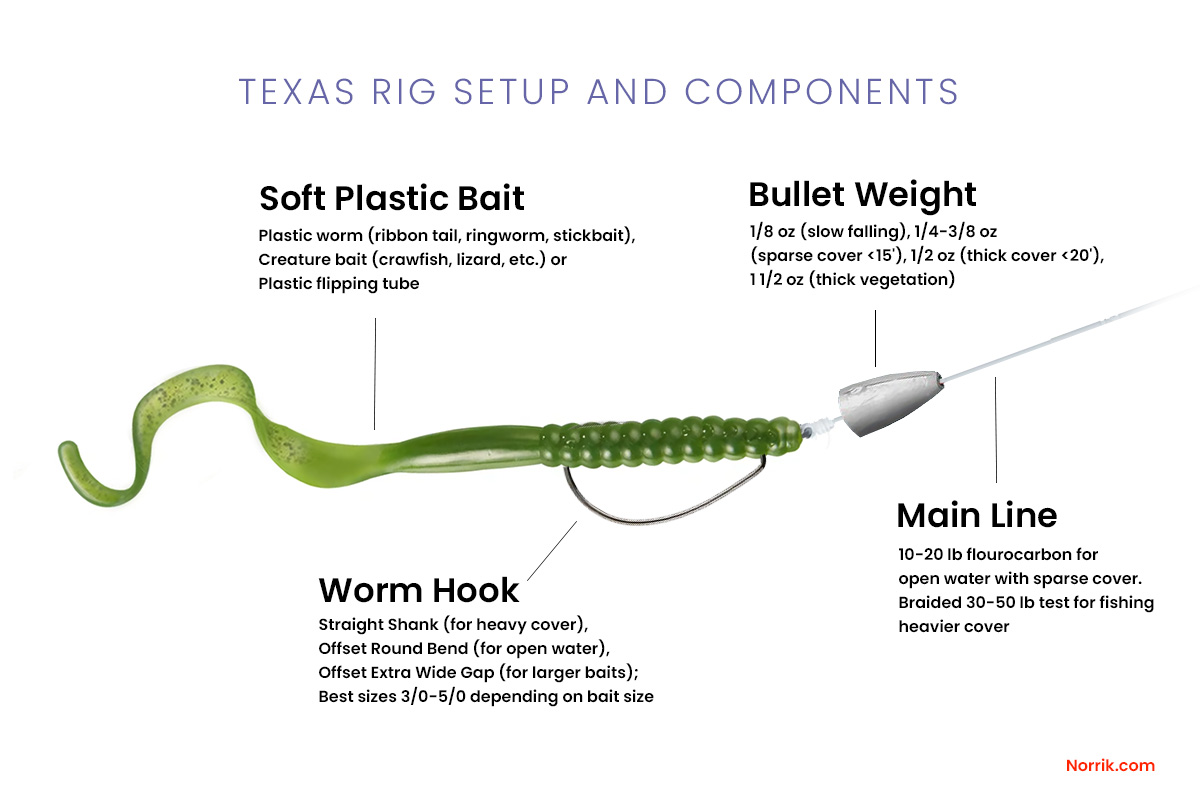
- Bullet Weight: This is typically a conical, lead (or tungsten) weight with a narrow front and a wider back. The bullet shape is crucial for its ability to slide through cover without snagging. The weight’s size can vary significantly, from as light as 1/16th of an ounce for finesse applications to over an ounce for deep water or heavy current. Tungsten weights are becoming increasingly popular due to their smaller size for a given weight, which translates to a more natural presentation and increased sensitivity.
- Offset Worm Hook: The “offset” design is critical. It features a bend or shank that creates a gap between the hook shank and the eye. This offset allows the hook point to be seamlessly embedded into the soft plastic bait, creating the weedless effect. The size of the hook should be matched to the size of the soft plastic lure being used, ensuring proper hook-up ratios. Hooks come in various barb designs, from standard to those with extra-wide gaps, further enhancing their ability to penetrate the fish’s mouth.
- Soft Plastic Lure: This is where the creativity and adaptability of the Texas Rig truly shine. A vast array of soft plastics can be rigged on a Texas Rig, including:
- Worms: The original application, from slender senkos to bulky ribbon-tail worms.
- Creature Baits: These are designed to mimic various aquatic organisms and often have multiple appendages that create subtle movement.
- Crawfish Imitations: Designed to mimic the scuttling motion of crawfish, a primary food source for many bass.
- Grubs and Paddle Tails: These can be rigged on a Texas Rig with the hook point buried, offering a more subtle baitfish imitation.
- Flukes and Jerkbaits: These soft plastic baits can be rigged to provide a darting, erratic action when twitched.
The Rigging Process
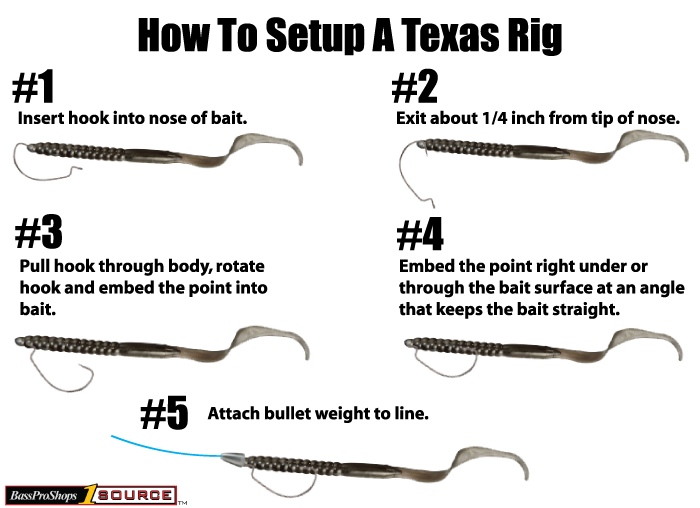
- Thread the Weight: Begin by threading the bullet weight onto your monofilament or fluorocarbon fishing line. The narrow end of the weight should face the lure.
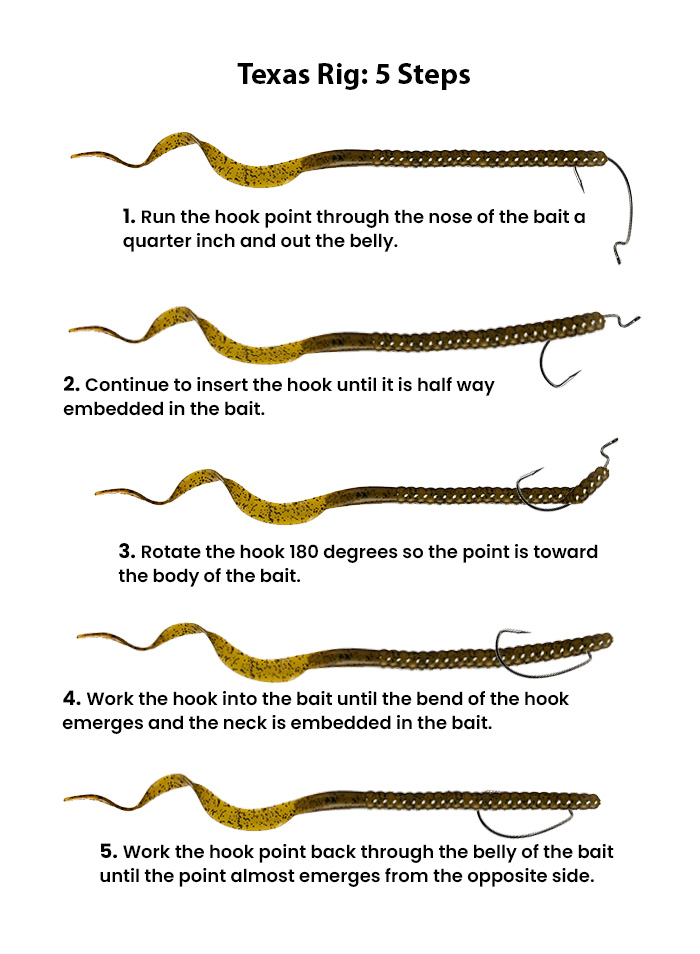
- Insert the Hook: Push the line through the eye of the offset worm hook. Then, insert the point of the hook into the nose of your soft plastic lure, typically about a quarter-inch to half-inch deep, depending on the lure’s density.
- Pass Through the Lure: Carefully bring the hook point back out of the lure’s body. The goal is to find a spot where the hook point can be cleanly buried back into the plastic without creating a hole that will compromise the weedless presentation. The exact location will vary based on the lure’s design.
- Bury the Hook Point: Gently press the hook point back into the soft plastic, so that it is flush with the surface of the bait. This ensures the hook is hidden and will not snag on weeds or other cover. When a fish strikes, the hook will pull free from the plastic, exposing the sharp point for a solid hookset.
- Achieve the “Texas Rig” Look: The finished rig should have the weight in front of the hook, with the hook point perfectly concealed within the bait. The line should exit the nose of the lure near the hook eye, allowing for a natural presentation.
Variations and Enhancements
While the basic Texas Rig is incredibly effective, several variations and enhancements can be employed to adapt it to specific conditions, lure types, and fish behaviors. These modifications often aim to subtly alter the bait’s action, sink rate, or appeal.
Weight Options
- Weight Size: As mentioned, the weight size is critical for controlling sink rate and presentation depth. Lighter weights are ideal for slower presentations and finesse fishing, while heavier weights are better for punching through thick cover, fishing in wind, or targeting deeper water.
- Weight Material: While lead is traditional, tungsten weights offer several advantages. Their density means they are smaller for the same weight, providing a more compact and natural bait profile. They also transmit more vibration and feel to the angler’s hand, enhancing sensitivity.
- Weight Placement: Typically, the weight is placed directly in front of the hook. However, in some applications, anglers might experiment with placing the weight further up the line for a different action or adding a second, smaller weight behind the hook for specific subtle movements.
Adding Rattles and Other Attractors
To increase the attractant power of a Texas Rig, anglers often incorporate rattles. These can be:
- Internal Rattles: Many soft plastic baits are manufactured with small glass or metal beads embedded within them. When the bait is moved, these beads create a subtle rattling sound.
- External Rattles: Small rattling capsules or weights can be inserted into the hollow cavity of certain soft plastics before rigging, or attached to the hook shank itself with a bit of glue or a rubber band. These add audible attraction, which can be particularly effective in stained water or low-light conditions.
Flipping and Pitching
The Texas Rig is the premier bait for flipping and pitching. These techniques involve short, underhand casts designed to accurately place the bait into tight spots near cover.
- Flipping: This technique is generally performed at closer ranges (typically 10-20 feet). The angler uses their reel to manage the line, letting out just enough to make the cast. The bait is then allowed to fall naturally into the desired target zone.
- Pitching: This is similar to flipping but is often used for slightly longer distances (20-40 feet). It involves a more controlled wrist and forearm motion to “pitch” the bait towards the target.
Both flipping and pitching are highly effective with a weedless Texas Rig because they allow precise bait placement without spooking fish with a large, overhand cast. The silent entry into the water is also a significant advantage when targeting wary fish.
Strategic Applications of the Texas Rig
The Texas Rig’s weedless nature makes it indispensable for targeting fish holding in thick cover, a strategy often employed in popular bass fishing destinations like the Everglades or the shallow, vegetated lakes of Florida. Fish use these dense areas for protection, ambush, and a ready food source, making them prime locations for an angler to target.
Fishing in Heavy Cover
The primary advantage of the Texas Rig is its ability to be fished through environments that would foul up most other lures. This includes:
- Submerged Vegetation: Lily pads, hydrilla, milfoil, and other aquatic plants are prime holding areas for bass, pike, and other predatory fish. The Texas Rig can be cast directly into the middle of these weed beds, with the bait sinking slowly through the vegetation to entice a strike.
- Fallen Trees and Brush Piles: These structures offer excellent ambush points. The weedless nature of the rig allows anglers to bounce it off branches and limbs, mimicking a struggling baitfish or crawfish.
- Cypress Knees and Mangrove Roots: In southern waters, these natural features create intricate underwater mazes that fish love to inhabit. The Texas Rig can be expertly maneuvered through these complex environments.
Adapting to Water Clarity and Conditions
The Texas Rig is remarkably adaptable to various water conditions, a testament to its versatility.
- Stained or Murky Water: In conditions where visibility is low, the addition of rattles to the Texas Rig can significantly increase its effectiveness by adding an audible element. The subtle scent of soft plastics can also help fish locate the bait. When fishing stained water, brighter or more contrasting colors are often preferred.
- Clear Water: In exceptionally clear water, anglers may opt for lighter weights and more natural colors to avoid spooking fish. A slower, more methodical retrieve can also be more effective, allowing the bait to appear more lifelike. Finesse worms rigged on a light Texas Rig are excellent for clear water situations.
- Windy Conditions: A heavier Texas Rig is beneficial on windy days as it helps cast the bait accurately and maintain control of the lure’s presentation against the wind. The added weight also allows the bait to sink more quickly to the desired depth.
Targeting Specific Species
While most famously associated with largemouth and smallmouth bass, the Texas Rig is effective for a much broader range of predatory fish.
- Bass (Largemouth, Smallmouth, Spotted): The quintessential target for the Texas Rig.
- Pike and Musky: Heavier duty hooks and sturdier soft plastics, often with more aggressive action, are used for these toothy predators.
- Walleye: Often caught on a lighter Texas Rig with smaller, more subtle soft plastics, especially when targeting them near bottom structure.
- Catfish: Certain types of soft plastics, particularly those that mimic crawfish or worms, can be effective for channel catfish and flatheads when rigged on a Texas Rig and presented near the bottom.
The Importance of the Texas Rig in Angling Culture
The Texas Rig is more than just a fishing knot or a rigging method; it has become a fundamental part of angling culture, particularly within the bass fishing community. Its widespread adoption is a testament to its effectiveness, reliability, and adaptability. Many professional anglers and fishing guides, from the famous waters of Lake Fork in Texas to the renowned fisheries of the Ozarks, consider it an essential tool in their arsenal.
Historical Significance and Evolution
The Texas Rig has a rich history, evolving over decades. While its exact origins are debated, its popularity surged in the mid to late 20th century as soft plastic baits gained prominence. Anglers sought ways to effectively fish these new lures through cover, leading to the refinement of this weedless presentation. Innovations in soft plastic lure design, hook manufacturing, and weight technology have continually improved the rig’s performance. For instance, the introduction of fluorocarbon line, with its superior abrasion resistance and sensitivity, has further enhanced the Texas Rig’s capabilities, especially in clear water or when dealing with tough-mouthed fish.
A Gateway to Advanced Techniques
For many anglers, mastering the Texas Rig serves as a crucial stepping stone to understanding more complex fishing strategies. Its simplicity allows newcomers to grasp the fundamentals of bait presentation, hooksets, and the importance of weedless rigging. Once proficient, anglers can then explore variations like the Carolina Rig, the Shaky Head, or the Neko Rig, all of which build upon the core principles established by the Texas Rig. The experience gained from feeling bites through the line, setting the hook effectively, and adapting to different lure actions while using a Texas Rig translates directly to success with these other techniques.
The Allure of Versatility
The enduring appeal of the Texas Rig lies in its sheer versatility. It can be used with a wide range of rod and reel combinations, from medium-action spinning setups for lighter finesse applications to heavy-action baitcasting outfits for punching through thick vegetation. The choice of soft plastic lure is virtually limitless, allowing anglers to match the hatch or present a completely artificial, yet effective, temptation. Whether fishing a small pond in Oklahoma or a vast reservoir like Lake Powell, the Texas Rig remains a reliable and effective choice for anglers of all skill levels. Its adaptability to different species, environments, and fishing conditions solidifies its status as a timeless classic in the angler’s tackle box.
LifeOutOfTheBox is a participant in the Amazon Services LLC Associates Program, an affiliate advertising program designed to provide a means for sites to earn advertising fees by advertising and linking to Amazon.com. Amazon, the Amazon logo, AmazonSupply, and the AmazonSupply logo are trademarks of Amazon.com, Inc. or its affiliates. As an Amazon Associate we earn affiliate commissions from qualifying purchases.