
The Alabama State Capitol in Montgomery, Alabama, stands not merely as the seat of state government but as a profound testament to the state’s rich and complex history. It is a beacon of democracy, a symbol of pivotal moments, and an architectural marvel that draws visitors eager to connect with the past and understand the present. More than just a building, it is a living monument, a site of pilgrimage for those interested in the civil rights movement, a hub for civic engagement, and a cherished landmark for residents. Its imposing presence on Goat Hill, overlooking the city, commands attention and invites exploration.
A Monument to History and Governance
The Alabama State Capitol has been the backdrop for some of the most significant events in American history. Its origins trace back to the mid-19th century, a period of burgeoning statehood and national division. The current structure, while undergoing numerous renovations and expansions, retains the grandeur of its original design, reflecting the architectural styles prevalent during its construction.
Genesis of a Statehouse
The need for a permanent capitol building for Alabama became apparent as the state grew. After a brief period with a temporary capitol, construction began on the current edifice in 1840. Designed by architects William Nichols and Stephen Button, the original building was completed in 1851. It was a stately example of Greek Revival architecture, intended to convey stability and permanence. The building’s prominence was quickly established as it housed the legislative chambers, executive offices, and the Supreme Court.
Pivotal Historical Moments
The Alabama State Capitol is inextricably linked to the nation’s most turbulent period: the Civil War. It was here, on February 4, 1861, that delegates from seven Southern states convened to form the Confederate States of America, electing Jefferson Davis as its president. The steps of the capitol witnessed the pronouncement of secession and the raising of the Confederate flag, marking Montgomery as the Confederacy’s first capital.
Later, the capitol also played a crucial role in the Civil Rights Movement. In 1965, the historic Selma to Montgomery marches culminated at the capitol’s steps. Thousands of marchers, led by figures like Dr. Martin Luther King Jr. and John Lewis, gathered to demand voting rights. The powerful speeches delivered on these steps, including Dr. King’s “Our God Is Marching On” address, resonated globally, underscoring the capitol’s enduring significance as a site of struggle for equality and justice. These events transformed the building from a symbol of a divided past to a landmark of progress and human rights.
Architectural Evolution
Over the decades, the Alabama State Capitol has undergone several significant renovations and additions, reflecting changing needs and evolving architectural sensibilities. The most notable expansion occurred in the 1960s, which saw the addition of a modern, five-story legislative wing. This expansion aimed to accommodate the growing demands of state governance while attempting to harmonize with the historic structure. While this modernization provided much-needed space and facilities, it also sparked debates about preserving the original aesthetic.
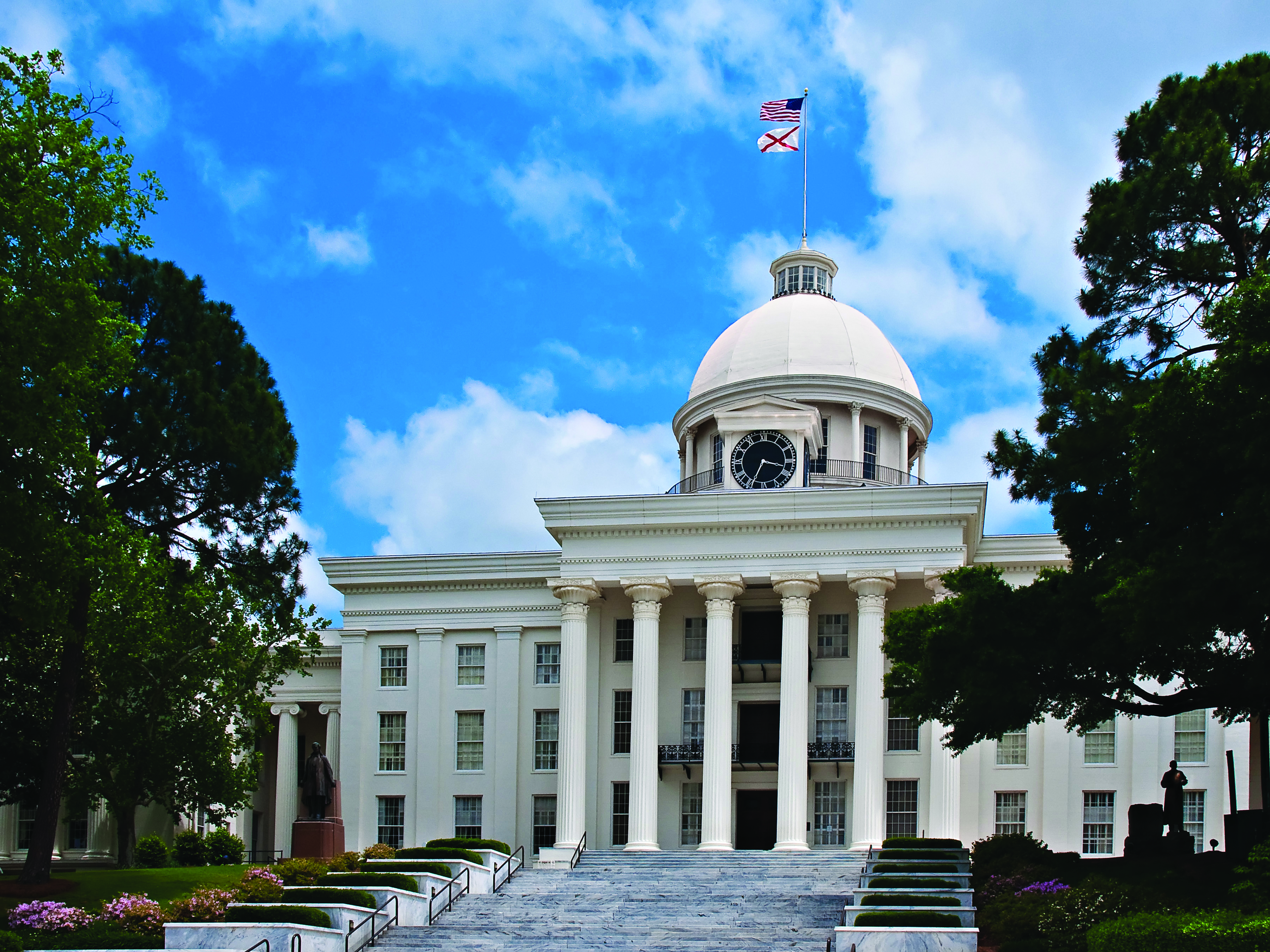
Despite these additions, the building’s core elements, particularly the original 1850s dome and the iconic legislative chambers, have been meticulously preserved. The dome, a majestic copper structure, is a defining feature of the capitol’s skyline and a symbol of its enduring presence. The interior spaces, including the Rotunda and the legislative halls, showcase intricate detailing, stained-glass windows, and historical portraits, all contributing to the building’s stately and historic ambiance. These preservation efforts ensure that the building continues to tell its story for generations to come.
Exploring the Alabama State Capitol
A visit to the Alabama State Capitol offers a compelling journey through Alabama’s history and its role in the broader American narrative. The building itself is a landmark, but its true value lies in the stories it holds and the educational experiences it provides.
The Exterior and Grounds
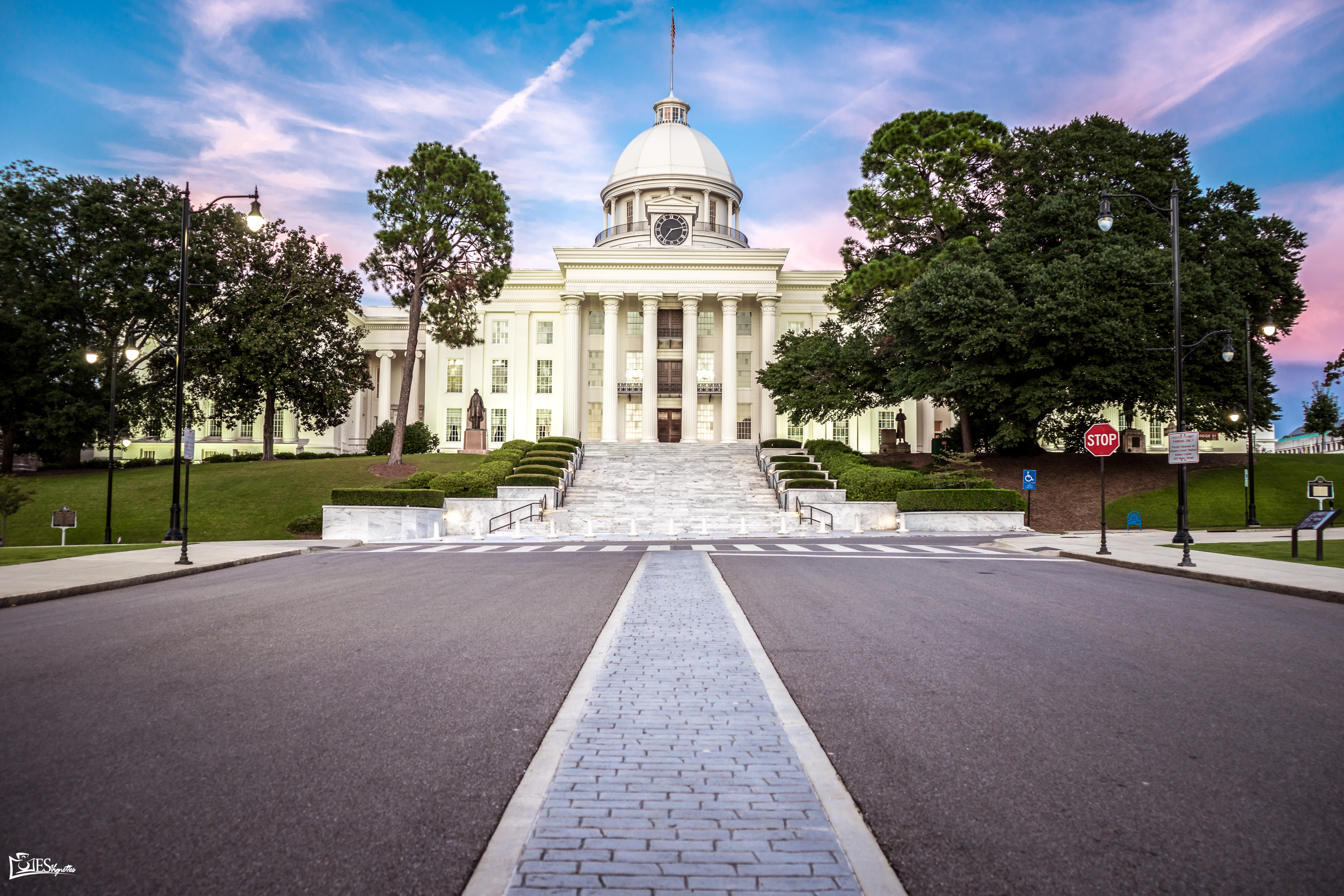
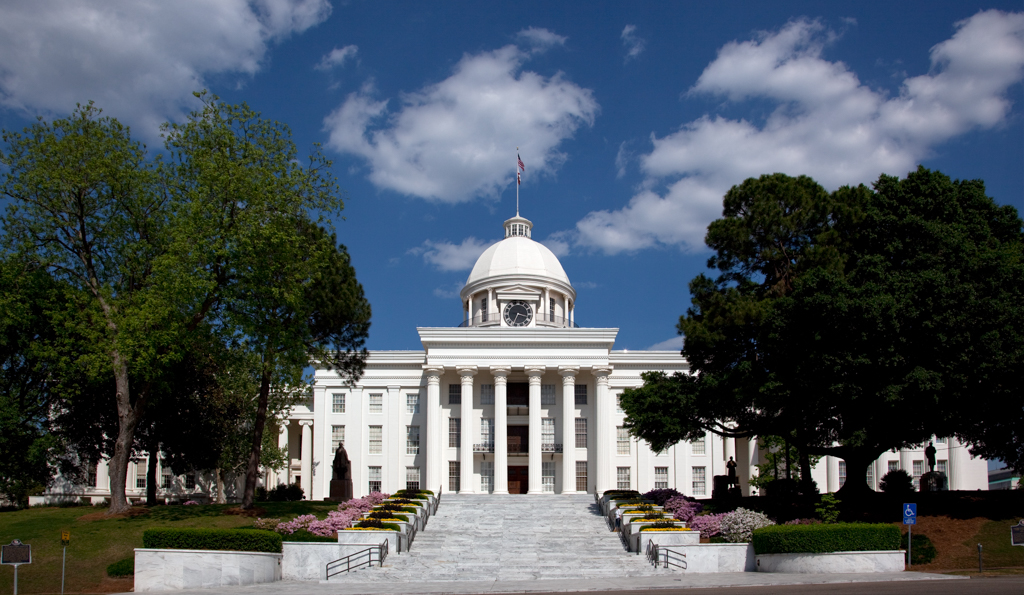
The capitol building’s imposing facade, crafted from sandstone, commands a prominent position on an elevated site, historically known as Goat Hill. The Greek Revival elements of the original structure are still evident, characterized by classical columns and pediments. The majestic copper dome crowns the building, visible from many points in Montgomery. The surrounding grounds are well-maintained, offering a pleasant space for reflection and appreciation of the building’s grandeur. Statues and monuments dot the landscape, commemorating key figures and events in Alabama’s past. A notable feature is the monument honoring the Confederate States of America, a reminder of its historical significance in that context, standing alongside other memorials reflecting the state’s diverse historical tapestry.
The Rotunda and Interior Spaces
Upon entering the Alabama State Capitol, visitors are often struck by the grandeur of the Rotunda. This central space serves as a focal point, featuring impressive marble columns, ornate ceilings, and historically significant artwork. The Rotunda often displays rotating exhibits that delve into various aspects of Alabama’s history, culture, and government.
The legislative chambers, where the Alabama State Senate and the Alabama House of Representatives convene, are preserved to reflect their historical appearance. Visitors can often view these chambers, imagining the debates and decisions that have shaped the state. Throughout the building, historical markers and displays provide context for the exhibits and architectural elements, enriching the visitor’s understanding. The preservation of original furnishings, artwork, and architectural details ensures an authentic historical experience.
Experiencing the Capitol Today
The Alabama State Capitol is more than a static historical site; it is a functioning government building. Visitors can often witness legislative sessions, observe committee meetings, or participate in guided tours that provide in-depth historical and civic context. The building is accessible to the public, and guided tours are highly recommended for a comprehensive understanding of its significance.
The capitol complex also includes the Alabama Archives and History Building, which houses extensive collections related to the state’s past. This adjacent facility further enhances the educational opportunities for those interested in researching Alabama’s history. The presence of these active government and historical institutions makes the Alabama State Capitol a dynamic and engaging destination.
The Capitol’s Role in Civic Engagement and Education
Beyond its historical weight, the Alabama State Capitol serves as a vital center for civic engagement and education. It is a place where citizens can connect with their government and learn about the processes that shape their lives.
A Hub for Democracy
As the seat of Alabama’s legislative and executive branches, the capitol is where laws are debated, created, and enacted. The presence of elected officials, their staff, and the constant flow of public business underscore its role as a living embodiment of democracy. Citizens can visit their representatives, attend public hearings, and observe legislative proceedings, fostering a more informed and engaged populace. The building’s design and function are inherently tied to the principles of representative government.
Educational Opportunities
The Alabama State Capitol is a valuable educational resource for students of all ages. School groups frequently visit, participating in tours tailored to their curriculum, learning about American history, state government, and the Civil Rights Movement. The historical narratives embedded within the capitol’s walls provide tangible connections to abstract concepts taught in classrooms.
The capitol’s staff and affiliated historical organizations are dedicated to providing enriching educational experiences. Lectures, special exhibits, and public programming often take place within the capitol complex, offering opportunities for deeper learning and community discussion. These initiatives ensure that the capitol remains a relevant and dynamic institution, continually engaging new generations with its profound historical and civic significance. The lessons learned within its walls extend far beyond mere historical facts, instilling an understanding of civic responsibility and the ongoing pursuit of justice and equality.
Visiting the Alabama State Capitol
Planning a visit to the Alabama State Capitol in Montgomery offers a deeply rewarding historical and educational experience. Its significance as a national landmark and a testament to pivotal moments in American history makes it a must-see destination.
Location and Accessibility
The Alabama State Capitol is located at 600 Dexter Avenue, Montgomery, AL 36130. It is situated in the heart of downtown Montgomery, making it easily accessible for visitors. The capitol building and its grounds are generally open to the public during standard business hours, though specific hours may vary, especially on weekends and holidays. It is advisable to check the official Alabama State Capitol website or contact them directly for the most up-to-date information regarding visiting hours, tour availability, and any special events or closures. Ample parking is available in the vicinity, and the building is accessible for individuals with disabilities.
What to See and Do
A visit typically includes exploring the historic legislative chambers, the grand Rotunda adorned with artwork and historical displays, and the exterior grounds featuring various monuments and memorials. Guided tours are highly recommended, as they provide invaluable historical context, insights into the architecture, and detailed accounts of the key events that transpired within and around the capitol. These tours often highlight the building’s role in the Civil War and its profound significance during the Civil Rights Movement. Photography is usually permitted in most public areas, allowing visitors to capture the beauty and historical essence of the site. Beyond the capitol itself, the surrounding downtown area offers other historical attractions, including the Dexter Avenue King Memorial Baptist Church and the Rosa Parks Museum, which are integral to understanding the broader historical narrative of Montgomery.
Planning Your Visit
To make the most of your visit, allocate sufficient time to explore both the interior and exterior of the Alabama State Capitol. Consider visiting in conjunction with other historical sites in Montgomery to create a comprehensive itinerary focused on Alabama’s rich history. Comfortable walking shoes are advisable, as you will be doing a fair amount of exploring. Engaging with the information presented, whether through guided tours or self-guided exploration, is key to appreciating the depth of history contained within this iconic landmark. The Alabama State Capitol is more than just a building; it is a gateway to understanding the pivotal moments that have shaped the United States and the enduring spirit of its people.
LifeOutOfTheBox is a participant in the Amazon Services LLC Associates Program, an affiliate advertising program designed to provide a means for sites to earn advertising fees by advertising and linking to Amazon.com. Amazon, the Amazon logo, AmazonSupply, and the AmazonSupply logo are trademarks of Amazon.com, Inc. or its affiliates. As an Amazon Associate we earn affiliate commissions from qualifying purchases.