
The concept of hospitality is rooted in the idea of welcoming all guests with equal warmth and efficiency. However, for a significant portion of the traveling population, a standard hotel room presents a series of physical and sensory hurdles that can transform a relaxing vacation or a productive business trip into a logistical challenge. This is where the accessible room comes into play. An accessible room is a specially designed guest accommodation intended to meet the needs of individuals with disabilities, including those with mobility, hearing, or visual impairments. While these rooms are often associated with wheelchair users, their design encompasses a much broader spectrum of “universal design” principles that benefit a wide variety of travelers.
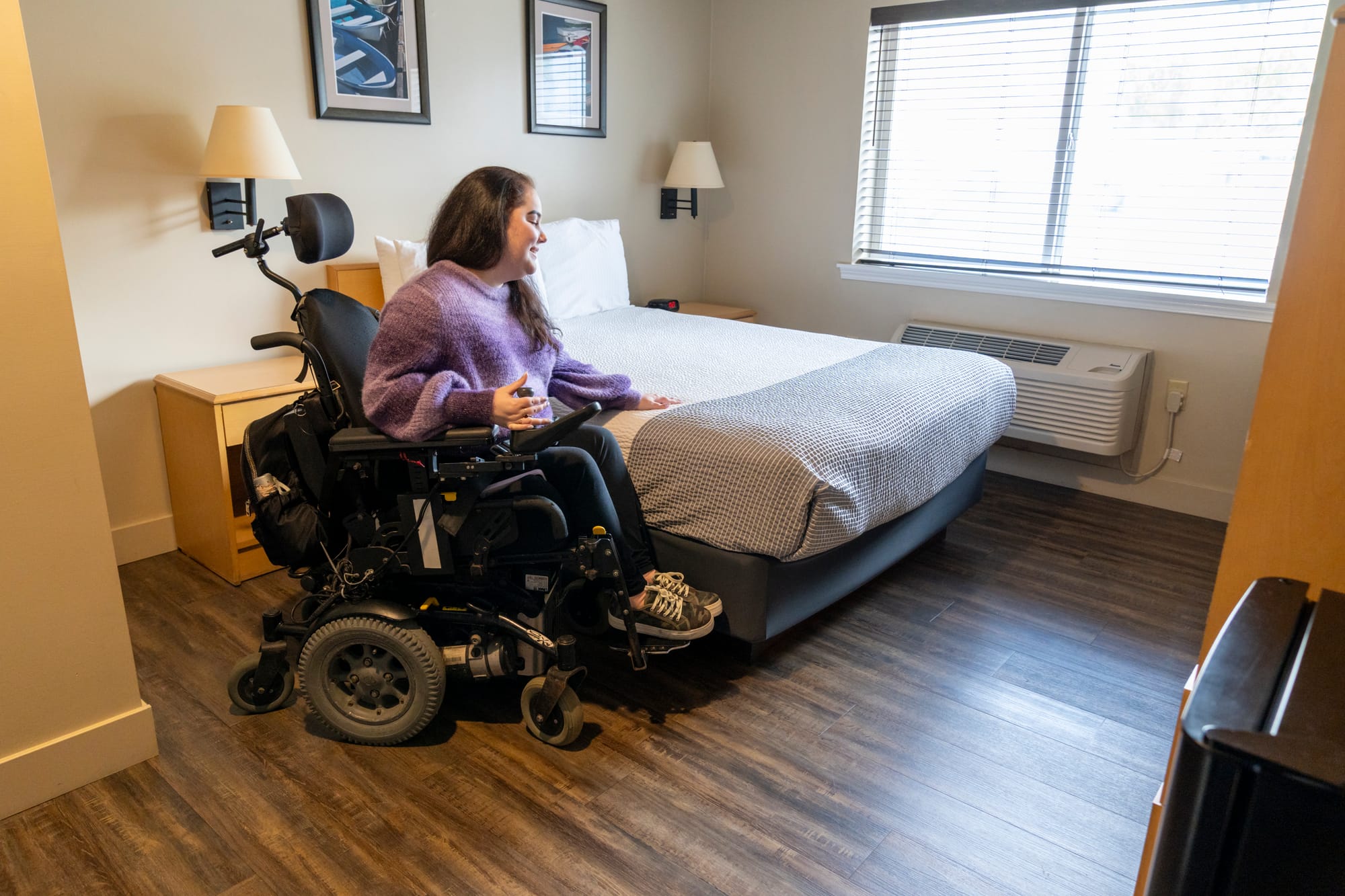
In the United States, the design and availability of these rooms are strictly regulated by the Americans with Disabilities Act (ADA), but the philosophy of accessibility is a global movement. From the historic corridors of London to the modern skyscrapers of Tokyo, hotels are increasingly recognizing that inclusivity is not just a legal requirement but a fundamental pillar of modern service.
Defining the Standards of Hotel Accessibility
The primary goal of an accessible room is to provide a guest with a disability the same level of comfort, independence, and safety as any other guest. This involves removing barriers and installing assistive features that facilitate movement and communication.
The Legal Framework and Global Compliance
In many jurisdictions, the specifications for accessible rooms are codified into law. For instance, the ADA in the United States provides granular details on everything from the height of the light switches to the clearance required under the sink. Similarly, in the United Kingdom, the Equality Act 2010 mandates that service providers make “reasonable adjustments” for disabled guests. In Canada, accessibility standards vary by province but generally follow the principles set out in the Accessible Canada Act.
For global brands like Marriott International or Hilton, maintaining consistency across international borders is a significant undertaking. While a Hilton property in Paris must comply with France regulations, the brand often applies a higher internal standard to ensure that a traveler from New York City knows exactly what to expect when they book an accessible suite abroad.
Universal Design Principles in Hospitality
Beyond strict legal compliance, many modern hotels, such as those within the Hyatt portfolio, are adopting “Universal Design.” This philosophy focuses on creating environments that are inherently accessible to all people, regardless of age or ability, without the need for adaptation. This might include features like wider doorways, lever-style door handles instead of knobs, and bright, high-contrast signage. These elements don’t just help guests in wheelchairs; they also assist elderly travelers, parents with strollers, or guests carrying heavy luggage.
Essential Features of an Accessible Hotel Room
To the untrained eye, an accessible room might look very similar to a standard room, but a closer inspection reveals a suite of modifications designed for functionality. These features are typically categorized into mobility enhancements and communication aids.
Entryways and Interior Maneuverability
The first requirement of an accessible room is the ability to get into it. Doorways must provide a minimum clear width—typically 32 inches—to allow a wheelchair to pass through comfortably. The door hardware itself is usually a lever handle, which is easier to operate for individuals with limited hand dexterity.
Once inside, the floor plan must allow for a “turning radius.” This is a clear circular space (usually 60 inches in diameter) that allows a wheelchair user to make a full 180-degree turn. You will notice that furniture in these rooms, such as the desk or the bed, is positioned to maintain wide pathways. For example, at The Ritz-Carlton properties, accessible rooms are often slightly larger than standard rooms to ensure that this maneuverability does not come at the expense of luxury or comfort.
Bathroom Modifications and Safety Features
The bathroom is often the most heavily modified area of an accessible room. It is designed to be a “wet room” or to feature a “roll-in shower.” A roll-in shower has no curb or lip, allowing a wheelchair to glide directly into the stall. These showers are equipped with fold-down benches and handheld showerheads that can be reached from a seated position.
Grab bars are a non-negotiable feature, strategically placed near the toilet and inside the shower to provide stability. The toilet itself is often “comfort height,” which is slightly higher than standard toilets to make transferring from a wheelchair easier. Sinks are mounted to allow for knee clearance underneath, and mirrors are tilted or lowered so they can be used from a seated position. These details are meticulously planned in resorts like those found in Las Vegas, where high-capacity hotels must cater to a diverse demographic of visitors.
Furniture Height and Technology Integration
Accessibility extends to every piece of furniture. The bed height is a critical factor; it must be low enough to allow for a “transfer” from a wheelchair but high enough to be comfortable. Many hotels, including InterContinental Hotels Group properties, have replaced traditional high-profile mattresses with options that meet these specific height requirements.
Furthermore, storage solutions are adjusted. Closets feature lowered rods and shelving that can be reached without standing. Modern technology has also introduced “Smart Room” features. In tech-forward cities like Seoul or Singapore, accessible rooms may include voice-controlled lighting, temperature, and drapery, allowing guests with limited mobility to control their environment with ease.
Variations in Accessible Accommodations
Not all disabilities are visible, and not all accessible rooms are the same. Hotels often categorize their rooms based on the specific type of assistance they provide.
Mobility-Accessible Rooms
These are the most common type and focus on physical space. They include the aforementioned roll-in showers, wider doorways, and lowered fixtures. In larger resorts, such as the Walt Disney World Resort in Florida, mobility-accessible rooms are categorized further by whether they have a roll-in shower or a tub with grab bars, as some guests prefer the latter for balance while standing.
Hearing and Visual Assistance Features
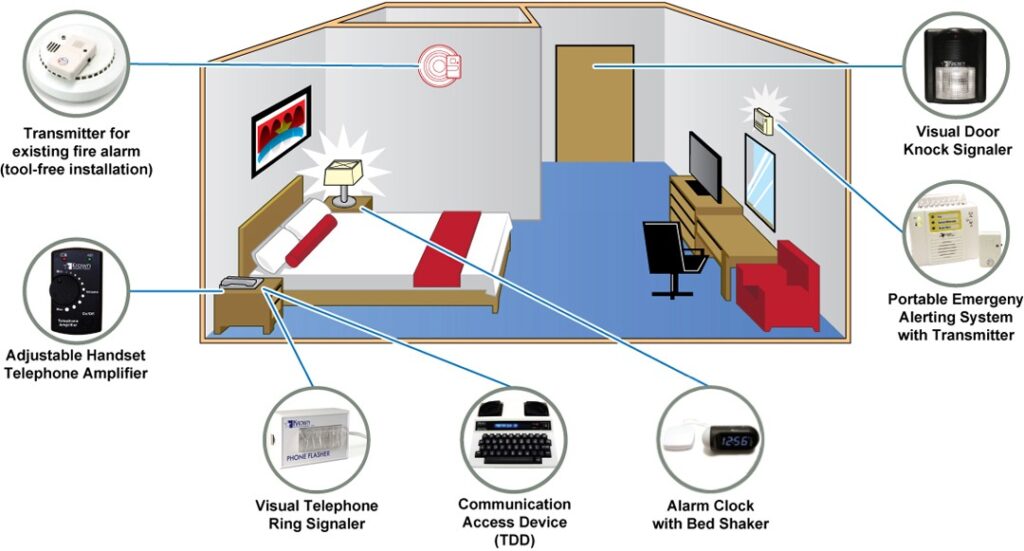
Guests with sensory impairments require a different set of tools. Hearing-accessible rooms are equipped with visual notification devices. For example, when someone knocks on the door or the telephone rings, a strobe light flashes. These rooms also feature visual fire alarms and “vibrating” alarm clocks that can be placed under a pillow.
For guests with visual impairments, rooms may include Braille signage on room numbers, thermostats, and menus. High-contrast decor is also used to help distinguish between walls, floors, and furniture. In Australia, many boutique hotels have led the way in integrating tactile indicators into their room design to assist navigation.
Suite-Specific Accessibility in Luxury Resorts
Luxury shouldn’t be sacrificed for accessibility. Brands like Four Seasons have mastered the art of “invisible accessibility,” where the room feels like a high-end sanctuary while subtly incorporating every necessary feature. In an accessible suite at a Four Seasons property in Dubai, the marble-clad bathroom might look like a standard spa-like retreat, but the grab bars are designer-integrated and the shower is perfectly level with the floor.
Booking and Navigating the Guest Experience
Securing an accessible room requires more than just checking a box on a website. Because these rooms are limited in number, the booking process involves a level of communication that is vital for a successful stay.
Communicating Specific Needs to Hotel Staff
While most booking engines for major chains like Accor allow guests to filter for accessible rooms, it is often recommended to call the property directly. This ensures that the specific type of room—such as a “Hearing Accessible King” or a “Mobility Accessible Double”—is guaranteed. In Germany and other parts of Europe, where historic buildings are often converted into hotels, speaking with a manager can clarify if the “accessible” room is truly reachable via an elevator or if there are small steps that might not be mentioned online.
Hotel staff, particularly the concierge and front desk, play a major role in the experience. Leading hospitality schools teach that “service accessibility” is just as important as “physical accessibility.” This means staff should be trained in how to assist guests without being intrusive and how to describe the room’s features accurately.
On-Site Amenities Beyond the Room
Accessibility doesn’t end at the guest room door. A truly accessible hotel, such as the MGM Grand, ensures that its restaurants, pools, and fitness centers are equally reachable. Pool lifts are a common sight in modern California resorts, allowing guests to enjoy the water safely. Likewise, lowered sections at the check-in desk and accessible seating in theaters or dining rooms are essential for a holistic experience.

The Future of Inclusive Travel and Hospitality
As the travel industry evolves, the definition of an accessible room is expanding. We are moving toward a future where “accessibility” is no longer a niche category but a standard expectation.
The integration of Artificial Intelligence (AI) is already showing promise. Imagine a room that automatically adjusts its layout or lighting based on a guest’s pre-saved profile. In countries like Japan, which is at the forefront of robotics, we may soon see robotic assistants helping guests with mobility or translating sign language in real-time.
Furthermore, the rise of “Slow Travel” and longer stays has led to the development of accessible apartments and villas. Brands like Airbnb have introduced “Adapted” categories to help travelers find homes with verified accessibility features. However, the traditional hotel industry remains the gold standard for reliability in this area.
Ultimately, an accessible room is a testament to the idea that travel is a universal right. Whether it is a luxury penthouse in Hong Kong or a budget-friendly stay in Mexico, the presence of these rooms ensures that every traveler can explore the world with dignity, safety, and comfort. By understanding what these rooms offer, travelers and hotel operators alike can work toward a more inclusive and welcoming world for everyone.
LifeOutOfTheBox is a participant in the Amazon Services LLC Associates Program, an affiliate advertising program designed to provide a means for sites to earn advertising fees by advertising and linking to Amazon.com. Amazon, the Amazon logo, AmazonSupply, and the AmazonSupply logo are trademarks of Amazon.com, Inc. or its affiliates. As an Amazon Associate we earn affiliate commissions from qualifying purchases.