
New York, often dubbed the Empire State, is a beacon for travelers worldwide, drawing millions with its iconic cityscape, breathtaking natural beauty, and unparalleled cultural experiences. From the bustling streets of Manhattan to the serene landscapes of the Adirondacks, this state offers a diverse tapestry of adventures. For anyone planning a visit, whether it’s for a quick weekend getaway, an extended business stay, or a deep dive into local culture, understanding the local communication landscape is as crucial as knowing how to navigate the subway or find the best pizza. And at the heart of this communication network lies a seemingly simple, yet vital, piece of information: the area code.
More than just a string of numbers, New York’s area codes are geographic identifiers that connect you to specific regions, facilitating everything from booking your hotel room in Times Square to reserving a table at a cozy restaurant in the Finger Lakes. For travelers, tourists, and those seeking accommodation, knowing these codes is not just about making calls; it’s about seamlessly integrating into the local fabric, accessing services, and ensuring a smooth, stress-free experience. This comprehensive guide will not only list the primary area codes for New York but also delve into their significance for modern travel, offering practical tips and insights to enhance your journey through this magnificent state.
Navigating the Empire State: Understanding New York’s Area Codes for Travelers
New York is a vast state, divided into numerous regions, each with its unique charm and, consequently, its own set of area codes. For a traveler, these codes are essentially the digital addresses of different geographical areas, helping you pinpoint services and contacts. While the sheer number of codes might seem daunting, especially with the introduction of new overlay codes to accommodate growing demand, understanding the main ones relevant to popular travel destinations will significantly ease your communication needs.
The Heart of the City: New York City Area Codes
New York City is, without a doubt, the most visited part of the state, a global hub for tourism, business, and lifestyle. Its communication network is complex, reflecting its immense population density and constant influx of new residents and businesses.
Historically, 212 was the original and sole area code for Manhattan. It retains a certain cachet, often associated with prestige and classic New York City culture. Today, while still prominent, it’s heavily overlaid by newer codes due to exhaustion of available numbers.
The primary overlay codes for Manhattan are:
- 646: Introduced as an overlay for 212, this code is now common throughout Manhattan and is frequently encountered when contacting businesses, hotels, and residents.
- 917: This is a unique mobile overlay code, meaning it was originally designated for cell phones across all five boroughs of New York City. However, it’s now also used for landlines and can be found interchangeably with other borough-specific codes.
- 332: The newest overlay for Manhattan, introduced in 2017, further expands the numbering capacity.
For travelers staying in Manhattan – perhaps at a luxury hotel near the Empire State Building or a boutique apartment in Greenwich Village – you’ll most commonly encounter 212, 646, 917, and 332.
Beyond Manhattan: Borough-Specific and Regional Codes
While Manhattan grabs much of the spotlight, New York City’s other boroughs and the surrounding metropolitan areas offer distinct attractions and experiences.
The outer boroughs of Brooklyn, Queens, The Bronx, and Staten Island share a primary set of area codes:
- 718: This was the original area code for these four boroughs, established to relieve the pressure on 212. It’s still widely prevalent.
- 347: Introduced as an overlay for 718, 347 numbers are very common across Brooklyn, Queens, The Bronx, and Staten Island.
- 929: Another overlay for the 718/347 region, 929 further increases the availability of phone numbers in these densely populated areas.
- 917: As mentioned, 917 also serves as an overlay for mobile phones and landlines across all five boroughs, so you might find businesses or individuals in the outer boroughs with a 917 number.
If your travel plans include exploring the vibrant neighborhoods of Brooklyn, catching a game at Yankee Stadium in The Bronx, or relaxing on the beaches of Staten Island, these are the codes you’ll likely encounter.
Moving beyond the immediate confines of New York City, but still within its greater metropolitan influence, we have Long Island and the Hudson Valley region.
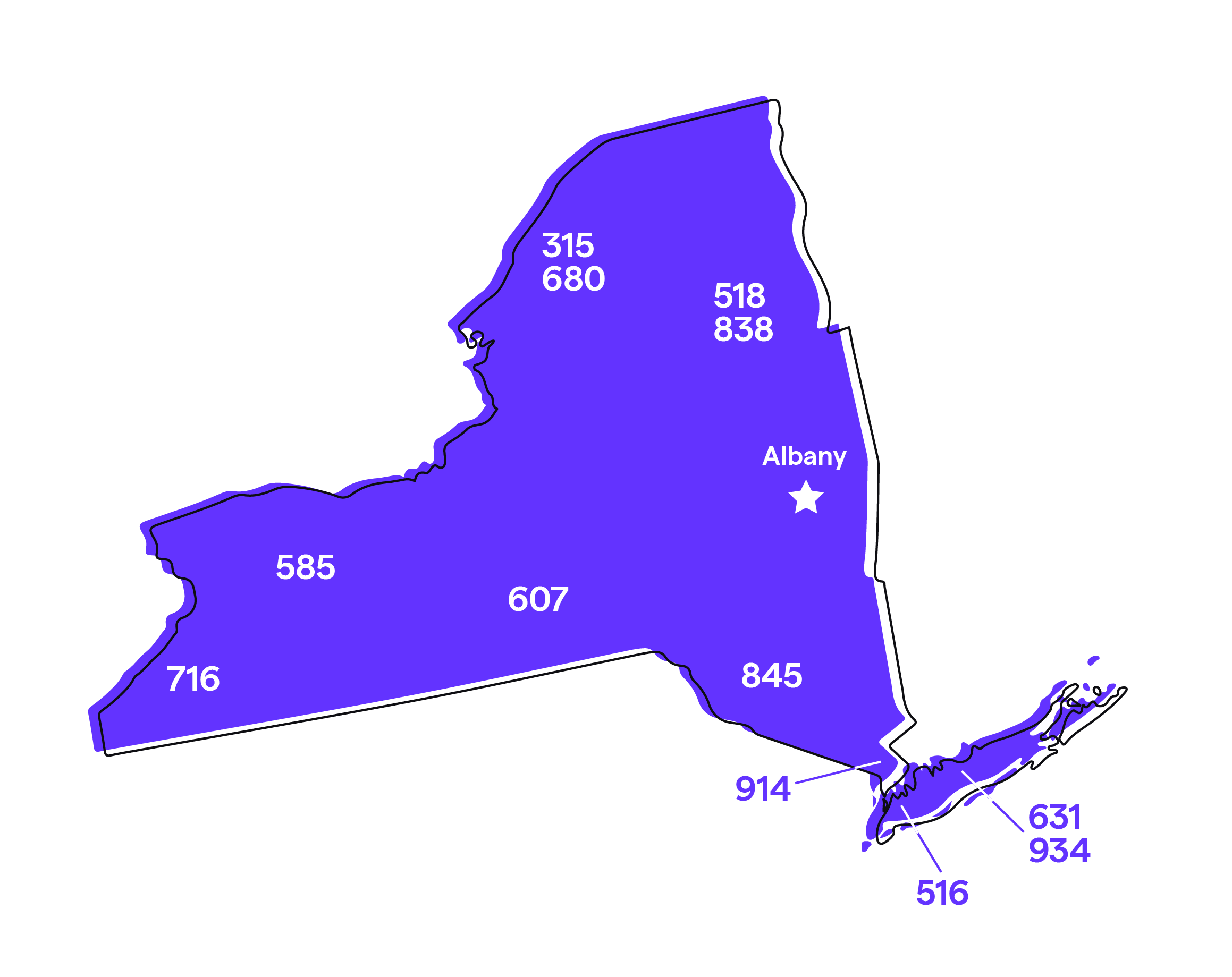
- 516: This code covers Nassau County on Long Island, home to historical estates and beautiful coastlines.
- 631: This code serves Suffolk County, which encompasses the popular Hamptons and Montauk areas, perfect for a luxury getaway or a quiet retreat.
- 934: An overlay for both 516 and 631, ensuring continued number availability across Long Island.
- 914: Covers Westchester County and parts of Putnam and Dutchess Counties, a popular region for scenic drives, historic sites, and charming towns, offering diverse accommodation options from country inns to family resorts.
- 845: Encompasses much of the Hudson Valley region, including Rockland, Orange, and parts of Dutchess and Ulster Counties, known for its wineries, culinary scene, and picturesque landscapes.

Exploring Upstate New York: Area Codes for Wider Adventures
Venturing further north into Upstate New York reveals a different pace of life and a distinct set of area codes. These regions are renowned for their natural beauty, outdoor activities, and historic cities.
- 518: Covers the Capital Region, including Albany, Saratoga Springs, and much of the vast Adirondacks. If you’re planning a trip to the state capital or an adventurous hiking expedition, this is your key.
- 838: An overlay code introduced for the 518 region to meet growing demand.
- 315: Serves Central New York, including Syracuse and Utica, extending towards the Thousand Islands and parts of the Adirondacks.
- 680: The newest overlay for the 315 area code.
- 585: Dedicated to the Rochester metropolitan area and the surrounding Finger Lakes region, famous for its wineries and stunning natural beauty.
- 329: An overlay for the 585 area code.
- 716: Covers Western New York, including Buffalo and the awe-inspiring Niagara Falls area. A must-know for anyone exploring this dynamic region.
- 624: The overlay for the 716 area code.
- 607: Serves the Southern Tier of New York, including cities like Binghamton and Ithaca, home to Cornell University and beautiful gorges.
Understanding this geographical distribution of area codes helps travelers not just in dialing, but also in mentally mapping their journey across the diverse landscapes of New York.
Why Area Codes Matter for Your New York Journey
For the modern traveler, area codes are far more than archaic remnants of a landline era. They are fundamental tools for efficient communication, essential for everything from confirming your hotel booking to navigating local experiences. Integrating this knowledge into your travel planning can save time, prevent frustration, and ensure you make the most of your visit to New York.
Seamless Hotel and Accommodation Bookings
When planning your stay in New York, whether it’s a suite in a Manhattan skyscraper, a cozy apartment in Brooklyn, or a charming resort upstate, area codes play a critical role.
- Booking and Confirmation: When you book directly with a hotel or accommodation provider, their contact number will begin with the local area code. Having this information helps you verify the location, especially if the hotel has multiple branches or if you’re using a comparison site. For instance, a hotel with a 212 number is firmly in Manhattan, while a 716 number points to Buffalo or Niagara Falls.
- Pre-arrival Communication: You might need to call your accommodation to arrange late check-in, inquire about specific amenities, or confirm transportation from the airport. Knowing the correct dialing procedure, including the area code, ensures your call connects without a hitch. This is particularly relevant for villas or long-term stays where direct communication with hosts is often necessary.
- Emergency Contact: In unforeseen circumstances, you might need to quickly reach your hotel or local services. Familiarity with the area code facilitates rapid communication.
Connecting with Local Attractions and Services
New York’s appeal lies in its myriad attractions, dining experiences, and diverse cultural offerings. Area codes are your gateway to accessing these local services.
- Restaurant Reservations: Planning a culinary adventure? Whether it’s a Michelin-starred restaurant in NYC or a farm-to-table eatery in the Hudson Valley, you’ll need to dial their local number, which starts with the appropriate area code.
- Tour and Activity Bookings: From Broadway show tickets to guided tours of the Statue of Liberty or wine tastings in the Finger Lakes, many local businesses rely on phone reservations.
- Transportation and Local Businesses: Taxis, ride-sharing services, car rentals, laundromats, pharmacies – any local service you might need during your trip will have a local number. Knowing the area code ensures you connect to the correct geographical branch or service provider. This is especially true for budget travel where you might rely more on local services.
- Emergency and Information Services: While 911 is universal, local non-emergency numbers (e.g., local police precinct, hospitals) will carry the area code of the region they serve.

Emergency Preparedness and Business Stays
For both casual tourists and those on essential business trips, a grasp of area codes contributes to overall safety and efficiency.
- Emergency Contact: Though 911 is always the primary emergency number in the US, knowing the local area code can be useful for contacting non-emergency local services or hospitals directly. In the rare event of a cellular network issue, having a landline number for local services might be crucial.
- Business Communication: For business travelers, seamless communication is paramount. Contacting clients, confirming meetings, or reaching local offices often requires dialing a number within that specific area code. Misdialing can lead to missed connections and lost opportunities. It’s an essential detail for managing logistics during a business stay.
- Local Credibility: For long-term stays or those looking to establish a temporary presence, a local area code for a mobile phone can offer a sense of integration and local credibility.
Practical Tips for Communicating in New York
Staying connected in New York is relatively straightforward, but understanding the local dialing conventions and leveraging modern technology can make your experience even smoother.
Dialing Practices for Domestic and International Travelers
Whether you’re visiting from another US state or from overseas, dialing rules are key.
- Within the Same Area Code: In many parts of the US, if you’re calling a number within the same area code, you might only need to dial the 7-digit number. However, due to the prevalence of area code overlays (especially in New York City), 10-digit dialing is generally mandatory throughout New York State. This means always dialing the 3-digit area code followed by the 7-digit number. For example, to call a Manhattan number, you would dial
212-XXX-XXXXor646-XXX-XXXX. - From a Different Area Code within the US: You will always need to dial “1” followed by the 10-digit number (e.g.,
1-212-XXX-XXXX). The “1” is the country code for the North American Numbering Plan (NANP), which includes the USA, Canada, and several Caribbean nations. - From International Locations: To call New York from outside the USA, you typically need to dial your country’s international access code (e.g., 00 from most of Europe, 011 from North America), followed by the US country code (1), then the 3-digit area code, and finally the 7-digit local number. For example,
[International Access Code]-1-212-XXX-XXXX.
Always double-check the specific dialing instructions provided by your mobile carrier or calling app, as they can sometimes simplify this process.
Staying Connected: SIM Cards, eSIMs, and Wi-Fi
Beyond understanding area codes, knowing how to stay connected is vital for modern travelers.
- Local SIM Cards: For longer stays or frequent calls, purchasing a local US SIM card upon arrival can be a cost-effective solution. These often come with a New York area code, allowing you to make local calls and use data plans easily.
- eSIMs: Many modern smartphones support eSIM technology, allowing you to download a digital SIM profile for New York (or the USA) before you even land. This offers flexibility and eliminates the need to swap physical SIM cards.
- Wi-Fi Connectivity: New York City and many parts of the state offer extensive public Wi-Fi networks in cafes, hotels, libraries, and even on some subway platforms. Wi-Fi calling, using apps like WhatsApp or Skype, can bypass traditional calling methods and potential roaming charges, making communication virtually free when connected. Many hotels provide complimentary Wi-Fi as a standard amenity.
The Evolution of New York’s Numbering Plan: A Brief History
New York’s area codes have a rich history, reflecting the state’s growth and technological advancements. The first area codes were introduced in the late 1940s by the Bell System (which later became AT&T) as part of the nationwide North American Numbering Plan (NANP).
- Initial Assignment: New York was one of the first states to receive area codes. 212 was initially assigned to all of New York City and Westchester County in 1947.
- Splits and Overlays: As the population and demand for phone numbers grew, the original codes underwent “splits.” In 1951, 914 was split off from 212 for Westchester and the Hudson Valley. Later, in 1984, 718 was created for Brooklyn, Queens, The Bronx, and Staten Island to ease the burden on 212.
- The Rise of Overlays: As splits became less desirable (due to the disruption of changing existing numbers), the “overlay” method became preferred. This is where a new area code is introduced to the same geographic region as an existing one. This is why New York City now has multiple codes like 646, 347, 929, 917, and 332 coexisting with 212 and 718. This approach ensures that existing numbers remain unchanged while new numbers can be added, albeit requiring mandatory 10-digit dialing.
This evolution highlights New York’s dynamic growth, making it a truly global destination. For travelers, this rich history provides context to the seemingly complex web of numbers, emphasizing their practical importance in connecting with the heart of the Empire State. Knowing the area codes is more than just a logistical detail; it’s a small but significant step towards a more informed and enjoyable New York experience.
LifeOutOfTheBox is a participant in the Amazon Services LLC Associates Program, an affiliate advertising program designed to provide a means for sites to earn advertising fees by advertising and linking to Amazon.com. Amazon, the Amazon logo, AmazonSupply, and the AmazonSupply logo are trademarks of Amazon.com, Inc. or its affiliates. As an Amazon Associate we earn affiliate commissions from qualifying purchases.