
The question “What is bigger, Alaska or Texas?” is a classic geographical brain-teaser that often surprises those unfamiliar with the sheer scale of the United States’s largest state. For anyone considering travel within these vast and diverse regions, understanding their relative sizes is more than just a trivia point; it fundamentally shapes the nature of the travel experience, the distances involved, and the sheer variety of landscapes one can expect to encounter. While Texas proudly touts its “Lone Star State” grandeur and considerable dimensions, it pales in comparison to the immense expanse of Alaska. This article delves into the geographic realities, explores how their sizes define their unique travel offerings, and illustrates why both states promise unforgettable adventures, albeit on dramatically different scales.
The Undeniable Geographic Truth: Unpacking the Numbers
At first glance, the common perception might lead some to assume Texas holds the title of the largest state, given its prominence in popular culture as a land of vast ranches and expansive horizons. However, the data paints a clear and compelling picture that unequivocally places Alaska in a league of its own.
Alaska’s Immense Scale: Land Area and Coastline
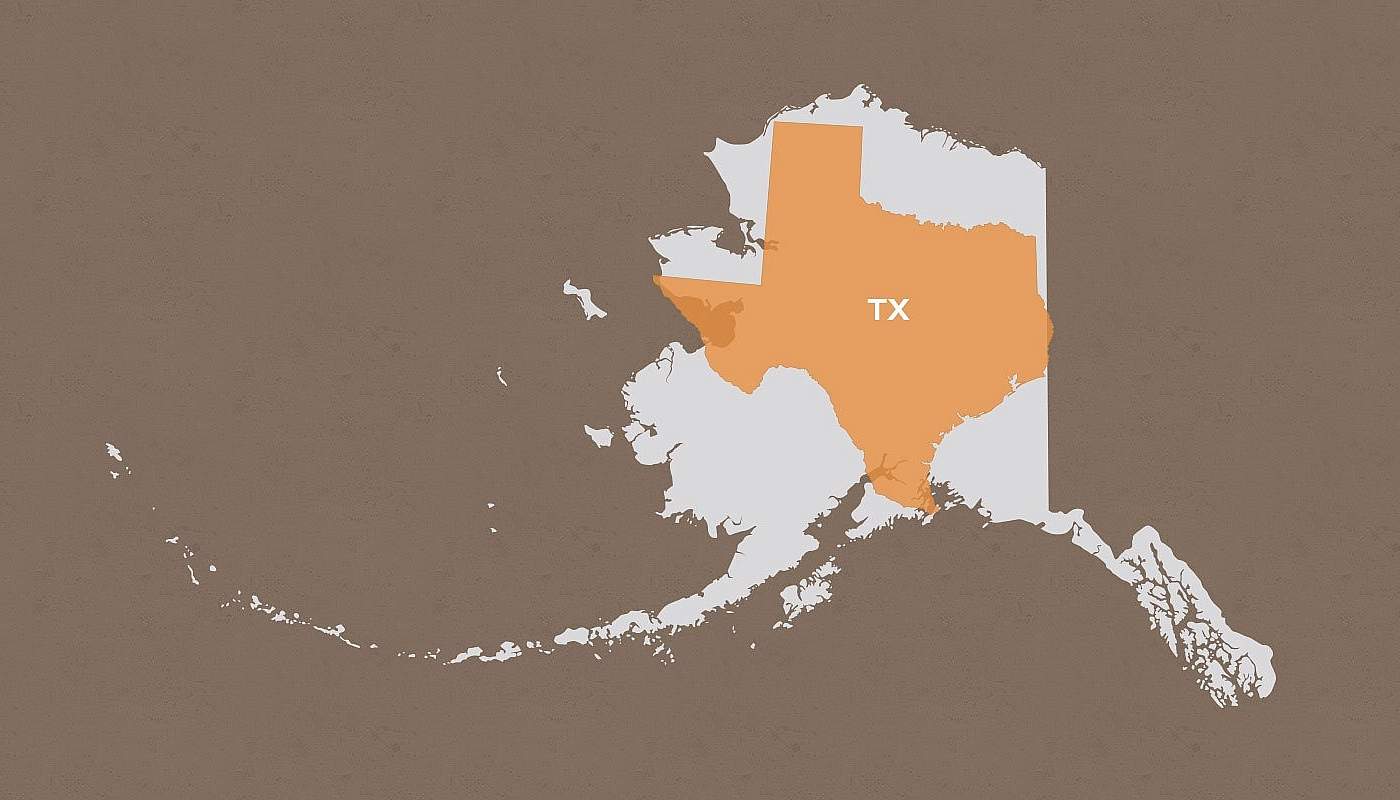
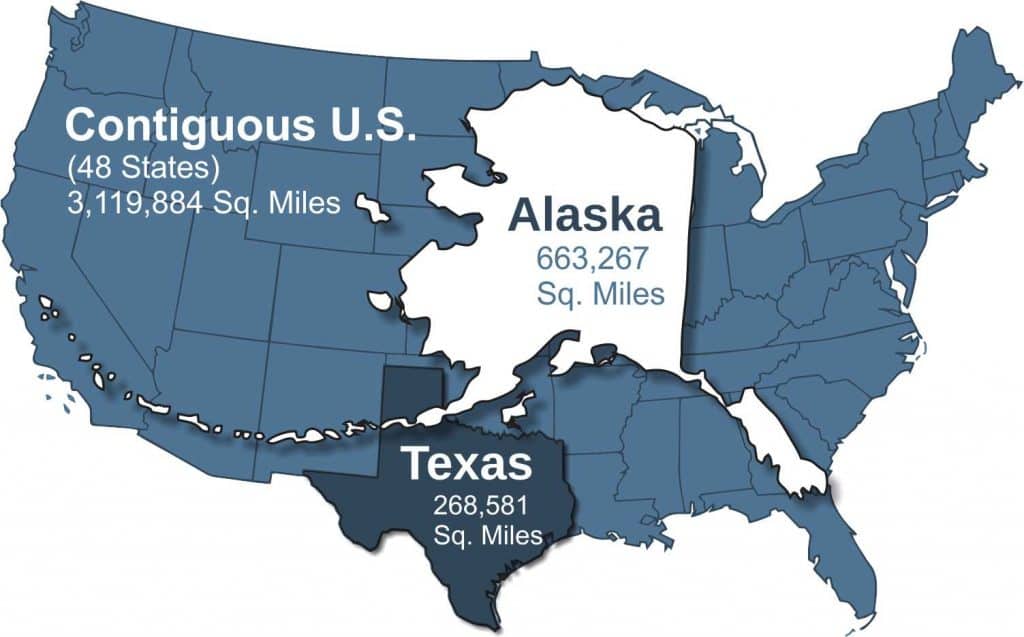
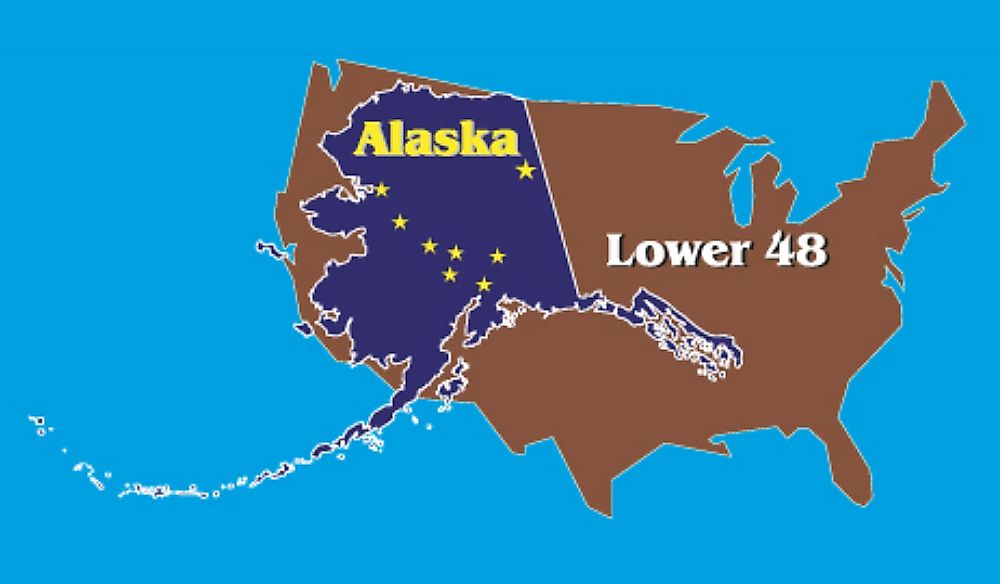
Alaska is, without a doubt, the largest state in the United States by a significant margin. Its total area encompasses approximately 665,384 square miles (1,723,337 square kilometers). To put this into perspective, Alaska is more than twice the size of Texas. In fact, if Alaska were a country, it would be the 17th largest in the world, surpassing nations like Iran and Mongolia.
This colossal size isn’t just about landmass; it translates into an unparalleled coastline. Alaska boasts nearly 34,000 miles of tidal shoreline, which is more than all other U.S. states combined. This incredible length is due to its highly indented coast, thousands of islands, and extensive archipelagos. This vast coastline profoundly influences travel, offering endless opportunities for marine exploration, fishing, kayaking, and wildlife viewing along the Pacific Ocean and Arctic Ocean.
Texas’s Considerable Size: A Closer Look
Texas, while the second-largest state by land area, measures approximately 268,596 square miles (695,662 square kilometers). This is still an incredibly large state, larger than many European countries, including France or Spain. Its immense size means that traveling across Texas can involve several days on the road, crossing multiple distinct geographical regions from the piney woods of East Texas to the deserts of the west.
The coastline of Texas, along the Gulf of Mexico, extends for about 367 miles (591 km), offering beautiful beaches, barrier islands like Padre Island National Seashore, and opportunities for coastal recreation. While impressive in its own right, it simply cannot compare to Alaska’s extensive reach into the sea.
The Visual Deception: Mapping Our Perceptions
Part of the confusion regarding the relative sizes of Alaska and Texas stems from the Mercator projection, a common world map style. This projection distorts the size of landmasses as they get closer to the poles, making areas like Greenland and Alaska appear much larger than they are in reality, or, in Alaska’s case, even larger than their already massive true size when compared to equatorial regions. However, even with this distortion taken into account, Alaska still dwarfs Texas. When correctly placed on a map without projection distortion, one can literally superimpose multiple Texas states within the borders of Alaska. This visual exercise dramatically clarifies the scale of the “Last Frontier.”
Beyond Square Miles: Diverse Landscapes and Climates
The sheer size of both Alaska and Texas translates into an astonishing diversity of landscapes, ecosystems, and climates. This geographical variety is a primary draw for travelers, offering a spectrum of experiences from icy wilderness to sun-baked deserts.
Alaska’s Wilderness Tapestry: From Tundra to Forests
Alaska’s enormous landmass spans multiple climate zones, from temperate rainforests in the southeast to vast tundra in the north and interior. Its landscape is dominated by majestic mountain ranges, including the Alaska Range, which hosts Denali (formerly Mount McKinley), North America’s highest peak. Travelers to Alaska can explore diverse environments:
- Glaciers and Fjords: The southeastern panhandle and Prince William Sound are renowned for their stunning glaciers, accessible by cruise or kayak.
- Boreal Forests: The interior region, around cities like Fairbanks, is characterized by vast taiga forests and experiences extreme seasonal temperature swings.
- Tundra and Arctic Deserts: North of the Brooks Range, the landscape transitions into treeless tundra, leading to the Arctic Ocean coast, a habitat for polar bears and caribou.
- Volcanic Islands: The Aleutian Islands stretch westward, a chain of active volcanoes forming one of the most remote and wild regions.
This immense natural variety makes Alaska a prime destination for adventure tourism, wildlife photography, and an escape into truly untamed nature.
Texas’s Varied Terrain: Gulf Coast to Deserts
Texas, despite being smaller, also boasts a remarkable range of geographical features. Its significant east-to-west and north-to-south dimensions ensure a diverse climatic and ecological experience for travelers.
- Gulf Coast Plains: The eastern and southern parts of the state are characterized by flat coastal plains, wetlands, and barrier islands, ideal for beach holidays and birdwatching.
- Piney Woods: Northeastern Texas features dense pine forests, similar to those found in the southeastern United States.
- Hill Country: Central Texas, near Austin and San Antonio, is famous for its rolling hills, spring-fed rivers, and unique limestone topography.
- Great Plains: The northern panhandle extends into the flat, agricultural lands of the Great Plains.
- Big Bend Country (Chihuahuan Desert): West Texas is dominated by the Chihuahuan Desert, featuring dramatic mountains like the Guadalupe Mountains and the iconic Big Bend National Park, a starkly beautiful landscape.
From the vibrant cities like Houston and Dallas to remote desert landscapes, Texas offers a kaleidoscope of environments and activities for every kind of traveler.
Implications for Travel and Exploration
The difference in size between Alaska and Texas is not merely academic; it dictates logistics, accessibility, and the overall rhythm of a travel itinerary. Understanding these implications is key to planning a fulfilling trip to either destination.
Navigating the Last Frontier: Travel in Alaska
Traveling through Alaska is an exercise in appreciating immense distances and embracing the wilderness.
- Limited Road Network: Despite its size, Alaska has a relatively sparse road network. Many popular destinations, especially in the vast interior and western regions, are inaccessible by car. For example, the state capital, Juneau, can only be reached by air or sea.
- Air and Sea Travel: Bush planes, ferries (via the Alaska Marine Highway), and cruise ships are vital modes of transport. Air travel, whether by small propeller plane or commercial jet, is often the most practical way to cover long distances between major hubs like Anchorage and other communities.
- Expansive National Parks: Alaska is home to eight national parks, including Denali National Park and the immense Wrangell-St. Elias National Park, which is larger than Switzerland. Exploring these often requires multi-day excursions, guided tours, or backcountry permits.
- Seasonality: Travel in Alaska is heavily influenced by seasons. Summer (June-August) offers long daylight hours and milder temperatures, making it peak tourist season. Winter travel, while challenging, offers unique experiences like aurora borealis viewing and winter sports.
A trip to Alaska often means focusing on a specific region or combining modes of transport to experience its diverse offerings, emphasizing immersive experiences over covering vast distances by road.
Exploring the Lone Star State: Travel in Texas
Travel in Texas also involves significant distances, but with a more established infrastructure.
- Extensive Road Network: Texas boasts an excellent network of interstates and state highways, making road trips a popular and practical way to explore the state. Driving from El Paso in the west to Beaumont in the east is a journey of over 800 miles and takes a full day of driving.
- Urban Hubs and Rural Charm: The state is dotted with major metropolitan areas—Houston, Dallas, San Antonio, Austin—each offering distinct cultural attractions, dining, and entertainment. Interspersed are charming small towns, historic sites, and natural parks.
- Diverse Activities: From surfing on the Gulf Coast to hiking in Big Bend National Park or exploring the vibrant music scene in Austin, Texas offers a wide array of activities that can be easily accessed by car.
- Year-Round Travel: While summers can be intensely hot, particularly in the south and west, Texas offers year-round travel opportunities. The spring and fall are particularly pleasant for outdoor activities.
Travelers to Texas can easily craft multi-city itineraries, linking different regions and experiences through extensive road trips, exploring its rich history, vibrant culture, and varied natural beauty.
Why Size Matters: Unique Appeal of Each State
The contrasting sizes of Alaska and Texas directly influence their unique appeals as travel destinations, offering distinct types of experiences that cater to different preferences.
The Grandeur of Alaska: Untamed Beauty and Adventure
Alaska’s colossal size is its greatest asset, promising a journey into the wild where human presence is often dwarfed by the natural world.
- Ultimate Wilderness Immersion: For those seeking true wilderness, untouched landscapes, and an escape from civilization, Alaska is unparalleled. Its size means vast tracts of land remain pristine, offering unrivaled opportunities for wildlife viewing—grizzly bears, moose, caribou, whales—in their natural habitats.
- Epic Scale of Natural Wonders: The sheer scale of its glaciers, mountains, and forests provides a sense of awe and adventure. Visitors can witness calving glaciers, fly over glacial fields, hike challenging mountain trails, or fish in salmon-rich rivers.
- Unique Cultural Experiences: While sparse, Alaska’s indigenous cultures offer profound insights into living in harmony with this formidable environment. Communities like those along the Bering Sea or in the Arctic provide unique cultural encounters.
- Aurora Borealis and Midnight Sun: Its northern latitude means extraordinary celestial phenomena—the magical Aurora Borealis in winter and the boundless energy of the Midnight Sun in summer.
Alaska calls to the adventurer, the nature lover, and those who wish to witness the raw, powerful beauty of a world largely untouched by human development.
The Diversity of Texas: Culture, History, and Natural Wonders
Texas’s significant size allows for a rich tapestry of experiences, blending vibrant cultural centers with diverse natural beauty and a proud history.
- Rich Cultural Tapestry: The state’s history as a republic before joining the United States, combined with its strong Mexican heritage and influences from other European settlers, has created a unique cultural identity. This is reflected in its music, food, architecture, and festivals. Cities like San Antonio, with the Alamo and its riverwalk, offer deep historical dives.
- Metropolitan Excitement: Texas boasts some of the largest and most dynamic cities in the U.S. Each urban center, from Houston’s space industry and world-class museums to Austin’s live music and food scene, provides a distinct experience for city explorers.
- Accessible Natural Beauty: From the beaches of Galveston to the canyons of Big Bend, Texas offers a wide array of natural attractions that are generally more accessible by road than those in Alaska. It caters to family vacations, weekend getaways, and outdoor enthusiasts alike.
- Culinary Journey: Texas is a gastronomic paradise, famous for its barbecue, Tex-Mex cuisine, and increasingly sophisticated fine dining scenes in its major cities. A road trip through Texas is often a culinary adventure in itself.
Texas appeals to travelers looking for a blend of urban sophistication and rugged natural beauty, infused with a distinct cultural identity and a legendary sense of hospitality.
Conclusion: A Tale of Two Giants
In conclusion, while Texas is indeed a massive and impressive state with a rich tapestry of landscapes and cultures, it is definitively dwarfed by Alaska. Alaska holds the undisputed title of the largest state in the United States, offering an unparalleled scale of wilderness and adventure.
For the intrepid traveler, this fundamental difference in size shapes every aspect of the journey. Alaska invites an immersive, often remote, encounter with nature on an epic scale, requiring careful planning and an appreciation for its untamed grandeur. Texas, while also vast, provides a more accessible and varied travel experience, seamlessly blending vibrant urban centers, diverse natural parks, and a unique cultural heritage.
Both states stand as testament to the incredible geographical diversity of the United States. Whether you are drawn to the rugged, icy peaks of Alaska or the sprawling, sun-baked plains and bustling cities of Texas, understanding their true dimensions is the first step in appreciating the distinct and unforgettable travel experiences each one promises.
LifeOutOfTheBox is a participant in the Amazon Services LLC Associates Program, an affiliate advertising program designed to provide a means for sites to earn advertising fees by advertising and linking to Amazon.com. Amazon, the Amazon logo, AmazonSupply, and the AmazonSupply logo are trademarks of Amazon.com, Inc. or its affiliates. As an Amazon Associate we earn affiliate commissions from qualifying purchases.