
The allure of California, with its sun-drenched beaches, iconic landmarks like the Golden Gate Bridge, and thriving metropolitan centers such as Los Angeles and San Francisco, consistently draws visitors. For many, a significant part of the California dream involves property ownership, whether it’s a charming bungalow in Pasadena or a luxurious beachfront villa in Malibu. However, when these valuable assets are sold, particularly for a profit, understanding the tax implications, specifically the California Capital Gains Tax, becomes paramount for any homeowner or investor. This tax is a critical component of the financial landscape for anyone engaging in the sale of real estate or other capital assets within the Golden State.
Understanding Capital Gains and Losses in California
At its core, a capital gain occurs when you sell an asset for more than you paid for it. Conversely, a capital loss happens when you sell an asset for less than its purchase price. California, unlike the federal government, does not distinguish between short-term and long-term capital gains. This means all capital gains recognized in California are taxed at the same ordinary income tax rates. This is a crucial distinction and a point of frequent confusion for those accustomed to federal tax treatments.
What Constitutes a Capital Asset?
The scope of capital assets is broad and extends beyond just real estate. In California, a capital asset generally includes:
- Real Property: This encompasses land and any permanent structures on it, such as homes, commercial buildings, and undeveloped land. Selling a vacation home in the Sierra Nevada mountains or a rental property in San Diego would trigger capital gains tax considerations.
- Stocks and Bonds: Investments in publicly traded companies, as well as corporate or government bonds, are considered capital assets.
- Collectibles: Items such as art, antiques, and coins can also be capital assets.
- Business Assets: While some business assets are treated differently, many, like equipment or vehicles used in a business, can be subject to capital gains tax.
Calculating Your Capital Gain or Loss
The calculation of a capital gain or loss is fundamental to understanding your tax liability. The formula is straightforward:
Selling Price – Adjusted Cost Basis = Capital Gain (or Loss)
- Selling Price: This is the total amount you receive from the sale, including any cash, the fair market value of other property received, and any debt assumed by the buyer.
- Adjusted Cost Basis: This is the original purchase price of the asset, plus the cost of any significant improvements made to it, and minus any depreciation claimed or casualty losses deducted. For real estate, this could include the cost of renovations, additions, or major repairs. For example, if you purchased a condo in Santa Monica for $500,000 and invested $50,000 in a kitchen remodel, your adjusted cost basis would be $550,000. If you then sold it for $750,000, you would have a capital gain of $200,000.
California’s Ordinary Income Tax Rates
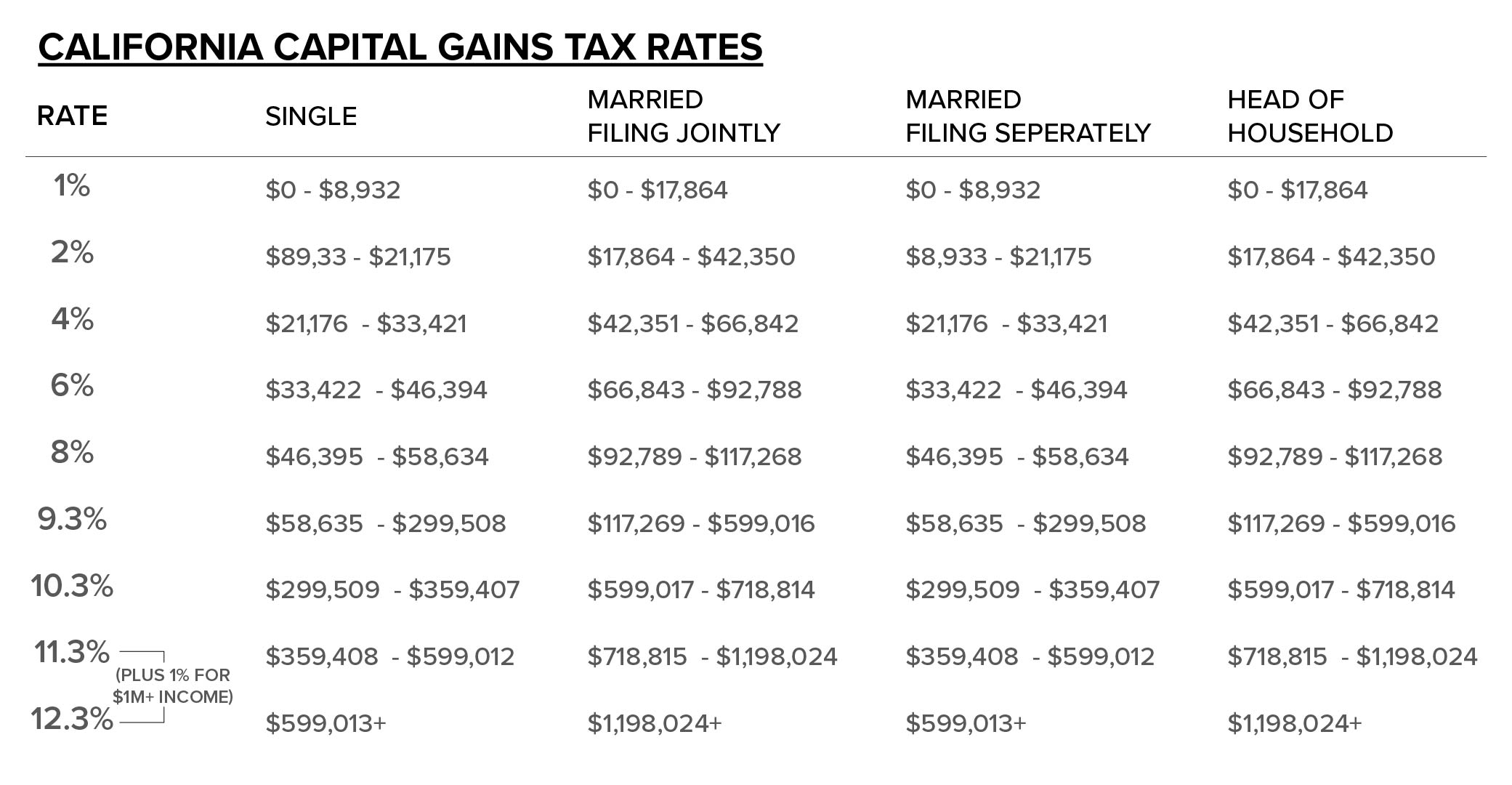
As mentioned, California taxes capital gains as ordinary income. This means the rate at which your capital gain is taxed depends on your total taxable income for the year. California has a progressive income tax system, with rates that have historically ranged from 1% to 13.3%.
The Impact of Your Income Bracket
Your marginal tax rate is the key factor in determining your capital gains tax liability. For instance, if you are in the highest income bracket in California, your capital gains will be taxed at the top marginal rate. This can significantly impact the net proceeds from a sale, especially for substantial gains.
Consider the scenario of selling a lucrative commercial property in Silicon Valley. If the capital gain is substantial, it will be added to your other income for the year, potentially pushing a larger portion of your total income into higher tax brackets.
Understanding State Tax Equivalency
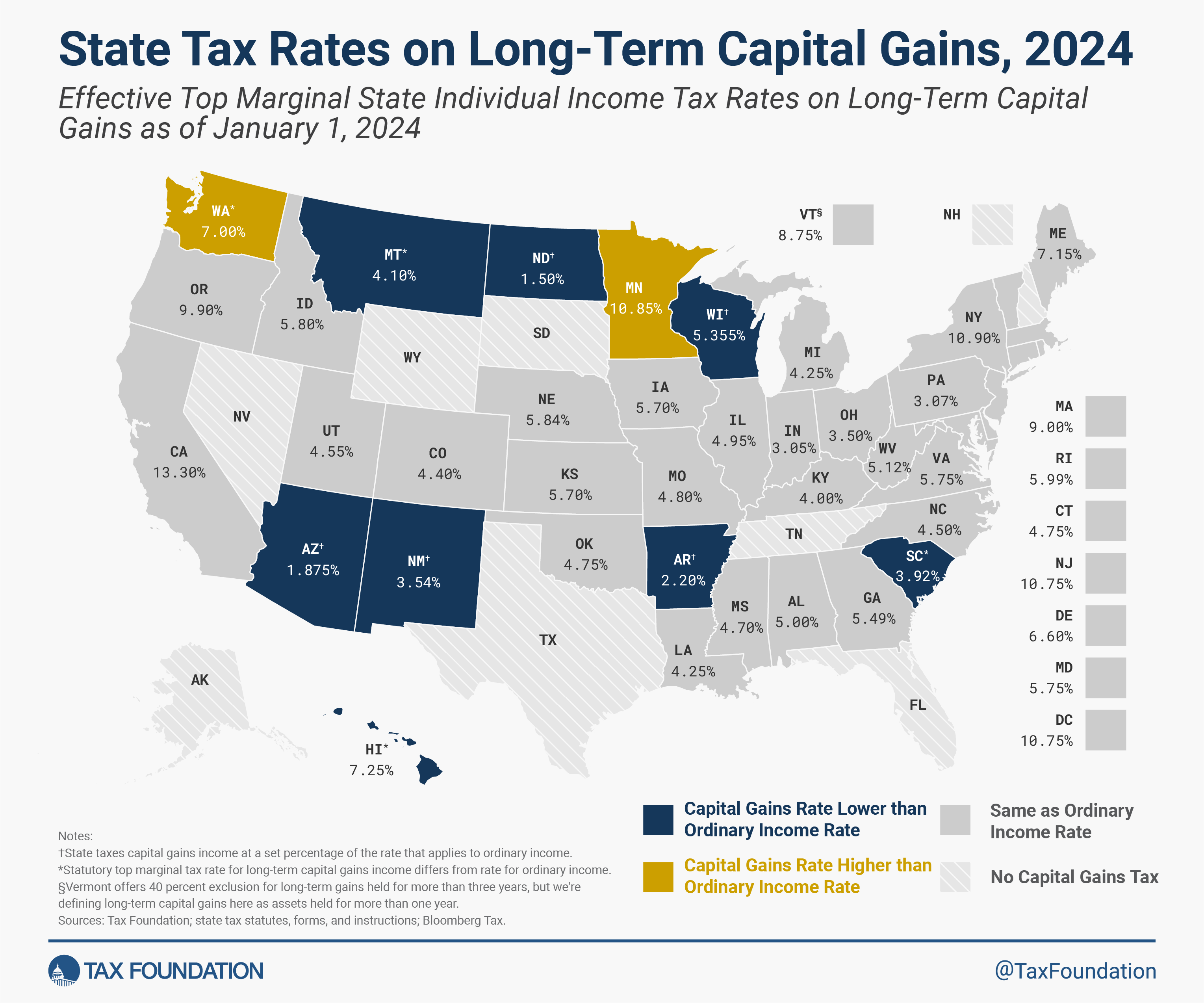
While the federal government has preferential tax rates for long-term capital gains, California does not. This disparity is important for individuals who may have differing federal and state tax obligations. A gain that is treated as a long-term capital gain for federal tax purposes might be taxed at a much higher ordinary income rate in California.
Strategies for Minimizing California Capital Gains Tax
While capital gains tax is often unavoidable, there are several strategies homeowners and investors can employ to potentially reduce their tax burden. These strategies often involve careful planning and understanding of tax laws.

The Primary Residence Exclusion
A significant benefit for homeowners is the exclusion of capital gains from the sale of a primary residence. Under federal law, individuals can exclude up to $250,000 of gain from the sale of their home, and married couples filing jointly can exclude up to $500,000. This exclusion applies to gains realized on your main home, provided you have owned and lived in it for at least two out of the five years before the sale. California generally follows this federal exclusion, providing substantial relief for those selling their primary residence. This is particularly beneficial for long-time residents of cities like Oakland or Sacramento whose home values may have appreciated significantly.
Strategies for Investment Properties
For investment properties or other capital assets, the planning becomes more complex.
1. Timing of Sales
While California doesn’t differentiate between short-term and long-term gains for tax rates, strategically timing the sale of assets can still be beneficial. If you anticipate being in a lower tax bracket in a future year, deferring a sale might lead to a lower overall tax bill, even with California’s ordinary income tax rates. This could involve waiting until after retirement or a change in employment.
2. Like-Kind Exchanges (1031 Exchanges)
For investment properties, a 1031 exchange (named after section 1031 of the Internal Revenue Code) allows investors to defer capital gains taxes when selling an investment property, provided they reinvest the proceeds into a new, similar property. While this is a federal tax provision, California generally conforms to it, allowing for tax deferral on like-kind exchanges of real property held for productive use in a trade or business or for investment. It’s crucial to follow strict rules, including identifying replacement property within 45 days and acquiring it within 180 days. This is a popular strategy for real estate investors in diverse California markets, from the vineyards of Napa Valley to the bustling commercial districts of San Jose.
3. Selling in Installments
An installment sale is when you sell property and receive at least one payment after the tax year in which the sale occurs. This allows you to recognize the capital gain and pay tax on it incrementally over the years the payments are received, rather than all at once in the year of sale. This can help spread the tax liability over several years, potentially keeping your income in lower tax brackets each year.
4. Tax-Loss Harvesting
This strategy involves selling investments that have lost value to offset capital gains from other investments. While California treats all capital gains as ordinary income, the concept of offsetting gains with losses still applies. For example, if you have significant capital gains from selling stocks, you can use capital losses from selling other stocks or bonds to reduce your taxable gain. It’s essential to be aware of the wash sale rule, which prevents you from claiming a loss if you buy a substantially identical security within 30 days before or after the sale.
5. Investing in Opportunity Zones
The Tax Cuts and Jobs Act of 2017 introduced Opportunity Zones, which are economically distressed communities where new investments may be eligible for preferential tax treatment. Investors can defer tax on any prior gains by investing in a Qualified Opportunity Fund (QOF). If the investment in the QOF is held for at least five years, 10% of the deferred gain is excluded from tax. If held for seven years, an additional 5% is excluded. If held for 10 years or more, any appreciation on the QOF investment itself may be tax-free. California has its own legislation regarding Opportunity Zones, generally conforming to federal provisions, making it a potential avenue for reinvesting capital gains.
The Role of Tax Professionals
Navigating the intricacies of California’s capital gains tax, especially when dealing with significant transactions or complex investment portfolios, can be challenging. The rules and regulations are subject to change, and individual circumstances can greatly influence tax outcomes. For this reason, consulting with a qualified tax advisor or CPA who specializes in California tax law is highly recommended. They can provide personalized guidance, ensure compliance with all relevant regulations, and help identify the most effective tax-saving strategies for your specific situation, whether you are a homeowner looking to sell your long-held residence in San Luis Obispo or an investor managing a portfolio of commercial properties across the state.
Accurate Record-Keeping is Crucial
Regardless of the complexity of your transactions, meticulous record-keeping is essential. This includes maintaining all purchase documents, receipts for improvements, records of any depreciation taken, and documentation for any tax-deferred exchanges. Accurate records form the bedrock of any tax return and are vital for substantiating your cost basis and any deductions or exclusions you claim. This diligence is as important for a small rental property owner in Fresno as it is for a large real estate developer in Orange County.
Conclusion
The California Capital Gains Tax is an integral part of financial planning for anyone selling assets in the state. Understanding how capital gains are calculated, the application of ordinary income tax rates, and available strategies for mitigation is crucial for maximizing net returns from property sales and investments. While the absence of preferential long-term capital gains rates in California distinguishes it from federal tax law, strategic planning, diligent record-keeping, and professional guidance can help individuals navigate this tax landscape effectively, ensuring they make informed decisions that align with their financial goals.
LifeOutOfTheBox is a participant in the Amazon Services LLC Associates Program, an affiliate advertising program designed to provide a means for sites to earn advertising fees by advertising and linking to Amazon.com. Amazon, the Amazon logo, AmazonSupply, and the AmazonSupply logo are trademarks of Amazon.com, Inc. or its affiliates. As an Amazon Associate we earn affiliate commissions from qualifying purchases.