
Detroit’s culinary landscape is as vibrant and distinctive as its industrial heritage, and at the heart of this flavorful narrative lies a pizza style that has captured the palates of locals and visitors alike: Detroit-style pizza. Far from the Neapolitan thin crust or the Chicago deep dish, Detroit pizza carves out its own niche, celebrated for its uniquely caramelized crust, airy interior, and robust flavor profile. It’s more than just a meal; it’s a testament to the city’s ingenuity and its deep-rooted love for hearty, satisfying food.
The origins of Detroit pizza are intrinsically tied to the city’s automotive industry and the ethnic communities that powered it. While many pizza styles boast ancient roots, Detroit pizza is a relatively modern invention, born out of necessity and innovation in the mid-20th century. Its development is a story of resourcefulness, mirroring the spirit of the city that forged it. Understanding what makes this pizza so special requires delving into its history, its distinctive ingredients, and the passionate individuals who have championed it, transforming it from a local delicacy into a globally recognized culinary icon. This exploration will not only illuminate the “what” of Detroit pizza but also the “why” – why it resonates so deeply and why it’s an essential part of any food lover’s travel itinerary when visiting the Motor City.
The Genesis of a Culinary Icon: From Blue Steel Pans to Beloved Pies
The story of Detroit pizza is one of humble beginnings, deeply rooted in the working-class neighborhoods of Detroit, Michigan. Its creation is attributed to Gus Guerra, who, in 1946, opened the legendary Buddy’s Rendezvous (now Buddy’s Pizza) on Conant Street in Detroit‘s East Side. At the time, Buddy’s was a bar and restaurant, and Guerra, inspired by the Sicilian pizza tradition, sought to create a unique offering for his patrons.
The breakthrough came with the use of rectangular, blue steel pans that were originally designed for industrial purposes – specifically, for stamping out auto parts on the assembly lines of Detroit’s burgeoning automotive sector. These deep, sturdy pans, a byproduct of the city’s industrial prowess, proved to be the perfect vessel for a different kind of pizza. Unlike the round pans used for traditional pizzas, these rectangular pans allowed for a thicker, denser dough that could absorb the rich toppings and cheese without becoming soggy.
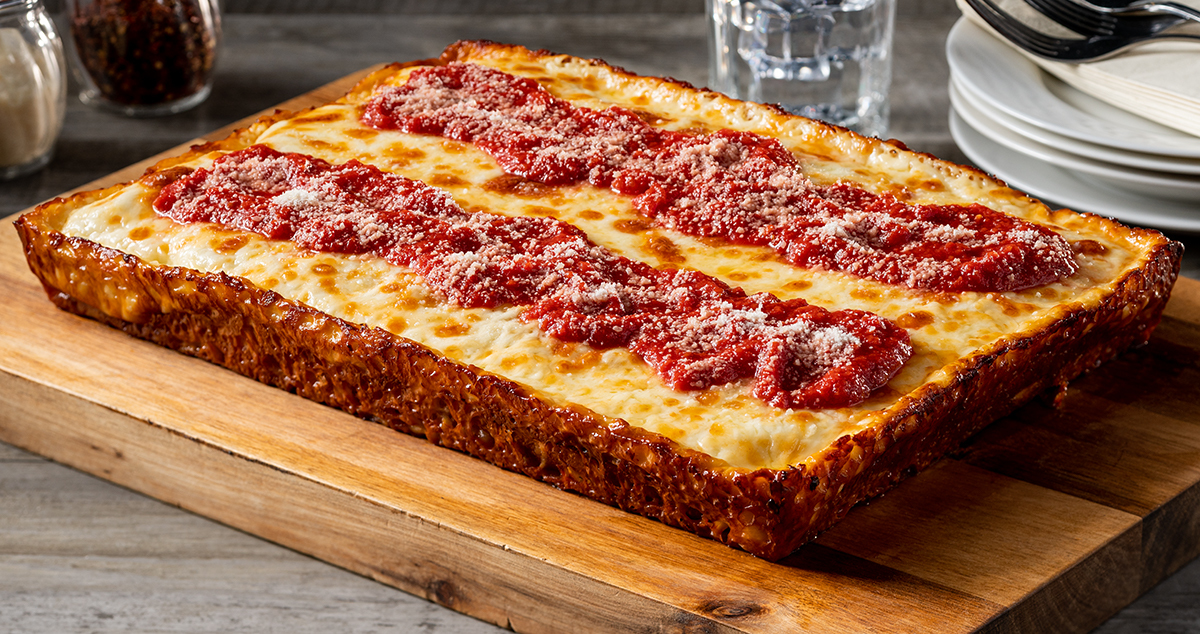
Guerra and his team began experimenting with the dough, developing a recipe that was both chewy and airy. The key was a high-hydration dough, which, when baked in the steel pan, resulted in a thick, focaccia-like base. The toppings were then applied in a specific order: cheese first, all the way to the edges, followed by sauce and other toppings. This arrangement was crucial for achieving the signature crispy, caramelized cheese edges that have become the hallmark of Detroit-style pizza. As the cheese melted and baked against the hot steel pan, it formed a delectable, almost fried, crusty edge – a delightful contrast to the soft interior of the pizza.
Buddy’s Rendezvous quickly became a local favorite, and the unique pizza served there began to gain notoriety. While Buddy’s is credited with the invention, other establishments in the area also adopted and adapted the style, contributing to its local legend. This early period was characterized by its accessibility; it was a food born from a working-class city, meant to be shared and enjoyed by everyone. It wasn’t about fancy ingredients or elaborate presentations; it was about honest, satisfying flavors and a hearty meal that could feed a family. The availability of these industrial pans, readily sourced from Detroit’s manufacturing landscape, made this innovative pizza style economically viable and practical to produce.
The Defining Characteristics: What Makes a Detroit Pizza Distinctive?
To truly understand Detroit pizza, one must appreciate its unique characteristics, which set it apart from any other pizza style. These elements combine to create a sensory experience that is both comforting and exciting.
The Crust: A Crispy, Chewy Masterpiece
The foundation of any great pizza is its crust, and Detroit pizza boasts a crust unlike any other. It is typically made with a high-hydration dough, meaning it contains a significant amount of water relative to the flour. This results in a dough that is soft, airy, and slightly sticky, which is then pressed into a rectangular, deep-dish pan. The pan itself plays a crucial role. Traditionally, blue steel pans, often coated with oil or butter, are used. This oil helps to create the signature crispy, almost fried, bottom crust.
During baking, the cheese is spread all the way to the edges of the pan. As it melts and cooks, it caramelizes against the hot steel, forming a deeply flavorful, crunchy, and chewy “cheese skirt” or “frico.” This caramelized edge is perhaps the most iconic element of Detroit pizza. The crust itself is thick and airy on the inside, with a substantial bite, providing a satisfying contrast to the toppings. It’s not as dense as a Chicago deep dish, but it has more chew and structure than a New York slice. The bottom of the crust develops a golden-brown, slightly charred crispiness that is addictive, offering a delightful textural experience with every bite.
The Cheese: Layered for Maximum Flavor
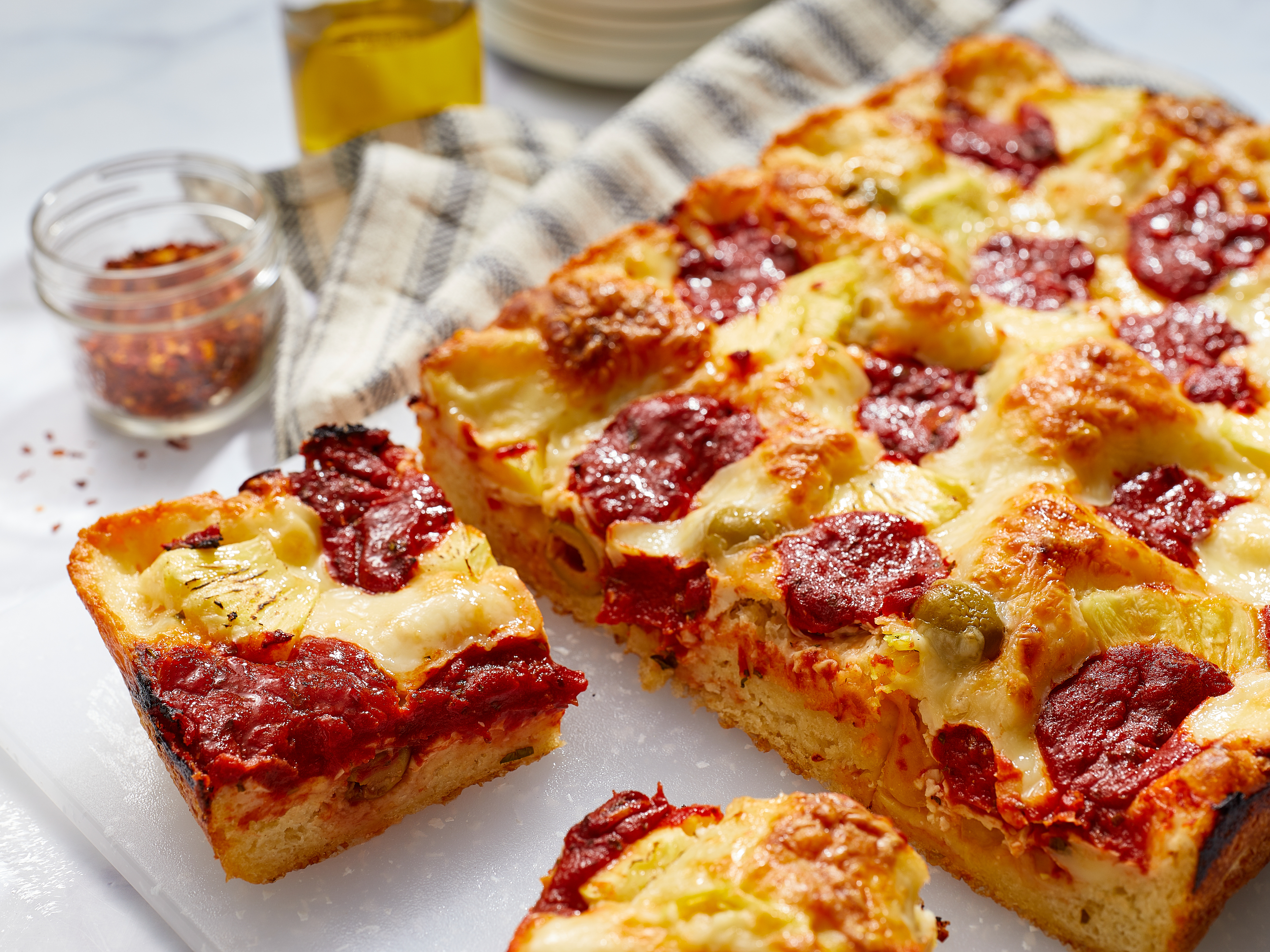
The cheese used in Detroit pizza is typically a blend of brick cheese and mozzarella. Brick cheese, a semi-hard American cheese with a mild, buttery flavor and excellent melting properties, is crucial for achieving the authentic taste and texture. When baked, it melts beautifully and contributes to the chewy, stringy quality of the cheese layer. Mozzarella is often added for its superior stretch and classic pizza flavor. The cheese is spread directly onto the dough, extending all the way to the edges, ensuring that every slice gets a generous portion of that coveted caramelized cheese crust. This generous application of cheese, layered directly onto the dough, is a key differentiator.
The Sauce: Applied on Top for a Tangy Finish
One of the most visually striking and flavor-defining aspects of Detroit pizza is the placement of the sauce. Unlike most pizzas where the sauce is applied directly onto the dough before the cheese, Detroit pizza features the sauce ladled or drizzled in three distinct stripes over the top of the cheese. This method allows the cheese to caramelize directly against the pan, creating that sought-after crispy edge, while the sauce remains vibrant and tangy, preventing it from becoming overcooked or mushy. The sauce is often a simple, yet flavorful, tomato sauce, sometimes seasoned with herbs like oregano and basil. Its placement on top ensures a burst of fresh tomato flavor with every bite, cutting through the richness of the cheese and dough.
The Toppings: Classic and Creative Combinations
While the crust, cheese, and sauce are paramount, the toppings on Detroit pizza also play a significant role in its overall appeal. The most classic and perhaps most popular topping is pepperoni. When baked, the pepperoni slices curl up into little “cups,” their edges becoming crispy and their rendered fat adding another layer of flavor to the pizza. Other popular toppings include mushrooms, onions, and sausage. However, as the style has gained popularity, chefs and home cooks have become more adventurous, experimenting with a wide range of ingredients, from gourmet meats and cheeses to fresh vegetables and even unique flavor combinations. Regardless of the toppings, the principle remains the same: a hearty, satisfying pizza designed to be enjoyed.

Beyond Buddy’s: The Evolution and Global Reach of Detroit Pizza
While Buddy’s Pizza is undeniably the birthplace of Detroit-style pizza, its evolution and widespread popularity are a testament to the dedication of many individuals and businesses who have embraced and adapted this unique culinary creation. From its humble beginnings in a Detroit bar to its presence on menus worldwide, Detroit pizza has undergone a fascinating journey.
The initial success of Buddy’s Pizza laid the groundwork for other pizzerias in Detroit to experiment with similar styles. Over the decades, the concept of a square, thick-crusted, cheese-edged pizza baked in a pan gained traction within the city. It became a staple of local gatherings, family dinners, and casual nights out. The distinctive shape and robust flavor made it instantly recognizable and deeply loved by those who grew up with it.
As Detroit began to see a resurgence in its downtown core and surrounding neighborhoods, businesses like Buddy’s expanded, reaching new audiences within the metropolitan area. This increased accessibility helped to solidify its status as a regional specialty. However, the true explosion of Detroit pizza onto the national and international scene can be attributed to a new generation of chefs and entrepreneurs who recognized its potential beyond its hometown.
Pizzerias in cities far from Michigan, such as Chicago, New York City, and even internationally, began to adopt and master the Detroit-style pizza. These establishments often stayed true to the core principles of the original – the blue steel pan, the high-hydration dough, the caramelized cheese edge, and the sauce on top – while also introducing their own creative twists. This widespread adoption introduced the style to a global audience, leading to a surge in its popularity. Food critics, bloggers, and culinary enthusiasts began to champion Detroit pizza, further cementing its status as a must-try food experience.
The recognition of Detroit pizza has also influenced the broader culinary tourism landscape. For many, a trip to Detroit is now incomplete without sampling an authentic Detroit-style pizza. This has turned iconic pizzerias into significant tourist attractions, drawing visitors eager to experience a taste of the city’s authentic flavors. The story of Detroit pizza is a compelling example of how a regional culinary tradition, born out of local innovation and resourcefulness, can capture the imagination and taste buds of people around the world. It’s a reminder that sometimes, the most extraordinary flavors can emerge from the most unexpected places and from the simplest of intentions – to create a delicious, satisfying meal.
The enduring appeal of Detroit pizza lies not just in its unique preparation and distinct flavors, but also in its narrative. It’s a story of Detroit itself – a city known for its resilience, its industrial strength, and its ability to innovate. The pizza, much like the city, is hearty, unpretentious, and full of character. It represents a fusion of cultural influences, resourceful adaptation, and a commitment to quality that resonates deeply with diners. As the culinary world continues to embrace authentic and regional specialties, Detroit pizza stands tall, a delicious ambassador of Michigan‘s rich gastronomic heritage.
LifeOutOfTheBox is a participant in the Amazon Services LLC Associates Program, an affiliate advertising program designed to provide a means for sites to earn advertising fees by advertising and linking to Amazon.com. Amazon, the Amazon logo, AmazonSupply, and the AmazonSupply logo are trademarks of Amazon.com, Inc. or its affiliates. As an Amazon Associate we earn affiliate commissions from qualifying purchases.