
Navigating the legal landscape of relationships and family structures can be complex, especially when considering the rights and recognitions afforded to couples. In California, the concept of domestic partnership offers a legal framework for unmarried couples to establish certain rights and responsibilities, often mirroring those traditionally associated with marriage. This recognition is particularly significant for same-sex couples and opposite-sex couples where one partner is over the age of 62, though its accessibility has broadened over time. Understanding what constitutes a domestic partnership in California is crucial for those seeking legal standing, benefits, and protections for their committed relationships.

The establishment of domestic partnerships in California was a landmark development, driven by the desire to provide legal parity and security to committed couples who were unable to marry or chose not to. While the primary impetus was to support same-sex couples before marriage equality was fully realized nationwide, the law has evolved to be more inclusive. Today, a domestic partnership in California is a legally recognized union between two adults who meet specific criteria, signifying their commitment to each other and granting them a range of legal rights and responsibilities that are similar to those of married couples. This can have profound implications for areas such as healthcare, inheritance, and employment benefits.
This comprehensive guide delves into the intricacies of domestic partnerships in California, exploring eligibility requirements, the registration process, the rights and benefits it confers, and its implications for various aspects of life, from travel to estate planning. Whether you are considering entering into a domestic partnership, are already in one and seeking clarity, or are simply interested in the legal landscape of committed relationships in the Golden State, this article aims to provide a thorough understanding.
Eligibility and Registration for Domestic Partnership in California
To qualify for a domestic partnership in California, couples must meet several key criteria designed to ensure the union is between two consenting adults who intend to share a life together. The state law defines a domestic partnership as a committed relationship between two adults, regardless of gender or sexual orientation, who meet the following conditions:
- Age: Both individuals must be at least 18 years old.
- Capacity to Consent: Both individuals must be capable of consenting to the domestic partnership.
- Not Married or in Another Domestic Partnership: Neither individual can be married to someone else or be a member of another domestic partnership with a different person.
- Shared Residence: The couple must share a common residence. This does not necessarily mean owning a property together, but rather residing in the same dwelling.
- Not Related by Blood: The individuals must not be related to each other by blood in a way that would prevent them from being married in California.
Historically, the eligibility criteria for domestic partnerships were more narrowly defined. Initially, it was primarily intended for same-sex couples and opposite-sex couples where one partner was 62 years of age or older. This age requirement for opposite-sex couples was intended to allow them to receive certain social security or pension benefits that were previously only available to married couples. However, subsequent legislative changes have expanded the eligibility to include any two adults who meet the general criteria, irrespective of age or sexual orientation, as long as they are not married to each other and share a common residence. This inclusivity reflects a broader societal understanding and acceptance of diverse relationship structures.
The registration process itself is relatively straightforward, though it requires careful attention to detail. To formally establish a domestic partnership in California, couples must file a Declaration of Domestic Partnership with the California Secretary of State. This document requires the full legal names of both partners, their addresses, and signatures. It is crucial that the signatures are notarized, affirming the truthfulness of the information provided and the voluntary consent of both parties.
Once completed and submitted, the California Secretary of State’s office will officially register the domestic partnership. This official registration is the legal act that bestows the rights and protections associated with domestic partnership status. It is advisable for couples to keep a certified copy of their registered Declaration of Domestic Partnership for their records, as this document may be required to access benefits or prove their status in various legal and administrative situations. This includes situations related to travel, accommodation bookings, or even exploring family-friendly destinations with extended family.
The simplicity of the registration process belies the significant legal weight it carries. By filing the declaration, couples are not just making a personal commitment; they are creating a legally recognized union that has tangible implications for their lives together. This formalization is a key step for couples seeking the protections and benefits that domestic partnership status provides, ensuring their relationship is acknowledged and respected by the state.
Rights and Benefits Conferred by Domestic Partnership
The recognition of a domestic partnership in California confers a substantial set of rights and benefits, largely mirroring those granted to married couples under state law. These protections are designed to provide legal security and practical advantages in various aspects of life, from daily living to significant life events. Understanding these rights is essential for partners to fully leverage the legal standing of their union.
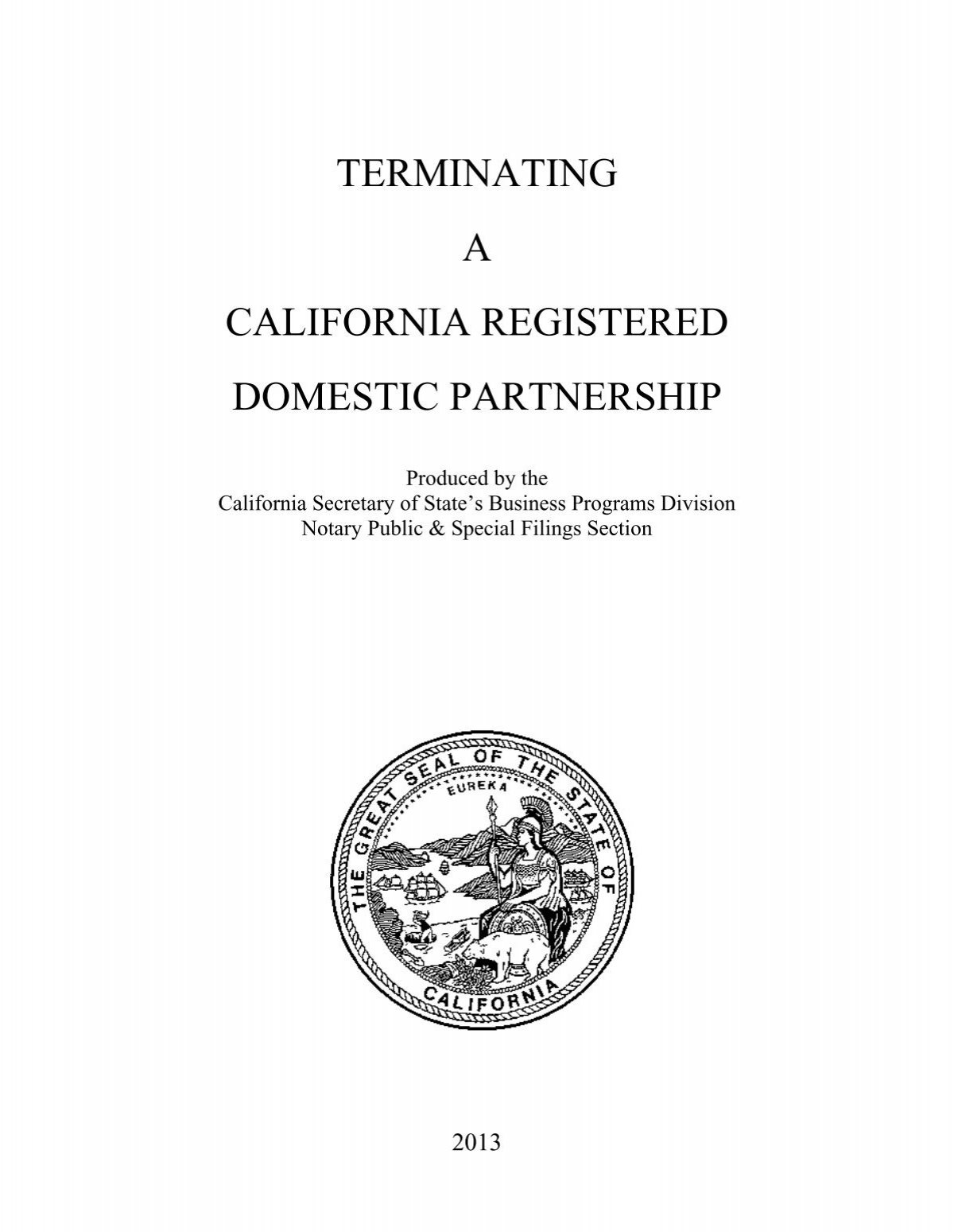
One of the most significant areas where domestic partners receive protections is in healthcare. Domestic partners typically have the right to make medical decisions for their partner if they become incapacitated. This can include the ability to consent to or refuse medical treatment, access medical records, and be involved in care planning. Employers who offer health insurance benefits to married employees often extend these benefits to registered domestic partners as well, subject to employer policies and federal regulations. This is a critical consideration for couples planning their lifestyle, especially when it comes to ensuring comprehensive coverage for both individuals, whether they are planning an extended stay in a resort or simply managing day-to-day health needs.
In matters of inheritance and property, domestic partnership also offers important protections. Upon the death of a domestic partner, the surviving partner generally has the right to inherit property from the deceased partner, similar to a spouse, unless otherwise specified in a will or trust. This can prevent complex legal battles and ensure that the surviving partner is provided for. Furthermore, domestic partners may have rights related to community property, depending on the nature of the assets acquired during the partnership and the specific laws of California. This can have implications for financial planning and the division of assets in the unfortunate event of a dissolution of the partnership.
Employment benefits are another area where domestic partners often see significant advantages. Many employers, especially larger corporations and those with a progressive stance on employee welfare, extend benefits such as paid leave for family care, bereavement leave, and access to group insurance plans to their employees’ domestic partners. This allows partners to support each other during times of illness or loss, and to share in the benefits that contribute to a stable and secure life together. This can be particularly relevant for individuals who travel frequently for business or leisure, ensuring that their partner is recognized and supported in their absence.
Beyond these core areas, domestic partners may also have rights related to:
- Hospital visitation: The right to visit their partner in a hospital or other healthcare facility.
- Court recognition: The right to sue for wrongful death or loss of consortium.
- Taxation: While federal tax benefits are not automatically extended to domestic partners (as California law governs domestic partnerships, while federal law primarily recognizes marriage), state tax benefits may apply, and it’s always advisable to consult with a tax professional.
- Workers’ compensation: Survivors of a registered domestic partner may be eligible for workers’ compensation death benefits.
- Parental rights: For couples who have children, domestic partnership can provide a framework for establishing parental rights and responsibilities, though specific legal processes may still be required.
The existence of these rights underscores the legal significance of domestic partnership in California. It provides a robust framework of protections that enhance the security and well-being of committed couples, acknowledging their relationship and ensuring they are not disadvantaged compared to married individuals in many key areas of life.
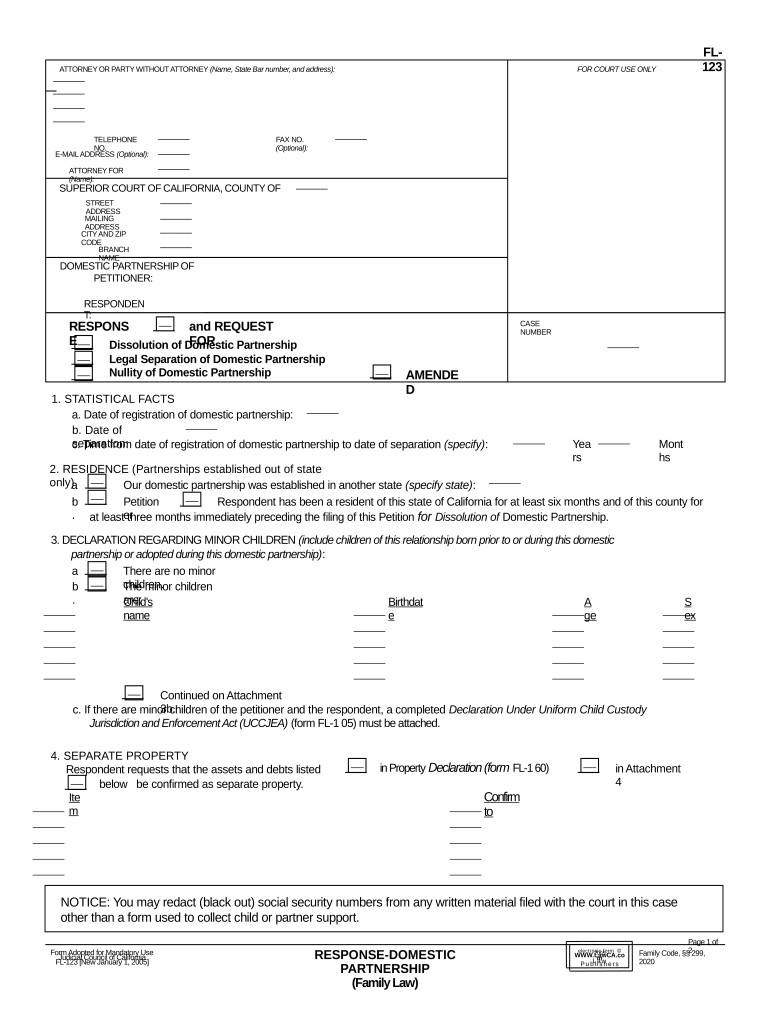
Dissolution of Domestic Partnership
Just as couples enter into a domestic partnership through a formal registration process, the termination of this legal union, known as dissolution, also requires a specific legal procedure. This process is designed to ensure that the rights and responsibilities of both partners are addressed in an orderly and equitable manner, providing clarity and finality to the relationship’s legal status.
The dissolution of a domestic partnership in California is legally similar to the dissolution of a marriage (divorce). The process typically involves filing specific legal documents with the court, and depending on the complexity of the couple’s affairs, it can be handled through an uncontested agreement or a contested court proceeding.
Key aspects of domestic partnership dissolution include:
- Filing a Petition: One partner, or both jointly, must file a Petition for Dissolution of Domestic Partnership with the superior court in California. This initiates the legal process.
- Serving the Other Partner: The partner who files the petition must formally serve the other partner with legal notice of the dissolution proceedings.
- Division of Property and Debts: Similar to divorce, domestic partners must divide any community property and community debts acquired during the partnership. California is a community property state, meaning assets and debts accumulated during the marriage or domestic partnership are generally presumed to be owned equally by both partners.
- Spousal Support (Alimony): In some cases, one partner may be entitled to receive spousal support (known as domestic partner support in this context) from the other. This is determined based on factors such as the length of the partnership, the financial circumstances of each partner, and their ability to earn income.
- Child Custody and Support: If the couple has children, the dissolution proceedings will also address matters of child custody, visitation, and child support, just as they would in a divorce.
The duration and complexity of a domestic partnership dissolution can vary significantly. If partners can reach a mutually agreeable settlement regarding property division, support, and child-related issues, the process can be relatively swift and less costly, often referred to as an uncontested dissolution. This can be achieved through direct negotiation, mediation, or the assistance of attorneys.
However, if partners cannot agree on these matters, the dissolution will become contested, requiring court intervention. This can involve extensive legal proceedings, including discovery, hearings, and potentially a trial, which can be time-consuming and expensive. It is highly recommended for individuals undergoing a dissolution to seek legal counsel from an attorney experienced in family law in California to ensure their rights are protected and the process is handled correctly.
Understanding the dissolution process is as important as understanding the formation of a domestic partnership. It provides the necessary framework for ending the legal union responsibly and ensures that all legal obligations and rights are properly addressed. This ensures that both individuals can move forward with their lives with legal certainty.
LifeOutOfTheBox is a participant in the Amazon Services LLC Associates Program, an affiliate advertising program designed to provide a means for sites to earn advertising fees by advertising and linking to Amazon.com. Amazon, the Amazon logo, AmazonSupply, and the AmazonSupply logo are trademarks of Amazon.com, Inc. or its affiliates. As an Amazon Associate we earn affiliate commissions from qualifying purchases.