
Fear and Loathing in Las Vegas, Hunter S. Thompson’s seminal work, is far more than just a chronicle of a drug-fueled weekend in the infamous Las Vegas. It’s a searing indictment of the American Dream, a hallucinatory journey through the underbelly of a city built on illusion and excess, and a darkly comic exploration of societal decay. While the Strip pulsates with neon and promises of fortune, Thompson’s narrative peels back the veneer to expose a profound sense of disillusionment and a desperate search for meaning in a landscape seemingly devoid of it.

At its core, the book, and its subsequent film adaptation, represent a potent metaphor for the broader cultural and political anxieties of the late 1960s and early 1970s in the United States. What began as a seemingly simple assignment for Rolling Stone magazine – to cover the Mint 400 motorcycle race and a convention on illegal drug enforcement – quickly devolves into a surreal odyssey for Thompson and his attorney companion, Dr. Gonzo. Their mission morphs into a desperate, often terrifying, flight from reality, fueled by an ever-expanding arsenal of narcotics and a growing sense of existential dread.
The narrative is famously told through the first-person perspective of Raoul Duke, a thinly veiled alter ego of Thompson himself, and his monstrously unstable associate, Dr. Gonzo. Their experiences in Las Vegas become a warped lens through which to view the superficiality of American culture. The gleaming hotels, the glittering casinos, the endless buffets, and the meticulously crafted illusions of happiness and success all come under scathing scrutiny.
The Spectacle of Las Vegas: A Mirror to the American Dream
Las Vegas, as depicted in Fear and Loathing, is not just a setting; it is a character in itself. It is a city that thrives on escapism, on the transient allure of instant gratification. For Thompson, it represents the ultimate embodiment of the post-war American Dream gone awry. The dream of prosperity, of a life free from hardship, has, in Las Vegas, been distorted into a grotesque parody of itself.
The Allure and the Abyss of the Strip
The iconic Las Vegas Strip is presented as a dazzling, yet ultimately hollow, spectacle. Hotels like the Sands Hotel and Casino and the Mint Hotel and Casino are not merely places to stay or gamble; they are temples of illusion. The constant barrage of flashing lights, the relentless jangle of slot machines, and the forced smiles of the staff all contribute to an atmosphere of manufactured joy. However, beneath this shimmering surface lies a profound sense of emptiness and desperation. The patrons, seen through Duke and Gonzo’s drug-addled eyes, are often portrayed as pathetic figures chasing an elusive jackpot, their lives dictated by the capricious turns of fate and the house’s inherent advantage.
Thompson masterfully uses the city’s opulent hotels and extravagant attractions as a backdrop for his characters’ descent into madness. The sheer excess of it all – the endless buffets, the lavish suites, the meticulously landscaped grounds of resorts – becomes overwhelming. It’s a world where reality is suspended, where consequence is seemingly deferred, and where the pursuit of pleasure is the only guiding principle. Yet, this pursuit leads not to fulfillment, but to a deeper immersion in the very anxieties and neuroses the characters are trying to escape. The book critiques how the promise of easy wealth and endless entertainment can mask a deeper spiritual and emotional void.
The Counterculture’s Disillusionment
Beyond the superficial glitz of Las Vegas, Fear and Loathing delves into the disillusionment of the counterculture movement. The optimism that characterized the “summer of love” in the late 1960s had begun to wane by the time Thompson was writing. The idealistic visions of peace, love, and social change had been met with resistance, violence, and a growing sense of cynicism. Las Vegas, with its inherent artifice and its embrace of excess, becomes a fitting, albeit disturbing, symbol of this shattered idealism.
The drug use in the novel is not presented as a joyous exploration of consciousness, but rather as a desperate, often destructive, attempt to cope with a world that feels increasingly alien and hostile. The characters are not seeking enlightenment; they are seeking oblivion, an escape from the crushing weight of reality. Their journey through Las Vegas is a frantic scramble for survival in a world that seems designed to disorient and consume them. The article highlights how the characters, in their pursuit of altered states of consciousness, are actually confronting the darker aspects of their own minds and the society they inhabit.
The Deeper Themes: A Critique of Modern Society
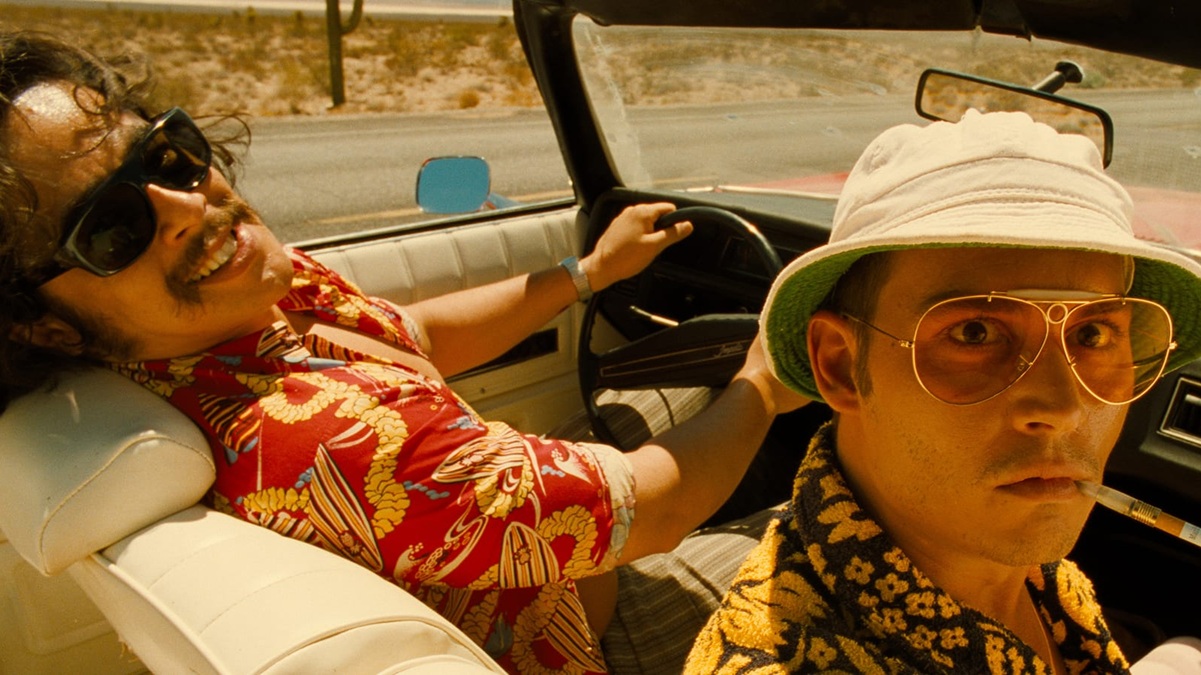
While the wild drug escapades and the bizarre encounters might be the most memorable aspects of Fear and Loathing, the book’s enduring power lies in its incisive critique of American society. Thompson uses the exaggerated reality of Las Vegas to hold a mirror up to the nation, revealing its hypocrisies, its moral bankruptcy, and its obsession with superficiality.
The American Dream Reimagined (and Shattered)
The American Dream, in its purest form, is about opportunity, hard work, and the pursuit of happiness. However, in Thompson’s portrayal, this dream has been corrupted and commercialized. Las Vegas offers a distorted version of this dream, where fortunes can be made and lost on the turn of a card, and where happiness is a commodity to be purchased. Duke and Gonzo’s chaotic journey underscores the hollowness of this materialistic pursuit. They are surrounded by symbols of wealth and success, yet they are consumed by a gnawing sense of despair and alienation.
The book questions the very foundation of this dream when it is so readily accessible through artificial means or sheer luck, rather than genuine effort. The constant pursuit of pleasure, the reliance on fleeting highs, and the disregard for any deeper meaning all point to a society adrift, searching for solace in the wrong places. The search for a genuine experience, an authentic moment, becomes increasingly difficult in a world saturated with manufactured realities.
The Role of the Media and Perception
Thompson was a journalist, and Fear and Loathing is, in many ways, a meta-commentary on the nature of journalism and perception. He deliberately blurs the lines between reality and hallucination, forcing the reader to question what is real and what is merely a product of Duke’s drug-addled mind. This technique serves to highlight how easily perception can be manipulated, both by individuals and by the media.
The conventions and events they are ostensibly covering – the Mint 400 motorcycle race, the drug enforcement convention – become secondary to their own personal descent. The article suggests that the characters’ distorted perceptions are not entirely their own creation, but are also influenced by the pervasive artificiality of Las Vegas itself. The constant bombardment of sensory information, the manufactured experiences, and the relentless pursuit of entertainment all contribute to a warped sense of reality. This critique extends to how news and events are framed and consumed, suggesting that the sensational and the exaggerated often overshadow the substantive.
The Legacy of Fear and Loathing
Decades after its publication, Fear and Loathing in Las Vegas continues to resonate with readers and viewers. Its raw, unflinching portrayal of a society grappling with its own excesses and disillusionment remains remarkably potent. The book’s unique style, its blend of gonzo journalism and surreal fiction, has influenced countless writers and filmmakers.
A Timeless Critique of Excess
The themes of Fear and Loathing are not confined to the era in which they were written. The book’s exploration of escapism, addiction, the seductive power of illusion, and the emptiness of unchecked consumerism are as relevant today as they were in the 1970s. In a world increasingly dominated by digital distractions and curated online personas, Thompson’s visceral depiction of a desperate search for authenticity feels particularly poignant. The endless pursuit of fleeting pleasures, the reliance on external stimuli for happiness, and the struggle to find meaning in a seemingly superficial world are all concepts that continue to plague modern society. The article concludes by emphasizing that the book’s enduring appeal lies in its ability to tap into universal anxieties about the human condition and the societal forces that shape our experiences.

The “Gonzo” Style and Its Impact
Hunter S. Thompson’s distinctive “gonzo” journalism, characterized by its subjective, first-person narrative, its embrace of personal experience, and its often exaggerated and satirical tone, was groundbreaking. Fear and Loathing in Las Vegas is arguably the quintessential example of this style. It broke away from traditional journalistic objectivity, instead plunging the reader directly into the chaotic and subjective world of the author. This approach allowed Thompson to convey the visceral, often disturbing, emotional and psychological landscape of his experiences in a way that a more conventional report could not. The film adaptation, starring Johnny Depp as Raoul Duke and Benicio del Toro as Dr. Gonzo, brought Thompson’s unique vision to a wider audience, further cementing the book’s place in popular culture. The article acknowledges that the stylistic innovation was as impactful as the thematic content, shaping how stories could be told and experienced.
LifeOutOfTheBox is a participant in the Amazon Services LLC Associates Program, an affiliate advertising program designed to provide a means for sites to earn advertising fees by advertising and linking to Amazon.com. Amazon, the Amazon logo, AmazonSupply, and the AmazonSupply logo are trademarks of Amazon.com, Inc. or its affiliates. As an Amazon Associate we earn affiliate commissions from qualifying purchases.