
For many businesses operating within the Lone Star State, understanding the intricacies of the Texas franchise tax is crucial for compliance and strategic financial planning. While often referred to as a “tax,” it’s more accurately described as a tax on the privilege of doing business in Texas, levied on entities that have incorporated or organized in the state, or are registered to do business there. This unique levy, overseen by the Texas Comptroller of Public Accounts, applies to a broad range of business structures, including corporations, limited liability companies (LLCs), partnerships, and professional limited liability companies (PLLCs).

The franchise tax is not based on a business’s net income, unlike traditional income taxes. Instead, it is calculated on a business’s “taxable margin,” which is derived from its total revenue. This distinction is fundamental and often a source of confusion. The goal of understanding this tax is not just to meet legal obligations but to also optimize financial structures and ensure that businesses can thrive without unnecessary burdens.
Understanding the Taxable Margin and Calculation
The core of the Texas franchise tax calculation lies in determining a business’s “taxable margin.” This process begins with total revenue and then involves various deductions and adjustments. The complexity arises from the multiple ways a taxable margin can be computed, offering businesses a degree of flexibility, but also requiring careful analysis.
Total Revenue and Gross Receipts
The starting point for franchise tax calculation is typically total revenue or gross receipts. This encompasses all income generated from the business’s operations. The specific definition of what constitutes revenue can vary based on the business structure and accounting methods employed. It is essential for businesses to accurately identify and categorize all sources of income to ensure a correct initial calculation.
Deductions and Allowable Expenses
Following the determination of total revenue, businesses can then claim various deductions to arrive at their taxable margin. These deductions are designed to reflect the costs associated with generating revenue and maintaining business operations. Some common deductions include:
- Compensation: Costs associated with employee wages, salaries, commissions, and benefits can often be deducted. The specifics of these deductions can be quite detailed, requiring careful attention to payroll records and employee classifications.
- Cost of Goods Sold (COGS): For businesses involved in the sale of tangible goods, the direct costs attributable to the production or acquisition of those goods are deductible.
- Payments to Subcontractors: In certain industries, payments made to independent contractors for services essential to the business’s operations may be deductible.
- Depreciation and Amortization: Allowable deductions for the wear and tear of tangible assets (depreciation) and the expensing of intangible assets over time (amortization) are also factored in.
- Certain Interest Expenses: Specific types of interest expenses incurred by the business may be deductible, subject to limitations and regulations.
It’s important to note that not all expenses are deductible. The Texas Comptroller’s office provides detailed guidelines and forms that outline which expenses are permissible. Misinterpreting these rules can lead to overpayments or underpayments, both of which can have financial implications.
The Earning and Economic Nexus Thresholds
Texas franchise tax applies based on an entity’s “nexus” with the state. This means that a business must have a significant connection or presence in Texas to be subject to the tax. This can be established through physical presence, economic activity, or the registration of the entity to do business in Texas.
Furthermore, there are specific thresholds that determine whether a business is required to file a franchise tax report and pay the tax.
- No Tax Due Threshold: For many small businesses, if their total revenue is below a certain threshold (which is adjusted annually), they may qualify for an exemption and have no tax liability. However, they are still generally required to file a “No Tax Due” report to claim this exemption.
- Taxable Capital vs. Total Revenue: For businesses exceeding the no tax due threshold, the tax is calculated on their taxable margin. The computation of this taxable margin offers two main methods:
- Cost of Doing Business: This method calculates the taxable margin by subtracting allowable costs of doing business from total revenue.
- Compensation: This method calculates the taxable margin by subtracting compensation paid by the business from total revenue.
Businesses generally elect the method that results in the lower tax liability. The tax rate is then applied to this calculated taxable margin.
Filing and Compliance Requirements
Navigating the filing and compliance aspects of the Texas franchise tax is as critical as understanding the calculation itself. The Texas Comptroller of Public Accounts mandates specific deadlines and reporting procedures.
Annual Filing Deadlines
The franchise tax report is an annual requirement. The due date for most entities is typically May 15th of each year. Extensions can be requested, but it is crucial to adhere to these deadlines to avoid penalties and interest. Businesses should consult the Texas Comptroller’s website for the most current deadlines and filing procedures.
Reporting Forms and Procedures
The primary reporting form for the Texas franchise tax is Form 05-102, Franchise Tax Report Information. For businesses that owe franchise tax, Form 05-162, Franchise Tax Computation, is also required. These forms are filed electronically through the Comptroller’s WebFile system.
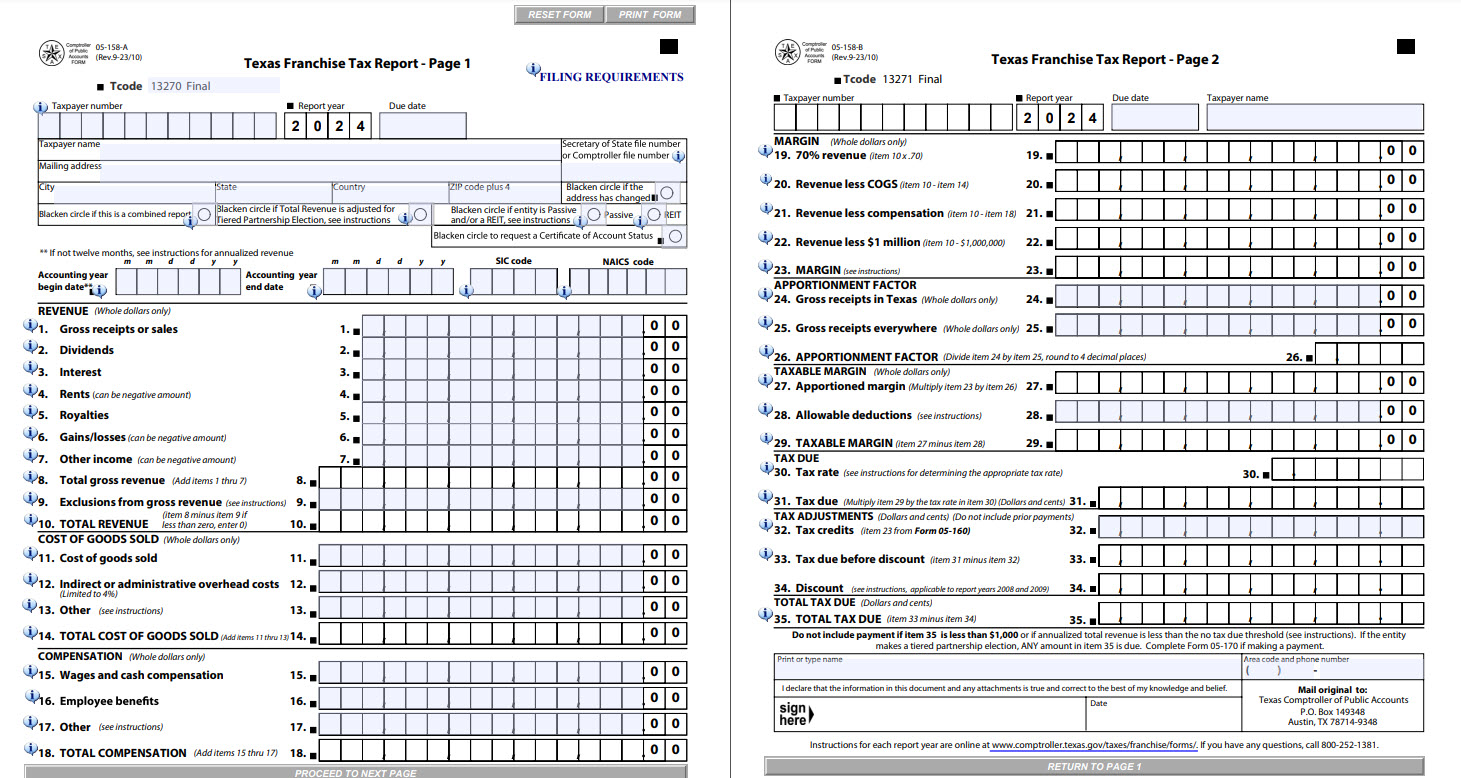
Accurate record-keeping is paramount. Businesses must maintain detailed financial records that support all revenue figures and claimed deductions. This includes invoices, receipts, payroll records, and any other documentation that substantiates the information provided on the franchise tax report.
Penalties and Interest
Failure to file on time, filing an inaccurate report, or failing to pay the tax when due can result in significant penalties and interest charges. These can substantially increase the overall cost of non-compliance. Therefore, establishing a robust internal process for franchise tax preparation and submission is highly recommended.
Who Needs to File and What Are the Exemptions?
Understanding who is subject to the Texas franchise tax and what exemptions might apply is essential for businesses of all sizes operating in Texas.
Entities Subject to Franchise Tax
Generally, any entity that does one or more of the following is subject to the Texas franchise tax:
- Is a corporation created under the laws of Texas.
- Is a corporation created under the laws of another state or foreign country that is authorized to transact business in Texas.
- Is a limited liability company (LLC) created under the laws of Texas.
- Is an LLC created under the laws of another state or foreign country that is authorized to transact business in Texas.
- Is a partnership (general, limited, or limited liability partnership) organized under the laws of Texas.
- Is a partnership organized under the laws of another state or foreign country that is authorized to transact business in Texas.
- Is a professional limited liability company (PLLC) or professional limited liability partnership (PLIP).
- Is an entity that has registered or is required to register to do business in Texas.
Common Exemptions and Relief
While the scope of entities subject to the franchise tax is broad, certain exemptions and relief provisions exist:
- No Tax Due Threshold: As previously mentioned, entities with total revenue below a specified annual threshold are generally exempt from paying franchise tax. However, they must still file a “No Tax Due” report. This is a significant relief for many small businesses.
- Certain Non-Profit Organizations: Various types of non-profit organizations, such as educational institutions, charitable organizations, and religious institutions, may be exempt from franchise tax. Specific criteria and documentation are required to claim these exemptions.
- Public Utilities and Certain Regulated Entities: Some industries, like public utilities, may have specific franchise tax treatments or exemptions due to existing regulatory frameworks.
- Holding Companies: Specific rules and exemptions may apply to holding companies that primarily engage in passive investment activities and do not conduct active business operations within Texas.
It is critical for businesses to thoroughly research the exemption requirements and consult with tax professionals to ensure they are properly claiming any applicable exemptions. The definition of what constitutes “doing business” in Texas can be nuanced, and proactive understanding can prevent future complications.
Strategic Considerations for Businesses
Beyond simple compliance, businesses can leverage their understanding of the Texas franchise tax for strategic advantage.
Structuring and Planning
The way a business is legally structured can have a significant impact on its franchise tax liability. For instance, the distinction between an LLC and a corporation, or between different types of partnerships, can influence how revenue is recognized and which deductions are available. Businesses considering formation or restructuring in Texas should consult with tax advisors to evaluate the franchise tax implications of different entity types.
Optimizing Deductions
A thorough understanding of allowable deductions is key. Businesses should implement robust accounting systems that meticulously track all expenses that qualify for franchise tax deductions. This includes ensuring that compensation is accurately reported and that costs of goods sold are properly calculated. Regularly reviewing expense categorization with an accountant can help maximize these deductions.
Understanding Nexus
For businesses operating in multiple states, understanding the concept of “nexus” is crucial. Texas has specific rules regarding economic nexus, meaning that even without a physical presence, a business can be subject to Texas franchise tax if it meets certain revenue thresholds within the state. This is particularly important for businesses with significant online sales or service provision into Texas.

Proactive Tax Planning
The Texas franchise tax is an ongoing consideration, not a one-time event. Businesses should engage in proactive tax planning throughout the year, rather than solely focusing on it during the annual filing period. This involves staying informed about any changes in tax law, reviewing financial performance regularly, and consulting with tax professionals to ensure optimal compliance and minimize tax burdens legally. By integrating franchise tax considerations into broader business strategies, companies can ensure they are operating efficiently and effectively within the Texas business landscape.
LifeOutOfTheBox is a participant in the Amazon Services LLC Associates Program, an affiliate advertising program designed to provide a means for sites to earn advertising fees by advertising and linking to Amazon.com. Amazon, the Amazon logo, AmazonSupply, and the AmazonSupply logo are trademarks of Amazon.com, Inc. or its affiliates. As an Amazon Associate we earn affiliate commissions from qualifying purchases.