
Florida, often affectionately known as the Sunshine State, is a beacon for travelers, adventure seekers, and those yearning for endless summer. From the vibrant nightlife of Miami to the magical theme parks of Orlando, and the historic charm of St. Augustine to the pristine beaches of the Gulf Coast, millions flock to this southern paradise each year. Whether you’re planning a thrilling family vacation, a romantic escape, or a relaxing long-term stay, understanding the local nuances is key to a seamless and enjoyable experience. One such often-overlooked detail, especially for those navigating the state by car, is the legal standard for window tinting.
In a state where the sun shines intensely for much of the year, window tint isn’t merely an aesthetic choice; it’s a practical necessity for many. It offers protection from harmful UV rays, reduces glare, keeps vehicle interiors cooler, and even provides a degree of privacy. For residents, it’s a daily consideration. For tourists, particularly those renting a car or driving their own vehicle across state lines, understanding Florida’s specific tint laws is crucial. Ignorance of the law, even for visitors, can lead to unexpected fines and disrupt an otherwise perfect trip to destinations like Key West or Tampa. This comprehensive guide delves into the specifics of what constitutes legal window tint in Florida, why it matters for both visitors and locals, and how to ensure your vehicle is compliant while you enjoy all the Sunshine State has to offer.
Understanding Florida’s Window Tint Laws
The regulations surrounding window tint in Florida are designed to balance privacy, comfort, and safety with the need for law enforcement officers to have clear visibility into a vehicle. These laws are primarily enforced by the Florida Department of Highway Safety and Motor Vehicles (DHSMV) and local police departments. Failing to adhere to these rules can result in traffic citations, fines, and the inconvenience of having to remove or replace illegal tint, which is certainly not how anyone wants to spend their vacation time.
Visible Light Transmission (VLT) Explained
At the heart of window tint laws is the concept of Visible Light Transmission, or VLT. This measurement indicates the percentage of visible light that is allowed to pass through your car windows. The lower the VLT percentage, the darker the tint, and the less light passes through. For example, a 5% VLT tint means that only 5% of visible light can penetrate the window, making it very dark, often referred to as “limo tint.” Conversely, a 70% VLT tint allows 70% of light through, making it much lighter and more transparent.
Florida’s tint laws are quite specific about the permissible VLT percentages for different windows on a vehicle. These regulations are in place to ensure that drivers have adequate visibility, especially at night or in adverse weather conditions, and to allow law enforcement to identify occupants and assess situations safely. Understanding these percentages is the first step toward ensuring your vehicle meets legal requirements.
Specific VLT Percentages for Different Windows
Florida law differentiates between various windows on a vehicle, stipulating different VLT requirements for each. This is a common practice across the USA to maintain safety standards.
-
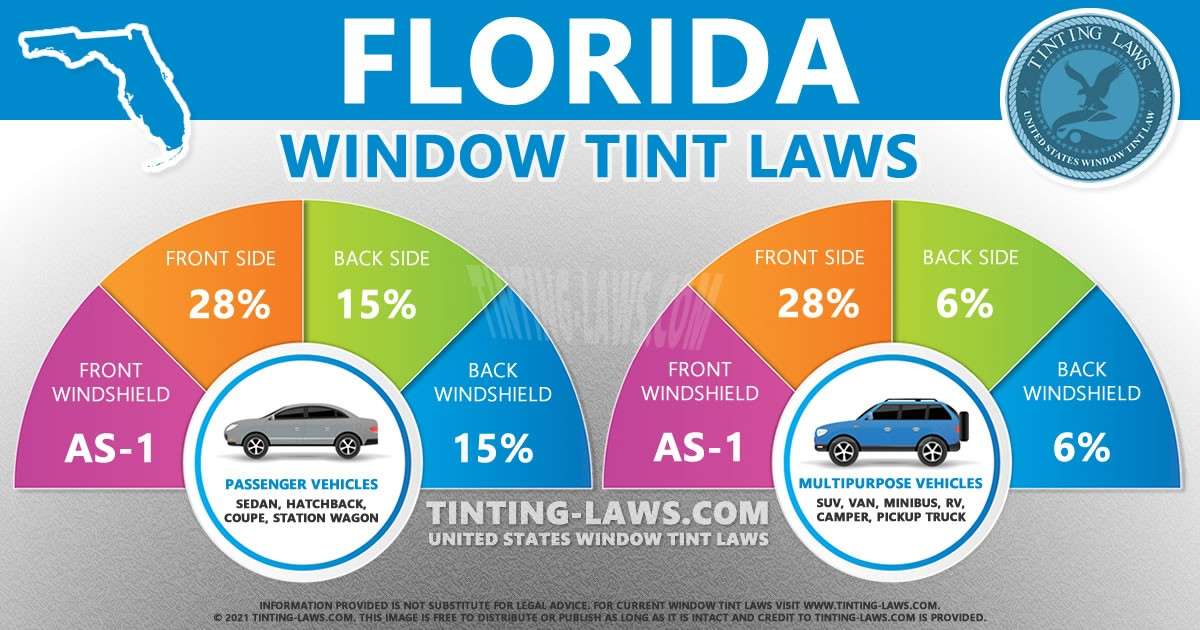
Front Side Windows: For the windows next to the driver and front passenger, the tint must allow more than 28% of visible light through. This means a maximum tint darkness of 28% VLT (e.g., 28% VLT or higher, such as 30%, 35%, 50%, etc., is legal). This ensures that the driver’s ability to see mirrors and the surrounding environment is not significantly impeded. It also helps with driver identification by law enforcement.
-
Back Side Windows: For the windows behind the driver and front passenger, the law is more lenient. These windows must allow more than 15% of visible light through. So, a tint with 15% VLT or higher is permissible. This provides increased privacy and sun protection for rear-seat passengers, which can be particularly beneficial for families traveling with children to attractions like Walt Disney World Resort or Universal Orlando Resort.
-
Rear Window (Rear Windshield): Similar to the back side windows, the rear window must allow more than 15% of visible light through. This allows for ample privacy while still maintaining some visibility for drivers checking their rearview mirror.
-
Windshield: The rules for the front windshield are stricter, as expected for safety reasons. Non-reflective tint is allowed only on the top 5 inches of the windshield. This strip helps reduce glare from the intense Florida sun, especially during sunrise and sunset, without obstructing the driver’s primary field of vision. No other tint is permitted on the main portion of the front windshield.
-
Reflectivity: Beyond VLT, Florida law also has regulations regarding the reflectivity of window tint. The tint on any window must not be more than 25% reflective. Highly reflective tints can create dangerous glare for other drivers, especially at night, and are therefore restricted.
It’s also important to note that certain colors of tint are prohibited. Specifically, red, amber, and blue tints are not allowed on any windows. These colors can interfere with the identification of signal lights or emergency vehicle lights and are therefore deemed unsafe. Always opt for neutral colors like charcoal, black, or bronze.
Why Tint Matters for Your Florida Experience
The rationale behind Florida’s tint laws extends beyond mere regulation; it’s deeply intertwined with the state’s climate, the comfort of its residents and visitors, and the overall travel experience. For a state that thrives on tourism and road trips, adhering to these laws is about more than just avoiding a ticket – it’s about enhancing your journey.
Comfort and Protection from the Florida Sun
The Florida sun, while glorious, can be relentless. Temperatures regularly soar, and UV index levels are often high. For anyone spending significant time in a vehicle, whether commuting to work in Jacksonville or driving down to the Everglades National Park, the benefits of window tint are undeniable.
-
Heat Reduction: Legal window tint can significantly reduce the amount of solar heat entering your vehicle. This means a cooler interior, less strain on your air conditioning system, and a more comfortable ride. Imagine driving from Orlando to Miami on a hot August day; a well-tinted car makes a world of difference. For families with children, especially infants, this heat reduction is paramount for comfort and safety during long drives between theme parks or to coastal destinations like Daytona Beach.
-
UV Protection: Tint films block a substantial percentage of harmful ultraviolet (UV) rays. UV radiation is a known contributor to skin damage, premature aging, and can even fade your car’s interior. For travelers enjoying the Florida lifestyle, protection from these rays is as important in the car as it is on the beach. This protection extends to car seats, luggage, and personal belongings, helping to preserve them from sun damage.

-
Glare Reduction: The bright Florida sun can create significant glare, especially when driving along the Atlantic Coast or near water bodies. Tint reduces this glare, improving visibility and reducing eye strain for the driver. This enhances safety, particularly during peak sun hours or when navigating busy tourist areas like South Beach.
-
Privacy and Security: While not the primary legal driver, tint does offer an added layer of privacy, deterring potential thieves who cannot easily see valuables inside a parked car. For tourists staying at hotels or resorts in crowded areas, this can offer peace of mind when leaving bags or electronics in their vehicle.
Avoiding Fines: A Traveler’s Guide
For those visiting Florida, navigating local laws can sometimes be challenging. A traffic stop for illegal window tint is an unwelcome interruption to any vacation. Penalties typically involve a non-moving violation citation and a fine, but also the hassle of addressing the issue, which might mean removing the tint or dealing with a rental car company.
-
Rental Cars: If you’re renting a car in Florida, the good news is that most reputable rental companies will provide vehicles that comply with state laws. However, it never hurts to double-check, especially if you opt for a specialty vehicle or a darker-than-average tint. When picking up your car, a quick visual inspection can provide reassurance.
-
Out-of-State Vehicles: This is where many visitors encounter issues. While most states have similar tint laws, there are variations. If your vehicle is registered in another state, its tint might be legal there but illegal in Florida. Unfortunately, out-of-state plates do not grant an exemption from Florida’s tint laws. Law enforcement can still issue a citation. If you plan an extended stay or frequently visit the Sunshine State, it might be worth considering if your tint meets Florida standards.
-
Enforcement: Police officers in Florida are equipped with tint meters that accurately measure VLT percentages. They can quickly assess if your tint is within legal limits during a traffic stop. It’s not uncommon for officers to check tint as part of routine traffic enforcement or during stops for other infractions.
Special Considerations and Exceptions
While Florida’s tint laws are relatively straightforward, there are a couple of specific scenarios and exceptions that individuals should be aware of, especially if they have unique circumstances or are traveling from afar.
Medical Exemptions for Window Tint
Florida law provides for medical exemptions for individuals who require darker window tint due to a medical condition. Conditions such as lupus, porphyria, or severe photosensitivity can make exposure to sunlight particularly harmful or painful.
To qualify for a medical exemption, an individual must obtain a doctor’s certification. This certification must state that the applicant has a medical condition that requires the use of a window tint darker than normally permitted by law. The certification then needs to be submitted to the Department of Highway Safety and Motor Vehicles, which can issue a special medical exemption certificate. This certificate must be carried in the vehicle at all times and presented to law enforcement upon request.
It’s important to understand that even with a medical exemption, there might still be practical limits to how dark the tint can be, as safety remains a primary concern. The exemption typically allows for a tint that is medically necessary, not necessarily an arbitrarily dark tint. Visitors with medical conditions should investigate how their home state’s medical tint exemptions are recognized in Florida or consider applying for a temporary Florida exemption if their stay is prolonged.
Out-of-State Visitors and Rental Cars
As previously touched upon, one of the biggest pitfalls for tourists is the difference in tint laws between states or even countries like Canada or Mexico. While many aspects of travel, such as driver’s licenses, are reciprocally recognized, vehicle modifications like window tint are subject to the laws of the state you are currently driving in.
-
Before You Drive In: If you’re driving your personal vehicle into Florida, especially from a state with more lenient tint laws, it’s prudent to check your vehicle’s tint beforehand. Many automotive shops can measure your VLT percentage. If your tint is found to be illegal, you might face the choice of removing it (which can be costly and inconvenient) or risking a citation. Consider this a part of your pre-trip checklist, alongside checking tire pressure and oil levels.
-
Rental Car Confidence: When picking up a rental car, you can generally be confident that the vehicle will comply with Florida laws. Rental companies operate extensively within the state and are well-versed in maintaining legal fleets. However, if you have any doubts, or if a particular vehicle appears to have exceptionally dark tint, you can always ask the rental agent for clarification or request a different vehicle. This proactive approach ensures your journey from the airport to your hotel in Miami, Sarasota, or Tallahassee starts without a hitch.
-
Enforcement Discretion: While officers have the authority to ticket vehicles with illegal tint regardless of where they are registered, some may exercise discretion with out-of-state visitors, perhaps issuing a warning rather than a full citation. However, relying on discretion is risky and not advisable. It’s always best to be compliant to avoid any potential issues that could detract from your experience exploring landmarks like the Kennedy Space Center or enjoying the natural beauty of the Florida Keys.

Ensuring Compliance and Enjoying Your Stay
Ultimately, understanding and complying with Florida’s legal tint laws is about more than just avoiding a ticket; it’s about ensuring a safe, comfortable, and stress-free journey through one of the USA’s most popular travel destinations. For those living in Florida, it’s a routine aspect of vehicle maintenance and adherence to local regulations that supports community safety and order. For tourists, it’s a small but significant detail that contributes to the overall success and enjoyment of their travel, tourism, and accommodation experiences.
When planning your trip or considering modifications to your vehicle, remember these key takeaways:
- Know Your Numbers: 28% VLT for front side windows, 15% VLT for back side and rear windows, and the top 5 inches of the windshield.
- Reflectivity Matters: Keep it under 25%.
- Forbidden Colors: Avoid red, amber, and blue tints.
- Medical Needs: Obtain proper documentation from the Department of Highway Safety and Motor Vehicles if you have a medical exemption.
- Check Your Ride: Always verify tint compliance, especially with personal vehicles driven from out-of-state or when in doubt about a rental.
By staying informed and compliant, you can focus on what truly matters: soaking up the sun, exploring incredible destinations, enjoying local culture and food, and creating unforgettable memories across the vibrant landscapes of the Sunshine State. Whether you’re indulging in luxury travel, embarking on a budget adventure, planning family trips, or on a business stay, a legally tinted vehicle will be a silent partner in making your Florida journey smooth and enjoyable, free from unnecessary worries about traffic violations. Drive safely, stay cool, and have an amazing time in Florida!
LifeOutOfTheBox is a participant in the Amazon Services LLC Associates Program, an affiliate advertising program designed to provide a means for sites to earn advertising fees by advertising and linking to Amazon.com. Amazon, the Amazon logo, AmazonSupply, and the AmazonSupply logo are trademarks of Amazon.com, Inc. or its affiliates. As an Amazon Associate we earn affiliate commissions from qualifying purchases.