
Texas, a state renowned for its vast landscapes, vibrant culture, and iconic landmarks, offers an unforgettable travel experience. From the bustling energy of Austin to the historic charm of San Antonio, and the sprawling ranches of West Texas, there’s something for every traveler. Whether you’re seeking the luxury of a Four Seasons Resort in Dallas or a budget-friendly stay in a cozy boutique hotel in Galveston, Texas caters to a diverse range of travel styles.
For those embarking on a Texas road trip, understanding local regulations, particularly concerning vehicle modifications, is crucial. One common question that arises, especially during the warmer months, is about the legality of window tint. Vehicle tint can enhance comfort by reducing heat and glare, and also offer a degree of privacy and UV protection, making it an appealing modification for many drivers. However, Texas has specific laws in place to govern the darkness of window tint to ensure visibility for law enforcement and public safety. This guide aims to demystify what constitutes legal tint in Texas, ensuring your journey through the Lone Star State is both enjoyable and compliant with the law.
Understanding Texas Window Tint Laws
Navigating the nuances of Texas window tint laws is essential for any vehicle owner or operator in the state. These regulations are primarily designed to balance the desire for privacy and comfort with the critical need for unobstructed visibility for law enforcement officers. The Texas Department of Public Safety (DPS) outlines these rules, which are enforced across all 254 counties. The key factor in determining legality is the Visible Light Transmission (VLT) percentage, which measures how much light is allowed to pass through the tinted window.
Window Tint Percentages Explained
The VLT percentage is the cornerstone of Texas tint law. It’s important to understand that a lower VLT percentage means a darker tint, allowing less light to pass through, while a higher VLT percentage signifies a lighter tint, allowing more light to enter the vehicle. Texas law specifies different VLT requirements for different windows on a vehicle.
Front Windshield:
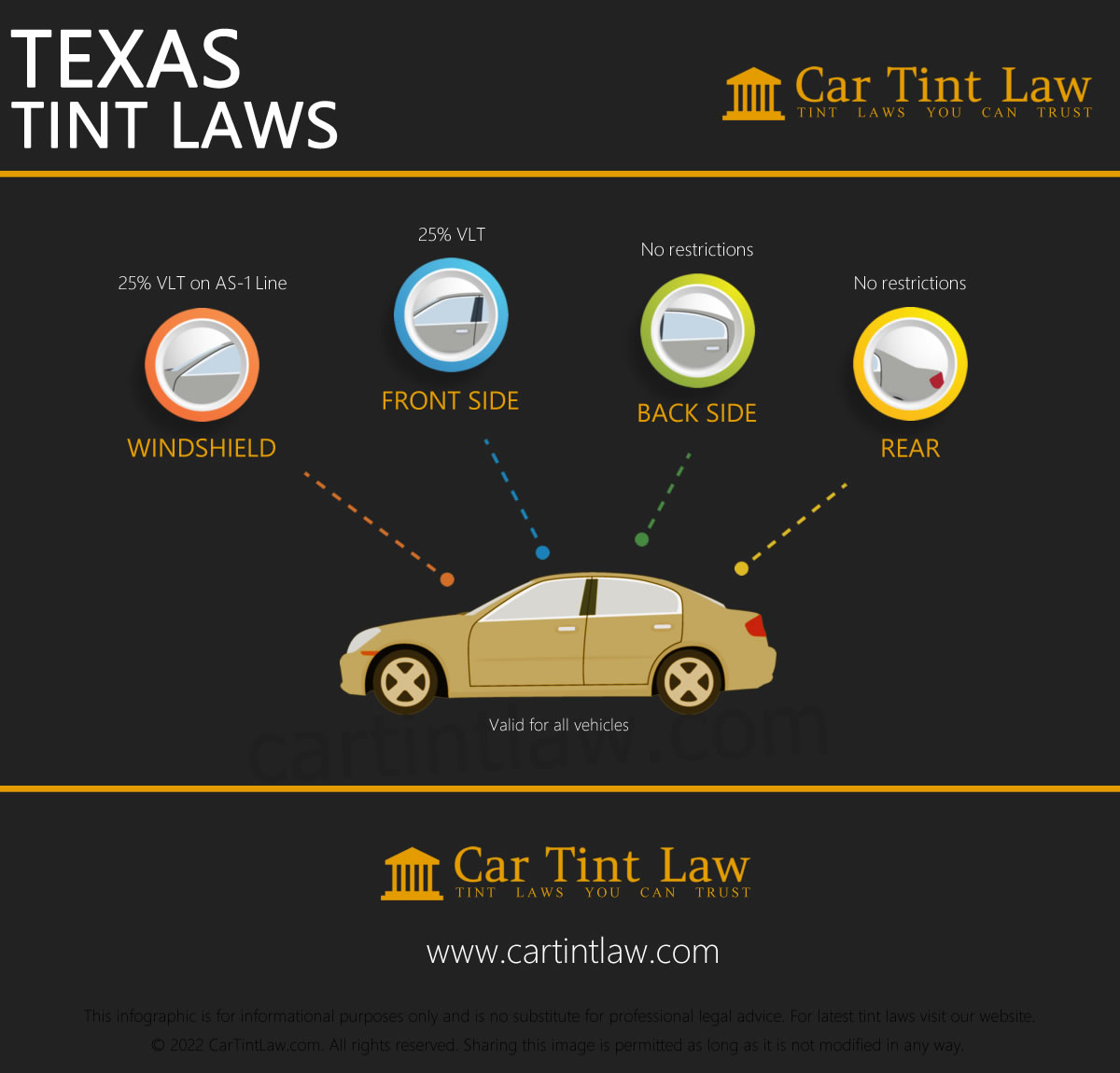
The Texas law permits tinting on the windshield, but with strict limitations. The tint must not extend below the manufacturer’s AS-1 line, which is typically marked on the windshield. Even within this AS-1 line, the tint is restricted to a maximum of 25% VLT. This means that at least 75% of the light must be able to pass through the tinted area, ensuring that the driver’s view is not significantly compromised. This is a critical safety measure, as clear visibility of the road ahead is paramount for safe driving.
Front Side Windows:
For the front side windows (driver and passenger doors), Texas law is more restrictive. The VLT for these windows must be at least 25%. This means that no more than 25% of light can be blocked; at least 75% of light must be able to pass through. This ensures that law enforcement officers can clearly see into the vehicle and identify the occupants, as well as assess the driver’s actions.
Rear Side Windows and Rear Window:
The regulations become more lenient for the rear side windows and the rear window (back windshield). Here, Texas law allows for darker tints. The VLT for these windows can be as dark as 5%. This means that up to 95% of light can be blocked, allowing for greater privacy and heat reduction. This is often the area where drivers seeking significant tinting will focus their modifications.
Important Considerations for VLT:
It’s vital to remember that these percentages refer to the total VLT, which includes the tint film itself and the natural tint of the glass. In most cases, the factory tint on vehicle glass is minimal, but it’s a factor to be aware of. When getting your windows tinted, professional installers will use VLT meters to ensure compliance with the law.
Exceptions and Special Circumstances
While the standard VLT percentages apply to most vehicles, Texas law recognizes certain exceptions and special circumstances. These are primarily in place to accommodate individuals with specific medical needs or for certain types of vehicles.
Medical Exemptions:
Individuals who can demonstrate a medical necessity for tinted windows beyond the legal limits can apply for a medical exemption. This typically requires a written statement from a physician, detailing the specific medical condition that necessitates darker tinting. Conditions such as photosensitivity, certain skin disorders, or eye conditions may qualify. If granted, the driver will receive a sticker or documentation to be kept in their vehicle, which must be presented to law enforcement if stopped. The exemption generally allows for a darker tint than the standard 25% VLT for front windows, but the exact permissible darkness is determined on a case-by-case basis.
Specific Vehicle Types:
Certain types of vehicles may have different tinting regulations. For instance, some law enforcement vehicles, emergency vehicles, or specific commercial vehicles might have allowances for different tint levels as part of their operational requirements. However, for the vast majority of passenger vehicles, including sedans, SUVs, trucks, and motorcycles, the standard VLT rules apply.
Reflective Tint:
Texas law also addresses reflective tint. Tinted windows can have a reflective quality, which can further reduce heat and glare. The law prohibits the use of excessive reflective material on the windows. Specifically, the front windshield and front side windows are not allowed to have a reflectivity exceeding 25%. This means the tint should not be so reflective that it significantly impedes visibility or creates a blinding glare for other drivers. Rear windows can have higher reflectivity.
Enforcement and Penalties
Understanding the legal tint requirements in Texas is only half the battle; knowing the consequences of non-compliance is equally important. Texas law enforcement officers are trained to identify vehicles with illegal tint, and violations can result in citations and fines.
What Happens If You Get Pulled Over?
If a law enforcement officer in Texas suspects your vehicle’s window tint is darker than legally permitted, they may initiate a traffic stop. During the stop, the officer will likely visually inspect the tint and may use a VLT meter to measure the percentage of light transmission. If the tint is found to be non-compliant, the driver can receive a citation.
Fines and Corrective Actions
The penalties for illegal window tint in Texas can vary depending on the jurisdiction and the discretion of the issuing officer. Typically, a citation for illegal tint is a misdemeanor offense. The fines associated with such a citation can range from a small amount to several hundred dollars. In addition to fines, the court may also order corrective action, which means the driver will be required to have the illegal tint removed from their vehicle within a specified timeframe. Failure to comply with this corrective action can lead to further penalties.
It’s also worth noting that while a single instance of illegal tint might result in a warning or a minor fine, repeat offenses can lead to more severe consequences. For drivers planning a road trip, ensuring your vehicle is compliant before you set off can save you the hassle and expense of dealing with citations.
Maximizing Comfort and Style Within the Law
For many travelers and residents, window tint is more than just an aesthetic choice; it’s a practical enhancement for vehicle comfort and protection. Thankfully, by understanding and adhering to Texas’s legal tint limits, you can still achieve significant benefits in terms of reduced heat, glare, and UV protection, all while staying on the right side of the law.
Benefits of Legal Tint
Even the legally permissible tints offer substantial advantages. A 25% VLT on the front windows and a 5% VLT on the rear windows can dramatically reduce the amount of heat entering your vehicle, especially during the scorching Texas summers. This means your air conditioning system can work more efficiently, leading to a more comfortable driving experience and potentially better fuel economy. Furthermore, window tint acts as a barrier against harmful ultraviolet (UV) rays, protecting your skin and preventing the interior of your car from fading and cracking over time. This is particularly beneficial for extended road trips or if you plan on spending a lot of time exploring Texas’s many attractions, from the Alamo in San Antonio to the vastness of Big Bend National Park.

Choosing a Professional Installer
When deciding to tint your vehicle’s windows, it is highly recommended to seek out a reputable and professional installer. Experienced professionals are well-versed in Texas tint laws and can guide you on the best tinting options that meet both your desired look and the legal requirements. They use high-quality tint films and the necessary equipment to ensure precise application and accurate VLT measurements. A professional installation not only guarantees compliance but also ensures the longevity and appearance of the tint, preventing issues like bubbling, peeling, or discoloration that can occur with amateur installations. This attention to detail is especially important when planning a long stay or extensive travel within Texas, where your vehicle will be your constant companion.
By understanding and respecting Texas’s window tint laws, you can enhance your driving experience, protect your vehicle, and travel the state with peace of mind. Whether you’re heading to a luxury resort in Houston or exploring the historical sites of Fort Worth, a legally tinted vehicle adds another layer of comfort and enjoyment to your Texas adventure.
LifeOutOfTheBox is a participant in the Amazon Services LLC Associates Program, an affiliate advertising program designed to provide a means for sites to earn advertising fees by advertising and linking to Amazon.com. Amazon, the Amazon logo, AmazonSupply, and the AmazonSupply logo are trademarks of Amazon.com, Inc. or its affiliates. As an Amazon Associate we earn affiliate commissions from qualifying purchases.