
For countless drivers, the allure of tinted windows extends far beyond mere aesthetics. Whether cruising through the bustling streets of Houston, embarking on a scenic drive to Big Bend National Park, or simply running daily errands in Austin, window tint offers a trifecta of benefits: enhanced privacy, reduced interior heat, and protection from harmful UV rays. For those traversing the vast and sun-drenched landscapes of the Lone Star State, these advantages are particularly appealing. However, as with any modification to a vehicle, there are strict regulations that govern what is permissible. Navigating the nuances of Texas window tint law can seem daunting, but understanding the rules is crucial for avoiding costly fines and ensuring a hassle-free journey. This comprehensive guide will demystify the legal requirements for window tint in Texas, helping residents and visitors alike make informed decisions while staying compliant with state statutes.
Understanding Window Tinting and Its Benefits
Window tint, often a thin laminate film applied to the interior or exterior of glass surfaces, serves multiple practical purposes beyond just styling. It’s a popular choice for drivers seeking comfort, protection, and a touch of personal flair for their vehicles. Yet, the very benefits that make tinting so desirable are also the reasons behind the regulations imposed by states like Texas.
The Allure of Tinted Windows
The appeal of tinted windows is multifaceted. First and foremost is the privacy they afford. Whether you’re transporting valuable luggage after a stay at a luxury resort near Dallas or simply wish for more personal space during your commute, tint can significantly obscure the view into your vehicle. This added layer of privacy can deter potential thieves and offer a sense of security, especially when parked in unfamiliar areas or busy tourist spots across Texas.
Secondly, tinting plays a significant role in thermal comfort. The scorching Texas sun can turn a car’s interior into an oven, making summer travel uncomfortable and increasing reliance on air conditioning. Quality window tint can block a substantial amount of solar heat, keeping the cabin cooler and reducing the strain on your vehicle’s cooling system. This not only enhances comfort but can also lead to minor improvements in fuel efficiency – a welcome bonus for long road trips across the United States.
Beyond comfort, window tint offers crucial health and safety benefits. It acts as a shield against the sun’s harmful ultraviolet (UV) rays, which are known to contribute to skin damage and premature aging. By blocking up to 99% of UV rays, window tint protects both occupants and the vehicle’s interior. Over time, UV exposure can fade upholstery, crack dashboards, and degrade plastic components. Tint helps preserve the longevity and appearance of your car’s interior, making it a wise investment for vehicle owners. Additionally, in the event of an accident, the film can help hold shattered glass together, preventing dangerous shards from flying and potentially reducing injury. It also reduces glare from bright sunlight, headlights, and reflective surfaces, improving driver visibility and reducing eye strain, particularly during dawn, dusk, or intense midday sun.
Why Texas Cares: Safety and Regulations
Given these benefits, it’s natural to wonder why any restrictions would be placed on window tint. The answer lies primarily in public safety and law enforcement concerns. While drivers appreciate the privacy, law enforcement officers need to maintain visibility into vehicles for their own safety during traffic stops and to effectively monitor traffic. Overly dark tint can obscure a driver’s identity or actions, posing a risk to officers.
Furthermore, extremely dark tints can impede a driver’s ability to see clearly, especially at night or in low-light conditions. This can increase the risk of accidents, particularly in urban areas like San Antonio or when navigating complex road systems. For these reasons, Texas has established clear guidelines for the darkness, reflectivity, and placement of window tint, balancing the desires of vehicle owners with the broader interests of public safety and law enforcement. The goal is to allow for the benefits of tinting while ensuring that vehicles remain safe for all road users and that law enforcement can perform their duties effectively.
Navigating the Texas Window Tint Law
Understanding the specifics of Texas’ window tint law is paramount for any driver considering this popular vehicle modification. The regulations are detailed and differentiate between various windows on a vehicle, along with other critical factors like reflectivity and color. Ignorance of these laws is not a valid defense, and non-compliance can lead to citations and the inconvenience of having to remove or replace illegal tint.
The primary measurement for window tint darkness is Visible Light Transmission (VLT). This percentage indicates how much visible light passes through the window. A lower VLT percentage means darker tint, while a higher VLT means lighter tint. For instance, 70% VLT allows 70% of light through and is relatively light, whereas 5% VLT is very dark (often called “limo tint”) and allows only 5% of light through.
Front Side Windows: The Crucial 25% Rule
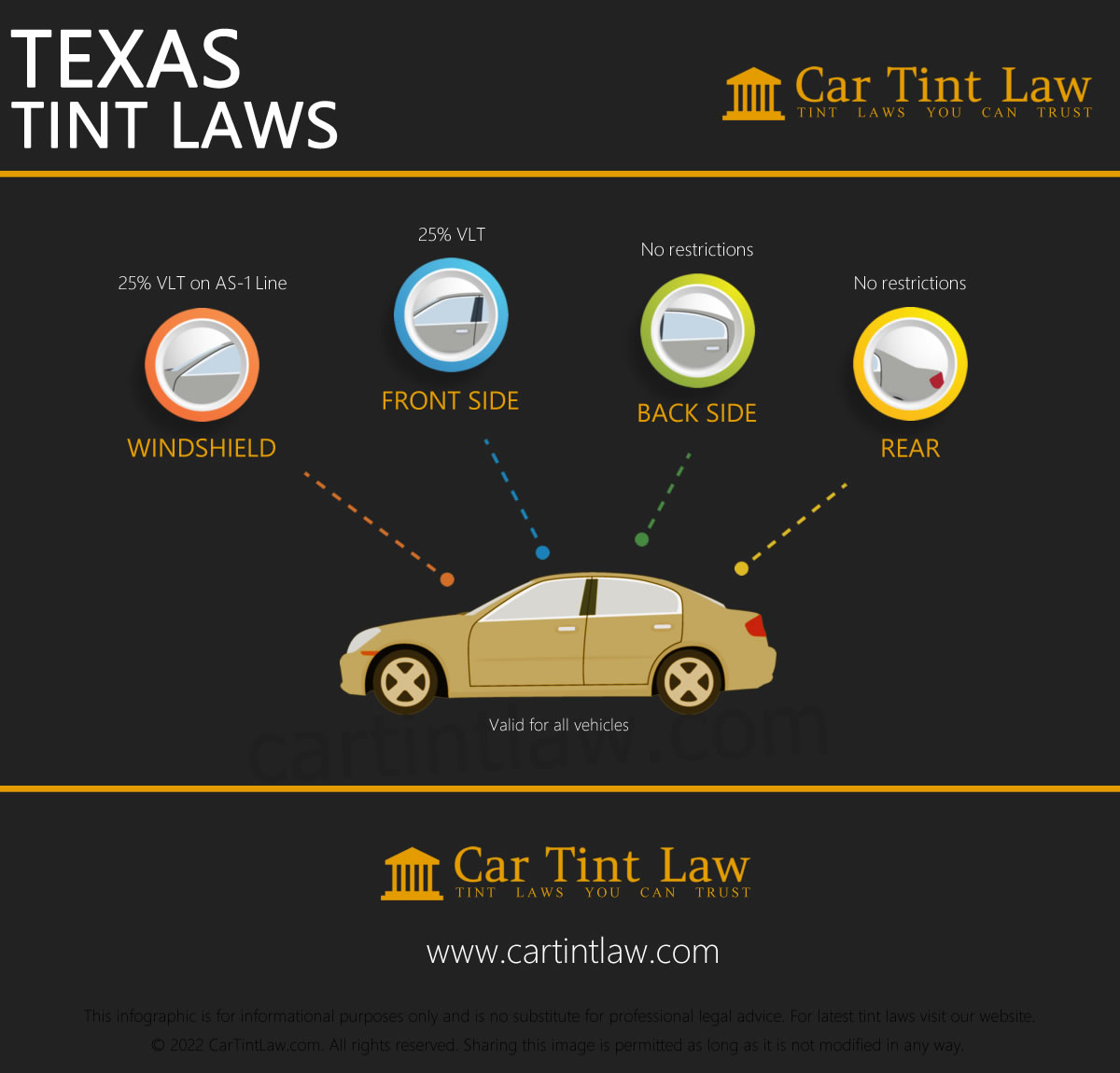
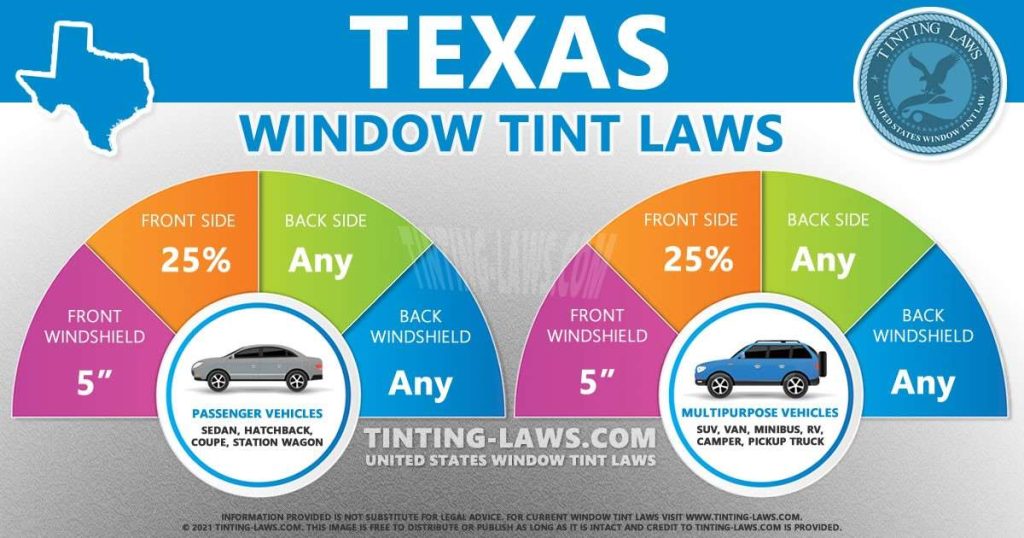
Perhaps the most critical regulation pertains to the front side windows – those on either side of the driver and front passenger. In Texas, these windows must allow more than 25% of visible light to pass through. This means your front side windows cannot be darker than 25% VLT. This rule is particularly strict compared to some other states and is enforced rigorously. The rationale behind this specific percentage is to ensure that drivers have adequate visibility for safe operation, especially when checking mirrors or making turns, and to allow law enforcement a reasonable view into the vehicle. It’s also important to note that the 25% VLT applies to the combination of the film and the factory tint on the glass. Many vehicle manufacturers include a slight tint in their glass from the factory (typically around 70-80% VLT). When adding aftermarket film, this factory tint must be factored in, as the combined VLT must still exceed 25%. A reputable tint shop will have a VLT meter to accurately measure this.
Rear and Back Side Windows: More Leeway
Fortunately, the law offers more flexibility for the rear side windows (those behind the driver) and the rear window (back windshield). For these windows, there are no specific VLT restrictions. This means you can apply any level of tint darkness you desire, including very dark “limo tint” (5% VLT) if you wish. This allows for greater privacy and heat reduction for passengers in the rear, which can be particularly beneficial for families traveling with children or individuals who frequently carry sensitive items. This relaxed rule for the rear of the vehicle acknowledges that visibility requirements for the driver are less critical through these windows, as long as the side mirrors are functional. However, even with dark rear tint, drivers must ensure their side mirrors are properly adjusted and provide adequate visibility to the rear.
Windshield Restrictions
The windshield, being the primary window for driver visibility, has the most stringent regulations. In Texas, you can only apply non-reflective tint to the top 5 inches of the windshield, or above the AS-1 line, whichever is lower. The AS-1 line is a marking typically found on the upper portion of the windshield by the manufacturer, indicating the legal limit for tint application. This allowance is primarily to reduce sun glare, a common issue for drivers navigating directly into the sun, which can be intense in the Texas climate. Beyond this strip, no tinting is permitted on the windshield. The entire rest of the windshield must allow 100% of visible light to pass through, ensuring unobstructed vision for the driver. This rule is universal across most states in the U.S., emphasizing the critical role of the windshield in driving safety.
Reflectivity and Color Regulations
Beyond darkness, Texas law also addresses the reflectivity and color of window tint. The tint film used on any window (front, back, or rear) cannot be more than 25% reflective. Highly reflective tints, often appearing mirrored, can create glare for other drivers, posing a safety hazard. They can also make it exceedingly difficult for law enforcement to see into a vehicle. This 25% reflectivity limit is a crucial aspect of the law designed to maintain safety for everyone on the road.
As for color, Texas law generally states that tint colors cannot be red, blue, or amber. These colors are typically reserved for emergency vehicles or have specific implications that could confuse other drivers or interfere with traffic signals. While most standard window tints come in shades of charcoal, gray, or bronze, it’s essential to ensure that your chosen tint color does not fall into these prohibited categories. Before committing to a unique tint, it’s always wise to confirm its legality with a reputable tint installer or the Texas Department of Public Safety’s guidelines.
Exemptions and Enforcement in the Lone Star State
While the general window tint laws in Texas are quite clear, there are specific circumstances under which exemptions may be granted. Understanding these exceptions, as well as the penalties for non-compliance, is essential for all drivers. The state aims to enforce these laws consistently to ensure public safety, but also recognizes certain individual needs.
Medical Exemptions: When Health Comes First
For individuals with specific medical conditions that make them particularly sensitive to sunlight, Texas law provides for a medical exemption. This means that if you or a passenger regularly riding in your vehicle suffers from a condition that requires additional protection from UV rays or bright sunlight, you may be allowed to have darker window tint than the standard legal limits. Common conditions that might qualify include lupus, porphyria, or severe photosensitivity.
To obtain a medical exemption, a written statement or prescription from a licensed physician or dermatologist is required. This document must specify the medical necessity for darker window tint. Once you have this documentation, it’s crucial to keep it in your vehicle at all times, as law enforcement officers may request to see it during a traffic stop. While a medical exemption allows for darker tint, it typically still prohibits metallic or highly reflective films, and there may be specific restrictions on the windshield area beyond the standard AS-1 line. It’s always best to consult with the Texas Department of Public Safety or a knowledgeable tint professional to understand the precise limitations and application process for a medical exemption. This provision underscores the state’s commitment to balancing regulatory enforcement with the health and well-being of its citizens.
Penalties for Non-Compliance
Driving with illegal window tint in Texas is a misdemeanor offense. The penalties typically start with a fine, which can vary depending on the specific county or municipality where the infraction occurs. While the initial fine might not be excessively high, it’s important to remember that this is often just the beginning.
Upon receiving a citation for illegal tint, you will usually be required to rectify the issue – meaning you’ll have to remove the non-compliant tint or replace it with legal tint. This can incur additional costs for tint removal and reapplication. If you fail to correct the tint and are pulled over again, you could face escalating fines and further legal consequences. In some cases, repeated offenses could lead to more serious penalties. Law enforcement officers in cities like Fort Worth, El Paso, and Corpus Christi are equipped with VLT meters to quickly and accurately measure the darkness of your window tint, making it relatively easy to identify non-compliant vehicles. Therefore, it is always advisable to ensure your vehicle meets all state requirements to avoid unnecessary hassle and expense.
Practical Advice for Texas Drivers and Travelers
Whether you’re a long-time resident of Texas or planning an extended road trip through the state, understanding and complying with window tint laws is a practical necessity. Adhering to these regulations not only keeps you on the right side of the law but also contributes to overall road safety.
Choosing a Reputable Tint Shop
One of the most crucial steps in ensuring your window tint is legal and high-quality is selecting the right installer. A reputable tint shop will have a thorough understanding of Texas window tint laws. They should be able to:
- Explain the VLT percentages and reflectivity limits clearly for each window on your specific vehicle.
- Measure factory tint and factor it into the overall VLT calculation when applying new film.
- Offer a variety of films that comply with state regulations, including those that provide excellent UV protection and heat rejection without being excessively dark or reflective.
- Provide a warranty on their work and the tint film itself.
- Have positive customer reviews and a solid reputation in the community.
Beware of installers who promise to put on “any tint you want” without discussing legal limitations. While they might accommodate your request for darker tint, it will ultimately be your responsibility if you are cited. Investing in a professional and compliant installation will save you headaches and money in the long run. Many quality installers are available in major metropolitan areas such as Houston and San Antonio, often near popular local attractions or shopping districts.
Maintaining Compliance on the Road
Once your vehicle is legally tinted, maintaining compliance is straightforward. Regularly check your vehicle, especially if you’ve recently purchased a used car, to ensure the tint hasn’t been altered or isn’t starting to peel, which could be an indicator of older, potentially non-compliant film. If you’re ever questioned by law enforcement about your tint, remain polite and cooperative. If you have a medical exemption, present your documentation immediately.
It’s also a good idea to be aware that some states surrounding Texas may have different window tint laws. If you’re planning an interstate road trip, it’s prudent to briefly research the tint laws of any states you’ll be traveling through. While most states have reciprocity agreements, meaning valid tint in your home state is generally accepted, it’s not always the case, and awareness can prevent unexpected issues.

Road Trips and Tint Considerations Across Texas
For those who love to explore the diverse landscapes and vibrant cities of Texas, from the historic Alamo in San Antonio to the coastal beauty of Galveston, legal window tint can significantly enhance your travel experience. The intense Texas sun is a constant companion on many journeys, making heat rejection and UV protection invaluable. Imagine a comfortable drive along the famous Riverwalk, or visiting Space Center Houston without worrying about your car’s interior baking in the parking lot.
Families planning vacations will especially appreciate the benefits of legal tint, keeping children and pets more comfortable on long drives to attractions like Six Flags Over Texas in Arlington or exploring the natural wonders of the Texas Hill Country. When booking accommodation, whether it’s a cozy bed and breakfast or a sprawling resort, the peace of mind knowing your vehicle is compliant with local laws is an added bonus to a stress-free trip. Ensuring your tint is legal allows you to focus on the adventure, the local culture, the delicious Texas barbecue, and the unforgettable experiences that the Lone Star State has to offer, without the distraction of potential legal woes.
In conclusion, while the benefits of window tint are clear, adherence to Texas’ specific laws is non-negotiable. By understanding the VLT percentages, reflectivity limits, and placement rules, and by choosing a reputable installer, drivers can enjoy the comfort, privacy, and protection of tinted windows while remaining fully compliant with state regulations. This ensures a safer and more enjoyable driving experience for everyone on the vast and beautiful roads of Texas.
LifeOutOfTheBox is a participant in the Amazon Services LLC Associates Program, an affiliate advertising program designed to provide a means for sites to earn advertising fees by advertising and linking to Amazon.com. Amazon, the Amazon logo, AmazonSupply, and the AmazonSupply logo are trademarks of Amazon.com, Inc. or its affiliates. As an Amazon Associate we earn affiliate commissions from qualifying purchases.