
Understanding the economic landscape of a destination is an integral part of planning any trip, especially when considering budget-conscious travel, family excursions, or extended business stays. The minimum wage is a fundamental component of this economic picture, directly impacting the cost of living, the affordability of local services, and ultimately, the overall expense of visiting or residing in a particular locale. For those planning a journey to or a longer sojourn in the State of Oklahoma, a clear grasp of its minimum wage regulations is paramount for informed decision-making and a more enjoyable experience.
While the primary focus of this exploration is the minimum wage itself, its implications ripple outwards, touching upon the feasibility of various travel styles, from budget backpacking through Oklahoma City to family vacations exploring the Ozark Mountains, or even the financial considerations for those undertaking longer business stays in hubs like Tulsa. This article aims to demystify the minimum wage in Oklahoma, providing the essential details that contribute to a comprehensive understanding of the state’s economic environment for travelers and temporary residents alike.
Understanding Oklahoma’s Minimum Wage Framework
The minimum wage in any given jurisdiction is a cornerstone of its labor laws, designed to establish a baseline income for workers. In the United States, wage regulations are a complex interplay of federal and state mandates, often leading to variations across different regions. For Oklahoma, this means navigating both national standards and specific state-level provisions.
Federal Minimum Wage and Its Application in Oklahoma
The Fair Labor Standards Act (FLSA), a landmark piece of federal legislation, sets the national minimum wage. As of the current federal standard, this rate is $7.25 per hour. Crucially, the FLSA stipulates that if a state’s minimum wage is higher than the federal rate, the higher state rate applies. Conversely, if a state has no minimum wage law or a rate lower than the federal one, the federal minimum wage prevails for covered employees.
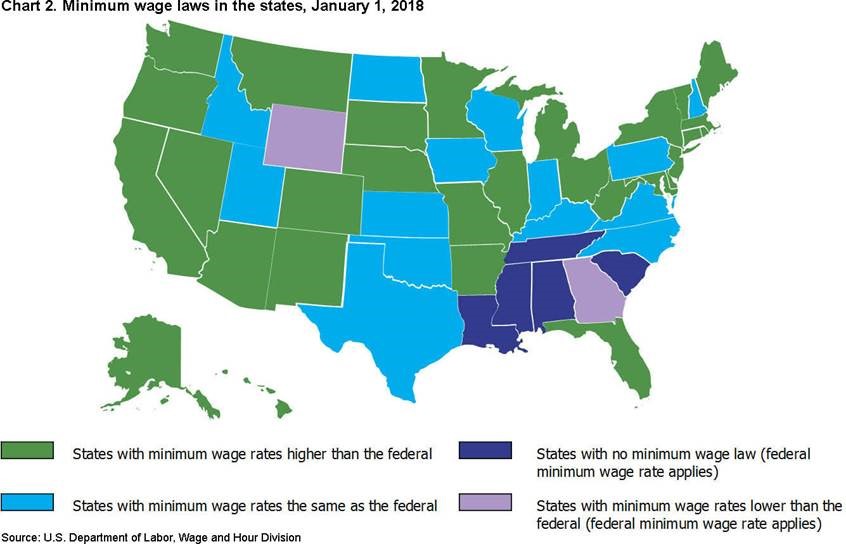
For Oklahoma, the FLSA acts as a foundational floor. However, the state has its own established minimum wage, which, in this instance, aligns with the federal rate. This alignment is a significant point for understanding the baseline earning potential within the state. It’s important for employers in Oklahoma to be aware of this dual compliance, ensuring that they meet or exceed whichever rate is more beneficial to the employee. This means that for most employees covered by both federal and state laws, the $7.25 per hour rate is the legal minimum they can be paid.
Oklahoma’s State Minimum Wage: A Deeper Look
While the FLSA sets a national standard, many states enact their own minimum wage laws. These state-level laws can offer higher rates than the federal minimum, providing greater financial protection to workers within their borders. In the case of Oklahoma, its state minimum wage has historically mirrored the federal rate. This means that, currently, the minimum wage in Oklahoma is $7.25 per hour for most employees.
This uniformity between federal and state minimum wages simplifies compliance for businesses operating across state lines but also means that Oklahoma does not offer a higher wage floor compared to the national standard. This detail is particularly relevant for travelers considering temporary work in Oklahoma, budgeting for services that rely on minimum wage labor, or assessing the general cost of goods and services influenced by wage levels. Understanding that the state minimum wage is $7.25 per hour is the first step in evaluating the economic context of any visit or stay.
Exemptions and Special Wage Categories in Oklahoma
While the $7.25 per hour rate is the general minimum wage in Oklahoma, labor laws are rarely monolithic. Various exemptions and special wage categories exist, designed to accommodate specific industries, types of employment, or employee classifications. Awareness of these nuances is critical for both employers and employees to ensure legal compliance and fair compensation.
Tipped Employees: A Differentiated Wage Structure
One of the most common areas where minimum wage differs is for tipped employees. These are individuals who customarily and regularly receive more than $30 per month in tips from patrons. For tipped employees in Oklahoma, a lower direct wage can be paid by the employer, with the expectation that tips will bring the total earnings up to at least the standard minimum wage.
Under the FLSA, employers can take a tip credit against their minimum wage obligation. This means that the employer is only required to pay a base cash wage of $2.13 per hour to tipped employees, provided that the employee’s tips, combined with this cash wage, equal at least the federal minimum wage of $7.25 per hour. If an employee’s tips in a given pay period do not bring their total earnings up to $7.25 per hour, the employer must make up the difference. This is a crucial distinction for understanding the effective hourly earnings of many service industry workers in Oklahoma, particularly in sectors like hospitality which are common in tourist destinations.
Other Potential Exemptions and Considerations
Beyond tipped employees, other categories of workers may be exempt from minimum wage requirements or subject to different pay structures. These can include:
- Certain agricultural workers: Depending on the size of the employer and the specific nature of the work, some agricultural laborers might fall outside the purview of standard minimum wage laws.
- Domestic employees: Similar to agricultural workers, certain in-home domestic staff may have different wage regulations.
- Individuals with disabilities: The FLSA allows for the payment of a special minimum wage to workers with disabilities, provided that a certificate is obtained from the U.S. Department of Labor. This wage is based on the individual’s productive capacity.
- Outside salespersons: Employees primarily engaged in making sales and customarily and regularly away from their employer’s place of business are typically exempt from minimum wage and overtime provisions.
- Learners and apprentices: In some cases, specific provisions may allow for a lower training wage for learners and apprentices undergoing on-the-job training.
It is imperative for both employers and employees to consult the official resources of the Oklahoma Department of Labor and the U.S. Department of Labor to ascertain the precise applicability of minimum wage laws to specific roles and industries. Ignorance of these exemptions can lead to significant legal liabilities for businesses and financial disadvantages for workers.
Impact of Minimum Wage on Travel and Lifestyle in Oklahoma
The minimum wage, while a legal construct for labor, has tangible effects on the everyday lives of residents and, by extension, on the experiences of visitors to the State of Oklahoma. Understanding the prevailing wage rate provides valuable insight into the cost of living and the affordability of various lifestyle choices, including travel and leisure activities.
Budget Travel and Affordability
For travelers who prioritize budget-conscious exploration, the minimum wage serves as an indirect indicator of the cost of essential services. A lower minimum wage can translate to more affordable prices for goods and services, such as meals at local diners, public transportation, and entry fees to smaller attractions. In Oklahoma, with its minimum wage aligned with the federal $7.25 per hour, travelers might find that their travel budget stretches further for certain expenditures compared to regions with significantly higher minimum wages.
This affordability can be particularly appealing for family trips, where managing expenses is often a primary concern. It also impacts the feasibility of longer stays, such as extended vacations or temporary work assignments, by influencing the cost of accommodation and daily living expenses. For instance, finding affordable lodging in cities like Oklahoma City or Tulsa might be more achievable when the local economy operates with a baseline wage of $7.25 per hour.
Business Stays and Cost of Services
For individuals undertaking business trips, understanding the local economic environment, including minimum wage, can inform decisions about travel expenses. The cost of hotel services, restaurant meals, and local transportation are all influenced by wage levels. In Oklahoma, businesses may find that the operational costs for services they utilize during their stays are relatively moderate due to the prevailing minimum wage. This can make Oklahoma an attractive destination for corporate travel and conferences, as it may offer a more cost-effective operational base compared to states with higher labor costs.
Furthermore, for those on longer business assignments, the minimum wage provides a benchmark for understanding the local cost of living, which can be relevant for per diem calculations or personal budgeting. While business travelers often have expenses covered, a general awareness of economic conditions enhances the overall understanding of the destination.
Implications for Luxury and Experiential Travel
While a lower minimum wage might suggest general affordability, it’s also important to consider its implications for different travel segments. In luxury travel, where the focus is on premium services and unique experiences, the minimum wage might have a less direct impact on the price of high-end accommodations like resorts or exclusive tours. However, the overall economic health of a region, partly influenced by wage levels, can still affect the availability and quality of luxury offerings.
For experiential travel, which often involves engaging with local culture and activities, the minimum wage can subtly influence the types of businesses that thrive. Lower operational costs might support a wider array of small, independent businesses and local eateries, offering travelers more authentic and diverse experiences. This economic backdrop can shape the character of a city like Tulsa or Oklahoma City, making them unique destinations for those seeking an immersive cultural encounter. Ultimately, the minimum wage in Oklahoma plays a role, however indirect, in shaping the affordability and diversity of experiences available to all types of travelers.
Navigating Labor Laws for Travelers and Temporary Residents
For individuals who are not permanent residents of Oklahoma but plan to work, even temporarily, or engage in employment-related activities, a clear understanding of the state’s labor laws, including minimum wage, is indispensable. This knowledge ensures fair compensation and helps avoid potential legal complications.
Worker Rights and Responsibilities in Oklahoma
All employees working within the State of Oklahoma are entitled to receive at least the minimum wage established by law, unless they fall under specific exemptions. This right is protected by both federal and state labor regulations. Workers have the right to be paid accurately and on time, and to be informed of their wage rates.
Key responsibilities for workers include understanding their job classification, whether they are considered exempt or non-exempt from minimum wage laws, and how tips are handled if they are in a tipped position. It is advisable for any temporary worker to keep records of their hours worked and pay received. In the event of suspected violations, workers can seek recourse through official channels.

Resources for Information and Assistance
Navigating labor laws can sometimes be complex. Fortunately, numerous resources are available to provide clarity and assistance for both employers and employees in Oklahoma.
The Oklahoma Department of Labor is the primary state agency responsible for enforcing labor laws, including minimum wage regulations. Their website and offices provide official information, fact sheets, and guidance on wage and hour issues. They can also assist with filing complaints if workers believe their rights have been violated.
Additionally, the U.S. Department of Labor’s Wage and Hour Division is another crucial resource. The FLSA, which sets the federal minimum wage, is enforced by this division. Their website offers extensive information, publications, and tools to help understand wage and hour requirements across the United States.
For travelers who might be considering short-term employment or freelance work while visiting areas like the Ozark Mountains or engaging in activities in Oklahoma City or Tulsa, familiarizing themselves with these resources before or upon arrival is a prudent step. It ensures a smoother and more legally compliant experience, allowing for a greater focus on enjoying their time in the Sooner State.
LifeOutOfTheBox is a participant in the Amazon Services LLC Associates Program, an affiliate advertising program designed to provide a means for sites to earn advertising fees by advertising and linking to Amazon.com. Amazon, the Amazon logo, AmazonSupply, and the AmazonSupply logo are trademarks of Amazon.com, Inc. or its affiliates. As an Amazon Associate we earn affiliate commissions from qualifying purchases.