
Navigating the requirements for registering a vehicle in Texas is a crucial step for any new resident or for those bringing a vehicle into the state. This process ensures your vehicle is legally compliant, allowing you to drive on Texas roads without issue. While it might seem straightforward, understanding the specific documents and procedures can save you time and potential frustration. This guide will break down exactly what you need to register your car in the Lone Star State, covering everything from initial inspections to proof of ownership.
Gathering the Essential Documentation
The foundation of registering your car in Texas lies in presenting the correct paperwork. The Texas Department of Motor Vehicles (DMV), often referred to as the County Tax Assessor-Collector’s office, is the governing body responsible for this process. They have specific requirements to verify your vehicle’s identity, your ownership, and its roadworthiness.
Proof of Ownership
This is arguably the most critical piece of documentation. You will need to present a valid title to the vehicle.
- Original Title: For most vehicles, the original certificate of title is required. This document legally proves you are the rightful owner. If you purchased the vehicle from a dealership, they will typically handle the initial title transfer and registration process for you. If you bought from a private seller, ensure the title is properly signed over to you by the seller.
- Salvage or Rebuilt Title: If your vehicle has a salvage or rebuilt title, additional documentation and inspections may be required. This often involves a state-mandated inspection to ensure the vehicle has been repaired to a safe standard.
- Out-of-State Title: If you are registering a vehicle that was previously titled in another state, you will need that state’s original title. The Texas DMV will then issue a new Texas title for your vehicle.
Proof of Insurance
Texas law mandates that all drivers carry a minimum level of liability insurance. You must provide proof of this coverage when registering your vehicle.
- Liability Coverage: The state requires at least $30,000 of bodily injury liability coverage per person, $60,000 of bodily injury liability coverage per accident, and $25,000 of property damage liability coverage per accident.
- Insurance Card or Policy Declaration Page: A current insurance card or a copy of your policy’s declaration page, issued by a Texas-licensed insurance company, is acceptable proof. This document must be valid at the time of registration.
Vehicle Inspection Certificate
Before you can register your vehicle, it must pass a state inspection. This inspection ensures the vehicle meets Texas safety and emissions standards.
- Safety Inspection: All gasoline-powered vehicles 25 years old or newer, and diesel-powered vehicles 25 years old or newer (with a GVWR of 14,000 lbs. or less), require an annual safety inspection. This inspection checks critical components like brakes, lights, tires, and steering.
- Emissions Testing: In certain designated counties, a more comprehensive inspection including an emissions test is required. These counties include: Brazoria, Chambers, Collin, Dallas, Denton, Fort Bend, Galveston, Harris, Hood, Hunt, Johnson, Kaufman, Liberty, Medina, Montgomery, Parker, Rockwall, Tarrant, Travis, Van Zandt, Walker, Waller, and Wise.
- Inspection Station: Ensure you visit a state-licensed inspection station. Upon passing, you will receive an inspection certificate, which is often digitally recorded and linked to your vehicle’s VIN.
Proof of Residency
As you are registering your vehicle in Texas, you’ll need to prove you are a resident.
- Utility Bills: Recent utility bills (electricity, gas, water) in your name at your Texas address are commonly accepted.
- Lease Agreement or Mortgage Statement: If you rent or own your home, a copy of your lease agreement or mortgage statement can serve as proof of residency.
- Texas Driver’s License: If you have already obtained a Texas driver’s license, this is excellent proof of residency.
Identification
You will need to present valid government-issued identification.
- Texas Driver’s License or ID Card: This is the preferred form of identification.
- Other Valid IDs: If you do not yet have a Texas driver’s license, other forms of identification such as a U.S. passport, military ID, or a Texas Handgun License may be accepted.
The Registration Process Itself
Once you have all your documents in order, you can proceed to the registration process. This typically involves a visit to your local County Tax Assessor-Collector’s office.
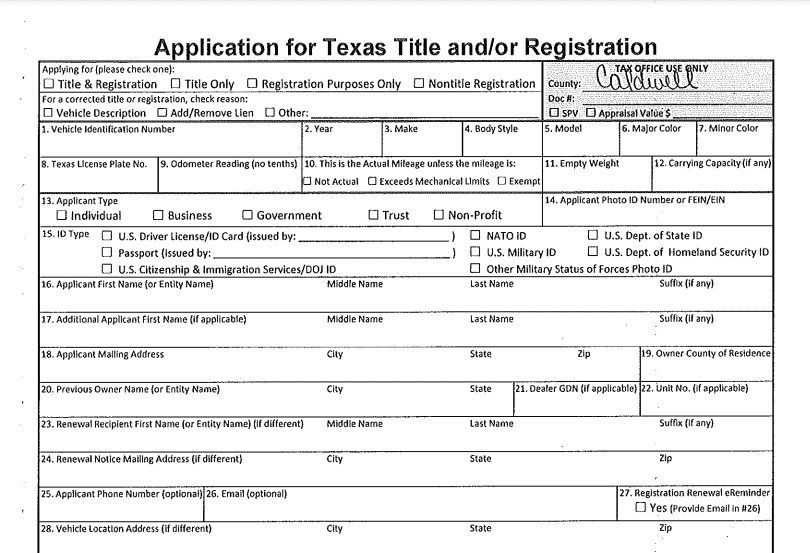
Application for Registration
You will be required to fill out an application for vehicle registration. This form collects essential information about you and your vehicle. It’s often available for download on the Texas DMV website or at the county office.
Payment of Fees and Taxes
Several fees and taxes are associated with vehicle registration in Texas.
- Registration Fee: This is an annual fee that varies based on the vehicle type and weight.
- Title Fee: If you are transferring a title, there will be a separate fee for issuing a new Texas title.
- Vehicle Inventory Tax (IVT): This is an ad valorem tax based on the value of the vehicle. It is paid when you register your vehicle for the first time in Texas. Subsequent renewals do not require IVT payment.
- Other Local Fees: Some counties may have additional local fees for specific services.
Obtaining Your License Plates and Decals
Upon successful completion of the registration process and payment of all fees, you will be issued your official Texas license plates and registration decals.
- License Plates: You will receive a set of license plates for your vehicle. Texas offers various specialty plates, which may have additional fees.
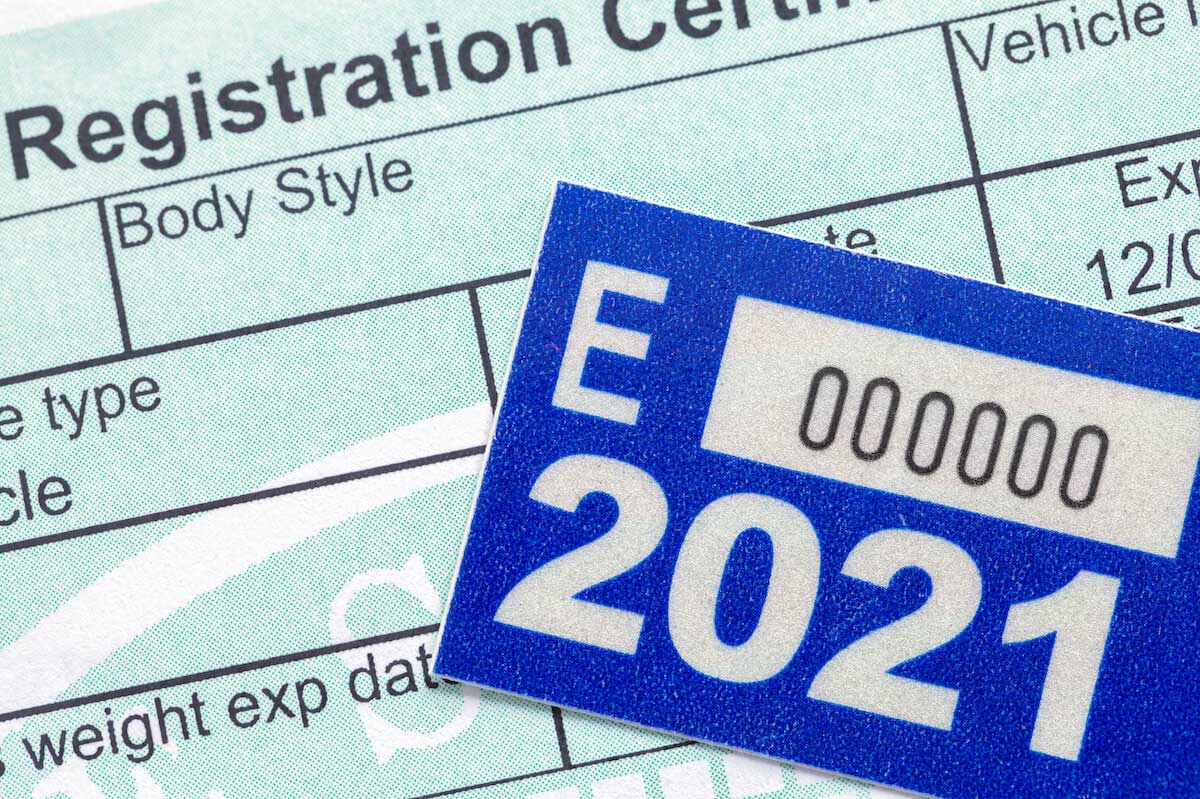
- Registration Decal: The registration decal is affixed to your license plate and indicates the expiration date of your registration. Make sure to display this decal prominently as required by law.
Special Circumstances and Considerations
While the general process is consistent, certain situations might require additional steps or documentation.
New Residents Registering a Vehicle
If you have recently moved to Texas and brought your vehicle with you, you have a limited time to register it.
- Time Limit: Generally, new residents have 90 days from establishing residency to register their vehicle in Texas. This includes obtaining Texas license plates and a Texas driver’s license.
- Title Transfer: You will need to surrender your out-of-state title to the Texas DMV to receive a new Texas title.
Purchasing a New or Used Vehicle in Texas
When you buy a vehicle from a dealership in Texas, the dealership typically handles much of the initial paperwork for you.
- Dealership Assistance: Dealerships will usually process the title and registration application, collect the fees and taxes, and provide you with temporary tags. They will then mail you your permanent license plates and registration documents.
- Private Sales: If you purchase a vehicle from a private seller, you are responsible for completing the title transfer and registration process at the County Tax Assessor-Collector’s office. Ensure you have a properly executed bill of sale along with the signed title.
Motorcycles and Other Vehicle Types
The requirements for registering motorcycles, trailers, and other types of vehicles are similar, but there might be specific nuances.
- Motorcycles: Motorcycles require an annual safety inspection and proof of insurance, just like cars.
- Trailers: Trailers weighing over 7,500 pounds gross weight require registration. Smaller utility trailers may not require registration, but it’s advisable to check current Texas DMV regulations for specifics.
Maintaining Your Registration
Vehicle registration in Texas is not a one-time event. It requires annual renewal.
Renewal Process
Texas sends out renewal notices by mail or email prior to your registration’s expiration.
- Online Renewal: You can often renew your vehicle registration online through the Texas DMV website or your county’s Tax Assessor-Collector’s website. This is usually the most convenient method.
- In-Person Renewal: You can also renew in person at a County Tax Assessor-Collector’s office.
- Mail-In Renewal: Some counties offer mail-in renewal options.
Requirements for Renewal
To renew your registration, you will generally need:
- Your current registration renewal notice or your license plate number.
- Proof of current liability insurance.
- A valid Texas vehicle inspection certificate (if required for your vehicle and county).
- Payment for the renewal fees.
By understanding these requirements and preparing your documents in advance, you can ensure a smooth and efficient process for registering your car in Texas. This proactive approach will help you legally operate your vehicle and enjoy all that the great state has to offer.
LifeOutOfTheBox is a participant in the Amazon Services LLC Associates Program, an affiliate advertising program designed to provide a means for sites to earn advertising fees by advertising and linking to Amazon.com. Amazon, the Amazon logo, AmazonSupply, and the AmazonSupply logo are trademarks of Amazon.com, Inc. or its affiliates. As an Amazon Associate we earn affiliate commissions from qualifying purchases.