
In the fast-paced world of the hospitality industry, a hotel never truly sleeps. While guests in New York City or London retreat to their rooms for the night, a critical operational shift begins. This is the realm of the night audit. The night audit is the process that bridges the gap between two business days, ensuring that all financial transactions are reconciled and that the hotel is prepared for the coming morning. For prestigious brands like Marriott International or Hilton Hotels, the night audit is the backbone of financial integrity and guest service continuity.
The Essential Role of the Night Auditor
The night auditor is a unique figure in the hotel ecosystem. Part accountant, part front desk agent, and part security officer, this professional handles the “graveyard shift” with a focus on precision and detail. In major global hubs like Dubai or Singapore, where luxury hotels operate at high occupancy year-round, the night auditor ensures that every cent spent by a guest—whether on a spa treatment or a meal at a Michelin-starred restaurant—is accurately recorded.
Bridging the Gap Between Day and Night
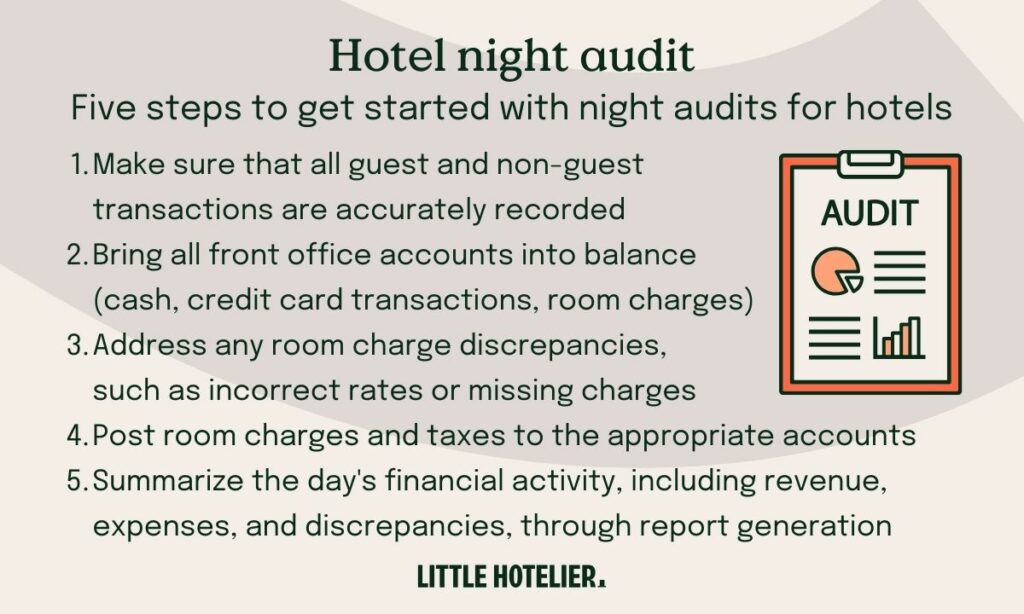
A hotel’s business day does not naturally end at midnight; it ends when the night audit is “run.” This process involves transitioning the Property Management System (PMS) from one date to the next. Before this transition can happen, the night auditor must verify that all guests who were supposed to arrive have checked in or have been marked as “no-shows.” In busy tourist destinations like Paris or Rome, managing these late-night arrivals and cancellations is vital for maintaining accurate inventory for the following day.
Financial Oversight and Accuracy
Beyond checking guests in, the night auditor acts as a guardian of the hotel’s revenue. They perform a “bucket check,” which is a manual or digital verification of every guest folio against the actual registration records. This ensures that the room rate charged matches the agreed-upon price. At high-end resorts such as the Four Seasons or The Ritz-Carlton, where rates can vary significantly based on packages and amenities, this financial oversight prevents costly disputes during the morning checkout rush.
The Step-by-Step Process of the Night Audit
The night audit is a structured sequence of tasks that requires both technical skill and patience. While modern software has automated many parts of the job, the fundamental logic remains the same. Whether in a boutique hotel in France or a massive convention center hotel in Las Vegas, the auditor follows a strict protocol to close the books.
Reconciling Daily Transactions
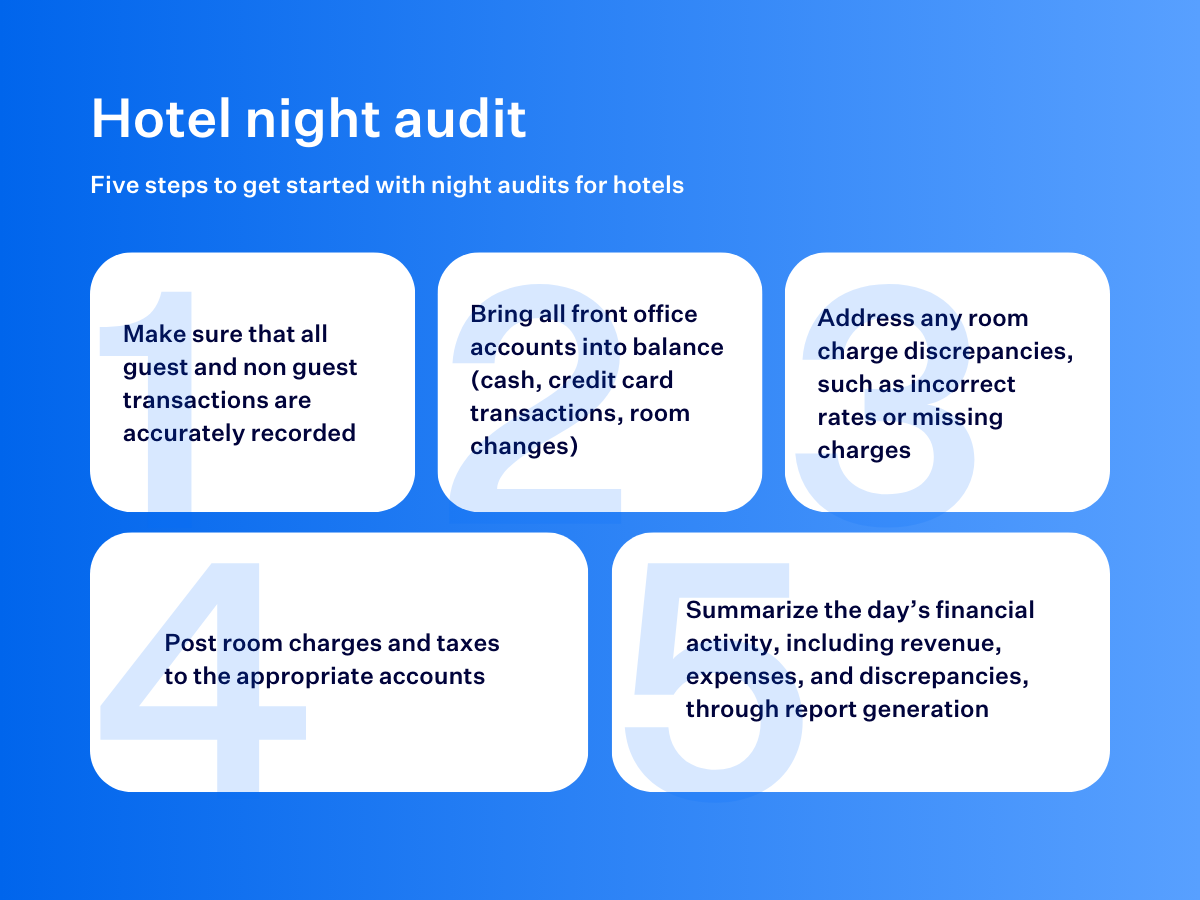
The first major task is reconciling all departmental accounts. This includes the front desk, the bar, the restaurant, and even the gift shop. The auditor compares the sales reports from the Point of Sale (POS) systems with the entries in the PMS. If a guest at the Burj Al Arab ordered room service, the auditor ensures that the charge was correctly posted to the guest’s room number and not lost in the system. Discrepancies must be investigated and corrected before the final audit run.
Processing Room and Tax Charges
Once the individual transactions are balanced, the auditor performs the “Post Room and Tax” function. This is the heart of the night audit. The system automatically applies the nightly room rate and any applicable local or state taxes to every occupied room in the hotel. In the United States, these taxes can include occupancy tax, sales tax, and local tourism fees. By performing this at a quiet hour, usually between 2:00 AM and 4:00 AM, the auditor ensures that guest folios are up-to-date by the time the first guest heads to the airport.
Closing the Business Day
After all charges are posted and verified, the auditor officially closes the business day. This generates a series of essential reports for the management team. These reports detail the total revenue, occupancy percentage, Average Daily Rate (ADR), and Revenue Per Available Room (RevPAR). For a hotel manager at The Savoy in United Kingdom, these reports are the first thing they review each morning to gauge the property’s performance and make strategic decisions for the future.
Why Night Auditing is Crucial for Modern Hospitality
In an era of instant gratification and digital reviews, the accuracy of a hotel’s financial records is more important than ever. A single error on a guest’s bill can lead to a negative review on travel platforms, impacting the hotel’s reputation in competitive markets like Tokyo or Hong Kong. Night auditing provides a final layer of defense against such errors.
Enhancing Guest Security and Experience
The night auditor is often the only management representative on-site during the overnight hours. This makes them responsible for the safety and security of the property. They monitor security cameras, handle emergency situations, and assist guests with unusual requests. In sprawling resorts in Australia or Mexico, the night auditor ensures that the quiet of the night is maintained, providing a peaceful environment for the guests to rest before their next day of exploration.
Strategic Data for Hotel Management
The data compiled during the night audit is not just about balancing books; it is about strategic planning. By analyzing trends in the night audit reports, hotels can identify patterns in guest behavior. For example, if the reports consistently show high late-night room service demand in Los Angeles, the hotel might decide to expand its overnight menu. The audit provides a clear picture of cash flow, allowing owners of properties like the Bellagio to manage their resources more effectively.
Challenges and Evolution of Night Auditing
The role of the night auditor has evolved significantly over the decades. In the past, auditors worked with massive paper ledgers and mechanical adding machines. Today, sophisticated software allows for a more streamlined approach, but new challenges have emerged, particularly in the realm of cybersecurity and software integration.
Navigating Software Integration
Modern hotels use a variety of platforms to manage bookings, including third-party sites like Expedia or Booking.com. Integrating these external reservations with the internal PMS can sometimes lead to data mismatches. The night auditor must be proficient in troubleshooting these digital bridges. In a global city like Berlin, where travelers arrive from all corners of the world, ensuring that these international bookings are correctly reflected in the system is a top priority.

The Human Element in a Digital Age
While automation can handle the math, it cannot replace the critical thinking of a human auditor. A computer might not notice that a suspicious transaction pattern could indicate credit card fraud, but an experienced night auditor will. Whether working at a quiet bed and breakfast in Canada or a high-energy hotel in Bangkok, the human element remains essential. The auditor’s ability to multitask—balancing accounts while simultaneously checking in a tired traveler from Spain—is what keeps the hotel industry’s standard of service high.
Ultimately, night auditing is the silent pulse of the hotel. It is a meticulous, demanding, and vital function that ensures the business remains profitable and the guests remain satisfied. When the sun rises over Sydney or San Francisco, and the lobby fills with the morning bustle, the work of the night auditor allows the day staff to step into a perfectly organized and financially sound environment, ready to welcome the world once again.
LifeOutOfTheBox is a participant in the Amazon Services LLC Associates Program, an affiliate advertising program designed to provide a means for sites to earn advertising fees by advertising and linking to Amazon.com. Amazon, the Amazon logo, AmazonSupply, and the AmazonSupply logo are trademarks of Amazon.com, Inc. or its affiliates. As an Amazon Associate we earn affiliate commissions from qualifying purchases.