
Understanding the minimum wage in any location is crucial for both travelers and those considering extended stays, offering insights into the local economy and cost of living. While the primary focus of our website revolves around travel, destinations, accommodation, and lifestyle, a grasp of essential economic factors like minimum wage can significantly enrich your planning and experience. For instance, knowing the prevailing minimum wage in Oregon can inform your budget for local activities, dining, and even influence your choice of hotels or apartments for a long-term stay. This article delves into the specifics of Oregon’s minimum wage, providing a comprehensive overview that complements your exploration of this beautiful state.

Understanding Minimum Wage in Oregon
The minimum wage is the lowest hourly wage that employers are legally permitted to pay their employees. It’s a critical component of labor law, designed to protect workers from exploitative wage practices and ensure a basic standard of living. In Oregon, the minimum wage is not a single, uniform rate across the entire state. Instead, it is structured with different rates for distinct geographic regions, acknowledging the varying costs of living in urban centers versus rural areas. This tiered approach aims to balance economic realities with the need to provide a livable wage.
The state’s minimum wage is adjusted annually based on inflation, ensuring that its purchasing power is maintained over time. These adjustments are typically announced well in advance, allowing businesses and employees to prepare for any changes. Employers are legally obligated to pay at least the prevailing minimum wage for their region to all eligible employees. Failing to do so can result in significant penalties, including back pay, fines, and legal action. For visitors, understanding this can offer a broader perspective on the local economy, influencing expectations regarding the cost of services and the types of experiences available.
How Oregon’s Minimum Wage is Determined
The process for determining Oregon’s minimum wage is overseen by the Oregon Bureau of Labor and Industries (BOLI). The legislature has established a framework that allows for annual adjustments to prevent erosion of wages due to inflation. This mechanism is designed to be predictable and transparent.
Annual Adjustments for Inflation
Each year, the minimum wage rates are adjusted on January 1st. This adjustment is tied to a specific inflation index, typically the Consumer Price Index (CPI). The CPI measures the average change over time in the prices paid by urban consumers for a market basket of consumer goods and services. By linking the minimum wage to inflation, the state aims to ensure that workers can maintain their standard of living even as prices rise. For example, if inflation is reported at 3%, the minimum wage would be expected to increase by approximately 3%. This ensures that the real value of the minimum wage, which represents its purchasing power, remains relatively stable.
This automatic adjustment mechanism is a key feature of Oregon’s minimum wage law, differentiating it from states where adjustments are made less frequently or require legislative action. This provides a degree of certainty for both employers and employees regarding future wage expectations. Travelers might notice that service costs can fluctuate slightly year to year due to these adjustments, a subtle but important aspect of the local economic landscape.
Regional Variations in Minimum Wage Rates
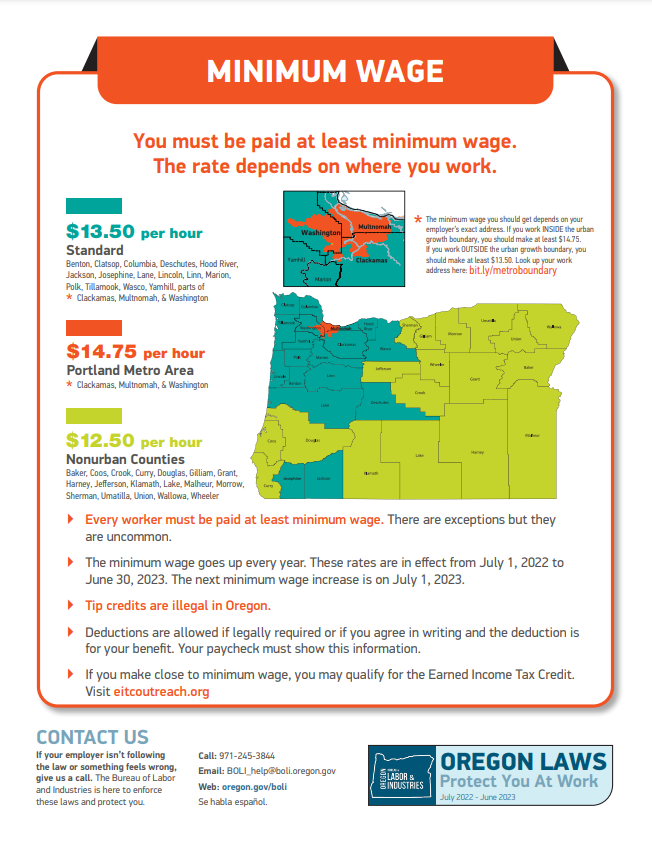
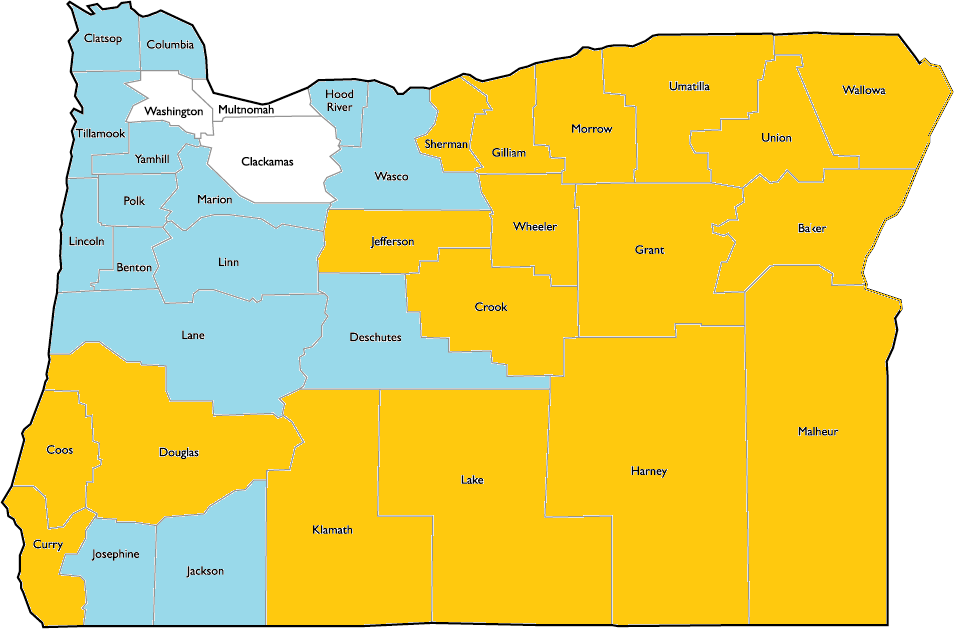
One of the most distinctive features of Oregon’s minimum wage policy is its division into three distinct regions. This approach recognizes that the cost of living, particularly housing and essential goods, can vary significantly between metropolitan areas and more rural parts of the state. The regions are defined as follows:
- Portland Metropolitan Area: This region encompasses the city of Portland and its surrounding metropolitan area. Due to its status as a major urban center, this region typically has the highest minimum wage rate. This reflects the higher costs associated with living and operating businesses in a large city.
- Standard Minimum Wage Area: This category includes most of the rest of Oregon that is not within the Portland metropolitan area or the specific urban enterprise areas. The minimum wage here is generally lower than in the Portland area but higher than in the nonurban areas.
- Nonurban Minimum Wage Area: This region comprises more rural counties and areas where the cost of living is generally lower. Consequently, the minimum wage set for these areas is the lowest of the three tiers.
The specific boundaries of these regions are defined by BOLI and are updated periodically. Employers are responsible for determining which wage rate applies to their employees based on the physical location where the work is performed. For visitors staying in different parts of the state, this regional structure can subtly influence the pricing of goods and services, from a cup of coffee in Portland to a souvenir in a smaller town near the Oregon Coast.
Current Minimum Wage Rates in Oregon (as of the latest available data)
It’s important to note that minimum wage rates are subject to annual adjustments. The figures provided below are illustrative of how the rates are structured and represent the rates in effect during a specific period. For the most up-to-date figures, always consult the official Oregon Bureau of Labor and Industries website.
2024 Minimum Wage Rates
For the period beginning January 1, 2024, and through December 31, 2024, the minimum wage rates in Oregon were set as follows:
- Portland Metropolitan Area: $15.95 per hour. This rate applies to employees working within the defined urban growth boundary of Portland, as well as within the cities of Gresham, Hillsboro, Lake Oswego, Oregon City, Sherwood, Tigard, and Wilsonville.
- Standard Minimum Wage Area: $14.20 per hour. This rate applies to employers located in counties not included in the Portland Metropolitan Area or the specific urban enterprise areas. This covers a significant portion of the state, including popular destinations like Bend, Eugene, and areas along the Oregon Coast that are not specifically designated as urban enterprise zones.
- Nonurban Minimum Wage Area: $13.45 per hour. This rate applies to employers located in counties with populations under a certain threshold and not within the Portland Metropolitan Area or specific urban enterprise areas. These are typically the more rural and less populated regions of Oregon.
These rates are a critical consideration for anyone planning a trip that involves paid work, such as seasonal tourism jobs, or for individuals considering relocating for work or a lifestyle change. For example, a worker in the hospitality industry at a resort near Mount Hood would be subject to the Standard Minimum Wage rate, while a hotel employee in downtown Portland would be covered by the higher Portland Metropolitan rate.
Factors Influencing Wage Levels for Specific Industries
While the minimum wage sets a floor, certain industries in Oregon may have their own specific wage considerations, influenced by factors like union agreements, the highly competitive nature of the tourism sector, and the demand for specialized skills.
For instance, the hospitality industry, which includes many hotels, resorts, and restaurants, is a significant employer in Oregon. In popular tourist destinations like Ashland or areas surrounding Crater Lake National Park, employers might offer wages slightly above the minimum to attract and retain staff, especially during peak seasons. This can also be influenced by the cost of accommodation for seasonal workers or the availability of public transportation.
Similarly, businesses in sectors requiring specific skills, such as those in technology or specialized tourism services, may offer compensation packages that far exceed the minimum wage. However, for entry-level positions or roles with less specialized requirements, the minimum wage serves as the baseline. Understanding these nuances can be beneficial for travelers seeking short-term work, or for those planning a budget travel experience and looking to understand the cost of services they might utilize. For example, the price of a guided tour near a prominent landmark might reflect not only the guide’s expertise but also the prevailing wage rates in that region.
Impact of Minimum Wage on Travel and Lifestyle in Oregon
The minimum wage in Oregon has a tangible impact on both the cost of living and the overall travel experience within the state. For visitors, understanding these wage structures can provide valuable context for budgeting and appreciating the local economy.
Cost of Services and Goods
A higher minimum wage generally translates to higher labor costs for businesses. These costs are often passed on to consumers in the form of slightly higher prices for goods and services. This means that dining at a restaurant, purchasing souvenirs, or utilizing local services like taxis or guided tours might be priced differently in Oregon compared to regions with lower minimum wages. For example, the cost of a meal at a restaurant in Portland might be influenced by the higher minimum wage in that metropolitan area, while a similar establishment in a more rural county could have slightly lower menu prices.
This effect is particularly noticeable in the tourism sector, where a significant portion of the workforce is employed in service roles. The quality of service at hotels, the attention from guides at attractions, and the overall hospitality experience are all indirectly shaped by the prevailing wage rates. While Oregon is known for its stunning natural beauty, from the Columbia River Gorge to the Oregon Dunes, the economic underpinnings of the services catering to tourists are influenced by labor laws like the minimum wage.
Planning Your Oregon Trip
For travelers planning a trip, especially those opting for budget travel or seeking affordable experiences, being aware of the minimum wage can inform budgeting. For instance, while you might find a wide range of accommodation options from luxury resorts to more modest motels, the pricing of these options can be influenced by the local wage structure. Similarly, the cost of food, whether at a sit-down restaurant or a casual eatery, will reflect the labor expenses of the establishment.
For those considering a family trip or even a more extended stay, understanding regional wage differences can also be a factor in choosing where to base your activities. Spending time in the Portland metropolitan area might present a slightly higher cost for some services compared to exploring smaller towns in eastern Oregon.
Ultimately, Oregon’s minimum wage policies are an integral part of its economic landscape, contributing to the cost of living and shaping the visitor experience. By understanding these factors, travelers can better plan their itineraries, manage their budgets, and gain a deeper appreciation for the economic realities of the places they visit. Whether you’re exploring the vibrant city life of Portland, enjoying the scenic beauty of the Oregon Coast, or venturing into the rugged Wallowa Mountains, this knowledge adds another layer to your travel journey.
LifeOutOfTheBox is a participant in the Amazon Services LLC Associates Program, an affiliate advertising program designed to provide a means for sites to earn advertising fees by advertising and linking to Amazon.com. Amazon, the Amazon logo, AmazonSupply, and the AmazonSupply logo are trademarks of Amazon.com, Inc. or its affiliates. As an Amazon Associate we earn affiliate commissions from qualifying purchases.