
While the allure of the Golden State is undeniable, drawing millions of visitors annually to its sun-drenched beaches, world-class theme parks, and diverse cultural landscapes, understanding the intricacies of California’s labor laws, particularly concerning overtime pay, is crucial for anyone considering working or doing business within its borders. This article delves into the fundamental aspects of overtime pay in California, a topic that impacts both employees and employers, and which can have significant implications for your travel experiences and lifestyle choices if you’re considering a longer stay or a working holiday in this vibrant state.
California’s overtime regulations are designed to ensure fair compensation for employees who work beyond their standard hours. For travelers considering extended stays that might involve employment, or for those dreaming of a working vacation in cities like Los Angeles or San Francisco, understanding these rules is paramount. This knowledge can transform a potentially stressful situation into a well-managed opportunity, allowing you to fully enjoy the travel and tourism experiences California has to offer. Whether you’re planning to explore the wonders of Yosemite National Park, relax at a luxurious resort in Napa Valley, or immerse yourself in the local culture of San Diego, a basic grasp of labor laws contributes to a smoother, more informed journey.
Understanding the Basics of California Overtime
At its core, overtime pay in California mandates that eligible employees receive a higher rate of pay for hours worked beyond a standard workday or workweek. This system is built upon the principle of ensuring workers are adequately compensated for extra effort and to discourage excessive working hours, promoting a healthier work-life balance. For anyone contemplating a lifestyle that involves working while exploring California’s diverse attractions, from the attractions of Southern California to the landmarks of the Northern California coast, understanding these regulations is a fundamental step.
The Standard Workday and Workweek
In California, a standard workday is defined as any day in which an employee works eight hours or less. Similarly, a standard workweek consists of any week in which an employee works 40 hours or less. Overtime pay kicks in when an employee exceeds these established thresholds.
- Daily Overtime: This applies when an employee works more than eight hours in a single workday. For example, if an employee works nine hours on a Monday, the ninth hour would be considered overtime.
- Weekly Overtime: This applies when an employee works more than 40 hours in a single workweek, regardless of how those hours are distributed across the days. Even if an employee works eight hours or less each day, if their total hours for the week exceed 40, the hours beyond 40 will qualify for overtime.
This distinction is crucial. An employee might not trigger daily overtime if they consistently work eight-hour days, but could still be eligible for weekly overtime if their total weekly hours surpass 40. Conversely, someone who works a 10-hour day for four days might be eligible for daily overtime on those extra two hours each day, and potentially weekly overtime if their total hours for the week exceed 40.
Overtime Pay Rates in California
The rate at which overtime pay is calculated in California is also specific and designed to provide a premium for extra work.
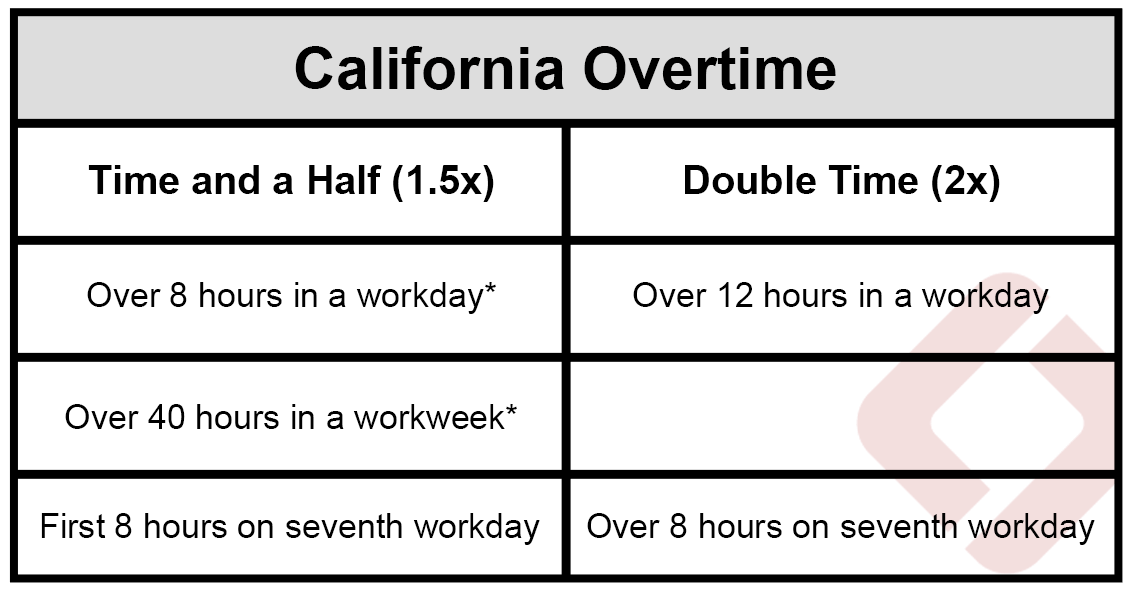
- Time-and-a-Half: For the first eight hours of daily overtime (hours worked beyond eight in a workday) and for all hours worked beyond 40 in a workweek, employees are typically entitled to pay at a rate of one and a half times their regular rate of pay. This is commonly referred to as “time-and-a-half.”
- Double-Time: A higher rate of compensation is mandated for certain circumstances. Employees are entitled to pay at a rate of double their regular rate of pay for any hours worked beyond 12 hours in a single workday, or for any hours worked beyond eight on the seventh consecutive day of work in a workweek, provided the employee has worked at least 32 hours during that seven-day period. This “double-time” rate serves as an additional incentive for employers to avoid excessive hours and to compensate employees more significantly for particularly demanding work schedules.
Understanding these rates is vital for anyone planning long-term stays in California that might involve employment, whether it’s a seasonal job near the attractions of Disneyland or a project-based role in Silicon Valley. It ensures that your labor is valued appropriately, contributing to a positive lifestyle and a more predictable financial situation.
Exempt vs. Non-Exempt Employees
A critical aspect of California’s overtime laws is the distinction between “exempt” and “non-exempt” employees. This classification determines who is eligible for overtime pay.
- Non-Exempt Employees: The vast majority of employees in California are non-exempt. This means they are entitled to overtime pay for any hours worked beyond the standard workday or workweek as outlined above. This category includes most hourly workers and many salaried employees whose job duties do not meet specific exemption criteria.
- Exempt Employees: Certain employees are classified as exempt from overtime pay. To qualify for an exemption, an employee must meet strict criteria related to their salary basis and the nature of their job duties. Generally, exempt employees must be paid a fixed salary that is at least twice the state minimum wage for a full-time position and perform specific executive, administrative, or professional duties that require a high degree of independent judgment and discretion. Even if an exempt employee works many hours, they are not typically entitled to overtime pay.
It’s important to note that the classification of an employee as exempt or non-exempt is not solely based on job title. California law looks at the actual duties performed. Misclassification is a common issue, and employees who believe they have been wrongly classified as exempt may have grounds to seek back overtime pay. This is a crucial detail for anyone considering positions in various sectors of the California economy, from hospitality roles in Lake Tahoe resorts to tech positions in San Francisco.
Specific Scenarios and Considerations
Beyond the general rules, California overtime law includes specific provisions that address various employment scenarios. These nuances can significantly impact how overtime is calculated and paid, particularly for individuals working in diverse industries or under unique contractual arrangements. For travelers who might be considering taking on temporary work to fund their exploration of California’s landmarks or to extend their travel experiences, understanding these specifics can prevent misunderstandings.
The 7th Consecutive Day Rule
One of the more complex aspects of California’s overtime regulations involves the seventh consecutive day of work in a workweek.
- Overtime on the Seventh Day: If an employee works more than eight hours on the seventh consecutive day of work in a workweek, they are entitled to overtime pay at the regular time-and-a-half rate for the hours worked beyond eight.
- Double-Time on the Seventh Day: Furthermore, if an employee works more than 12 hours on the seventh consecutive day of work, they are entitled to double-time pay for all hours worked in excess of 12 on that day.
This rule is designed to discourage employers from requiring employees to work extremely long stretches without adequate rest. It applies even if the employee has not worked more than 40 hours in that workweek. For instance, an employee working 10 hours a day for six days might not have met the weekly overtime threshold. However, if they then work, say, 5 hours on the seventh consecutive day, those five hours might not trigger overtime. But if they work 9 hours on that seventh day, the 9th hour would be paid at time-and-a-half. If they work 13 hours on that seventh day, the hours from 9 to 12 would be time-and-a-half, and the 13th hour would be double-time.
This rule can be particularly relevant in industries that often require weekend work or extended shifts, such as hospitality at a resort in Palm Springs, or in event-based tourism roles.

Meal and Rest Break Requirements
While not directly overtime pay, California’s strict rules on meal and rest breaks are intrinsically linked to working hours and can indirectly affect overtime calculations. Employers are required to provide non-working rest periods and meal breaks to non-exempt employees.
- Rest Breaks: For every four hours of work (or major fraction thereof), employees are generally entitled to a 10-minute paid rest break.
- Meal Breaks: For workdays longer than five hours, employees are entitled to a 30-minute unpaid meal break. If an employee is required to work through their meal break, they must be paid for that break at their regular rate of pay. If an employer fails to provide a required meal or rest break, the employee is entitled to an additional hour of pay for each day the break was missed.
These break requirements can influence the total number of hours an employee is considered to be “on duty” and may affect when overtime begins. For example, if a meal break is not taken, the time spent working through that break is compensable. This is an important consideration for anyone working in roles that might involve long days, such as working at a theme park or managing accommodation bookings, especially during peak travel seasons.
Calculating the Regular Rate of Pay
The “regular rate of pay” is the foundation for calculating overtime. In California, this is not always simply the hourly wage. It includes all remuneration for employment paid to an employee by their employer, except for certain statutory exclusions. This can include:
- Hourly wages
- Commissions
- Bonuses (though some specific types of bonuses may be excluded)
- Shift differentials
When calculating the regular rate of pay for overtime, all such compensation received over a workweek is divided by the total number of hours worked in that workweek. This ensures that employees receive overtime based on their total earnings, not just their base hourly rate. For example, if an employee earns a base hourly wage plus commissions, those commissions must be factored into the regular rate for overtime calculations. This complexity underscores the importance of careful record-keeping and understanding your full compensation package, especially if your lifestyle in California depends on accurate pay.
Special Industry Rules and Public Holidays
California also has specific overtime regulations for certain industries that may have unique operational demands. Furthermore, the treatment of public holidays can impact overtime pay. Understanding these industry-specific rules and holiday policies is crucial for workers in sectors like agriculture, healthcare, and the film industry, as well as for anyone working during a major public holiday that is a significant part of California’s cultural calendar.
Industry-Specific Overtime Regulations
While the general overtime rules apply broadly, some industries have slightly different standards due to their inherent nature.
- Agriculture: Historically, agricultural employees in California have had different overtime rules. However, recent legislative changes have been phasing in overtime protections more aligned with other industries. It’s crucial to stay updated on the latest regulations for agricultural work.
- Healthcare: The healthcare industry, with its 24/7 operational needs, often has specific rules regarding overtime, particularly for nurses and other patient care staff. These can include provisions for on-call pay and alternative workweek schedules.
- Motion Picture and Television: The film and television industry has its own set of rules regarding overtime, often based on daily limits and the types of work performed (e.g., principal photography, post-production).
For those considering travel to California for work in these sectors, researching the specific overtime laws pertinent to their industry is highly recommended. This ensures a clear understanding of their rights and compensation.
Public Holidays and Overtime
The impact of public holidays on overtime pay in California can be nuanced. Generally, working on a public holiday does not automatically trigger overtime pay unless the hours worked on that holiday, when combined with other hours in the workweek, push the employee into overtime thresholds (beyond 40 hours in the week or beyond 8 hours on a workday).
However, some employers or collective bargaining agreements may offer premium pay for working on holidays, separate from overtime. It is essential to check your employment contract and any applicable union agreements to understand holiday pay provisions. While California observes federal holidays, it also has state-specific holidays, such as Cesar Chavez Day. Understanding how your employer treats these days is important for accurate pay. For those enjoying luxury travel or budget travel in California during holiday periods, knowing this can help manage expectations regarding potential work compensation.
Seeking Clarification and Enforcement
Navigating the complexities of overtime pay can be challenging. If you are unsure about your rights or believe you have not been paid correctly, there are resources available to help you. Understanding these resources is key to ensuring fair treatment and can contribute to a more secure and enjoyable lifestyle while in California.
Resources for Employees
- California Labor Commissioner’s Office: This state agency is responsible for enforcing labor laws, including those related to wages and overtime. Employees can file wage claims with the Labor Commissioner if they believe they are owed unpaid wages. The office also provides information and guidance on labor laws.
- Employment Lawyers: For complex cases or significant wage disputes, consulting with an employment lawyer specializing in California labor law is advisable. They can provide legal advice, represent employees in negotiations or litigation, and help recover any owed wages.
- Employer’s Human Resources Department: For immediate questions about your paystub or work hours, the first point of contact should often be your employer’s HR department. They can clarify company policies and explain how your pay was calculated.

Importance of Record-Keeping
Accurate record-keeping is crucial for both employees and employers. Employees should maintain detailed records of their work hours, including start times, end times, and any breaks taken. This documentation can be invaluable if a dispute arises regarding overtime pay. Employers are also legally required to keep accurate payroll records.
For anyone planning business stays or experiencing the vibrant tourism scene of California, from the natural beauty of Big Sur to the urban energy of San Diego, a clear understanding of these labor laws ensures that your time in the state is both enjoyable and legally sound. Whether you’re indulging in luxury travel, opting for budget travel, or considering extended accommodation, knowledge is your best tool for a seamless experience.
LifeOutOfTheBox is a participant in the Amazon Services LLC Associates Program, an affiliate advertising program designed to provide a means for sites to earn advertising fees by advertising and linking to Amazon.com. Amazon, the Amazon logo, AmazonSupply, and the AmazonSupply logo are trademarks of Amazon.com, Inc. or its affiliates. As an Amazon Associate we earn affiliate commissions from qualifying purchases.