
Understanding property tax in California is crucial for any homeowner, investor, or even prospective visitor considering a long-term stay in the Golden State. While often perceived as a straightforward expense, California‘s property tax system is governed by a unique set of rules, primarily stemming from Proposition 13, which significantly altered how these taxes are assessed and collected. This guide aims to demystify property tax in California, covering its fundamental principles, how it’s calculated, and factors that influence its amount, offering insights relevant to those interested in the financial landscape of owning property in this popular destination.
The Foundation: Proposition 13 and Its Impact
Enacted in 1978, Proposition 13 revolutionized California‘s property tax system, establishing two key tenets: a limit on the ad valorem tax rate and a restriction on the assessment of real property values. Before Proposition 13, property taxes were levied at a higher rate and could increase annually without limit, often leading to unpredictable and burdensome tax bills for homeowners, particularly those on fixed incomes.
Limiting the Tax Rate
Under Proposition 13, the maximum ad valorem tax rate for most properties is capped at 1% of the property’s assessed value. This 1% rate is applied to the sum of the state, county, and local levies for general governmental services. This cap provides a significant degree of predictability and stability for property owners, shielding them from drastic tax increases due to fluctuating government spending or urgent local needs. However, it’s important to note that this 1% is a maximum; actual rates can be lower depending on local voter-approved special taxes for specific purposes like schools or infrastructure.
Restricting Assessment Values
The second pillar of Proposition 13 is its stringent control over how property values are assessed. For properties that have not changed ownership, the assessed value is generally limited to the original purchase price, plus an annual inflation adjustment not to exceed 2%. This means that a property purchased decades ago at a low price will continue to be taxed based on that significantly lower value, even if its market value has skyrocketed. This has led to disparities in tax burdens, where long-time residents may pay considerably less in property taxes than newer buyers of comparable properties.
Changes in Ownership and Reassessment
The primary trigger for a reassessment of property value under Proposition 13 is a “change in ownership.” This typically occurs when a property is bought or sold. However, the definition of “change in ownership” can be complex and includes various scenarios, such as:
- Transferring ownership to a spouse or registered domestic partner.
- Transfers between parents and children or between grandparents and grandchildren, under specific conditions and exclusions.
- The creation or termination of certain trusts.
- The transfer of majority ownership in a legal entity that owns the property.
When a change in ownership occurs, the property is generally reassessed to its fair market value as of the date of the transfer. This new assessed value then becomes the base for future tax calculations, subject to the annual 2% inflation adjustment. Understanding these triggers is vital for property owners and investors to anticipate potential tax implications when considering property transactions.
How Property Tax is Calculated in California
Calculating property tax in California involves understanding a few key components: the assessed value of the property, the tax rate, and any applicable special assessments.
Assessed Value
As established by Proposition 13, the assessed value is not necessarily the current market value. For properties that haven’t undergone a change in ownership since Proposition 13 was enacted or their last reassessment, the assessed value is typically the 1975 market value, adjusted annually by an inflation factor of no more than 2%. For properties that have experienced a change in ownership, the assessed value is reset to the fair market value at the time of the transfer. This value then forms the basis for taxation. The County Assessor is responsible for determining and maintaining these assessed values.
The Tax Rate
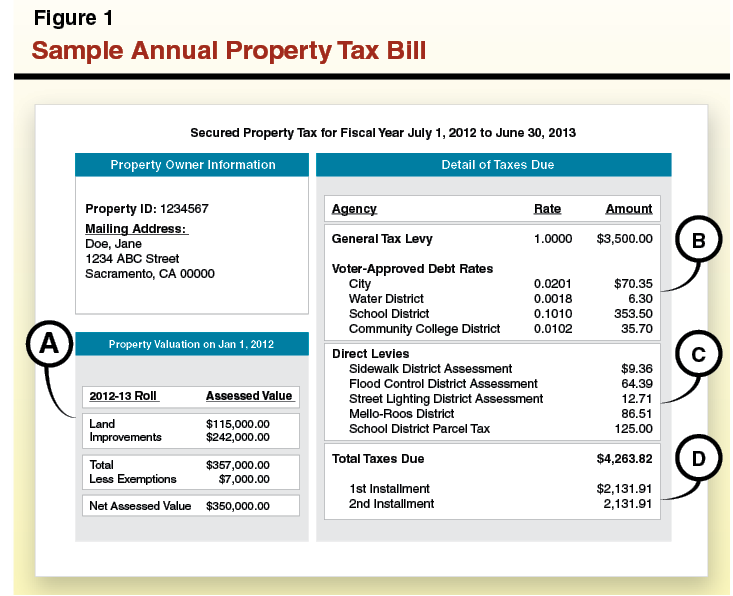
The fundamental tax rate is the 1% rate established by Proposition 13. This rate covers state, county, and local general-purpose revenues. However, the final tax rate can be higher than 1% if voters have approved special taxes or assessments for specific local improvements, such as funding for schools, fire protection, or water districts. These additional levies are often referred to as “special taxes” or “special assessments” and are calculated based on the property’s assessed value.
Formula for Property Tax Calculation
The basic formula for calculating property tax in California is:
Property Tax = (Assessed Value – Exemptions) * (Base Tax Rate + Special Tax Rates)
- Assessed Value: The value determined by the County Assessor.
- Exemptions: Certain exemptions, such as the Homeowner’s Exemption, can reduce the taxable value of a property. The Homeowner’s Exemption reduces the assessed value by a fixed amount annually (currently $7,000).
- Base Tax Rate: The 1% mandated by Proposition 13.
- Special Tax Rates: Voter-approved special taxes and assessments.
For example, if a property has an assessed value of $500,000, a Homeowner’s Exemption of $7,000, a base tax rate of 1%, and an additional 0.25% in special assessments, the calculation would be:

($500,000 – $7,000) * (1% + 0.25%) = $493,000 * 1.25% = $6,162.50
This figure represents the annual property tax liability for that property.
Factors Influencing Property Tax Amounts
Several factors can influence the amount of property tax a homeowner or investor will pay in California. Understanding these variables can help in budgeting and financial planning.
Location and Local Levies
The specific location of a property within California plays a significant role. Different counties and municipalities have varying voter-approved special taxes and assessments to fund local services. For instance, a property in a district with excellent school funding or extensive public services might carry a higher total tax rate than a property in a less developed area. This means that two properties with identical assessed values in different California cities could have substantially different tax bills.
Property Value and Purchase History
As discussed, the property’s assessed value is the primary driver of property tax. For properties purchased recently or after a change in ownership, the assessed value will likely reflect current market conditions, leading to a higher tax burden compared to older properties that haven’t been reassessed. The County Assessor conducts regular reappraisals, especially for properties that have undergone changes in ownership.
Exemptions and Reductions
California offers several exemptions and potential reductions that can lower the taxable value of a property. The most common is the Homeowner’s Exemption, which provides a significant reduction for primary residences. Other potential exclusions and relief programs may exist for specific situations, such as property owned by disabled veterans or for properties impacted by natural disasters. It is advisable to investigate all available exemptions with the local County Assessor’s office.
Inflation Adjustment
The annual 2% inflation adjustment for properties that have not changed ownership is a critical factor. While seemingly small, over many years, this compounded adjustment can lead to a gradual increase in the assessed value and, consequently, the property tax bill. This mechanism helps to somewhat bridge the gap between older assessed values and current market realities, albeit at a controlled pace.
Special Circumstances and Additional Considerations
Beyond the fundamental principles of Proposition 13, California has specific provisions and considerations related to property tax that are important for property owners to be aware of.
Property Tax Post-Disaster Relief
In the unfortunate event of a natural disaster, such as a fire, flood, or earthquake, property owners in California may be eligible for property tax relief. If a property is substantially damaged or destroyed, the owner can apply to the County Assessor for a reassessment to reflect the reduced value of the damaged property. This reassessment can be temporary until the property is repaired or rebuilt. Furthermore, the property tax due on the value of the destroyed portion is cancelled, and taxes paid on that portion may be refunded. This relief measure is crucial for supporting communities recovering from natural calamities.
Supplemental Property Taxes
When a property undergoes a change in ownership or a new construction is completed, California often issues supplemental tax bills. These bills are in addition to the regular annual property tax bill and reflect the pro-rated difference in tax due to the change in assessed value for the period between the event and the end of the tax year. For example, if a property is purchased mid-year, the buyer will receive a supplemental bill for the portion of the tax year they owned the property, calculated on the new, higher assessed value.
Property Tax Limitations for Seniors and Disabled Individuals
While Proposition 13 provides broad protections, specific programs exist to offer additional relief to seniors and individuals with disabilities, particularly concerning the prevention of property tax increases that could lead to displacement. Proposition 90 and Proposition 110 allow for the intergenerational transfer of property tax benefits, permitting individuals over 55 or those with severe disabilities to transfer their property’s assessed value to a replacement property within the same county, under certain conditions. This can significantly alleviate the property tax burden when downsizing or relocating. Some counties also offer property tax postponement programs for eligible seniors.
Future of Property Tax in California
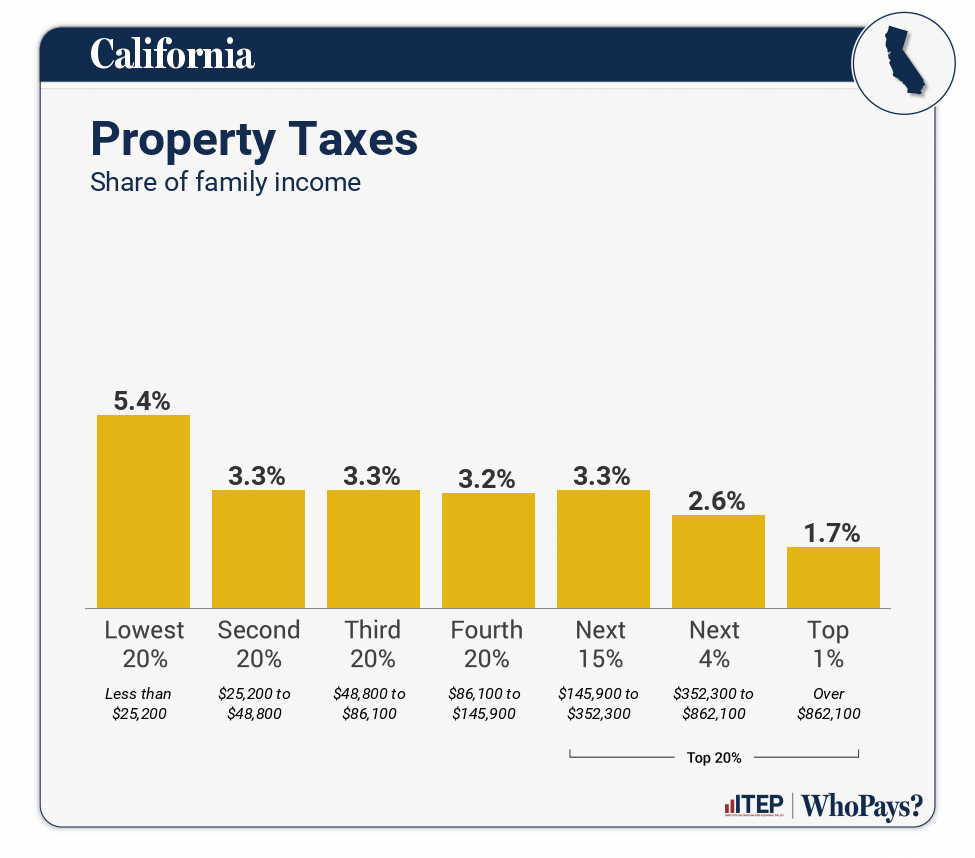
The California property tax system, heavily influenced by Proposition 13, continues to be a subject of debate. Discussions often revolve around fairness, equity, and the potential for reform. While the core principles of Proposition 13 remain firmly in place, proposals and initiatives may emerge seeking to adjust assessment methods, tax rates, or exemptions. For property owners, staying informed about legislative developments and potential changes to property tax laws is always advisable.
In conclusion, understanding property tax in California requires delving into the historical context of Proposition 13 and its ongoing implications. By grasping how property is assessed, how taxes are calculated, and the various factors that influence tax amounts, property owners can navigate this complex system more effectively. Whether you are considering purchasing a vacation home, a long-term residence, or an investment property in the Golden State, a solid understanding of property tax is an essential component of informed decision-making.
LifeOutOfTheBox is a participant in the Amazon Services LLC Associates Program, an affiliate advertising program designed to provide a means for sites to earn advertising fees by advertising and linking to Amazon.com. Amazon, the Amazon logo, AmazonSupply, and the AmazonSupply logo are trademarks of Amazon.com, Inc. or its affiliates. As an Amazon Associate we earn affiliate commissions from qualifying purchases.