
Navigating the complexities of relationships and legal recognition can be a significant undertaking, and for many, the concept of common-law marriage presents a unique pathway to marital status. While not universally recognized across all U.S. states, Texas stands as one of the jurisdictions that permits and acknowledges this form of union. Understanding the specific requirements is crucial for anyone considering or currently in a common-law marriage within the Lone Star State. This article will delve into what constitutes a common-law marriage in Texas, the essential elements that must be present, and how to prove its existence.

Understanding Common Law Marriage in Texas
Common-law marriage, also known as informal marriage, is a marriage that has not been solemnized by a formal ceremony. Instead, it is established by the agreement and conduct of the parties involved. In Texas, this form of marriage holds the same legal standing as a ceremonial marriage, granting couples the same rights and responsibilities. This means that if a common-law marriage is proven, the parties are considered legally married and are subject to the same laws regarding divorce, property division, inheritance, and spousal support as those who have had a formal wedding ceremony.
It’s important to note that Texas is one of a minority of states that still recognize common-law marriage. Many states have abolished it, requiring a formal marriage license and ceremony for legal recognition. Therefore, understanding the specific criteria in Texas is vital, as the requirements may differ significantly from other jurisdictions. The recognition of common-law marriage in Texas stems from its historical roots and its continued embrace of this less formal, yet legally binding, marital status.
The Three Key Elements of Common Law Marriage in Texas
To establish a valid common-law marriage in Texas, three specific elements must be proven to have existed concurrently. These elements are not sequential; rather, they must all be present at the same time for the marriage to be legally recognized. Proving these elements can be critical in various legal situations, such as seeking spousal benefits, inheriting from a deceased partner, or navigating a divorce.
1. Agreement to Be Married
The first and most fundamental requirement is that the couple must have an actual agreement to be married. This is not merely an intention to marry in the future or a casual understanding; it is a present, mutual commitment to be husband and wife. This agreement doesn’t need to be in writing or spoken aloud in a specific way. It can be inferred from the couple’s words, actions, and overall conduct.
Think of it as a conscious decision made by both individuals to enter into a marital relationship. This agreement signifies their intent to take on the legal responsibilities and privileges of marriage. For example, if one partner says to the other, “I consider you my husband/wife,” and the other partner reciprocates with a similar sentiment, and they both genuinely intend for this to mean they are married, this can satisfy the agreement element. The agreement must be to be married now, not at some future date. It signifies a present intent to be bound by the legal institution of marriage.
2. Living Together in Texas
The second element requires that the couple, after agreeing to be married, must live together in Texas. This means that Texas must be their domicile or residence. Cohabitation alone, without the agreement to be married, is not sufficient to establish a common-law marriage. The period of cohabitation can vary; there is no minimum duration required by law, as long as the other two elements are also met. The key is that Texas is the place where they establish their marital home.
This element emphasizes the physical presence and shared life of the couple within the state. It signifies that they are presenting themselves to the world as a married couple within Texas. If a couple agrees to be married while in another state but then moves to Texas and lives together as husband and wife, their common-law marriage will be recognized from the point they began cohabiting in Texas. Conversely, if they agree to be married and live together in another state that does not recognize common-law marriage, and then move to Texas, they would need to reaffirm their agreement to be married while residing in Texas for a common-law marriage to be established.
3. Holding Out to Others as Married
The third crucial element is that the couple must represent themselves to others as being married. This is often referred to as “holding out” or “representing” to the public that they are husband and wife. This representation can take many forms and is often the most commonly cited evidence in proving a common-law marriage. It involves presenting a unified front to family, friends, acquaintances, and the wider community as a married couple.
Examples of holding out include:
- Using the same last name: While not a strict requirement, it is strong evidence if both partners adopt the same surname.
- Introducing each other as “my husband” or “my wife”: This is a direct and clear representation of marital status.
- Filing joint tax returns: This is significant evidence of a marital relationship in the eyes of the government.
- Listing each other as spouse on official documents: This could include insurance forms, loan applications, or employment records.
- Signing documents as husband and wife: This demonstrates an intention to be legally recognized as married.
- Wearing wedding rings: While symbolic, it can contribute to the overall presentation of being married.
- Referring to each other’s families as their own: This can indicate a deep integration into each other’s lives as a married unit.
- Maintaining joint bank accounts or property: This can demonstrate a shared financial life consistent with marriage.
The “holding out” element is about projecting an image of being married to the community. It’s about how they are perceived by those who interact with them. This evidence is crucial because it provides external validation of their internal agreement to be married. Without this outward projection, it can be difficult to prove that the couple genuinely considered themselves married.
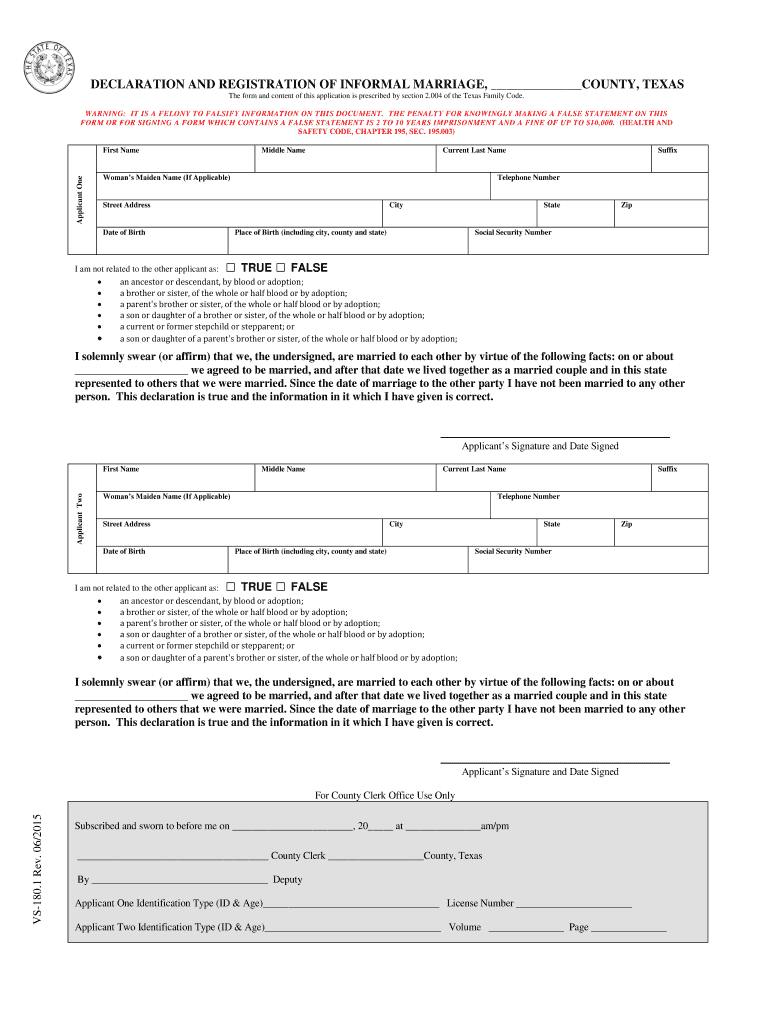
Proving a Common Law Marriage in Texas
Establishing the existence of a common-law marriage in Texas often requires presenting compelling evidence to a court, especially if the marriage is disputed. Since there’s no marriage license or ceremony to point to, the burden of proof falls on the party asserting the existence of the marriage. This is where meticulous record-keeping and the testimony of witnesses become paramount.
Evidence Needed to Prove a Common Law Marriage
When seeking to prove a common-law marriage, a comprehensive collection of evidence is essential. This evidence should aim to demonstrate that all three elements – agreement, cohabitation, and holding out – were present concurrently.
- Witness Testimony: Statements from friends, family members, neighbors, or colleagues who can testify to the couple’s agreement to be married, their cohabitation, and their representations to the public as husband and wife are invaluable. Witnesses can describe how the couple introduced themselves, how they referred to each other, and their general demeanor as a married couple.
- Documents and Records: As mentioned previously, various documents can serve as strong evidence. This includes:
- Affidavits: Written statements made under oath.
- Copies of joint tax returns: Filed as married.
- Bank statements: Showing joint accounts or transfers consistent with a marital relationship.
- Insurance policies: Where one partner is listed as the spouse of the other.
- Lease agreements or property deeds: Showing joint ownership or residency.
- Employment records: Listing each other as spouses.
- Hospital or medical records: Referring to each other as husband or wife.
- Correspondence: Letters or emails that refer to the marital relationship.
- Personal Testimony: The testimony of the individuals involved is, of course, a critical piece of evidence. Each partner can testify to their agreement to be married, their life together in Texas, and how they presented themselves to others. However, if the couple is estranged or one party is deceased, proving the marriage can become more challenging, making witness testimony and documentary evidence even more crucial.
Challenges and Considerations
Proving a common-law marriage can be more challenging than proving a ceremonial marriage. One of the main difficulties arises when one party denies the existence of a marriage, or when one party has passed away, making their testimony unavailable. In such cases, the burden of proof can be substantial, requiring a significant amount of corroborating evidence.
It’s also important to remember that simply living together for a long period or having children does not automatically constitute a common-law marriage in Texas. These factors might be considered as part of the “holding out” element, but they are not sufficient on their own. The agreement to be married, living together in Texas, and holding out to others as married must all be demonstrably present.
Furthermore, if a couple enters into a ceremonial marriage after having a common-law marriage, the ceremonial marriage generally supersedes the informal one. However, if a common-law marriage was validly established and then one party enters into a subsequent ceremonial marriage with someone else, this could lead to accusations of bigamy, which has legal consequences.
Dissolving a Common Law Marriage in Texas
Just as a common-law marriage is established by agreement and conduct, it must also be dissolved through a formal legal process. This means that couples in a common-law marriage cannot simply decide to end their union by separating. They must go through a legal divorce.
The Divorce Process for Common Law Marriages
If a couple has a validly established common-law marriage in Texas, they are subject to the same divorce laws as any other married couple. This involves filing a petition for divorce, serving the other spouse, and going through the legal proceedings to divide property, determine spousal support (if applicable), and finalize the dissolution of the marriage.
The first step in proving the existence of a common-law marriage during a divorce proceeding is often to file a Counterclaim or Original Petition for Divorce that specifically states the existence of an informal marriage and requests that the court recognize it. The party seeking the divorce will need to present evidence supporting all three elements of common-law marriage. If the court confirms the existence of a valid common-law marriage, then the divorce proceedings will continue as normal, addressing all the legal ramifications of a marital dissolution.
Failure to prove the existence of a common-law marriage in a divorce proceeding means the court will not grant a divorce, as there was no legal marriage to dissolve. In such cases, the couple would be considered unmarried, regardless of their cohabitation or any agreements they may have had. This underscores the importance of having clear and demonstrable evidence of all three elements.

Implications for Long-Term Stays and Travel
While the primary focus of common-law marriage is legal recognition, its implications can extend to various aspects of life, including long-term stays and travel. For instance, if a couple has a valid common-law marriage in Texas, they might be able to access benefits or make decisions related to accommodation and travel that are typically reserved for married couples. This could include booking suites or villas together, making joint travel arrangements, or being recognized as a family unit for certain travel experiences.
When planning long-term stays in Texas, understanding the validity of a common-law marriage can be crucial for leases, joint accommodation bookings, and establishing residency. In the context of tourism, recognizing the legal status of common-law married couples can influence how they are treated by hotels and other service providers, especially if they present themselves as a married unit. While Texas is a pioneer in recognizing common-law marriage, and many hotels and resorts in popular destinations like San Antonio or Austin are accustomed to diverse relationship structures, legal recognition provides a clearer framework for rights and responsibilities. For luxury travel or budget-conscious trips, having legal marital status can simplify joint bookings and financial arrangements, ensuring a smoother experience. Whether it’s a romantic getaway to the Texas Hill Country or a family trip exploring the historic Alamo, legal recognition of their union provides a layer of security and legitimacy.
Ultimately, the recognition of common-law marriage in Texas provides a legal framework for couples who have chosen a less traditional path to marital commitment. By understanding and fulfilling the specific requirements – an agreement to be married, living together in Texas, and holding out to others as married – individuals can ensure their relationship is legally recognized, with all the associated rights and responsibilities.
LifeOutOfTheBox is a participant in the Amazon Services LLC Associates Program, an affiliate advertising program designed to provide a means for sites to earn advertising fees by advertising and linking to Amazon.com. Amazon, the Amazon logo, AmazonSupply, and the AmazonSupply logo are trademarks of Amazon.com, Inc. or its affiliates. As an Amazon Associate we earn affiliate commissions from qualifying purchases.