
The skyline of Las Vegas has long been defined by neon lights, sprawling casino resorts, and the mimicry of global architectural wonders. However, the introduction of Sphere has fundamentally altered the structural and sensory landscape of this desert metropolis. Rising 366 feet into the air and spanning 516 feet in width, the Sphere at The Venetian Resort is not merely a venue; it is a profound advancement in the intersection of engineering, art, and immersive entertainment. As the world’s largest spherical structure, it represents a departure from traditional arena design, moving toward a future where the building itself is an active participant in the guest experience.

The Architectural Marvel of Modern Engineering
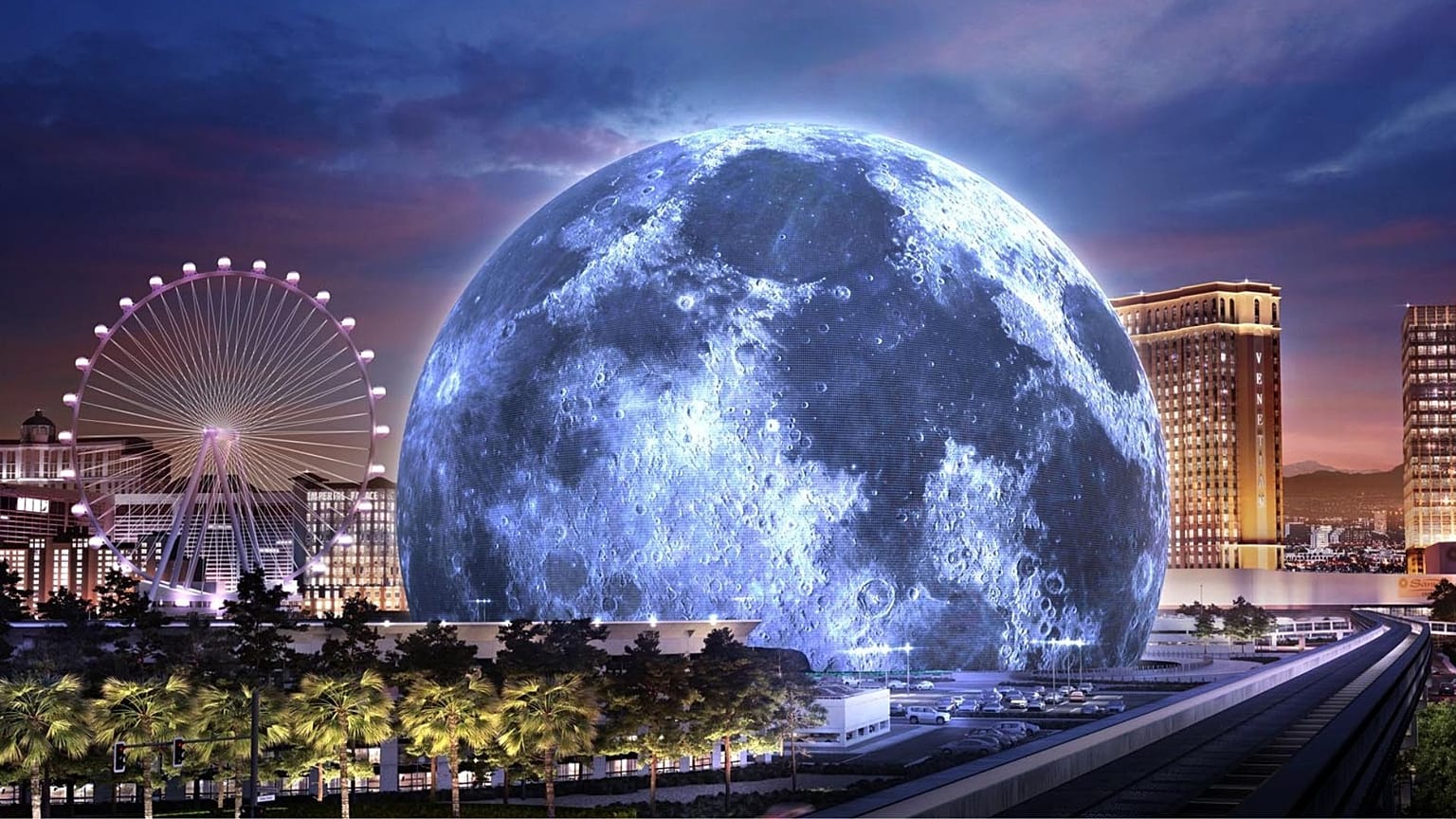
The sheer scale of Sphere commands attention from miles away, but its architectural significance lies in the technology that coats its exterior. The surface, known as the Exosphere, is composed of approximately 580,000 square feet of fully programmable LED panels. This allows the building to project high-definition imagery—ranging from realistic eyeballs and planetary surfaces to intricate holiday themes—that can be seen from high above the Nevada desert floor.
Structural Innovation and Design
Constructing a sphere of this magnitude required structural ingenuity. The project, led by Madison Square Garden Entertainment, utilized a custom-built crane—the Demag CC-8800—which had to be shipped from Belgium to handle the massive steel sections of the dome. The design prioritizes acoustic clarity and visual depth, ensuring that every seat provides an unobstructed view of the interior screen, which is currently the largest and highest-resolution LED screen in the world.
The Exosphere as a Canvas
The Exosphere functions as a massive, digital public art installation. It operates as the largest LED screen on Earth, capable of displaying vibrant, moving visuals that integrate with the nighttime aesthetic of the Las Vegas Strip. By utilizing advanced lighting algorithms, the venue can change its identity instantly, turning the structure into a giant pumpkin, a glowing globe, or a static billboard, effectively redefining the concept of an urban landmark.
Immersive Entertainment and Sensory Technology
While the exterior draws the crowds, the interior of Sphere is where the technological revolution truly takes place. The venue was designed specifically for “multi-sensory” storytelling, where the goal is to envelop the audience in a narrative rather than simply projecting a film or a concert performance onto a flat screen.
The Inner Screen Experience
The interior LED display wraps up, over, and around the audience in a giant bowl. With a resolution of 16K, the clarity of the visuals is intended to trick the brain into experiencing depth and motion in ways that traditional theaters cannot replicate. This “wraparound” effect creates a sense of vertigo during cinematic sequences or an intimate sense of presence during live musical acts, effectively erasing the boundary between the viewer and the projected image.

Audio and Haptic Innovation
Visuals are only half of the sensory equation at Sphere. The venue features a custom audio system powered by HOLOPLOT, which utilizes beamforming technology to direct sound with pinpoint accuracy to every individual seat in the house. Whether an audience member is in the front row or the highest balcony, the audio experience remains consistent, crisp, and personal. Furthermore, the seating area is equipped with haptic technology, allowing the chairs to vibrate in sync with the onscreen action—simulating everything from the rumbling of a spacecraft to the subtle shifts in wind during a nature documentary.
A New Era for Las Vegas Tourism
Las Vegas has always thrived on the principle of spectacle. For decades, visitors traveled to the United States to see the Bellagio Fountains or the replica Eiffel Tower at Paris Las Vegas. Sphere represents the next evolutionary step in this model, shifting the focus from static replicas to dynamic, high-tech experiences that cannot be replicated at home or on a standard television screen.
Changing the Concert Paradigm
Major touring artists, such as U2, were among the first to utilize the venue for residencies, proving that Sphere could serve as a premier destination for live music. The venue’s ability to synchronize high-fidelity audio with massive, immersive visuals changes how bands engage with their fanbases. It shifts the concert experience from a passive viewing event to a shared, immersive atmosphere where the visual environment reacts to the cadence of the music.
The Impact on Local Landmarks
By establishing itself as a “must-see” destination, Sphere has successfully shifted the center of gravity on the Las Vegas Strip. It acts as a beacon that encourages visitors to explore areas of the city that might have previously been overlooked, integrating itself into the broader ecosystem of Nevada tourism. It complements the existing luxury of the Wynn Las Vegas and the high-energy atmosphere of Caesars Palace by offering a destination that is uniquely focused on the future of media and architecture.
Looking Toward the Future of Large-Scale Venues
As Sphere continues to host film premiers, original content like “Postcard from Earth,” and major concert residencies, it sets a new global standard for what a venue can be. The challenge for the developers remains in the constant creation of content that can live up to the hardware. A screen of this size requires specialized cinematography that moves away from traditional framing, requiring a new generation of directors and creators who understand the physics and limitations of spherical projection.
The Sustainability of Spectacle
While the energy consumption of such a massive LED structure is significant, the facility is designed with an eye toward modern efficiency. The goal is to provide a sustainable entertainment model that justifies its power footprint by offering an unparalleled level of utility, serving as a venue, an art gallery, and an advertising platform simultaneously.
The Legacy of Innovation
When historians look back at the development of Las Vegas in the early 21st century, Sphere will likely be cited as the turning point where digital immersion became a pillar of urban design. It invites travelers from around the globe to witness a fusion of light and sound that is impossible to ignore. Whether one is walking the Las Vegas Strip at midnight or sitting within the bowels of the structure during a performance, Sphere reminds the world that the only limit to what can be built in the desert is the limit of human imagination. It stands as a testament to the fact that Nevada remains the primary laboratory for the future of entertainment, pushing the boundaries of what is technically feasible and aesthetically breathtaking.
LifeOutOfTheBox is a participant in the Amazon Services LLC Associates Program, an affiliate advertising program designed to provide a means for sites to earn advertising fees by advertising and linking to Amazon.com. Amazon, the Amazon logo, AmazonSupply, and the AmazonSupply logo are trademarks of Amazon.com, Inc. or its affiliates. As an Amazon Associate we earn affiliate commissions from qualifying purchases.