
Chicago, a city synonymous with groundbreaking architecture and an unparalleled skyline, has long been a global leader in the evolution of the skyscraper. From the ashes of the Great Chicago Fire in 1871, the city rebuilt itself with a fervent ambition that gave birth to engineering marvels, transforming its urban landscape into a living museum of architectural innovation. For decades, one structure has dominated this iconic panorama, standing as a testament to human ingenuity, ambition, and structural mastery. The unequivocal answer to the question of Chicago’s tallest building is the Willis Tower, formerly known as the Sears Tower.
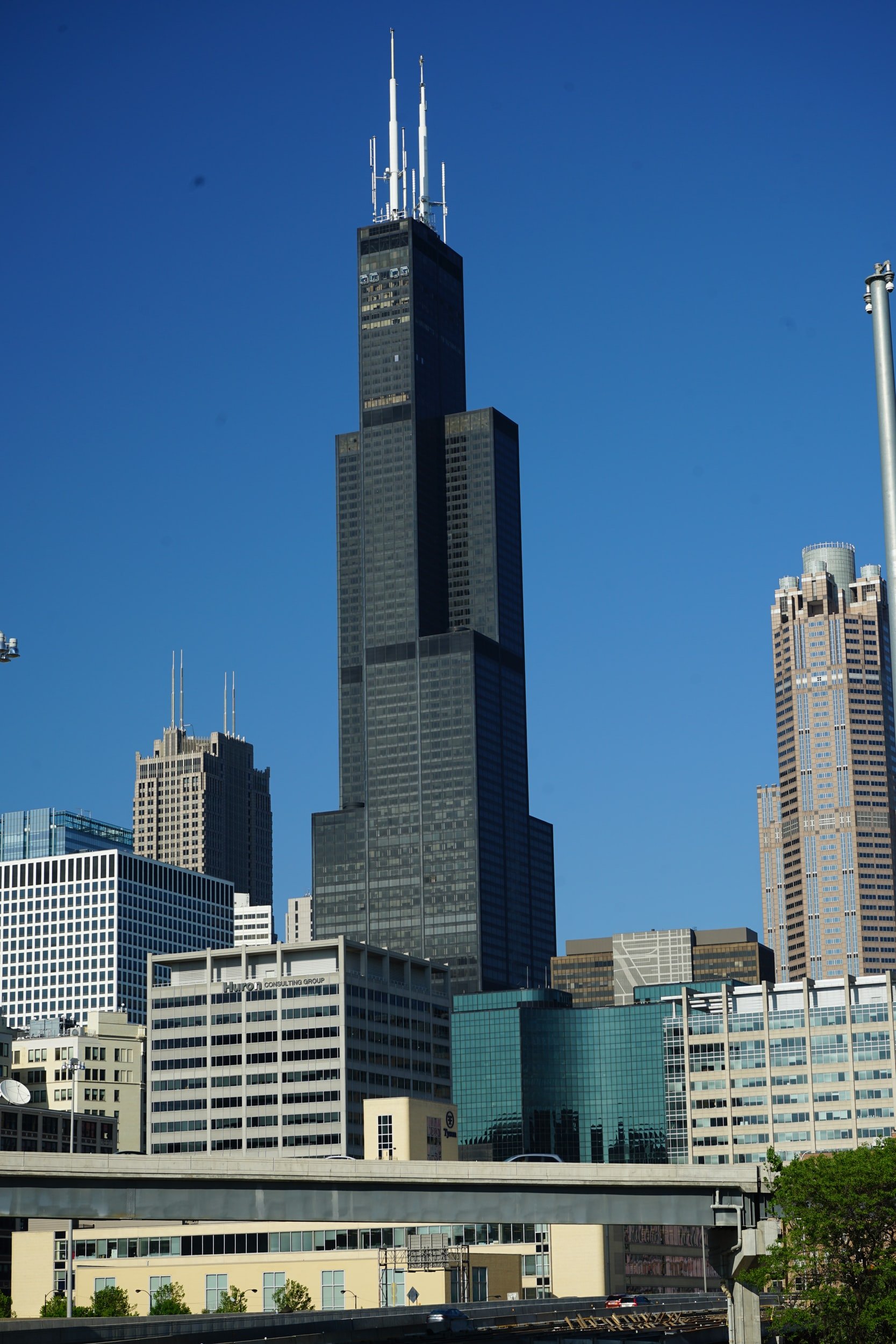
Erected during a pivotal era of American economic expansion and architectural experimentation, the Willis Tower didn’t just break records; it redefined what was possible in vertical construction. Its sheer scale, innovative design, and enduring presence have cemented its status not merely as a building but as an indispensable landmark, a symbol of Chicago’s indomitable spirit and its profound contribution to the world of architecture. This article delves into the various facets that underscore the Willis Tower‘s enduring legacy, exploring its architectural brilliance, historical significance, cultural impact, and its place among Chicago’s constellation of celebrated structures.
The Reigning Giant: Willis Tower’s Architectural Prowess
The Willis Tower’s ascendancy to the apex of Chicago’s skyline was not merely about height; it was about a revolutionary approach to skyscraper design that pushed the boundaries of engineering. When it topped out in 1973, it stood as the world’s tallest building, a title it held for nearly 25 years. This achievement was rooted in a structural system that was both elegantly simple and profoundly complex.
A Vision of Innovation: The Bundled Tube Design
The genius behind the Willis Tower’s design belongs to the architectural firm Skidmore, Owings & Merrill (SOM), with lead architect Bruce Graham and structural engineer Fazlur Rahman Khan at the helm. They conceived the “bundled tube” system, a groundbreaking innovation that addressed the immense challenges posed by constructing a building of such unprecedented height. Instead of a single, rigid tube, the structure comprises nine square “tubes” that rise from a 225-foot square base. These tubes terminate at different heights, creating the building’s distinctive stepped-back silhouette. Two of the tubes reach the full 110 stories, while others gradually step down, creating a dynamic visual profile that is instantly recognizable.
This bundled tube system offered several advantages. It dramatically increased the building’s resistance to wind loads, a critical factor for supertalls in a windy city like Chicago. It also allowed for greater flexibility in interior space planning, as the structural columns were concentrated at the perimeter of each tube, creating large, column-free floor plates. The use of high-strength steel for the framework and the integrated use of steel and concrete further contributed to its robustness and efficiency. This architectural strategy was not only functional but also aesthetically striking, transforming what could have been a monolithic block into a sculpture of ascending forms.
Sky-High Statistics and Unrivaled Views
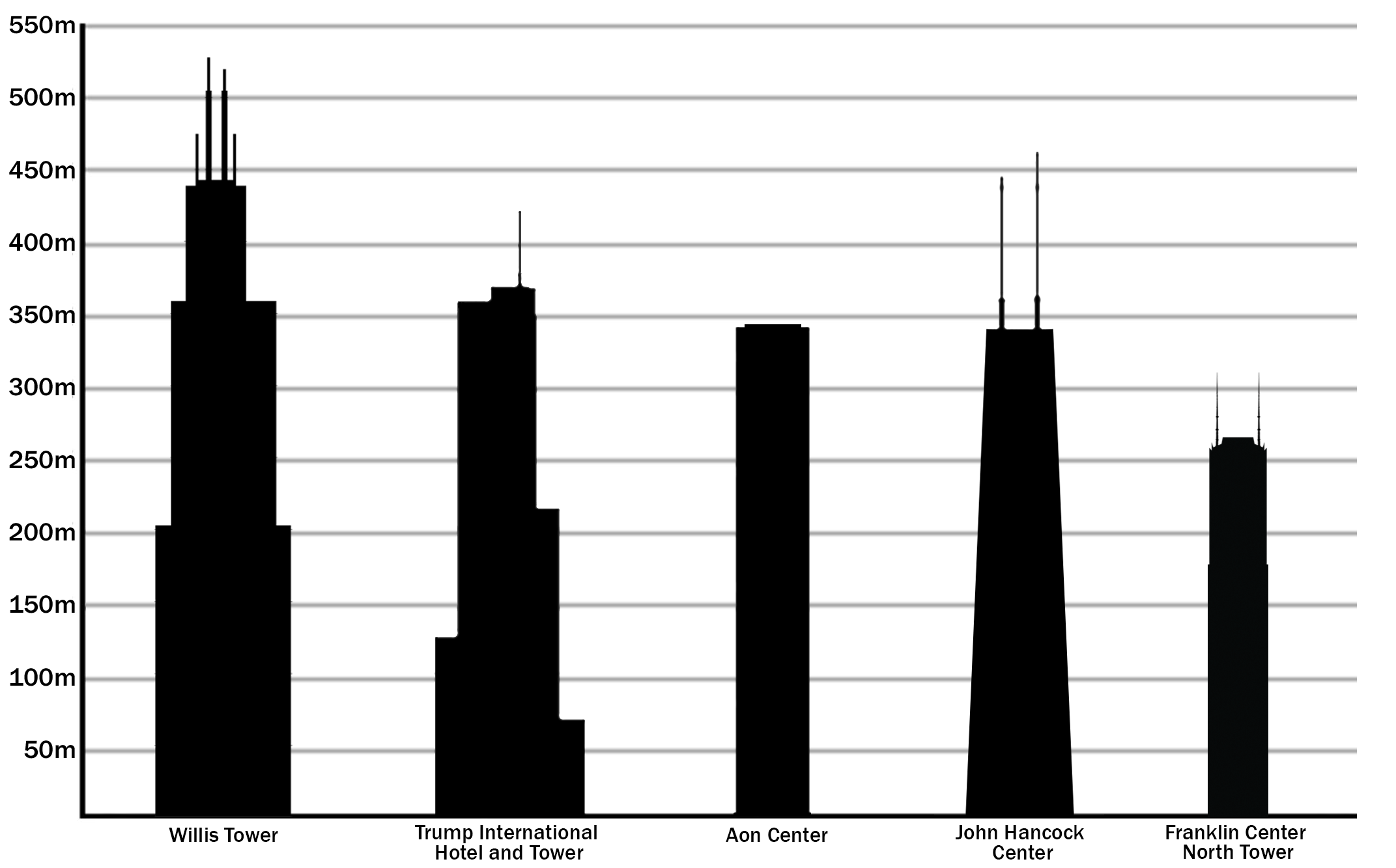
The raw statistics of the Willis Tower are staggering and speak to its monumental scale. Reaching an architectural height of 1,450 feet (442.1 meters) to the top of its roof, and a total height of 1,739 feet (527 meters) including its two television antennae, it remains the tallest building in Chicago and the third tallest in the United States. It encompasses 110 stories, approximately 4.5 million square feet of office and commercial space, making it one of the largest office buildings in the world by area.
Beyond its impressive figures, the Willis Tower offers an unparalleled experience to millions of visitors each year through Skydeck Chicago. Located on the 103rd floor, the Skydeck provides breathtaking panoramic views stretching up to 50 miles and across four states on a clear day. The Skydeck is particularly famous for “The Ledge,” a series of glass-bottomed balconies that extend four feet out from the building, offering an unobstructed, stomach-churning view directly down to the streets below. This feature transforms passive observation into an exhilarating, immersive experience, further solidifying the tower’s status as a must-visit landmark.
A Legacy Forged in Steel: History and Significance
The narrative of the Willis Tower is deeply intertwined with American corporate history and the architectural ambitions of the late 20th century. Its evolution from a corporate headquarters to a globally recognized landmark reflects broader shifts in urban development and global commerce.
From Sears Tower to Willis Tower: A Name Change and Enduring Icon
Originally conceived as the headquarters for Sears, Roebuck and Company, then the world’s largest retailer, the tower was a bold statement of the company’s dominance and vision. Its construction symbolized the boundless aspirations of American enterprise and served as a powerful icon of corporate might. For decades, it was affectionately known as the Sears Tower, a name that became synonymous with Chicago’s identity.
However, in 2009, following a lease agreement with global insurance broker Willis Group Holdings, the building was officially renamed the Willis Tower. While the name change initially sparked debate and a sense of nostalgia among Chicagoans, the building’s iconic status has transcended its nomenclature. Regardless of its official title, it remains a beloved and unmistakable part of the city’s fabric, a testament to its enduring architectural and cultural significance. Its silhouette continues to be a cornerstone of the Chicago skyline, recognized worldwide as a symbol of the city’s progressive spirit.
Catalyst for Urban Development and Architectural Innovation
The construction of the Willis Tower had a profound impact on urban development, not just in Chicago but globally. It demonstrated the economic viability and structural feasibility of supertall buildings, inspiring a new generation of skyscrapers around the world. The bundled tube system pioneered by Khan became a fundamental principle in the design of many subsequent high-rise structures, influencing architectural thought for decades to come.
Its presence in the West Loop neighborhood of Chicago also catalyzed significant economic activity and urban revitalization. It drew businesses, residents, and visitors, contributing to the growth of ancillary services and infrastructure. As a landmark, it has continuously adapted, undergoing modernization efforts to remain competitive and relevant in a dynamic urban environment, ensuring its continued contribution to the city’s economic and cultural vitality.
Beyond the Summit: Other Notable Chicago Landmarks
While the Willis Tower proudly holds the title of Chicago’s tallest, the city’s architectural narrative is rich with other iconic landmarks that contribute to its globally renowned skyline. These structures, while perhaps not reaching the same dizzying heights, each tell a unique story of innovation, design, and cultural impact.
The Trump International Hotel and Tower
Standing as the second-tallest building in Chicago, the Trump International Hotel and Tower reaches an architectural height of 1,388 feet (423 meters) to its spire. Completed in 2009, this mixed-use skyscraper, designed by Adrian Smith of SOM, houses a luxury hotel, condominiums, and retail spaces. Its design is characterized by three setbacks, mirroring the height of nearby buildings and subtly integrating it into the city’s fabric while still making a grand statement along the Chicago River. While it doesn’t possess the historical depth of the Willis Tower, its contemporary elegance and prominence make it an undeniable modern landmark.
The St. Regis Chicago
More recently completed in 2020 (originally named Vista Tower), the St. Regis Chicago is a striking addition to the city’s collection of architectural wonders. Designed by renowned architect Jeanne Gang of Studio Gang Architects, this 1,198-foot (365-meter) supertall is the third tallest in Chicago and the tallest building in the world designed by a woman. Its distinctive undulating, curvilinear form, inspired by the geometry of crystals, creates a dynamic interplay of light and shadow, offering a fresh aesthetic to the skyline. This mixed-use residential and hotel tower represents the cutting edge of contemporary skyscraper design, showcasing Chicago’s continued leadership in architectural innovation.
The John Hancock Center
An older but equally iconic landmark, the John Hancock Center (now officially known by its address, 875 N. Michigan Avenue) was completed in 1969, predating the Willis Tower. Also designed by SOM with Fazlur Rahman Khan as the structural engineer, its distinctive exterior X-bracing system is not just decorative but an integral part of its structural support. This bold expression of its engineering principles made it an instant classic and a precursor to the mega-structures that followed. At 1,128 feet (343.7 meters), it offers its own spectacular observation deck, 360 Chicago, and stands as a beloved symbol of modern architecture and engineering prowess.
The Cultural Impact and Future of Chicago’s Skyscrapers
Chicago’s identity is inextricably linked to its soaring structures. These buildings are not merely steel, glass, and concrete; they are living testaments to human ambition, artistic vision, and engineering mastery that resonate deeply with the city’s populace and visitors alike.
Icons of Chicago’s Identity
The Willis Tower and its fellow supertalls are more than just buildings; they are cultural touchstones. They frequently feature in films, television shows, and popular art, serving as instant visual cues for the city of Chicago. They inspire awe, represent progress, and contribute to the city’s dynamic urban rhythm. For residents, they are familiar sentinels against the horizon; for tourists, they are compelling attractions that draw millions to experience the thrill of unprecedented heights and breathtaking views. The collective impact of these landmarks fosters a strong sense of pride and identity, contributing significantly to Chicago’s global image as an architectural capital.

Sustaining the Skyline: Modernization and Sustainability Efforts
As architectural icons, these landmarks face the ongoing challenge of remaining relevant and sustainable in an ever-changing world. The Willis Tower itself has undergone significant modernization programs, including energy efficiency upgrades and enhancements to its visitor experience. Such initiatives ensure that older landmarks continue to meet contemporary standards of environmental responsibility and appeal to new generations.
The future of Chicago’s skyline promises continued innovation, with an emphasis on sustainable design, mixed-use developments, and structures that blend seamlessly into the urban fabric while making their own unique architectural statements. The city’s commitment to architectural excellence, from the groundbreaking designs of the past to the environmentally conscious towers of the future, ensures that Chicago will remain a beacon for landmark architecture for centuries to come. The Willis Tower, as its tallest and most renowned structure, stands as a powerful symbol of this enduring legacy.
In conclusion, the Willis Tower reigns supreme as the tallest building in Chicago, a titan of engineering and design that continues to captivate and inspire. Its historical significance, architectural innovation, and the sheer spectacle it offers visitors firmly establish it as one of the world’s most recognizable and revered landmarks. As Chicago’s skyline continues to evolve, the Willis Tower will forever serve as a monumental testament to the city’s unwavering commitment to pushing the boundaries of what is possible, a true icon of American ingenuity and urban ambition.
LifeOutOfTheBox is a participant in the Amazon Services LLC Associates Program, an affiliate advertising program designed to provide a means for sites to earn advertising fees by advertising and linking to Amazon.com. Amazon, the Amazon logo, AmazonSupply, and the AmazonSupply logo are trademarks of Amazon.com, Inc. or its affiliates. As an Amazon Associate we earn affiliate commissions from qualifying purchases.