
Understanding the temperature in Fairbanks, Alaska is paramount for anyone planning a visit or simply curious about this northern gem. Fairbanks experiences a subarctic climate, characterized by extreme seasonal variations. Summers are short but surprisingly warm, while winters are notoriously long, cold, and dark. This distinct climatic pattern shapes every aspect of life and tourism in the region, from the activities available to the attire one should pack.
The Extremes of Fairbanks Winters
The hallmark of Fairbanks, Alaska is its frigid winter season. Typically beginning in late October or early November and extending well into March or even April, winter brings prolonged periods of sub-zero temperatures. The average daily temperature in January, the coldest month, hovers around -10°F (-23°C), but it’s not uncommon for temperatures to plummet to -30°F (-34°C) or even -40°F (-40°C) and below. Wind chill factors can make these already extreme temperatures feel significantly colder, adding another layer of challenge to braving the elements.
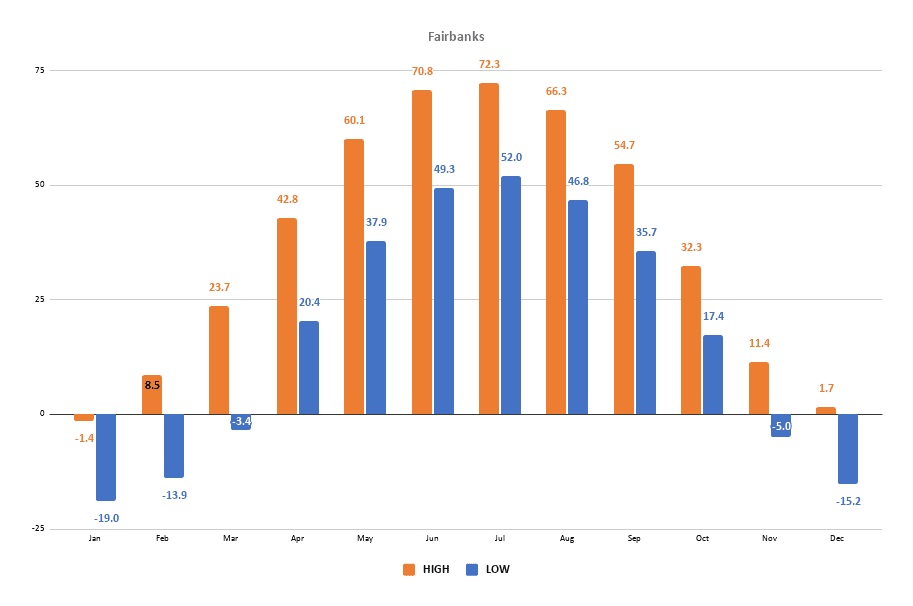
Daily Temperature Fluctuations in Winter
Even within the brutal cold of winter, there can be diurnal temperature variations. Daytime highs might reach into the single digits Fahrenheit or low teens Celsius, offering a slight reprieve before the mercury plummets again with the setting sun. However, the consistent absence of prolonged daylight during the peak winter months of December and January means that warmth is a precious commodity. Residents and visitors alike rely on robust heating systems and heavily insulated clothing to navigate the outdoors.
Snowfall and Its Impact
Fairbanks, Alaska receives a considerable amount of snowfall each winter, with an average of around 75 inches annually. Snowfall is not just an aesthetic feature; it significantly impacts daily life and recreational opportunities. The accumulation of snow transforms the landscape into a winter wonderland, ideal for activities like cross-country skiing, snowshoeing, and dog sledding. However, it also necessitates diligent snow removal from roads and sidewalks to maintain accessibility. The snow cover also plays a role in insulating the ground, which is crucial for understanding permafrost, a significant geological feature of the region.
Unique Winter Phenomena
The extreme cold of Fairbanks, Alaska winter creates several unique atmospheric phenomena. The most sought-after is the Aurora Borealis, or Northern Lights. The clear, dark, and frigid nights provide the perfect canvas for this celestial spectacle. Another fascinating phenomenon is “ice fog,” which occurs when moisture condenses in the extremely cold air, often leading to the formation of ice crystals that can create shimmering, ethereal conditions. At very low temperatures, sometimes around -40°F (-40°C), sounds can travel farther and seem sharper, and breath will freeze instantly into visible clouds.
The Brief but Vibrant Fairbanks Summer
In stark contrast to its harsh winters, Fairbanks, Alaska experiences a surprisingly warm and pleasant summer. The season generally runs from June through August, with the peak of summer occurring in July. Average daily temperatures during this time can reach into the mid-60s Fahrenheit (around 18-19°C), with highs frequently climbing into the 70s Fahrenheit (21-26°C). It is not uncommon for temperatures to exceed 80°F (27°C) on particularly warm days, providing a welcome change from the winter’s chill.
Extended Daylight Hours
One of the most remarkable aspects of Fairbanks, Alaska summers is the phenomenon of the “midnight sun.” Due to its high latitude, Fairbanks experiences extremely long daylight hours during the summer solstice in June. The sun barely dips below the horizon, resulting in prolonged periods of twilight that can last for hours, often referred to as “white nights.” This extended daylight allows for extended exploration and enjoyment of the outdoors, with activities continuing well into the evening. For instance, one can enjoy a round of golf or a hike with daylight at 10 or 11 PM.
Summer Activities and Tourism
The warmer temperatures and extended daylight of summer make Fairbanks, Alaska a hub for outdoor recreation and tourism. Visitors can take advantage of hiking trails, riverboat tours on the Tanana River, and explorations of nearby natural attractions like Denali National Park and Preserve. The city itself offers attractions such as the Morris Thompson Cultural and Visitors Center, the Fountainhead Antique Auto Museum, and the University of Alaska Museum of the North, all of which are more accessible and enjoyable during the warmer months.
Transitional Seasons: Spring and Autumn

The shoulder seasons of spring and autumn in Fairbanks, Alaska represent periods of significant transition.
Spring (April-May)
Spring is a slow awakening from winter’s grip. While temperatures gradually warm, it remains cold, with average temperatures in April still hovering around freezing. Snowmelt begins, and the landscape transitions from a stark white to a muddy brown as the ground thaws. This period can be characterized by unpredictable weather, with chances of lingering snow mixed with rain. Daylight hours increase dramatically, offering a hopeful sign of the coming summer.
Autumn (September-October)
Autumn offers a brief but spectacular display of fall colors, particularly in late August and September, before the arrival of winter. Temperatures begin to drop noticeably, with average daily temperatures in October around 20°F (-7°C). The air becomes crisp, and the landscape is painted with vibrant hues of red, orange, and yellow. This season is also an excellent time for Aurora Borealis viewing, as the nights begin to lengthen and darken, and the skies often remain clear.
Planning Your Visit: Temperature Considerations
When planning a trip to Fairbanks, Alaska, understanding the temperature is crucial for packing appropriately and choosing the best time to visit based on your interests.
Winter Travel (November-March)
For those seeking a true Alaskan winter experience, including the chance to witness the Aurora Borealis, dog sledding, and ice sculptures, winter is the season. However, be prepared for extreme cold. Layers are essential, including thermal base layers, insulating mid-layers (fleece or down), and a windproof, waterproof outer shell. Warm hats, gloves, insulated boots, and scarves are non-negotiable. Many accommodations and attractions are heated, but spending time outdoors requires careful preparation.
Summer Travel (June-August)
Summer travelers will find Fairbanks, Alaska much more accessible and comfortable. Pack light, breathable clothing for warmer days, but always include a jacket or sweater for cooler evenings and any potential rain showers. Comfortable walking shoes are a must for exploring the city and its surroundings. Insect repellent is also advisable, as mosquitoes can be prevalent during the warmer months.
Spring and Autumn Travel (April-May, September-October)
Visiting during the transitional seasons offers a chance to experience both the remnants of winter and the first signs of warmth, or the fading beauty of summer before the deep freeze. Temperatures can be unpredictable, so packing layers is key. Be prepared for a range of conditions, from chilly mornings and evenings to milder afternoons. Waterproof outerwear and sturdy footwear are recommended for both seasons.

Climate Data and Averages
The climate data for Fairbanks, Alaska highlights its extreme continental climate.
- Average January High: Approximately 2°F (-16.7°C)
- Average January Low: Approximately -19°F (-28.3°C)
- Average July High: Approximately 70°F (21.1°C)
- Average July Low: Approximately 48°F (8.9°C)
- Average Annual Precipitation: Approximately 11.5 inches (292 mm)
- Average Annual Snowfall: Approximately 75 inches (1905 mm)
These averages provide a general guideline, but it is always wise to check the forecast closer to your travel dates. The dynamic nature of Fairbanks, Alaska’s weather means that conditions can change rapidly, underscoring the importance of being prepared for a range of temperatures and weather events, regardless of the season. Whether you’re drawn by the ethereal dance of the Aurora Borealis in the deep winter cold or the endless daylight of the summer months, understanding the temperature is the first step to a successful and memorable adventure in Fairbanks, Alaska.
LifeOutOfTheBox is a participant in the Amazon Services LLC Associates Program, an affiliate advertising program designed to provide a means for sites to earn advertising fees by advertising and linking to Amazon.com. Amazon, the Amazon logo, AmazonSupply, and the AmazonSupply logo are trademarks of Amazon.com, Inc. or its affiliates. As an Amazon Associate we earn affiliate commissions from qualifying purchases.