
When planning a visit to Sarasota, Florida, one of the most crucial aspects to consider is the weather, and specifically, the temperature. Understanding the typical temperature ranges throughout the year will significantly impact your packing, your choice of activities, and ultimately, your overall enjoyment of this beautiful Gulf Coast city. Sarasota isn’t just about its pristine beaches and vibrant arts scene; it’s also about experiencing it in comfort, and temperature plays a vital role in that.
The weather in Sarasota is largely defined by its humid subtropical climate. This means you can generally expect warm to hot summers and mild winters. However, within this broad classification, there are distinct seasonal variations that are important to grasp for any traveler. Whether you’re dreaming of a sun-drenched beach vacation in the peak of summer or a more temperate escape during the cooler months, knowing what to pack and what to expect temperature-wise is key to a successful trip. This guide aims to provide a comprehensive overview of Sarasota’s temperature throughout the year, helping you make informed decisions for your travel plans.
Sarasota’s Annual Temperature Trends
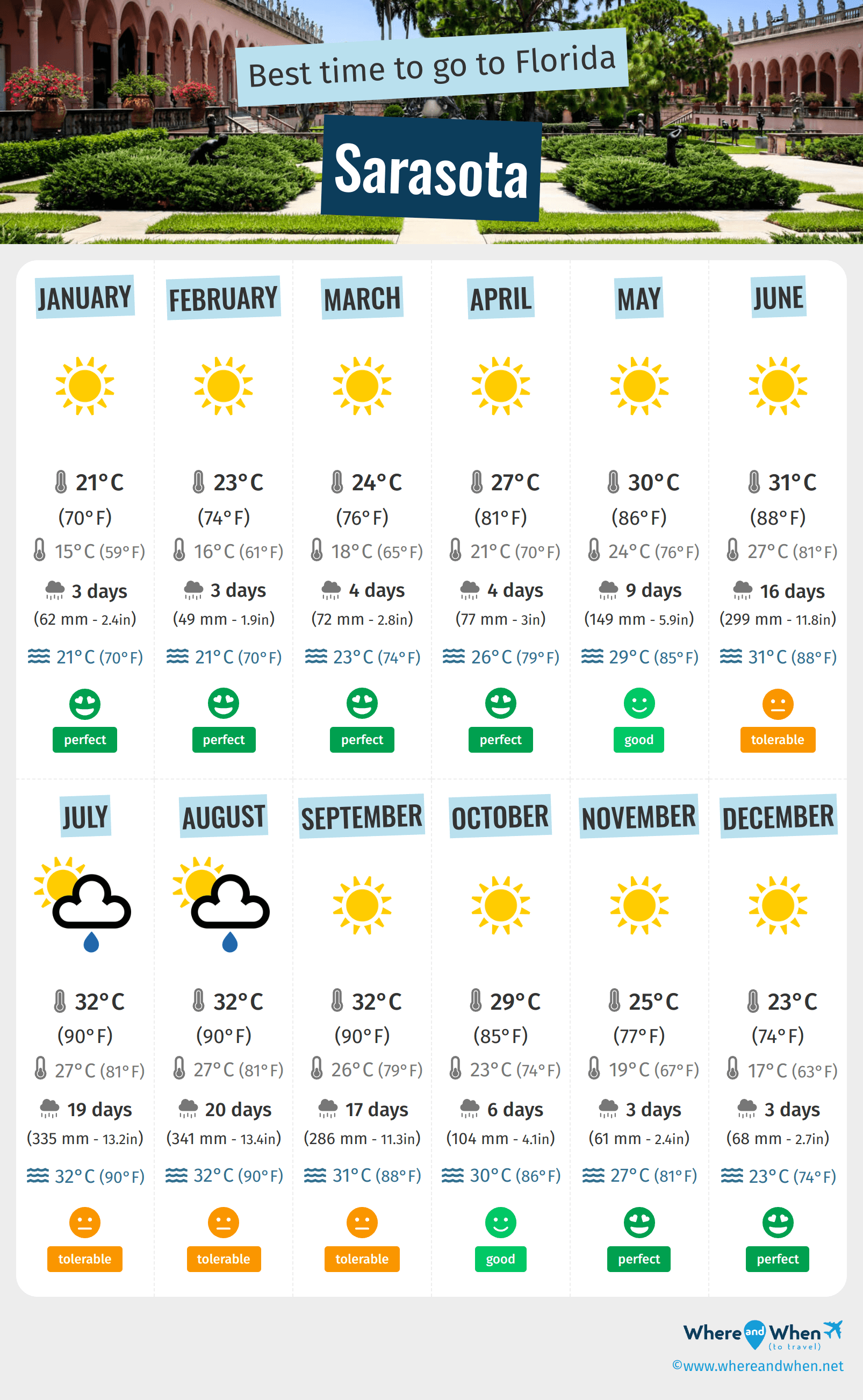
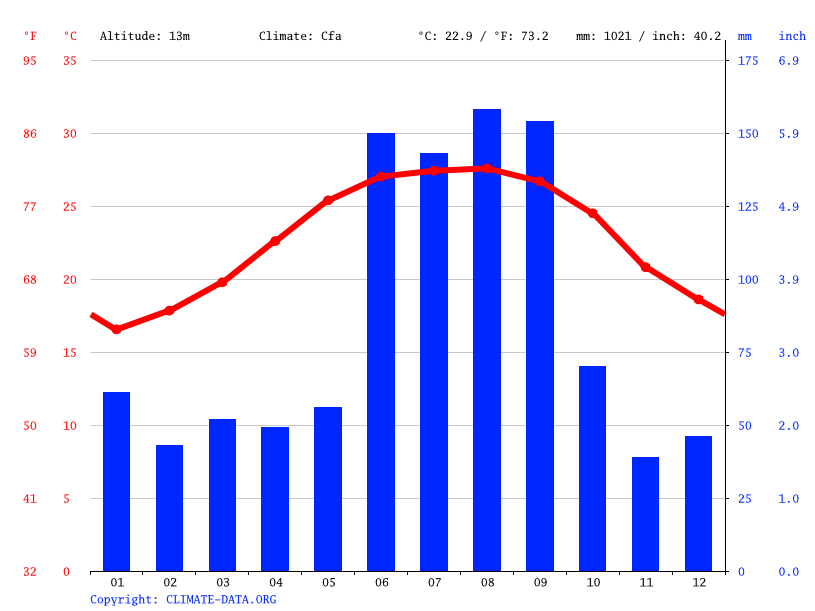
Sarasota, Florida, experiences a pleasant and generally warm climate year-round, making it an attractive destination for visitors seeking sunshine and outdoor activities. The city’s proximity to the Gulf of Mexico plays a significant role in moderating its temperatures, preventing extreme heat or cold. The annual average temperature hovers around a comfortable 73 degrees Fahrenheit (23 degrees Celsius). However, this average masks the distinct characteristics of each season, offering a diverse range of experiences for visitors throughout the year.
Summer in Sarasota: Heat, Humidity, and Sunshine
Summers in Sarasota, from June through August, are undeniably hot and humid. This is the peak of the wet season, and while sunshine is abundant, so are afternoon thunderstorms. The average high temperatures typically range from the upper 80s to low 90s Fahrenheit (around 31-33 degrees Celsius). However, it’s not uncommon for temperatures to reach into the mid-90s (35 degrees Celsius) during heatwaves, especially inland. The humidity levels are consistently high, often making the “feels like” temperature significantly warmer than the actual air temperature. This can be a consideration for those sensitive to heat and humidity when planning their activities.
- June: Marks the official start of summer with average highs in the low 90s Fahrenheit (32-33 degrees Celsius) and lows in the mid-70s Fahrenheit (24 degrees Celsius). Humidity begins to rise, and daily thunderstorms are common.
- July: Typically the hottest and most humid month. Average highs remain in the low 90s Fahrenheit (32-33 degrees Celsius), with nights offering little relief, staying in the mid-70s Fahrenheit (24 degrees Celsius).
- August: Similar to July, with continued high temperatures and humidity. Average highs are around 91-92 degrees Fahrenheit (33 degrees Celsius), and overnight lows are in the mid-70s Fahrenheit (24 degrees Celsius).
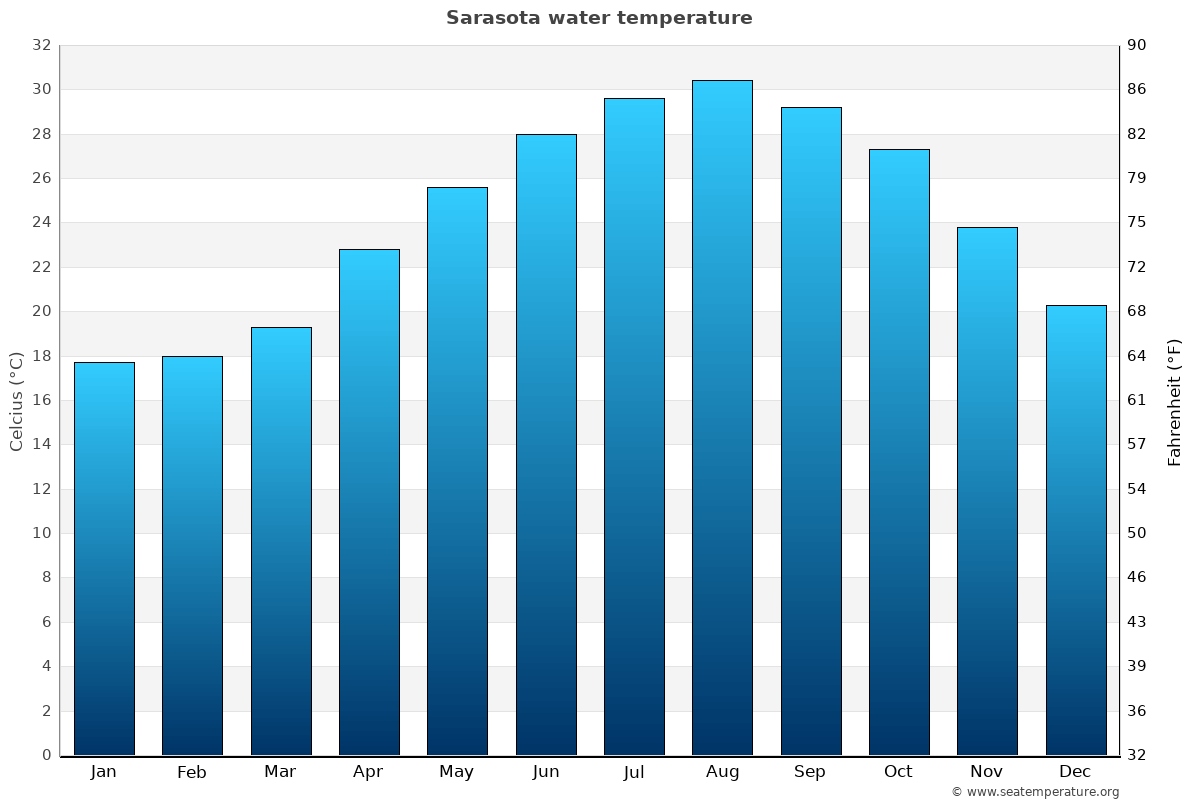
Despite the heat, summer is a popular time for travel to Sarasota, especially for those who enjoy beach activities, water sports, and the vibrant nightlife. The water temperatures of the Gulf of Mexico are also at their warmest during these months, often reaching the upper 80s Fahrenheit (around 30-31 degrees Celsius), making swimming and other aquatic pursuits incredibly enjoyable. Visitors during the summer should be prepared for the heat by staying hydrated, seeking shade during the hottest parts of the day, and embracing the refreshing afternoon downpours, which often provide a temporary respite from the heat. The presence of air-conditioned hotels, resorts, and attractions ensures that escaping the heat is always an option.
Fall in Sarasota: A Transition to Pleasant Temperatures
Autumn in Sarasota, from September through November, is often considered the sweet spot for many visitors. The intense heat and humidity of the summer begin to dissipate, replaced by more comfortable and consistently pleasant weather. While still warm, the temperatures become more manageable, and the risk of daily thunderstorms decreases significantly. This makes it an ideal time for exploring the city’s many outdoor attractions and enjoying its natural beauty.
- September: Still carries some of the summer’s heat and humidity, with average highs in the upper 80s Fahrenheit (30-31 degrees Celsius) and lows in the mid-70s Fahrenheit (24 degrees Celsius). However, the intensity of the heat begins to wane, and the humidity starts to decrease.
- October: This is a truly delightful month in Sarasota. Average high temperatures typically fall into the low to mid-80s Fahrenheit (27-29 degrees Celsius), with overnight lows settling into the pleasant 60s Fahrenheit (15-20 degrees Celsius). The humidity is considerably lower, and rainfall is reduced.
- November: Continues the trend of pleasant weather, with average highs in the mid-70s Fahrenheit (24 degrees Celsius) and lows in the low 60s Fahrenheit (16-17 degrees Celsius). This month offers a comfortable and sunny climate, perfect for enjoying outdoor activities and exploring the local culture.
The fall season is perfect for extended stays, enjoying the outdoor dining scene, visiting landmarks like St. Armands Circle, or taking in a performance at the Van Wezel Performing Arts Hall. The transition in temperature makes it easier to engage in activities that might be less comfortable in the summer heat, such as exploring Myakka River State Park or enjoying a leisurely stroll through downtown Sarasota. Accommodation options often see continued popularity during these months, so booking in advance is still advisable.
Winter in Sarasota: Mild and Sunny Days
Winter in Sarasota, from December through February, is renowned for its mild and sunny weather, making it a highly sought-after destination for those escaping colder climates. The city experiences its “dry season” during these months, with significantly less rainfall and comfortable temperatures. While it is technically winter, it rarely feels like it in the traditional sense.
- December: The transition into winter is smooth, with average highs typically in the mid-70s Fahrenheit (24 degrees Celsius) and lows around the low 50s Fahrenheit (10-12 degrees Celsius). These are perfect daytime temperatures for exploring.
- January: Often the coolest month of the year, but still remarkably mild. Average high temperatures are usually in the low 70s Fahrenheit (22 degrees Celsius), with overnight lows dipping into the upper 40s to low 50s Fahrenheit (9-12 degrees Celsius). Occasional cooler fronts can bring temperatures down further, but significant cold is rare.
- February: Starts to warm up slightly, with average highs climbing back into the low to mid-70s Fahrenheit (22-23 degrees Celsius) and lows in the low 50s Fahrenheit (11-12 degrees Celsius). The days remain predominantly sunny and pleasant.
This period is ideal for enjoying the beaches without the oppressive heat, playing golf, cycling, and exploring the numerous parks and nature preserves. The water temperatures in the Gulf of Mexico will be at their coolest, typically in the 60s Fahrenheit (15-20 degrees Celsius), which may be a bit chilly for some swimmers but still enjoyable for watersports or a brisk dip. Hotels and resorts are particularly busy during the winter months, as snowbirds flock to Sarasota to take advantage of the idyllic weather. Booking accommodation well in advance is essential if you plan to visit during this popular time. The mild winter climate also supports a thriving cultural scene, with numerous events and festivals taking place, making it a great time for lifestyle-focused travel.
Spring in Sarasota: Warming Up to Summer
Spring in Sarasota, from March through May, offers a gradual transition from the comfortable winter temperatures to the heat of summer. This season is characterized by increasing warmth and sunshine, with a slight uptick in humidity as the months progress. It’s a beautiful time to visit, with blooming flora adding color to the landscape.
- March: Continues the pleasant weather from winter. Average high temperatures are in the mid-70s Fahrenheit (24 degrees Celsius), with overnight lows in the low 50s Fahrenheit (11-12 degrees Celsius). The sunshine is abundant, and humidity is still low.
- April: Warmth increases noticeably. Average highs climb into the upper 70s to low 80s Fahrenheit (26-28 degrees Celsius), and overnight lows are in the mid-60s Fahrenheit (18-19 degrees Celsius). Humidity begins to rise, but it’s generally not yet uncomfortable.
- May: The transition to summer becomes more pronounced. Average high temperatures are in the mid-80s Fahrenheit (29-30 degrees Celsius), with overnight lows in the mid-70s Fahrenheit (24 degrees Celsius). Humidity levels start to increase, and the chance of afternoon showers also begins to rise.
Spring is an excellent time for outdoor activities, enjoying the beaches, and exploring the natural beauty of the Florida coast. It’s a time when the outdoor dining scene truly comes alive, and the local markets are brimming with fresh produce. The temperature is generally warm enough for swimming, especially as May approaches, and the natural landmarks are at their most vibrant. This season is also popular for family trips and business stays, offering a comfortable climate for both leisure and work.
Factors Influencing Sarasota’s Temperature
While the general seasonal trends provide a good framework for understanding Sarasota’s climate, several factors can influence the day-to-day and even hour-to-hour temperature fluctuations. Being aware of these elements can help you prepare for your visit and better appreciate the local weather patterns.
The Gulf of Mexico’s Influence
The most significant factor shaping Sarasota’s temperature is its direct access to the warm waters of the Gulf of Mexico. This large body of water acts as a natural moderator for the climate.
- Summer: The ocean absorbs a vast amount of heat during the day and releases it slowly at night. This helps to keep nighttime temperatures from dropping too drastically, contributing to the warm and humid evenings characteristic of Sarasota summers. The sea breeze also provides a welcome, albeit often slight, cooling effect along the coast.
- Winter: Conversely, the Gulf’s water retains its warmth for longer. Even as air temperatures cool, the ocean’s residual heat helps to keep coastal areas like Sarasota milder than inland regions of Florida. This is why Sarasota can enjoy daytime temperatures in the 70s Fahrenheit (low 20s Celsius) while other parts of the state, or country, might be experiencing much colder conditions.
The consistent presence of the Gulf means that coastal areas in Sarasota are typically a few degrees warmer at night and a few degrees cooler during the hottest part of the day compared to locations situated further inland. This makes Sarasota a particularly appealing destination for those seeking a coastal climate.
Humidity and Its Impact on Perceived Temperature
Humidity is a critical component of Sarasota’s climate, particularly during the summer months, and it significantly impacts how the temperature is perceived.
- High Humidity: When the air is saturated with moisture, the body’s natural cooling mechanism – evaporation of sweat – becomes less efficient. This means that even if the thermometer reads a moderate temperature, the high humidity can make it feel much hotter and more uncomfortable. In Sarasota, summer humidity often hovers between 70% and 90%, contributing to those “feels like” temperatures that can exceed the actual air temperature by several degrees.
- Low Humidity: Conversely, during the drier winter and spring months, lower humidity levels make the pleasant temperatures feel even more comfortable. A sunny 75 degrees Fahrenheit (24 degrees Celsius) day in December can feel wonderfully crisp and refreshing due to the low humidity, whereas the same temperature in July might feel sticky and oppressive.
Understanding the interplay between temperature and humidity is crucial for packing appropriately. Light, breathable fabrics are a must for summer, while even a light jacket or sweater might be useful for cooler evenings in winter, despite the warm days.
The Role of Breezes and Storm Systems
Local wind patterns and the occasional passage of weather systems also play a role in temperature variations.
- Sea Breezes: The daily cycle of land and sea breezes is a prominent feature of coastal climates like Sarasota. During the day, warmer air rising from the land draws cooler air from the ocean inland, creating a refreshing sea breeze. In the evening, this effect often reverses. These breezes can significantly moderate daytime temperatures, especially along the immediate coastline.
- Cold Fronts: During the winter months, Florida can occasionally be influenced by cold fronts moving down from the north. While Sarasota rarely experiences severe cold, these fronts can bring temporary drops in temperature, leading to a few days where highs might only reach the 50s or 60s Fahrenheit (10-20 degrees Celsius). These are usually short-lived, with temperatures quickly rebounding to their milder averages.
- Afternoon Thunderstorms: As mentioned, summer brings a high likelihood of afternoon thunderstorms, particularly inland. These storms, while often brief, can cause a noticeable, albeit temporary, drop in temperature as the rain falls and cloud cover increases.
By considering these influencing factors, visitors can gain a more nuanced understanding of Sarasota’s temperature and plan their travel and activities accordingly, ensuring a comfortable and enjoyable experience in this vibrant Florida city. Whether you are planning a luxurious getaway at a boutique hotel or a budget-friendly stay in a charming villa, knowing the temperature will enhance your appreciation of everything Sarasota has to offer.