
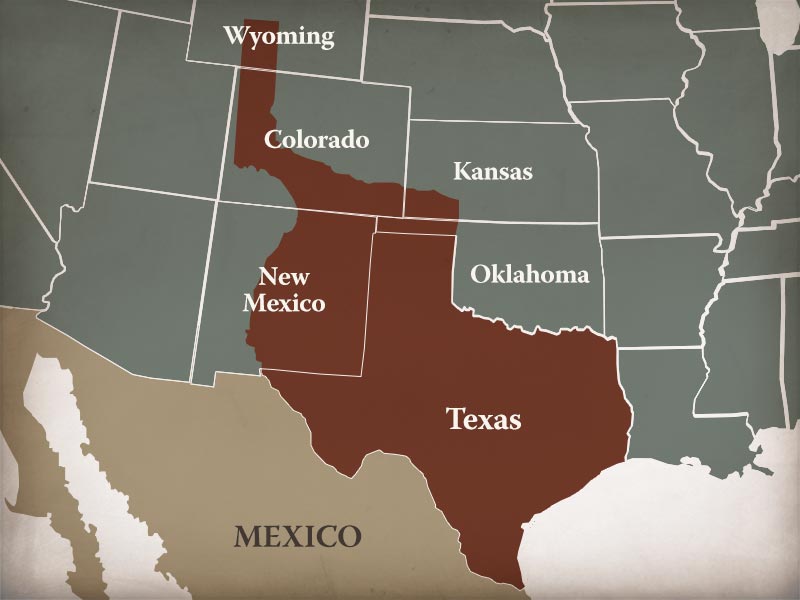
The term “Texas annexation” refers to the historical process by which the Republic of Texas was integrated into the United States of America as the 28th state. This pivotal event, formally occurring on December 29, 1845, was not a sudden development but rather the culmination of years of political maneuvering, economic pressures, and deeply rooted cultural ties between the burgeoning republic and its powerful neighbor. For Texans, annexation represented a secure future, an end to the precarious independence of a young nation constantly navigating foreign relations and internal instability. For the United States, it signified a significant territorial expansion, pushing the nation’s boundaries westward and igniting fervent debates about slavery and manifest destiny. Understanding Texas annexation is crucial for appreciating the complex tapestry of American history, particularly the development of the American Southwest and the contentious issue of slavery that ultimately led to the Civil War.
The Republic of Texas: A Brief History
Following the Texas Revolution in 1836, which saw Texan forces defeat the Mexican army under Santa Anna, the former Mexican territory declared itself an independent republic. The newly formed Republic of Texas faced significant challenges from its inception. Mexico, though defeated, refused to recognize Texas’s independence and continued to view it as a rebellious province. This precarious situation meant Texas maintained a standing army and a navy, a significant financial burden for a nascent nation.
The republic’s economy was largely agrarian, heavily reliant on cotton production, which in turn was inextricably linked to enslaved labor. This economic model placed Texas in a difficult position internationally. Major European powers, such as Great Britain and France, were increasingly wary of the expansion of slavery, making formal recognition and significant trade agreements with Texas challenging.
Politically, the republic experienced internal divisions. Sam Houston, a key figure in the revolution and its first elected president, favored annexation by the United States. Mirabeau B. Lamar, his successor, championed an independent Texas, envisioning it as a powerful nation with its own distinct identity. However, the economic realities and the constant threat from Mexico made the dream of a strong, independent Texas increasingly difficult to sustain. The desire for stability, economic prosperity, and security, particularly from potential renewed Mexican aggression, fueled a persistent longing for union with the United States.
The Path to Annexation: Diplomacy and Debate
The idea of Texas joining the United States was not new. Many American settlers in Texas had originally emigrated from the U.S. with the intention of furthering American interests. However, the issue of annexation became politically charged due to the institution of slavery. In the 1830s and 1840s, the United States was already deeply divided over slavery, with Northern abolitionists vehemently opposing its expansion.
When Texas applied for annexation in 1837, the U.S. Senate, under President Martin Van Buren, tabled the proposal, fearing it would reignite the fiery debates over slavery and potentially lead to war with Mexico. For years, the matter remained dormant, with Texas continuing its independent existence.
A significant shift occurred with the election of James K. Polk as U.S. President in 1844. Polk was an ardent expansionist, committed to the doctrine of “manifest destiny”—the belief that the United States was divinely ordained to expand its dominion and spread democracy across the North American continent. He made the annexation of Texas a central plank of his presidential campaign.
Following Polk’s victory, the U.S. Congress, driven by expansionist fervor and the desire to counter potential British influence in Texas, passed a joint resolution for annexation in early 1845. This resolution offered Texas the chance to join the Union as a territory, which could later become a state. The offer was a significant diplomatic victory for President Polk and his supporters.
Texas’s Decision: A Referendum and Rejection of Independence
The Texas Congress, recognizing the precariousness of their nation’s future and the immense benefits of joining the United States, overwhelmingly approved the U.S. annexation resolution. A public referendum was then held on October 13, 1845, where the citizens of Texas voted by a substantial margin (over 7,000 in favor, fewer than 300 opposed) to accept the terms of annexation and abandon their republican status. This decisive vote underscored the popular will of the Texan people, who largely favored becoming part of the United States. The overwhelming support for annexation can be attributed to several factors:

- Economic Security: Joining the U.S. promised greater economic stability and access to American markets, relieving Texas of its substantial national debt and freeing it from the economic isolation it had faced.
- Military Protection: The United States offered a powerful military guarantee against potential Mexican incursions, a constant concern for the Republic of Texas.
- Cultural and Social Ties: A significant portion of the Texan population had originated from the United States, fostering strong cultural and social connections that made union a natural progression for many.
- The Slavery Question: For slaveholding Texans, joining the U.S. provided a framework within which their institution would be protected, at least for a time, within a larger, slave-holding nation.
Upon Texas’s official acceptance of annexation, the U.S. Congress passed the Texas Admission Act, admitting Texas as the 28th state on December 29, 1845. However, Mexico did not recognize Texas’s annexation, and this act of expansion by the United States would soon lead to armed conflict.
Consequences and the Road to War
The annexation of Texas by the United States was a deeply contentious issue and directly precipitated the Mexican-American War. Mexico viewed the annexation as an act of aggression and a violation of its territorial integrity. The U.S. claim to the territory between the Nueces River and the Rio Grande River, which Mexico still considered part of its land, became a flashpoint.
President Polk, eager to acquire more territory from Mexico, including California and New Mexico, saw the annexation of Texas as a strategic first step. When diplomatic efforts to purchase these territories failed, and tensions over the Texas border escalated, Polk ordered U.S. troops under General Zachary Taylor into the disputed territory. Skirmishes ensued, providing Polk with the pretext to ask Congress for a declaration of war, which was granted in April 1846.
The Mexican-American War, fought between 1846 and 1848, resulted in a decisive U.S. victory. The Treaty of Guadalupe Hidalgo, signed in 1848, ceded vast territories to the United States, including present-day California, Nevada, Utah, Arizona, and parts of New Mexico, Colorado, and Wyoming, in addition to confirming U.S. sovereignty over Texas. This territorial expansion was immense, fulfilling much of the vision of manifest destiny but also dramatically intensifying the national debate over slavery.
The Slavery Question Intensifies
The admission of Texas as a slave state further tipped the delicate balance of power between free and slave states in the U.S. Senate. This imbalance fueled the growing sectional tensions that would ultimately lead to the Civil War. Abolitionists in the North saw the annexation as a victory for the “Slave Power,” while Southern proponents viewed it as a crucial expansion and protection of their economic and social system.
The compromises that followed, such as the Compromise of 1850, attempted to soothe these divisions, but the issue of slavery’s expansion remained a persistent and irreconcilable conflict. Texas annexation, therefore, was not merely a territorial acquisition; it was a catalyst that exacerbated the fundamental differences that would tear the nation apart.

Texas Post-Annexation: Statehood and Beyond
Upon becoming a U.S. state, Texas was permitted to retain its public lands and its existing slave property. This provision was a significant concession and one of the key draws for Texas’s agreement to join the Union. Texas was granted the right to divide itself into as many as five new states, a provision that never materialized.
The decades following annexation saw Texas rapidly develop. Its vast resources, fertile lands, and strategic location made it an attractive destination for new settlers. However, the state’s economy remained heavily reliant on agriculture and enslaved labor, perpetuating the social structures of the antebellum South.
The Civil War fundamentally reshaped Texas. As a Confederate state, it participated in the conflict, though its geographical isolation meant it was not a primary theater of major battles. The end of the war and the abolition of slavery brought profound social and economic changes to the state. Reconstruction, though often tumultuous, ushered in a new era for Texas, one that continued to grapple with its legacy of slavery while striving to build a future within the reunited United States.
The story of Texas annexation is a complex narrative of ambition, diplomacy, conflict, and the enduring struggle over fundamental American ideals. It is a story that continues to shape the identity and destiny of the Lone Star State and the nation as a whole.
LifeOutOfTheBox is a participant in the Amazon Services LLC Associates Program, an affiliate advertising program designed to provide a means for sites to earn advertising fees by advertising and linking to Amazon.com. Amazon, the Amazon logo, AmazonSupply, and the AmazonSupply logo are trademarks of Amazon.com, Inc. or its affiliates. As an Amazon Associate we earn affiliate commissions from qualifying purchases.