
Understanding the intricacies of sales tax is a fundamental aspect of managing personal finances, especially when planning travel or considering a move to a new locale. For anyone looking to explore the delights of Alabama, comprehending the state’s sales tax structure is crucial, whether you’re a budget-conscious traveler, a luxury seeker, or a business professional. This seemingly simple percentage can significantly impact your overall expenses, influencing everything from the cost of your morning coffee to the total price of a weekend getaway. Integrating sales tax awareness into your financial planning is not just about avoiding surprises; it’s about making informed lifestyle choices that align with your economic goals and expectations, ensuring a smoother and more enjoyable experience in the Heart of Dixie.
Unpacking the Basics: Alabama’s State Sales Tax Framework
The sales tax system in Alabama is a multifaceted structure that combines a statewide rate with additional local levies. This layered approach means that the actual tax you pay on goods and services can vary considerably depending on your specific location within the state. For travelers and residents alike, gaining a clear understanding of these fundamental components is the first step toward effective financial planning and expenditure management.
The Statewide Rate: What to Expect Across the State
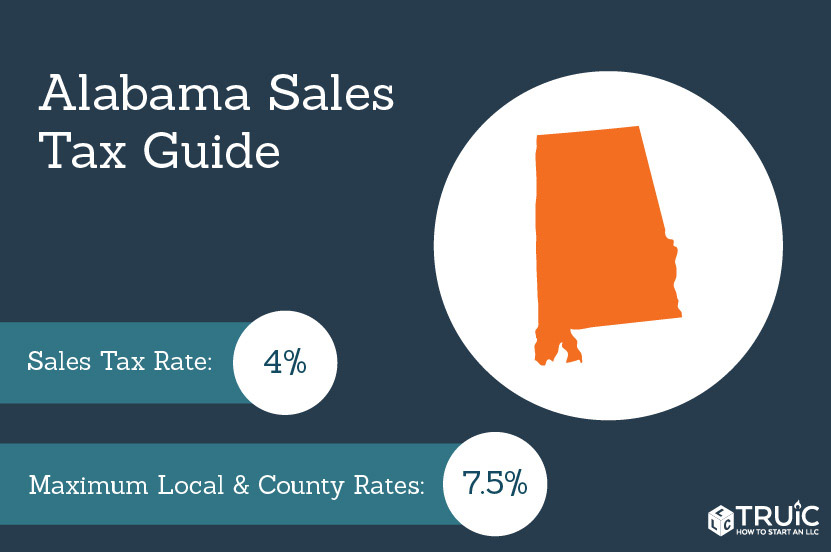
At its core, Alabama imposes a statewide sales tax rate. This foundational percentage applies uniformly across all jurisdictions within the state, forming the bedrock upon which additional local taxes are built. This rate ensures a minimum level of taxation on most taxable transactions, contributing to state revenue that funds various public services. For consumers, this means that regardless of where they are in Alabama, a portion of their purchase price is consistently allocated to the state. While seemingly modest on its own, this statewide rate is an essential component to factor into any financial calculation, especially when considering general purchases like groceries (though some specific food items might have different tax treatments, the general principle applies to most tangible goods) or merchandise bought from retail establishments. Understanding this base rate provides a helpful starting point for estimating costs before diving into the complexities of local variations.
Beyond the State: Local Sales Taxes and Their Impact
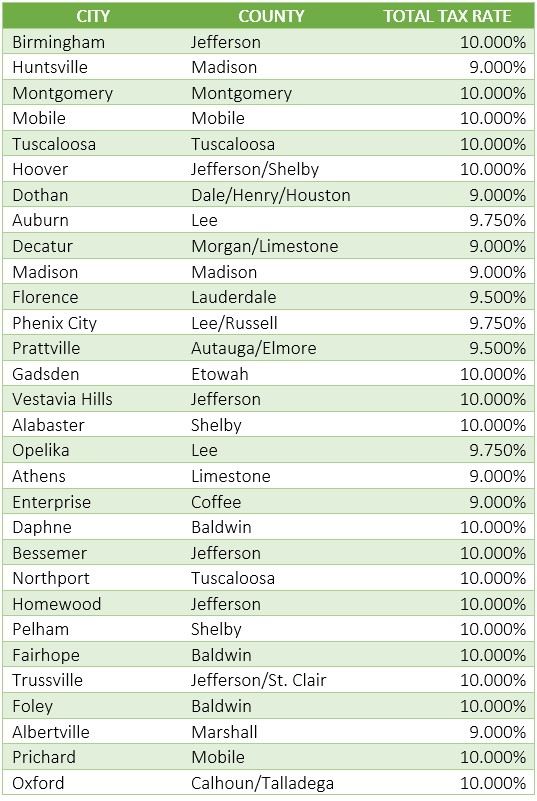
Where the Alabama sales tax system truly becomes nuanced is with the addition of local sales taxes. These are imposed by individual counties and municipalities, and they are levied on top of the state’s baseline rate. The combination of state, county, and city taxes can result in a total sales tax rate that fluctuates significantly from one community to another. For instance, a purchase made in Birmingham might carry a substantially higher sales tax rate than the same purchase made in a smaller, rural county. Major metropolitan areas like Montgomery, Mobile, and Huntsville often have some of the highest combined rates due to their dense populations and extensive municipal services.
This variability is critical for travelers and residents to recognize. Someone planning a shopping spree in downtown Birmingham needs to account for a different tax burden than someone buying supplies in Gulf Shores or a college student stocking up near Auburn or Tuscaloosa. These local taxes directly fund local government operations, schools, and infrastructure projects, underscoring their importance to community development. However, for the consumer, it means that the “sticker price” of an item may not reflect its true cost until the combined sales tax rate for that specific location is applied. Therefore, before making significant purchases or budgeting for daily expenses, it is always advisable to research the specific combined sales tax rate for the exact city and county you will be visiting or residing in. This due diligence ensures financial clarity and helps prevent any unexpected expenses from derailing your carefully planned budget.
Sales Tax and Your Travel Lifestyle in Alabama
The impact of Alabama’s sales tax extends far beyond a simple percentage; it directly shapes various travel lifestyles, from the most economical expeditions to the most opulent getaways. Understanding how these taxes interact with different spending habits is crucial for maximizing your budget and enhancing your experience in the state. Whether you’re pinching pennies or splurging freely, sales tax awareness empowers you to make smarter financial decisions tailored to your personal travel style.
Budget Travel: Maximizing Value Amidst Sales Tax Considerations
For the budget-conscious traveler, every dollar counts, and sales tax can add an often-overlooked layer to daily expenses. While the state sales tax might seem small individually, it adds up quickly across multiple transactions for groceries, inexpensive souvenirs, or quick meals. To maximize value, budget travelers in Alabama might opt for self-catering, buying groceries from stores where sales tax applies but overall costs are lower than dining out. This strategy not only saves on the meal price but also potentially on the cumulative sales tax for a family. When dining out, being aware of local sales tax rates can subtly influence choices; for instance, choosing a fast-casual spot with a lower combined tax rate might be preferable to a full-service restaurant in a high-tax urban center if savings are paramount. Furthermore, transportation costs, such as car rentals, are also subject to sales tax, which can subtly increase the overall expense of getting around the state. Factor these taxes into your initial rental quotes to avoid surprises. By consciously making choices that minimize the cumulative tax burden, budget travelers can stretch their funds further and allocate more resources to experiences rather than unforeseen levies.
Luxury Travel and Business Stays: Understanding the Financial Nuances
At the other end of the spectrum, luxury travelers and those on business stays will also find that sales tax plays a significant role, albeit with different implications. For these groups, expenditures are often higher—premium dining experiences, high-end retail purchases, bespoke services, and upscale accommodation all command a greater base price. Consequently, the application of sales tax, even at the same percentage rate, results in a much larger dollar amount. A lavish dinner for two in Birmingham or a significant purchase from a boutique in Mobile will incur a substantial sales tax charge that needs to be anticipated.
For business travelers, understanding these financial nuances is paramount for accurate expense reporting and corporate budget management. The cumulative sales tax on hotel stays, business meals, conference services, and supplies can add up quickly, impacting project budgets or per diem allocations. While the primary goal might not be to save every penny, recognizing these costs ensures that financial forecasts are precise and that reimbursement processes are smooth. Luxury travelers, too, benefit from this awareness; while they may not be as constrained by budget, knowing the total cost of an experience, including all applicable taxes, contributes to a clearer financial picture and helps in planning a truly seamless high-end journey. Being informed allows both luxury and business travelers to appreciate the full value of their investments in Alabama’s offerings without unexpected financial detours.
Family Trips and Group Travel: Cumulative Costs and Budgeting
Family trips and group travel present a unique challenge when it comes to sales tax: the cumulative effect. When you’re traveling with multiple people, every purchase, no matter how small, is multiplied by the number of individuals or frequency. A snack for one child, a souvenir for another, and an entry ticket for everyone—each transaction carries its own sales tax burden. Over the course of a day or a week in Alabama, these seemingly minor additions can quickly escalate into a significant sum, impacting the overall family vacation budget.
Consider the cost of dining out with a family of four or more. Not only is the base cost of multiple meals higher, but the sales tax applied to that larger total can be substantial. Similarly, group activities, such as visiting an attraction like the U.S. Space & Rocket Center in Huntsville, will see sales tax applied to each individual ticket. If the group decides to shop for matching T-shirts or local crafts, the sales tax on these multiple items will also add up. The key for families and group organizers is to factor in this multiplying effect during the initial budgeting phase. Rather than just estimating the base cost of goods and services, it’s wise to add a buffer or explicitly calculate the expected sales tax for all common purchases. This proactive approach ensures that the “fun money” doesn’t unexpectedly shrink due to underestimated tax obligations, allowing families and groups to fully enjoy their time in Alabama without financial stress.
Specific Categories: Accommodation, Dining, and Attractions
Beyond general retail purchases, certain categories of spending are particularly impacted by sales tax and often other specialized taxes in Alabama. Understanding these distinctions is crucial for accurately forecasting travel expenses and making informed decisions about where and how to spend your money. From where you lay your head at night to what you eat and how you entertain yourself, specific tax structures can influence your lifestyle choices while exploring the state.
Hotel and Lodging Taxes: More Than Just Sales Tax
When booking accommodation in Alabama, it’s vital to recognize that your bill will typically include more than just the standard sales tax. Hotels, motels, and other lodging providers are generally subject to additional specific taxes, often referred to as occupancy taxes, lodging taxes, or transient occupancy taxes. These taxes are levied by both state and local governments and are specifically designed to generate revenue from visitors utilizing short-term accommodations. The rates for these lodging taxes can vary dramatically by city and county. For example, a stay in Gulf Shores, a popular coastal destination, might have a higher combined lodging tax rate than a smaller inland town, reflecting the local government’s reliance on tourism revenue.
These additional taxes can significantly increase the total cost of a hotel room, sometimes adding several percentage points on top of the regular sales tax. For a multi-night stay or a booking at a high-end resort, these extra charges can quickly accumulate into a substantial sum. This is particularly relevant for luxury travelers and business professionals whose accommodation expenses are often higher. Always inquire about the total price, including all taxes and fees, when booking to avoid surprises. Failing to factor in these additional lodging taxes can lead to unexpected budget overruns, impacting your overall travel lifestyle choices and potentially limiting funds available for other experiences during your trip to Alabama.
Food and Beverage: Eating Out vs. Groceries
The sales tax landscape for food and beverages in Alabama presents a nuanced picture, especially when comparing dining out to purchasing groceries. Generally, food purchased at restaurants, cafes, and other dining establishments is subject to the full combined state and local sales tax rate applicable to that specific location. This means that every meal out, from a quick breakfast to a leisurely dinner, will have this tax added to the menu price. For those who enjoy a lifestyle centered around culinary exploration or frequent dining, understanding this can significantly impact their budget. The cumulative effect of sales tax on multiple restaurant visits throughout a trip can be considerable, influencing choices about dining frequency or restaurant selection.
Conversely, food items purchased for home consumption at grocery stores are also typically subject to sales tax in Alabama. Unlike some other states that offer exemptions or lower rates for groceries, Alabama generally applies its standard sales tax to most food items sold in grocery stores. While the tax rate itself is usually the same as dining out, the overall cost of groceries is typically much lower than restaurant meals, making self-catering a common strategy for budget-conscious travelers. For families or those planning longer stays, this distinction is crucial: cooking at your accommodation can lead to substantial savings, not only on the base cost of food but also on the overall sales tax burden compared to consistently eating out. Planning meals and understanding where your food dollar goes, including the impact of sales tax, is a key component of managing your lifestyle expenses in Alabama.
Attractions and Entertainment: Planning Your Activities
Exploring Alabama’s rich array of attractions and entertainment options is a highlight for many visitors, but budgeting for these experiences also requires an understanding of sales tax. Tickets for museums, historical sites, theme parks, concerts, sporting events, and other recreational activities are typically subject to the full state and local sales tax rates. This means that the advertised price for an admission ticket may not be the final price you pay at the gate or online.
For individuals, families, or groups planning their itinerary, factoring in this additional cost is essential. For instance, a family visiting the McWane Science Center in Birmingham or attending a college football game in Tuscaloosa should account for the sales tax on each ticket. This can be especially important for major events or popular attractions where ticket prices are already substantial. Ignoring the sales tax can lead to unexpected expenses that might force re-evaluation of activities or dip into other budget categories. A savvy traveler, keen on a lifestyle filled with enriching experiences, will incorporate sales tax into their activity budget from the outset. This foresight ensures that the joy of experiencing Alabama’s cultural, historical, and recreational offerings remains untainted by financial surprises, allowing for a more predictable and enjoyable journey.
Navigating the System: Tips for Travelers and Residents
Successfully navigating Alabama’s sales tax system is key to managing your finances effectively, whether you’re passing through or putting down roots. A proactive approach to understanding tax implications can save you money and prevent unexpected costs from impacting your lifestyle. Equipping yourself with the right knowledge and tools empowers you to make smarter spending decisions throughout the Heart of Dixie.
Researching Local Rates Before You Go
One of the most effective strategies for managing sales tax in Alabama is to conduct thorough research on local rates before you travel or make significant purchases. Given the significant variability in combined sales tax rates across different cities and counties, knowing the specific rate for your destination can greatly influence your budgeting. Official state tax websites, typically managed by the Alabama Department of Revenue, are excellent resources for finding current state, county, and municipal sales tax rates. Many local government websites also provide this information for their respective jurisdictions.
Additionally, various online tax calculators or financial planning apps can offer estimates based on zip codes, providing a quick way to gauge the tax burden in different areas. For travelers, this research can help inform decisions about where to shop for souvenirs, where to dine, or even which part of a metropolitan area to base themselves in, especially for extended stays. For residents, it’s crucial for understanding the true cost of living and budgeting for everyday expenses. By proactively researching local rates, you gain a clearer picture of your financial obligations, allowing for more precise budgeting and preventing any unwelcome surprises at the checkout counter.
Understanding Exemptions and Special Cases
While sales tax generally applies to most tangible goods and some services, it’s worth noting that certain exemptions and special cases exist within Alabama’s tax code. While a deep dive into complex tax law isn’t necessary for most visitors, being aware of common exceptions can sometimes be beneficial. For instance, certain non-profit organizations might be exempt from paying sales tax on purchases made for their organizational use. Specific services, distinct from tangible goods, might also fall outside the purview of general sales tax, though service providers may have their own separate fees.
For the typical traveler or resident, the most relevant areas to be aware of are often related to certain food items (though Alabama taxes most groceries, unlike many states) or specific industry-related exemptions that might not directly impact the average consumer. It’s also important to distinguish between general sales tax and specialized taxes, such as those applied to lodging (occupancy taxes) or rental cars, which are additional levies rather than exemptions from sales tax. While broad exemptions are less common for general consumer purchases, a quick check on the Alabama Department of Revenue’s website can provide clarification on specific items or circumstances if you have a unique purchase in mind. Understanding these nuances, even at a high level, contributes to a more comprehensive financial awareness for your lifestyle in Alabama.
Budgeting for the Unseen: Why Sales Tax Matters
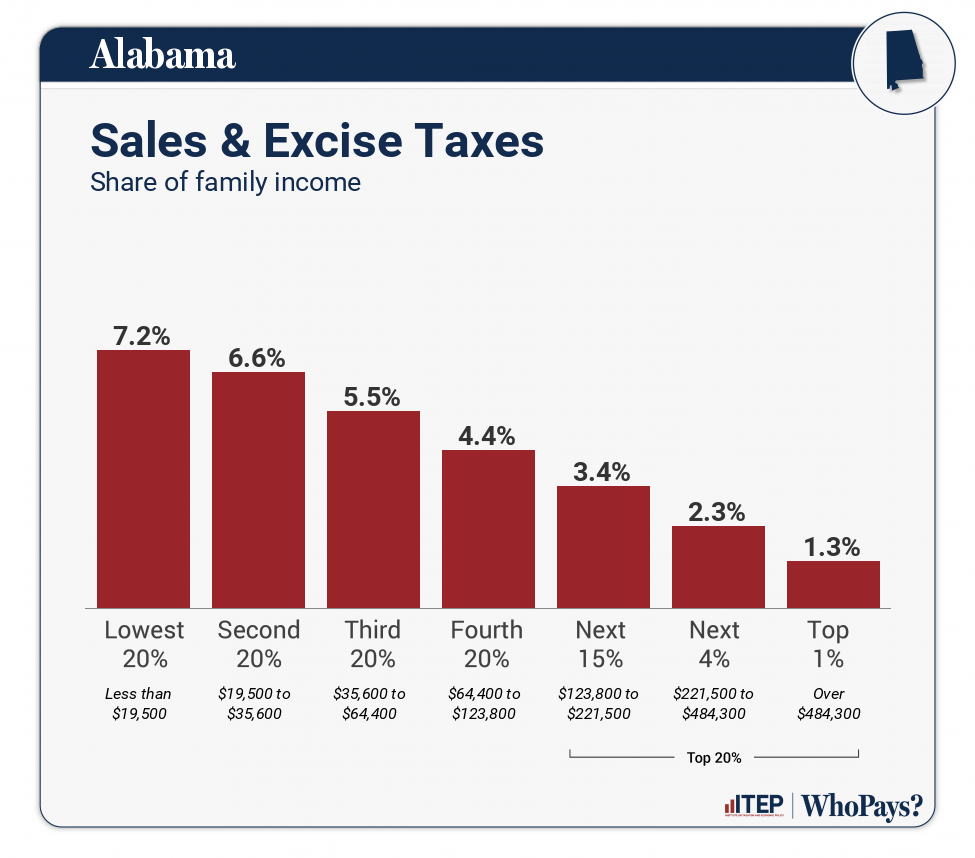
Ultimately, the most critical takeaway for both travelers and residents in Alabama is the importance of “budgeting for the unseen”—specifically, incorporating sales tax into every financial plan. Many individuals tend to focus solely on the advertised price of goods or services, overlooking the additional percentage that will be added at the point of sale. This oversight is a common reason for budget overruns, especially on trips or during periods of significant spending. Sales tax, while often appearing as a small percentage, can accumulate rapidly, especially in high-tax areas or when making multiple purchases.
For a budget traveler, neglecting sales tax might mean less money for unexpected experiences. For a family on vacation, it could translate to fewer souvenirs or dining opportunities. For a business professional, it might impact expense reports or departmental budgets. A smart financial lifestyle involves adding a buffer to all estimated expenses, specifically to cover sales tax. A simple rule of thumb could be to add an extra 10-12% (depending on the specific location’s combined rate) to your projected spending for goods, meals, and activities. This proactive measure ensures that your financial expectations align with reality, providing a sense of control and predictability over your expenditures. By making sales tax an explicit line item in your budget, you transform it from an unseen expense into a managed cost, enabling a smoother and more financially stress-free experience in Alabama.
In conclusion, understanding what the Alabama sales tax entails—from its statewide rate to its diverse local variations and specific applications across different spending categories—is fundamental for anyone engaging with the state’s economy. Whether you’re planning a thrilling adventure, a serene retreat, or a productive business trip, integrating this knowledge into your financial lifestyle ensures a more predictable and enjoyable journey. By researching local rates, being mindful of specific category taxes, and proactively budgeting for these “unseen” costs, you empower yourself to make informed decisions that align with your financial goals, leaving more room to savor the unique charm and hospitality of Alabama.
LifeOutOfTheBox is a participant in the Amazon Services LLC Associates Program, an affiliate advertising program designed to provide a means for sites to earn advertising fees by advertising and linking to Amazon.com. Amazon, the Amazon logo, AmazonSupply, and the AmazonSupply logo are trademarks of Amazon.com, Inc. or its affiliates. As an Amazon Associate we earn affiliate commissions from qualifying purchases.