
Understanding the appreciation rate of homes in a particular real estate market is crucial for investors, homeowners, and potential buyers alike. It provides insight into the market’s health, its growth potential, and the long-term value of property ownership. Tampa, Florida, a vibrant and growing metropolitan area on the west coast of the Sunshine State, has long been an attractive destination for its warm climate, beautiful beaches, and robust economy. This article delves into the appreciation rates for homes in Tampa, Florida, exploring the factors that influence this growth and what it means for the local real estate landscape.
Factors Influencing Home Appreciation in Tampa, Florida
The appreciation of home values is not a random occurrence; it’s driven by a complex interplay of economic, demographic, and market-specific factors. In Tampa, Florida, several key elements contribute to its consistent growth.
Economic Growth and Job Market
A strong and growing economy is fundamental to a healthy real estate market. Tampa, Florida has experienced significant economic expansion in recent years, attracting new businesses and fostering job creation across various sectors. Industries such as healthcare, finance, technology, and manufacturing have seen substantial growth, leading to an influx of professionals seeking housing in the area. This increased demand from a growing population directly translates into higher property values. As more people move to Tampa, Florida for employment opportunities, the competition for available housing intensifies, pushing prices upward. The presence of major employers and the diversification of the job market ensure a steady stream of potential homebuyers, contributing to sustained appreciation.
Population Growth and In-Migration
Tampa, Florida has been a prime destination for people relocating from other parts of the United States, as well as from international locations. Its attractive lifestyle, lower cost of living compared to some major coastal cities, and favorable tax environment are significant draws. This consistent in-migration places continuous upward pressure on housing demand. As the population grows, so does the need for more housing units, and when supply cannot keep pace with demand, prices naturally rise. This demographic trend is a cornerstone of Tampa, Florida’s real estate appreciation.
Supply and Demand Dynamics
Like any market, real estate in Tampa, Florida is governed by the fundamental principles of supply and demand. Currently, the demand for housing in Tampa, Florida often outstrips the available supply, particularly in desirable neighborhoods and for certain types of properties. Limited new construction, zoning regulations, and the pace at which new homes can be built all contribute to the supply side of the equation. When demand is high and supply is constrained, sellers find themselves in a favorable position, leading to bidding wars and increased sale prices, which in turn drives up the average appreciation rate.
Interest Rates and Affordability
Mortgage interest rates play a pivotal role in the affordability of homes, and consequently, in the appreciation of property values. Lower interest rates make mortgages more affordable, allowing buyers to purchase more expensive homes or increasing the pool of eligible buyers. This increased purchasing power can fuel demand and contribute to appreciation. Conversely, rising interest rates can dampen demand and slow down appreciation. While interest rates fluctuate, Tampa, Florida’s market has historically shown resilience, with demand often absorbing the impact of rate changes due to the underlying strength of its economic and demographic drivers.
Infrastructure Development and Urban Planning
Ongoing investments in infrastructure and thoughtful urban planning can significantly enhance the desirability of a city and its surrounding areas. Tampa, Florida has seen substantial development in its transportation networks, public spaces, and amenities. Projects like the expansion of the Tampa International Airport, improvements to roadways, and the revitalization of downtown areas and waterfront districts make Tampa, Florida a more attractive place to live, work, and visit. These enhancements not only improve the quality of life but also increase the economic viability of neighborhoods, leading to higher property values and appreciation.
Historical Appreciation Trends in Tampa, Florida
To understand the current appreciation rate, it’s helpful to look at historical trends. The real estate market in Tampa, Florida has experienced periods of robust growth, interspersed with market corrections common to national real estate cycles. However, over the long term, Tampa, Florida has demonstrated a strong track record of home value appreciation, often outpacing the national average.
Long-Term Appreciation
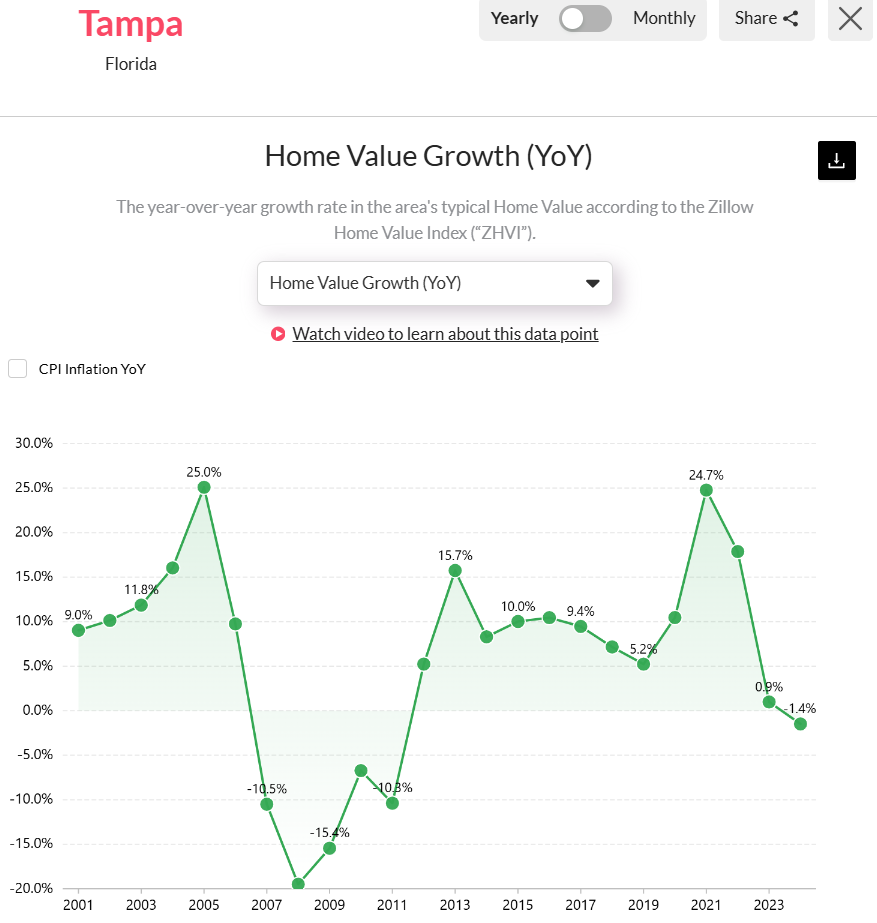
Data from various real estate analytics firms consistently show that Tampa, Florida has experienced significant home appreciation over the past decade and beyond. While specific percentages vary depending on the source and the exact timeframe analyzed, the trend has been overwhelmingly positive. This sustained growth can be attributed to the confluence of the economic and demographic factors mentioned earlier. Properties in Tampa, Florida have generally been a sound investment for those looking for capital gains over time.
Short-Term Fluctuations and Market Cycles
It is important to note that real estate markets are dynamic and can experience short-term fluctuations. Factors such as seasonal demand, changes in interest rates, or unexpected economic events can cause temporary slowdowns or accelerations in appreciation. For instance, the COVID-19 pandemic initially led to a surge in demand for larger homes and a shift towards suburban living, impacting appreciation rates in different parts of the Tampa Bay area. However, these short-term movements are often absorbed by the underlying long-term growth drivers.
Current Appreciation Rates and Projections
Pinpointing an exact, single appreciation rate for Tampa, Florida is challenging due to the diversity within the market itself, encompassing various neighborhoods, property types, and price points. However, general trends and expert projections offer valuable insights.
Average Appreciation Figures
Recent reports from reputable real estate data providers indicate that home appreciation rates in Tampa, Florida have been strong, often in the mid-to-high single digits annually over the past few years. Some analyses have shown figures exceeding 10% year-over-year in certain periods, reflecting the high demand and limited inventory. It’s crucial to consider that these are averages, and specific neighborhoods might experience higher or lower appreciation based on local factors like school districts, proximity to amenities, and new development.
Neighborhood-Specific Variations
The appreciation rate can vary significantly from one neighborhood to another within the Tampa, Florida metropolitan area. Areas undergoing revitalization, those with excellent schools like parts of South Tampa or Carrollwood, or those offering desirable waterfront access, often see higher appreciation rates. Conversely, areas with slower development or fewer amenities might experience more modest growth. For instance, the growth of downtown Tampa, Florida and the Waterfront areas has spurred considerable appreciation in surrounding residential zones.
Future Outlook and Projections
While predicting the future with certainty is impossible, most real estate experts remain optimistic about the continued appreciation of homes in Tampa, Florida. The underlying economic and demographic drivers that have propelled the market are expected to persist. Continued job growth, population influx, and the ongoing desirability of the Florida lifestyle suggest that demand for housing will remain robust. However, the pace of appreciation may moderate as the market matures and potentially faces headwinds like rising construction costs or broader economic shifts. Nonetheless, Tampa, Florida is widely considered a market with strong long-term appreciation potential.
Investing in Tampa, Florida Real Estate
For those considering investing in real estate in Tampa, Florida, understanding appreciation rates is a key component of assessing potential returns.
Benefits of Property Investment in Tampa, Florida
The consistent historical appreciation, coupled with strong rental demand, makes Tampa, Florida an attractive market for real estate investors. Beyond capital gains through appreciation, rental properties in Tampa, Florida can also provide a steady stream of income, further enhancing the overall return on investment. The growing tourism sector also presents opportunities in the short-term rental market, though this segment often has different appreciation dynamics.

Considerations for Buyers and Sellers
For prospective buyers, understanding the appreciation rate can help in making informed decisions about when and where to purchase property. It helps in assessing the long-term value proposition. For sellers, knowing the current appreciation trends can inform pricing strategies and negotiation tactics. It’s always advisable to consult with local real estate professionals who have up-to-date knowledge of specific market conditions and neighborhood trends. Factors such as the condition of the property, its location, and current market inventory will also play a significant role in its individual appreciation trajectory.
In conclusion, the appreciation rate for homes in Tampa, Florida is influenced by a robust economy, significant population growth, and favorable market dynamics. While specific figures vary, the long-term trend points to strong and consistent appreciation, making Tampa, Florida a compelling market for real estate investment and homeownership.
LifeOutOfTheBox is a participant in the Amazon Services LLC Associates Program, an affiliate advertising program designed to provide a means for sites to earn advertising fees by advertising and linking to Amazon.com. Amazon, the Amazon logo, AmazonSupply, and the AmazonSupply logo are trademarks of Amazon.com, Inc. or its affiliates. As an Amazon Associate we earn affiliate commissions from qualifying purchases.