
New York, often referred to as the Empire State, is a land of unparalleled diversity, encompassing everything from the pulsating urban heart of New York City to the tranquil, sprawling wilderness of the Adirondacks. For anyone planning to travel, explore its vibrant tourism scene, book accommodations, or simply understand the lifestyle of its residents, knowing the local area codes is more than just a piece of trivia; it’s a practical guide to navigating this vast and captivating state. While the question “What is the area code for New York?” might seem straightforward, the answer reflects the complex telecommunication infrastructure necessitated by millions of inhabitants and countless businesses spread across distinct geographic regions.

Area codes in New York do not merely serve as prefixes for phone numbers; they are signifiers of location, identity, and the very fabric of local connectivity. For the intrepid traveler seeking destinations from the iconic landmarks of Manhattan to the picturesque Finger Lakes wine country, understanding these codes can streamline everything from booking a hotel to contacting local attractions. For those considering a longer stay, whether for business or leisure, area codes offer insights into the regional characteristics, helping to identify suitable accommodations, services, and communities. This comprehensive guide delves into the intricate world of New York area codes, revealing how they are essential tools for anyone looking to experience the state to its fullest.
Understanding New York’s Telecommunication Landscape
The telecommunications map of New York is a testament to its population density and geographical expanse. Unlike smaller states where a single area code might suffice, New York’s needs have led to a rich tapestry of codes, each primarily corresponding to a specific region. These codes are not static; as population centers grow and demand for phone numbers increases, new overlay codes are introduced, adding layers of complexity that both residents and visitors must understand. This evolution reflects the dynamic nature of communication in a state that is perpetually growing and attracting people from around the globe.
The Metropolitan Hub: New York City Area Codes
The most recognizable and densely populated part of the state, New York City and its immediate surroundings, has a particularly intricate web of area codes. These codes are emblematic of the city’s status as a global epicenter for travel, tourism, business, and diverse lifestyles.
The original and most iconic area code for Manhattan is 212. This three-digit prefix has become synonymous with the borough’s prestige and historical significance. However, due to the immense demand, 646 was introduced as an overlay in the late 1990s, followed by 332 more recently. This means that many businesses, hotels, and residents in Manhattan now have numbers starting with these codes. When booking a luxury suite overlooking Central Park or reserving a table at a Michelin-starred restaurant near Times Square, you’ll likely encounter numbers with these prefixes.
For the outer boroughs—Brooklyn, Queens, the Bronx, and Staten Island—the primary area code is 718. As these boroughs also experienced significant growth and demand, 347 was added as an overlay, and then 929 followed suit. These codes identify businesses and residences in areas that offer a distinct blend of local culture, diverse food scenes, and a slightly different pace of life compared to Manhattan. When seeking budget travel options or exploring local neighborhoods for unique experiences, you’ll frequently come across numbers with these prefixes.
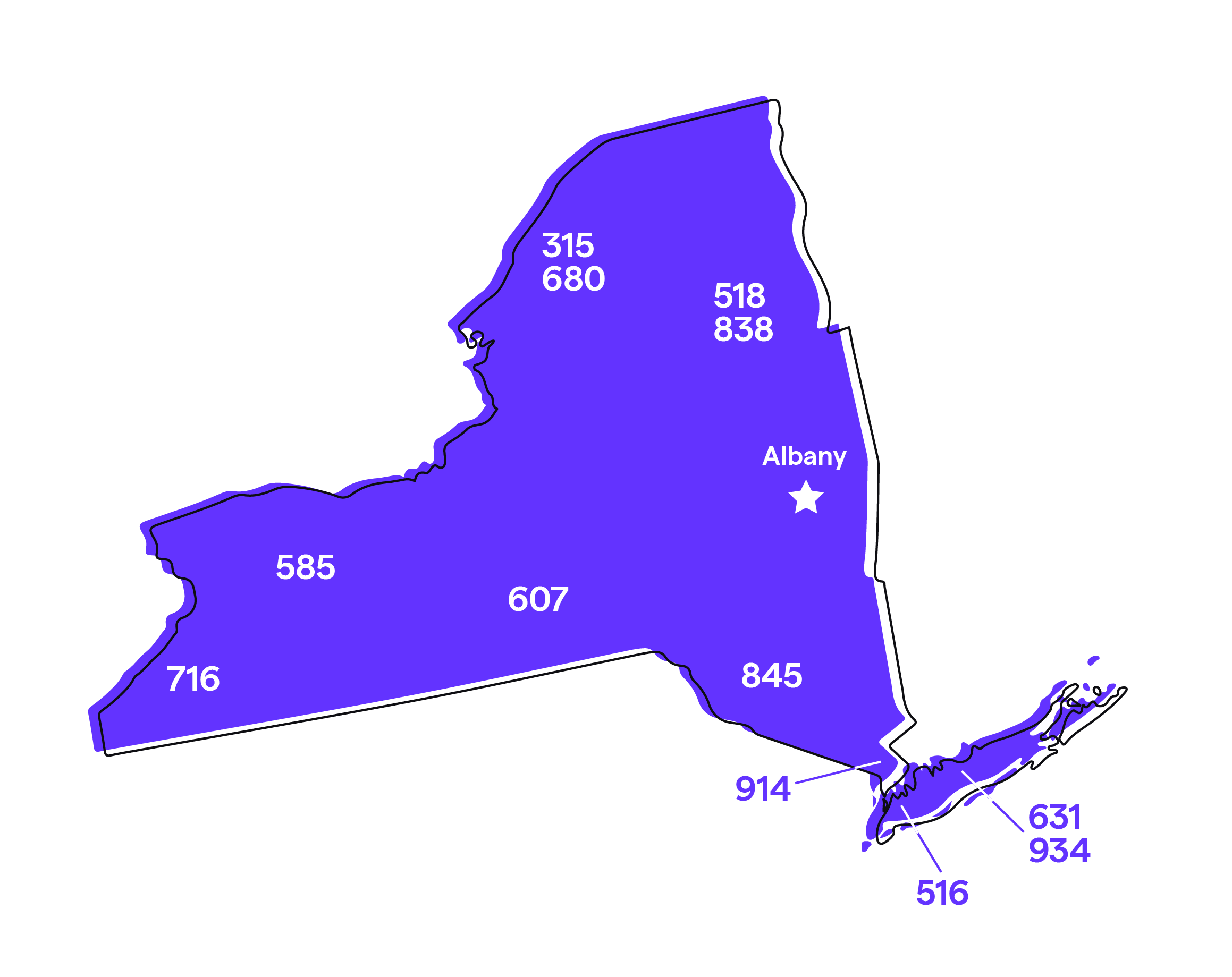
Beyond the immediate city limits, but still very much part of the greater metropolitan area, Long Island has its own set of codes. Nassau County, bordering Queens, primarily uses 516, with 934 as its overlay. Further east, Suffolk County, known for its charming towns, beaches, and the Hamptons, is served by 631, also with 934 as an overlay. These areas represent different facets of the New York lifestyle, from suburban comfort to opulent coastal resorts, and their area codes provide a quick geographical identifier.
Beyond the City: Upstate New York and Regional Codes
Moving away from the dense urban sprawl, Upstate New York offers a stark contrast, characterized by rolling hills, majestic mountains, serene lakes, and historic cities. Its area codes reflect this regional diversity, guiding visitors to different attractions and experiences.
The Capital Region, centered around Albany, the state capital, uses 518. This region is rich in history, architecture, and cultural institutions, offering a different kind of tourism experience. To the west, encompassing cities like Syracuse and Utica, and extending into the scenic Finger Lakes wine region, the primary area code is 315, with 680 as an overlay. This is prime territory for nature lovers, wine enthusiasts, and those interested in local culture and food.
Further west, the city of Rochester and its surrounding areas are covered by 585. This region boasts a strong arts scene, impressive museums, and is a gateway to the western parts of the Finger Lakes. Even further west, closer to the Canadian border, Buffalo and the iconic Niagara Falls region are served by 716, which now has 624 as an overlay. Western New York is a popular destination for its natural wonders, distinct culinary traditions, and vibrant communities.
Finally, the Southern Tier region, including cities like Binghamton and Ithaca (home to Cornell University and Ithaca College), primarily uses 607. This area is known for its academic atmosphere, gorges, and waterfalls, making it ideal for those seeking outdoor adventures and intellectual pursuits. Each of these Upstate New York codes paints a picture of distinct regional flavors, from historical sites to natural landmarks, crucial for planning comprehensive travel guides and itineraries.
Overlay Codes and the Future of Communication
The proliferation of overlay codes is a crucial aspect of New York’s telecommunication story. Originally, most areas had a single area code, allowing for 7-digit dialing for local calls. However, as mobile phones became ubiquitous and the demand for new phone numbers skyrocketed, existing area codes began to exhaust their available numbers. To address this, regulatory bodies introduced overlay codes, meaning that two or more area codes serve the same geographic region.
The consequence of overlay codes is that 10-digit dialing (area code + 7-digit number) became mandatory for all calls within these regions, even local ones. This ensures a larger pool of available numbers without requiring existing numbers to change. For visitors, this means that whether you’re calling a local diner in Brooklyn (718/347/929) or a bed and breakfast in the Finger Lakes (315/680), you must always include the area code. Understanding this dialing convention is a vital tip for seamless communication during your stay in any part of New York.
Area Codes as a Navigator for Travelers
For anyone embarking on a journey through the Empire State, area codes serve as an incredibly useful, albeit often overlooked, navigational tool. They offer immediate geographical context, aiding in trip planning, accommodation selection, and connecting with local services, thereby enhancing the overall travel experience.
Planning Your New York Itinerary: From Manhattan to the Finger Lakes
When crafting a New York itinerary, an awareness of area codes can significantly improve your planning. Imagine you’re researching attractions and find a phone number for a quaint winery tour with a 315 area code. You immediately know this destination is likely in the Finger Lakes region, which helps you group it with other activities in that area, such as visits to Watkins Glen State Park or Cornell University in Ithaca (607). Conversely, a 212 or 646 number clearly points to Manhattan landmarks like the Empire State Building or the Museum of Modern Art, guiding you to allocate time for urban exploration.
This geographical tagging is invaluable when curating experiences. If you’re interested in outdoor adventures, numbers starting with 518 might lead you to guides for hiking in the Adirondacks or exploring Lake Placid. For history buffs, a 518 number could indicate a historical site in the Capital Region or near Albany. This small detail helps to visualize the spatial relationship between potential destinations, optimizing travel time and logistics across the state’s diverse landscapes.
Booking Accommodations: How Area Codes Can Help
Choosing the right accommodation is a cornerstone of any successful trip, and area codes play a subtle yet significant role in this process. Whether you’re searching for luxury resorts, boutique hotels, budget-friendly suites, or long-term apartment rentals, the area code associated with the property’s contact information can provide instant confirmation of its location and aid in comparison.
For example, if you’re looking for a hotel with easy access to Manhattan’s attractions, you might prioritize properties with 212 or 646 numbers. While many hotels in Brooklyn or Queens (718, 347, 929) offer excellent value and convenient subway access, knowing their area code immediately informs you of their borough, allowing you to factor in commute times to the specific landmarks you wish to visit. Similarly, if your goal is a tranquil retreat near the Catskill Mountains, seeing an 845 area code for a cozy villa or resort confirms its presence in the Hudson Valley region, aligning with your desired ambiance.
Moreover, when reading reviews or comparing different booking options, the area code can implicitly verify the local authenticity of a given listing. It’s a small detail that contributes to a more informed decision-making process, ensuring your chosen accommodation aligns perfectly with your travel goals and budget, whether it’s a family trip or a business stay.
Connecting with Local Services and Attractions
Beyond major landmarks, a trip to New York often involves interacting with a myriad of local services – from calling a taxi or ride-share service to making reservations at a local eatery, checking opening hours for a museum, or inquiring about guided tours. In all these instances, the area code provides a quick geographic anchor.
If you’re in Buffalo and need to call a local car rental, you’d expect a 716 or 624 number. If you’re exploring the cultural sites in Syracuse, a 315 or 680 number for a local guide or attraction like the Erie Canal Museum reinforces its local connection. This applies equally to unique food experiences; a phone number for an authentic pizzeria in Brooklyn will likely start with 718, while a contact for a farm-to-table restaurant in the Hudson Valley would carry an 845 prefix. Understanding these codes helps confirm that you are indeed contacting a local entity, rather than a centralized call center, which can be particularly useful for last-minute inquiries or detailed questions about specific local offerings.
The Lifestyle Connection: Living and Working in New York
Area codes in New York extend their significance beyond mere telecommunication, weaving into the very fabric of local identity, business operations, and daily life. For residents, area codes are often a source of regional pride, while for businesses, they can be a strategic asset.
Business and Residential Perspectives
For residents, their area code is often more than just a phone number prefix; it’s a badge of honor, a quick way to identify where they’re from within the vast state. A “212 number” holder in Manhattan might implicitly signal a long-standing connection to the city’s core, while someone with a 716 number proudly represents Western New York. This subtle aspect of local culture fosters a sense of community and belonging, whether you’re living in a bustling city or a quieter rural town.
From a business perspective, selecting the right area code can be a calculated move. A company aiming to establish a strong presence in the financial district might opt for a 212 or 646 number to project an image of being centrally located and established in New York City. Similarly, a regional tourism board in the Finger Lakes will prominently display its 315 or 680 number, signaling local expertise and accessibility. For businesses catering to luxury travel or specific local markets, the area code can be a subtle but effective branding tool, indicating their geographic focus and commitment to the local community. This is especially true for small businesses, local boutiques, or specialized service providers that rely heavily on their local reputation.
Emergency Services and Local Identity
While mobile phones have made dialing 911 universally simple, understanding the local area codes still holds a subtle importance in emergency situations or when seeking local assistance. If you’re reporting a non-emergency issue, contacting a local police precinct, fire department, or public utility, the area code helps affirm you’re reaching the correct regional office. It underscores the concept of local governance and service delivery that underpins much of public life in New York.
Furthermore, the connection between an area code and local identity can even influence community initiatives and regional marketing efforts. Events celebrating Upstate New York culture, for instance, might implicitly target or appeal to those residing in the 518, 315, 585, 716, or 607 regions, fostering a collective sense of pride in their specific part of the state. This demonstrates how a seemingly technical detail like an area code can contribute to the broader tapestry of New York’s diverse lifestyles and communities.
Essential Tips for Visitors and Residents
Navigating the telecommunications landscape of New York doesn’t have to be complicated. With a few key tips, both visitors and long-term residents can ensure seamless communication, making their travel experiences or daily lives in the Empire State more efficient and enjoyable.
Dialing Conventions and International Calls
The single most important rule to remember when making calls within New York (and indeed most of the United States with overlay codes) is 10-digit dialing. Even if you are calling a number in the same area code as your own, you must dial the full 10-digit number (area code + 7-digit number). Forgetting this can lead to calls not connecting or getting an automated message. This applies whether you’re calling a friend across town, contacting your hotel for amenities, or confirming reservations at a local attraction.
For international visitors, making calls to numbers within New York from outside the United States requires adding the country code for the USA, which is +1. So, an international call to a New York number would look like: [International Exit Code] + 1 + [Area Code] + [7-Digit Number]. When calling home from New York, you’ll need your home country’s specific international dialing conventions. Most modern smartphones simplify this with automatic formatting, but it’s good practice to be aware of the underlying structure.

Staying Connected on Your New York Adventure
In today’s interconnected world, staying connected is paramount for travel and exploration. While understanding area codes is crucial for traditional calls, most visitors will rely heavily on mobile data and Wi-Fi. Many hotels, suites, and resorts across New York offer complimentary Wi-Fi, allowing you to use messaging apps and internet-based calling services. Public Wi-Fi is also increasingly available in major tourist areas, airports (like JFK International Airport or LaGuardia Airport), and cafés.
For international travelers, consider purchasing a local pre-paid SIM card upon arrival if your phone is unlocked, or inquire with your home provider about international roaming packages. This ensures you have a New York number and consistent data access for navigation, researching attractions, booking last-minute activities, and staying in touch with travel companions. Services like eSIMs also offer flexible and convenient options for data connectivity without needing a physical SIM card.
Ultimately, whether you’re seeking the bustling energy of New York City, the historical richness of Albany, the natural beauty of the Finger Lakes, or the grandeur of Niagara Falls, understanding the area codes is a small yet significant detail that enhances your overall experience. They are more than just numbers; they are gateways to different regions, cultures, and adventures within the extraordinary state of New York.
LifeOutOfTheBox is a participant in the Amazon Services LLC Associates Program, an affiliate advertising program designed to provide a means for sites to earn advertising fees by advertising and linking to Amazon.com. Amazon, the Amazon logo, AmazonSupply, and the AmazonSupply logo are trademarks of Amazon.com, Inc. or its affiliates. As an Amazon Associate we earn affiliate commissions from qualifying purchases.