
Florida, the Sunshine State, is a vibrant tapestry of diverse landscapes, bustling cities, and world-renowned attractions. From the sun-drenched beaches of the Florida Keys to the enchanting theme parks of Orlando, and the sophisticated art deco charm of Miami, Florida draws millions of visitors each year. Whether you’re planning a luxurious resort getaway, a family adventure, a budget-friendly exploration, or a business trip, understanding the state’s geography and its associated area codes can be a surprisingly useful piece of information. While the immediate thought might be about dialing a specific number, the area codes themselves offer a subtle yet interesting insight into the state’s sprawling development and its distinct regional identities.

Navigating Florida’s Diverse Regions Through Area Codes
Florida’s rapid growth and expansion over the decades have necessitated the implementation of numerous area codes to serve its ever-increasing population and a booming tourism industry. Unlike some states with a single dominant area code, Florida is a prime example of how telecommunications planning evolves with population density and geographical distribution. The state is divided into multiple overlay regions, meaning that several area codes can cover the same geographic territory. This can sometimes lead to confusion for those unfamiliar with the state, but it’s a testament to Florida’s dynamic nature.
The Foundation: Understanding Overlay Area Codes
To truly grasp the area code landscape of Florida, it’s crucial to understand the concept of an overlay area code. In the past, a single area code typically covered a specific geographic region. However, as the number of phone lines and mobile devices surged, these original area codes began to run out of available numbers. Overlay area codes were introduced as a solution. An overlay area code is a new area code that is superimposed over an existing geographic area, sharing that area with one or more older codes. This allows for a greater pool of telephone numbers without requiring drastic geographic reassignments, which can be complex and disruptive.
For example, a particular city or county might have been initially served by area code 305. As demand grew, a new area code like 786 might have been added to cover the same region. This means that a resident or business in that area could have a phone number starting with either 305 or 786. When dialing within this region, it’s now mandatory to dial the full 10-digit number (including the area code), even if both parties are in the same town.
This system is prevalent across Florida, reflecting the state’s significant population growth and the high demand for telecommunication services. The proliferation of smartphones, mobile businesses, and the sheer influx of residents and tourists all contribute to this need.
Key Florida Area Codes and Their Geographic Footprints
Florida’s area codes are not randomly assigned; they generally correspond to distinct geographic regions, offering a subtle map of the state’s development and its most populated areas. While overlays mean that one area might have multiple codes, understanding the primary associations can still be helpful for travelers and residents alike.
South Florida: A Mosaic of Codes
The southern tip of Florida, a region synonymous with vibrant nightlife, stunning beaches, and a rich cultural heritage, is served by a complex network of area codes.
-
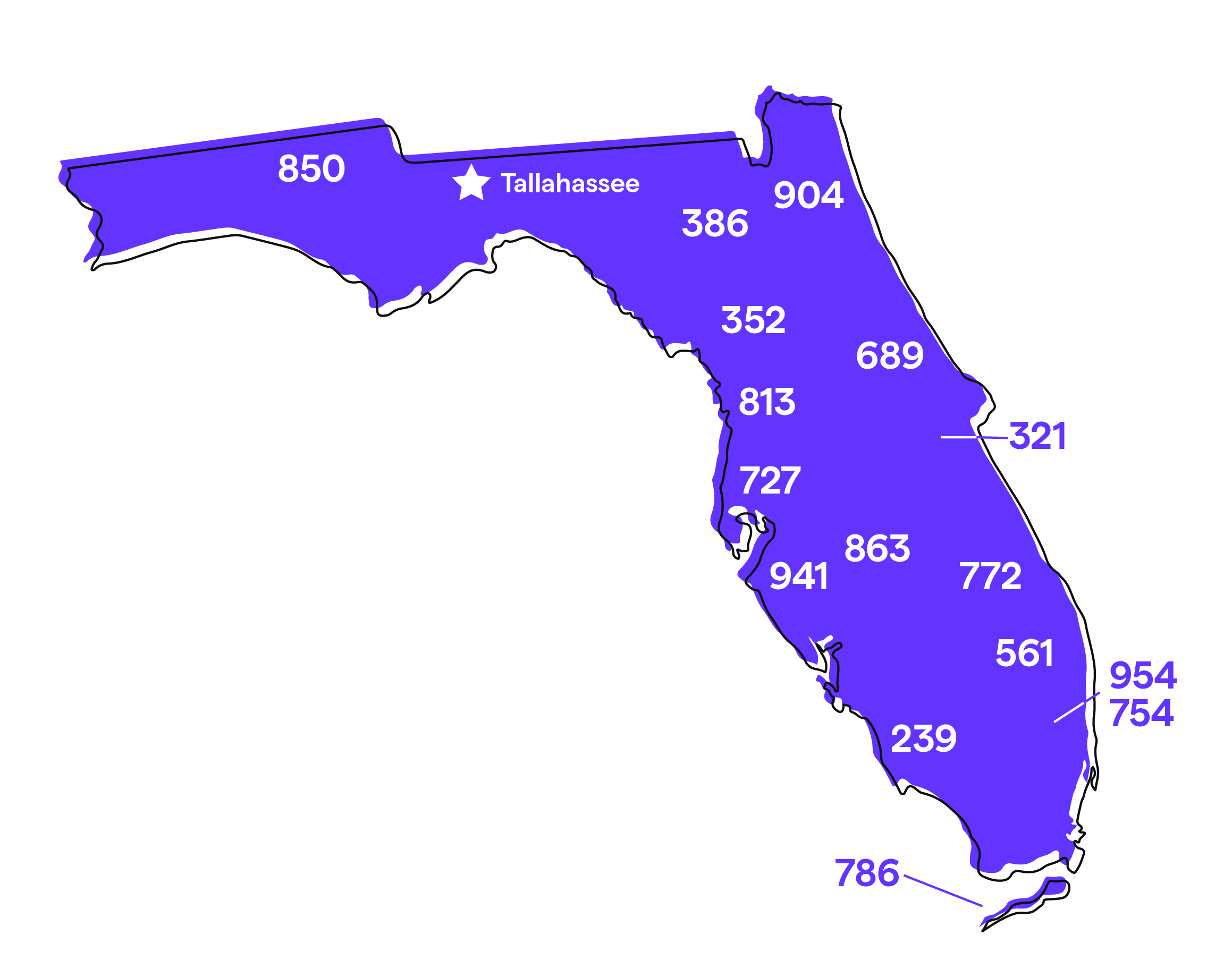
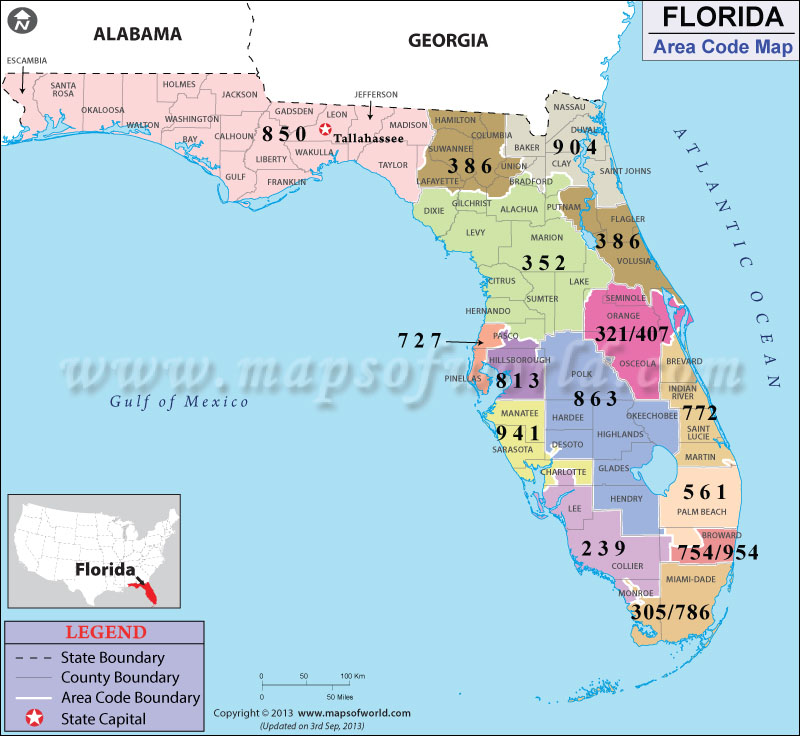
305 and 786: These are the foundational area codes for Miami-Dade County. Area code 305 is the original code for this region, established when Florida‘s telecommunication system was first developed. As Miami‘s population and demand for phone numbers exploded, area code 786 was introduced as an overlay. This means that if you’re calling or looking for accommodation in cities like Miami Beach, Coral Gables, or Hialeah, your number might start with either 305 or 786. This region is a major hub for tourism, featuring landmarks like the Art Deco Historic District and the Vizcaya Museum and Gardens.
-
954: Covering much of Broward County, including popular destinations like Fort Lauderdale, Pompano Beach, and Hollywood, area code 954 is another significant code in South Florida. This code was created to relieve the strain on the older 305 system as Broward County experienced substantial growth. Fort Lauderdale is particularly famous for its canals, beaches, and the annual Fort Lauderdale International Boat Show.
-
561: Extending further north along the Atlantic coast, area code 561 serves Palm Beach County, encompassing cities like West Palm Beach, Boca Raton, and Palm Beach. This affluent region is known for its luxury resorts, beautiful estates, and world-class golf courses.
-
772: This area code covers counties north of Palm Beach County, including Martin, St. Lucie, Indian River, and the southern portion of Okeechobee County. Cities like Port St. Lucie, Fort Pierce, and Vero Beach fall under this code. This area offers a more relaxed coastal lifestyle, with opportunities for boating and fishing.
-
239: Serving the southwestern part of the state, area code 239 primarily covers Lee County and Collier County. This includes popular tourist destinations like Naples, Fort Myers, and the gateway to the Everglades National Park. The region is renowned for its pristine beaches, upscale shopping, and natural beauty.
Central Florida: The Theme Park Capital and Beyond
Central Florida is globally recognized as the home of some of the world’s most famous theme parks, drawing millions of families and thrill-seekers each year. The area codes here reflect the massive growth driven by tourism and a burgeoning population.
-
407, 321, and 689: These area codes are associated with Orlando and the surrounding counties, including Orange County, Seminole County, and parts of Osceola County and Lake County. Area code 407 was the original code for this vibrant region. As Orlando‘s popularity as a tourist destination and a place to live soared, 321 was introduced as an overlay, followed by 689. This means that when you’re booking a stay at a hotel like the Grand Floridian Resort & Spa or planning a visit to Walt Disney World Resort or Universal Orlando Resort, the local numbers will likely fall within these codes. Beyond the theme parks, the region boasts beautiful lakes, springs, and a growing business sector.
-
863: This expansive area code covers a large portion of Central Florida, often referred to as the Heartland. It includes cities like Lakeland, Winter Haven, and Sebring. This region is known for its agricultural roots, particularly citrus groves, and its many lakes, making it popular for fishing and outdoor activities.
Other Significant Florida Area Codes
As Florida continues to expand, new area codes are periodically introduced to meet demand. Here are a few other notable area codes that cover different parts of the state:
-
813 and 941: These codes historically served the west coast of Central and Southwest Florida. Area code 813 covers the Tampa Bay area, including cities like Tampa and St. Petersburg. This region is a major economic and cultural center, with beautiful beaches, a thriving arts scene, and historical landmarks like the Henry B. Plant Museum. Area code 941 was split off from 813 and now covers areas south of the Tampa Bay region, including cities like Sarasota and Fort Myers (though Fort Myers has since been re-assigned to 239). Sarasota is famous for its cultural institutions, stunning coastline, and the Circus Arts Conservatory.
-
904: This code serves the northeastern corner of Florida, including the historic city of Jacksonville and surrounding areas like St. Augustine, the oldest continuously inhabited European-established settlement in the United States. This region offers a mix of urban attractions and coastal charm.
-
352: Located in North Central Florida, area code 352 covers a diverse range of areas, from the university city of Gainesville to the rolling hills of Citrus County and the retirement communities of The Villages. It encompasses areas known for their natural springs and a more relaxed pace of life.
-
386: Serving the northeastern part of the state, north of Orlando and west of Jacksonville, area code 386 includes cities like Daytona Beach, known for its famous racing and wide sandy beaches.
The complexity of Florida’s area codes is a direct reflection of its dynamic growth and its status as a premier destination for travel, tourism, and permanent residency. Whether you’re navigating the vibrant streets of Miami, seeking adventure in Orlando, or enjoying the tranquility of the Gulf Coast, understanding these codes can provide a subtle yet interesting layer to your Florida experience, reminding you of the vast and varied regions that make up this beloved state.
LifeOutOfTheBox is a participant in the Amazon Services LLC Associates Program, an affiliate advertising program designed to provide a means for sites to earn advertising fees by advertising and linking to Amazon.com. Amazon, the Amazon logo, AmazonSupply, and the AmazonSupply logo are trademarks of Amazon.com, Inc. or its affiliates. As an Amazon Associate we earn affiliate commissions from qualifying purchases.