
When planning a visit to Boston, the vibrant capital of Massachusetts, understanding the local telecommunication landscape is a small yet crucial detail that can significantly smooth your travel experience. While modern smartphones often manage dialing automatically, knowing the primary area codes for Boston and its surrounding areas is invaluable for tourists, ensuring seamless communication with hotels, restaurants, attractions, and emergency services. Far from a mere string of digits, area codes define geographic regions, helping visitors pinpoint their location and connect with local services efficiently.
Navigating Boston’s Telecommunication Landscape
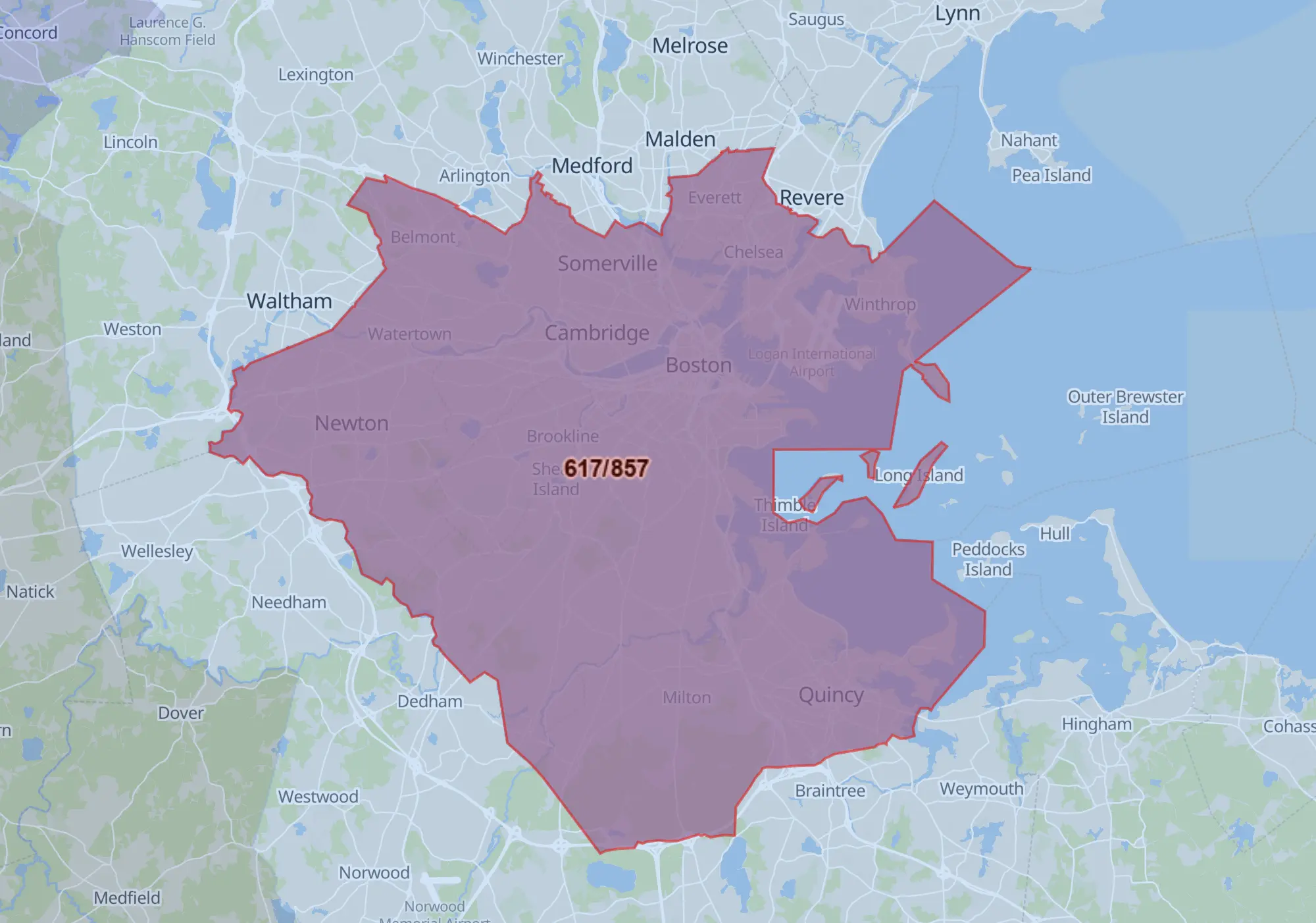
The Boston metropolitan area is served by several key area codes, reflecting its growth and the increasing demand for telephone numbers over the decades. For any visitor, the primary area codes to be aware of are 617 and 857. These two codes form an overlay complex, meaning they serve the same geographic region, encompassing the city of Boston itself and many of its inner suburbs.

The Primary Area Codes Serving Greater Boston
The original and most historically significant area code for Boston and its immediate vicinity is 617. Established in 1947 as one of the original North American Numbering Plan (NANP) area codes, 617 has long been synonymous with the city. It covers not only downtown Boston but also iconic neighborhoods and adjacent cities crucial to any tourist itinerary, such as Cambridge, Brookline, Quincy, and Somerville. When you call a local business, a historic site like Faneuil Hall, or a restaurant in the North End, chances are you’ll be dialing a 617 number.
As the population grew and the demand for new telephone numbers outstripped the capacity of the 617 code, an overlay area code, 857, was introduced in 2001. This means that both 617 and 857 serve the exact same geographic region. When making a call within this area, whether it’s local or not, you must dial all ten digits (area code + seven-digit number). This dialing convention is vital for visitors to remember, as simply dialing seven digits will not connect your call, even if the recipient is just across the street. The 857 area code is just as prevalent now for new lines in these areas as 617, so don’t be surprised to encounter either when looking up contact information for services and attractions.
Historical Context and Overlays
The introduction of overlay codes like 857 is a common solution to number exhaustion in densely populated regions across the United States. Prior to overlays, the typical solution was a geographic split, where a region would be divided, and existing numbers would either retain the old code or switch to a new one based on their physical location. The overlay method, while requiring mandatory 10-digit dialing even for local calls, avoids the costly and disruptive process of reassigning numbers and changing addresses for existing subscribers. For the tourist, this history merely underscores the importance of the 10-digit dialing rule for all calls within the 617/857 service area, regardless of perceived “local” proximity. It ensures that communication with your Back Bay hotel or the Museum of Fine Arts is always straightforward.
Practical Implications for Visitors and Tourists
Understanding Boston’s area codes goes beyond mere trivia; it’s a practical tool for efficient travel. From confirming dinner reservations to reaching out for assistance, knowing how to dial correctly is paramount.
Making Local Calls: When and How Area Codes Matter
For visitors with U.S.-based mobile phones, dialing within the Boston area (617/857) always requires 10 digits. For example, to call a restaurant with the number 555-1234, you would dial 617-555-1234 or 857-555-1234, depending on the establishment’s assigned code. If you’re using a hotel landline, the dialing procedure might be slightly different – some hotels allow 7-digit dialing for internal calls or immediate local calls, but it’s always safer and more reliable to use 10 digits for any external contact.
For international visitors, the process involves an additional step: first dialing your country’s international access code (e.g., 00 from Europe, 011 from North America if using a foreign SIM), then the United States country code (1), followed by the 10-digit Boston number. For example, to call 617-555-1234 from outside the U.S., you would dial +1-617-555-1234. While most modern smartphones streamline this with automatic formatting based on stored contacts, manual dialing or recalling a number from memory requires this knowledge.
Important Tourist Contacts and Emergency Services
Crucially, knowing the local area code helps identify the region a number belongs to. While the universal emergency number in the U.S. is 911 (which does not require an area code), for non-emergency services, local area codes become relevant. For instance, contacting the local police department for a non-urgent matter, reaching out to your consulate, or calling a local taxi service will typically involve a 617 or 857 number. Having these numbers saved in your phone with the correct area code ensures quick access when needed. Many Boston attractions, such as the Boston Tea Party Ships & Museum or the New England Aquarium, list their contact numbers on their websites, almost invariably with the 617 or 857 prefix.
Navigating Communication with Local Businesses
When exploring Boston, you’ll interact with a myriad of local businesses, from charming Beacon Hill boutiques to seafood restaurants on the waterfront. Many local businesses pride themselves on their deep roots, and their phone numbers often reflect this, typically starting with 617 or 857. Knowing these codes helps confirm that you’re dialing a business truly located within the core Boston area, rather than a branch in a more distant suburb with a different area code. This can be particularly useful if you are trying to confirm directions or service availability for a specific location within the city limits. Always double-check the area code when looking up a number online or from a directory.
Expanding Your Reach: Beyond the Immediate Boston Area
While 617 and 857 cover the heart of Boston, the broader metropolitan area and surrounding regions of Massachusetts utilize different area codes. A tourist planning day trips or venturing further afield should be aware of these.
Neighboring Regions and Their Distinct Area Codes
As you move beyond the immediate 617/857 service area, other area codes come into play. The 781 and its overlay 339 codes serve many of the inner-ring and northern/southern suburbs of Boston, extending into areas like Lexington, Concord, Wellesley, and Plymouth. These towns, while distinct from Boston proper, are popular destinations for their historical significance, charming downtowns, or natural beauty. If you’re booking a tour that departs from one of these towns or reserving a table at a restaurant there, you’ll likely encounter a 781 or 339 number.
Further out, particularly to the west and southeast of Boston, you’ll find the 508 and its overlay 774 area codes. These cover a much larger geographical expanse, including major cities like Worcester and Fall River, and extend to Cape Cod and the islands (Nantucket and Martha’s Vineyard). While less directly relevant for a primary Boston trip, they become important if your itinerary includes exploring the wider region of Massachusetts, perhaps to visit a vineyard, historical site, or coastal town. Just like with 617/857, all calls within or to these 781/339 and 508/774 areas require 10-digit dialing.
The Evolution of Mobile Communication for Travelers
Modern mobile phones and communication apps have somewhat simplified the need to memorize area codes. Most phones automatically format numbers correctly, especially if they are saved in your contacts. International roaming services or local SIM cards purchased for your trip typically handle the correct country and area codes transparently. However, the underlying principles remain. When manually entering a number, or verifying one, the area code still serves as the geographical identifier. Furthermore, for those instances where mobile service might be spotty, or you need to use a landline, this knowledge becomes essential. Understanding these codes is also crucial for interpreting phone numbers found on local advertisements, brochures, or street signs, helping you immediately discern if a service is local or further afield.
Essential Tips for Seamless Communication During Your Boston Visit
Effective communication is a cornerstone of any successful trip. By being mindful of Boston’s area codes and general dialing practices, you can ensure your trip runs smoothly.
Pre-trip Planning: Saving Key Numbers
Before you even board your flight or start your drive, take a few moments to save important contact numbers in your phone, complete with their full 10-digit area codes. This includes your hotel, any tour operators, specific restaurants where you have reservations, and local friends or family. Don’t forget non-emergency police lines, hospital information desks, and your travel insurance provider’s local contact. Having these pre-saved eliminates guesswork and stress, especially if you’re in a hurry or don’t have immediate internet access to look up numbers. This small preparation can significantly enhance your travel security and convenience.
Understanding Dialing Conventions from International Locations
For international visitors, ensure your mobile plan includes international roaming or consider purchasing a local prepaid SIM card upon arrival at Boston Logan International Airport. When dialing any U.S. number, whether local to Boston or elsewhere, from an international phone or service, you must always prefix it with the country code +1. For instance, a number like (617) 555-1234 should be dialed as +1 617 555-1234. Most smartphones will automatically add the ‘+’ and country code if you are dialing from a contact saved with the full international format.

Utilizing Modern Communication Alternatives
While area codes are fundamental for traditional voice calls, tourists today also have a wealth of alternative communication methods. Wi-Fi calling, messaging apps like WhatsApp or FaceTime, and social media platforms can often bypass traditional phone networks, especially for international communication, saving on roaming charges. Boston offers numerous public Wi-Fi hotspots in cafes, attractions, and hotels, making these alternatives readily accessible. However, for critical local contacts or emergency situations, a reliable cell phone plan and an understanding of the area codes for direct dialing remain indispensable. Keep in mind that not all small businesses or services might be accessible via messaging apps, making traditional calls essential.
In conclusion, the primary area codes for Boston are 617 and 857, which cover the city and its immediate suburbs, requiring mandatory 10-digit dialing. Venturing further into Massachusetts introduces 781/339 and 508/774. Being aware of these codes and their associated dialing conventions is a small but impactful detail that contributes to a smooth, stress-free, and well-connected Boston experience. It ensures that whether you’re contacting your hotel, booking a tour, or simply reaching out to a local eatery, you’re always just a phone call away.
LifeOutOfTheBox is a participant in the Amazon Services LLC Associates Program, an affiliate advertising program designed to provide a means for sites to earn advertising fees by advertising and linking to Amazon.com. Amazon, the Amazon logo, AmazonSupply, and the AmazonSupply logo are trademarks of Amazon.com, Inc. or its affiliates. As an Amazon Associate we earn affiliate commissions from qualifying purchases.