
The Boston Port Act stands as a pivotal historical landmark, a legislative declaration that irrevocably altered the course of American history and remains central to understanding the origins of the United States. Enacted by the British Parliament in 1774, this punitive measure was a direct response to the infamous Boston Tea Party and became the first of the so-called “Intolerable Acts” (also known as the Coercive Acts). Far from quelling colonial dissent, the Boston Port Act instead ignited a furious backlash, catalyzing a sense of shared grievance among the thirteen colonies and propelling them towards outright rebellion against Great Britain. To fully grasp the revolutionary spirit that permeates Boston’s historical sites today, one must first comprehend the profound impact of this single, draconian piece of legislation.

A Catalyst for Revolution: The Historical Context
The mid-1770s marked a period of escalating tension between Great Britain and its North American colonies. Decades of “salutary neglect” had fostered a spirit of self-governance, which was increasingly challenged by new British imperial policies following the costly French and Indian War. Taxes such as the Stamp Act and Townshend Acts, imposed without colonial representation, sparked widespread protest and boycotts. The perceived tyranny culminated dramatically on December 16, 1773, with the Boston Tea Party.
The Aftermath of the Boston Tea Party
In this audacious act of defiance, members of the Sons of Liberty, disguised as Mohawk Indians, boarded three British ships in Boston Harbor and dumped 342 chests of tea into the water. This act, a protest against the Tea Act of 1773 which granted the British East India Company a monopoly on tea sales and undercut colonial merchants, sent shockwaves across the Atlantic. To King George III and his ministers, particularly Lord North, the incident was not merely vandalism but a direct challenge to the authority and sovereignty of the British Empire. They believed that a firm and decisive response was necessary to restore order, demonstrate imperial power, and prevent further insubordination. This punitive mindset gave birth to the Boston Port Act.
British Retribution and Imperial Control
The British government, reeling from the destruction of property and the perceived insult to its authority, was determined to make an example of Boston, the epicenter of colonial radicalism. The Boston Port Act was not an isolated measure; it was the first of five legislative acts passed in quick succession by Parliament between March and June 1774, collectively known as the Coercive Acts in Great Britain and the Intolerable Acts in the colonies. These acts aimed to punish Massachusetts, restore royal authority, and demonstrate the futility of resistance. The other acts included the Massachusetts Government Act, the Administration of Justice Act, an expanded Quartering Act, and the unrelated but similarly resented Quebec Act. Each contributed to the growing sense of an oppressive imperial hand, but the Boston Port Act was arguably the most immediate and devastating in its impact.
The Provisions and Immediate Impact of the Act
The Boston Port Act, officially titled “An Act to discontinue, in such manner, and for such time as are therein mentioned, the landing, and discharging, lading or shipping, of goods, wares, and merchandise, at the town, and within the harbour, of Boston, in the province of Massachusetts Bay, in North America,” was passed on March 31, 1774, and went into effect on June 1, 1774. Its provisions were severe and unequivocal.
Closing the Port of Boston
The central tenet of the act was the complete closure of Boston Harbor to all commercial traffic. No ships could load or unload goods until the colonists paid for the destroyed tea and reimbursed customs duties to the British East India Company and the Crown. Furthermore, King George III retained the power to reopen the port only when he deemed order restored and royal authority respected. This was not merely an economic sanction but a direct assault on the lifeblood of Boston, a thriving port city whose prosperity was entirely dependent on maritime trade. The act essentially placed the city under siege, not by military force, but by economic strangulation.
Economic Ruin and Civilian Hardship
The immediate consequences for the citizens of Boston were catastrophic. Thousands of merchants, sailors, dockworkers, and tradesmen found themselves suddenly unemployed. Food prices soared as supplies dwindled, and the city’s economy ground to a halt. While the British government intended this suffering to break the spirit of the rebellious colonists, it instead fueled resentment and hardship, solidifying anti-British sentiment. The act also moved the official seat of government for Massachusetts Bay from Boston to Salem, further emphasizing the punitive intent and the desire to strip Boston of its importance. General Thomas Gage, commander-in-chief of British forces in North America, was appointed governor of Massachusetts, effectively placing the colony under military rule. The docks, once bustling with activity, lay eerily silent, a stark monument to British retribution.
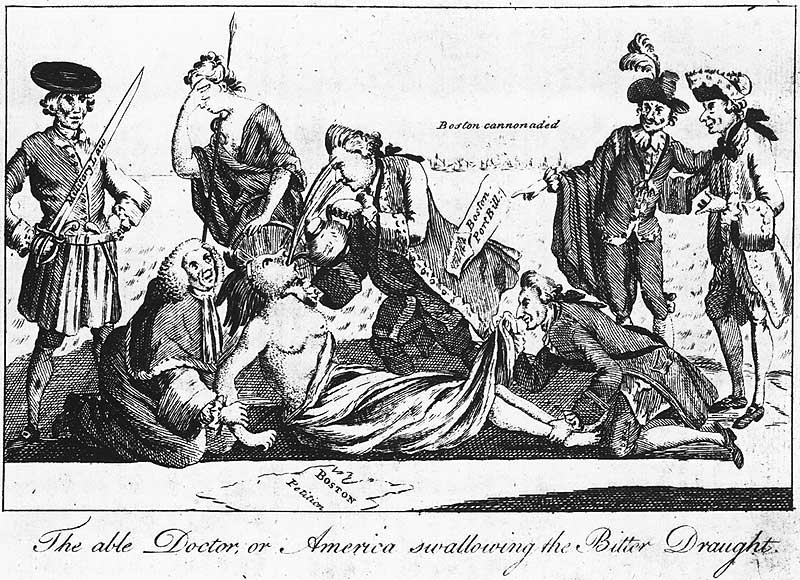
Unifying the Colonies: A Spark for American Independence
Contrary to British expectations, the Boston Port Act and the subsequent Intolerable Acts did not isolate Massachusetts but rather galvanized the other colonies into action. Seeing Boston’s plight as a precedent for what could happen to any of them, a profound sense of shared identity and mutual defense began to emerge.
Widespread Sympathy and Aid
News of the closure of Boston Harbor evoked widespread sympathy and outrage across North America. From Charleston, South Carolina, to New York and Philadelphia, communities began sending aid to the beleaguered city. Food, livestock, and other provisions were transported overland, bypassing the closed port, often at great personal sacrifice. This outpouring of support demonstrated a nascent colonial unity, illustrating that while geographically separate, the colonies were increasingly bound by a common cause against perceived British oppression. The closure of the port thus inadvertently created a network of inter-colonial solidarity that had been largely absent before.
The First Continental Congress
The severity of the Boston Port Act and its companion acts directly led to calls for a unified colonial response. In September 1774, delegates from twelve of the thirteen colonies (excluding Georgia) converged in Philadelphia for the First Continental Congress. This landmark assembly was a direct result of the crisis initiated by the Port Act. The delegates debated responses to British policy, drafting a Declaration of Rights and Grievances and, most significantly, establishing the Continental Association. This agreement called for a coordinated boycott of British goods, a clear escalation of colonial resistance and a bold challenge to British economic power. The Continental Congress, spurred by Boston’s suffering, marked a critical step towards organized, pan-colonial opposition, transforming a local grievance into a continental struggle.
From Grievance to Revolution
While the First Continental Congress initially sought reconciliation with Great Britain, the uncompromising stance of King George III and Parliament soon pushed the colonies towards independence. The Boston Port Act, more than any other single measure, demonstrated to the colonists that their rights and liberties were under direct assault and that negotiation was proving futile. The economic distress and the military occupation of Massachusetts by General Gage set the stage for open conflict. Within a year of the Port Act’s implementation, the “shot heard ’round the world” at Lexington and Concord would ignite the American Revolution, fulfilling the dire warnings of those who predicted that British punitive measures would only lead to war.
Legacy and Lasting Significance in American History
The Boston Port Act, though a seemingly archaic piece of legislation, holds profound significance as a historical landmark. It encapsulates a pivotal moment when colonial grievances transitioned into unified resistance, laying the groundwork for the birth of a new nation.
A Prequel to War
The Port Act is often regarded as one of the most significant triggers for the American Revolution. It was a clear demonstration of Great Britain’s willingness to use extreme measures to assert its authority, effectively closing a major port city and inflicting severe economic hardship on its inhabitants. This heavy-handed approach served to alienate not just Massachusetts, but the majority of the colonies, consolidating their resolve to resist British oppression. It highlighted the vast philosophical chasm between colonial demands for self-governance and Parliament’s insistence on absolute sovereignty. The act fundamentally reshaped colonial perceptions of their relationship with the mother country, fostering a collective identity that prioritized liberty over subservience.

Understanding Boston’s Revolutionary Heritage
Today, when visitors explore Boston’s historical landmarks, from the Freedom Trail to the Old North Church and the sites of the Boston Massacre, the underlying tension and revolutionary fervor that defined the era are palpable. Understanding the Boston Port Act provides crucial context for appreciating the depth of sacrifice and resolve demonstrated by the city’s inhabitants. The port, once a symbol of economic vitality, became a symbol of British tyranny, transforming its role in the city’s narrative. The city’s defiant spirit, forged in the crucible of the Port Act’s economic siege, continues to resonate through its architecture, museums, and public spaces, reminding us of the legislative acts that pushed a proud populace from protest to the radical path of revolution. It serves as a reminder that even seemingly bureaucratic acts can have monumental historical consequences, shaping the destiny of nations.
LifeOutOfTheBox is a participant in the Amazon Services LLC Associates Program, an affiliate advertising program designed to provide a means for sites to earn advertising fees by advertising and linking to Amazon.com. Amazon, the Amazon logo, AmazonSupply, and the AmazonSupply logo are trademarks of Amazon.com, Inc. or its affiliates. As an Amazon Associate we earn affiliate commissions from qualifying purchases.