
The California Bar Exam is widely regarded as one of the most challenging and comprehensive licensing examinations for aspiring legal professionals in the United States. Administered by the State Bar of California, this rigorous test determines an individual’s eligibility to practice law in the state of California. Its reputation for difficulty stems from its demanding format, extensive subject matter, and high standards for passing. For those dreaming of a legal career in the Golden State, understanding the nuances of the California Bar Exam is a crucial first step.
The Significance of the California Bar Exam
Passing the California Bar Exam is more than just a procedural hurdle; it’s a gateway to a distinguished profession. It signifies that an individual possesses the requisite knowledge, analytical skills, and ethical understanding to competently represent clients and uphold the principles of justice within the California legal system. The examination is designed to ensure public protection by confirming that only qualified individuals are licensed to practice law.

A Gatekeeper to the Legal Profession
The legal profession, particularly in a jurisdiction as populous and economically significant as California, demands a high level of competence and integrity. The California Bar Exam serves as the primary gatekeeper, ensuring that those who enter the profession meet a stringent standard. This is not only for the benefit of clients but also for the overall health and public trust in the legal system.
Historical Context and Evolution
The history of the California Bar Exam reflects the evolving legal landscape and the state’s commitment to rigorous legal education and practice. Initially, bar examinations were less standardized and varied significantly by jurisdiction. Over time, as the legal profession became more formalized, states like California developed more structured and challenging examinations to ensure a consistently high caliber of legal practitioners. The exam has undergone numerous reforms to adapt to changes in law and legal education, aiming to remain relevant and effective in assessing modern legal skills.
Structure and Components of the Examination
The California Bar Exam is a multi-day examination, typically administered over two days, twice a year (usually in February and July). It is renowned for its breadth and depth, covering a wide array of legal subjects and testing various skills essential for legal practice. The exam is divided into several distinct sections, each designed to assess different facets of a candidate’s legal aptitude.
The Essay Portion
A significant component of the exam is the essay section. Candidates are presented with hypothetical legal scenarios and are required to analyze the facts, identify legal issues, apply relevant legal principles, and present well-reasoned conclusions. These essays are graded on the clarity of thought, the accuracy of legal analysis, the quality of writing, and the logical organization of arguments. The subjects covered in the essays are extensive, often including areas such as:
- Civil Procedure: Rules governing lawsuits in civil courts.
- Community Property: Laws specific to married couples in community property states like California.
- Constitutional Law: The U.S. Constitution and its interpretation.
- Contracts: Formation, breach, and remedies for contractual agreements.
- Criminal Law and Procedure: Offenses, defenses, and the legal process in criminal cases.
- Evidence: Rules governing the admissibility of information in court.
- Professional Responsibility: Ethical duties and standards for lawyers.
- Real Property: Laws concerning land and its ownership.
- Torts: Civil wrongs that cause harm to others.
- Trusts: Legal arrangements for managing assets.
- Wills and Estates: Laws governing the distribution of property after death.
- Business Associations: Laws governing different types of business entities.
- Remedies: The legal means by which a right is enforced or a violation of a right is redressed.
The essay portion challenges candidates to synthesize complex legal information and articulate their understanding in a persuasive and legally sound manner.
The Performance Test
Another critical element is the Performance Test. This section is designed to simulate real-world legal tasks that lawyers encounter daily. Candidates are provided with a confidential file containing case-specific documents (e.g., client letters, statutes, prior court opinions, witness statements) and a library of legal authorities. They are then instructed to perform a specific legal task, such as drafting a legal memorandum, a brief to a court, or a client letter. The Performance Test assesses a candidate’s ability to:
- Analyze and synthesize information: Extract relevant facts and legal principles from the provided materials.
- Identify the legal issues: Determine the core questions that need to be addressed.
- Apply legal rules: Use the provided authorities to support their analysis.
- Organize and communicate effectively: Present their findings in a clear, concise, and persuasive manner, adhering to the specific task requirements.
This section emphasizes practical legal skills over rote memorization, testing an applicant’s ability to think like a practicing attorney.
The Multistate Bar Examination (MBE)
The Multistate Bar Examination (MBE) is a standardized, multiple-choice examination developed by the National Conference of Bar Examiners (NCBE). It is administered as part of the bar examinations in most U.S. jurisdictions, including California. The MBE consists of 200 multiple-choice questions, divided into two 3-hour sessions. It tests fundamental legal principles in core subjects, including:
- Civil Procedure
- Constitutional Law
- Contracts
- Criminal Law and Procedure
- Evidence
- Real Property
- Torts
The MBE is scored independently, and its results significantly contribute to the overall score on the California Bar Exam. It is designed to assess an applicant’s understanding of legal rules and their ability to apply them to factual scenarios.
Preparing for the California Bar Exam
The preparation for the California Bar Exam is a demanding and lengthy process, often requiring dedicated study for several months. Given the exam’s complexity and scope, a strategic and disciplined approach to studying is essential for success.
Bar Review Courses
Most aspiring attorneys enroll in comprehensive bar review courses. These courses are specifically designed to cover the vast amount of material tested on the California Bar Exam. They typically offer:
- Lectures: Expert instruction on all tested subjects.
- Outlines and Study Materials: Detailed summaries of legal principles.
- Practice Questions: A large volume of MBE questions, essay prompts, and performance test simulations.
- Simulated Exams: Full-length practice exams under timed conditions to mimic the actual exam experience.
- Personalized Feedback: Assistance with essay writing and performance test performance.
Prominent bar review providers include Barbri, Themis Bar Review, and Kaplan Bar Review, among others. Choosing a course that aligns with an individual’s learning style and needs is a critical decision.
Self-Study and Practice
While bar review courses provide a structured framework, diligent self-study and consistent practice are paramount. This involves:
- Active Learning: Engaging with the material through outlining, flashcards, and summarizing key concepts.
- Repetitive Practice: Working through as many practice questions as possible, particularly for the MBE, to build familiarity and identify weak areas.
- Essay Writing Practice: Regularly writing timed essays to improve speed, structure, and legal analysis.
- Performance Test Drills: Practicing the format and demands of performance tests to develop efficient strategies.
- Time Management: Developing effective strategies for managing time during the exam itself, allocating sufficient time to each section and question.
Mental and Physical Well-being
The intense study period can take a toll on mental and physical well-being. Maintaining a healthy lifestyle is crucial:
- Adequate Sleep: Ensuring sufficient rest to optimize cognitive function.
- Balanced Diet: Consuming nutritious foods to maintain energy levels.
- Regular Exercise: Incorporating physical activity to reduce stress and improve focus.
- Mindfulness and Stress Management Techniques: Practicing techniques like meditation or deep breathing to cope with pressure.
- Support System: Leaning on friends, family, or study groups for emotional support.
The psychological aspect of preparing for such a high-stakes exam cannot be overstated. Many candidates find that a supportive environment and proactive stress management contribute significantly to their ability to perform at their best.
The Scoring and Passing Criteria
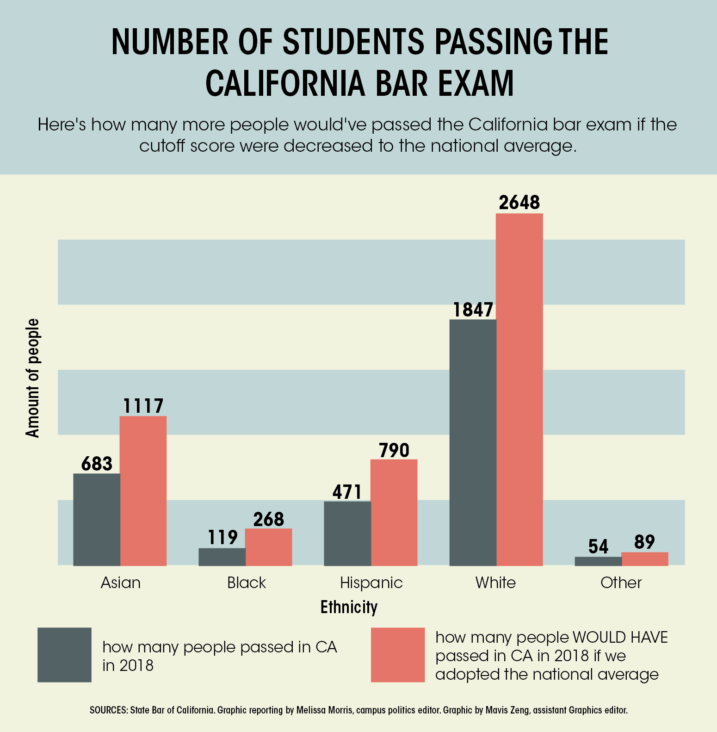
The California Bar Exam employs a weighted scoring system. The MBE component accounts for 35% of the total score, the Performance Test for 15%, and the essays for 50%. The State Bar of California sets a minimum passing score, which is often higher than in many other jurisdictions. Candidates must achieve this minimum score on the combined components to be licensed.
Understanding the Scaled Score
The MBE is scaled, meaning raw scores are converted to a standardized scale to account for variations in difficulty across different exam administrations. Similarly, the essays and performance tests are graded by experienced attorneys and law professors, with scores then scaled and combined with the MBE score. The California Bar Exam has a reputation for having one of the lowest pass rates in the nation, underscoring the difficulty and the need for thorough preparation.
The Impact of the California Bar Exam on Legal Careers
For those who successfully navigate the California Bar Exam, a world of opportunities opens up. Licensed attorneys can pursue a wide range of legal careers in various sectors, including:
- Law Firms: From large international firms in cities like Los Angeles and San Francisco to small boutique practices.
- Public Interest Law: Working for non-profit organizations or government agencies to provide legal services to underserved communities.
- In-House Counsel: Serving as legal advisors for corporations and businesses.
- Government Service: Holding positions in local, state, or federal government.
- Judicial Clerkships: Assisting judges with legal research and writing.
The prestige associated with passing the California Bar Exam can open doors to highly sought-after positions and contribute to a successful and impactful legal career.

Conclusion
The California Bar Exam stands as a formidable yet essential benchmark for anyone aspiring to practice law in California. Its comprehensive nature, rigorous format, and demanding standards are designed to ensure that only the most competent and ethically grounded individuals are granted the privilege of practicing law. For aspiring lawyers, understanding the exam’s structure, dedicating oneself to thorough preparation, and maintaining mental and physical fortitude are the cornerstones of achieving success. The journey through the California Bar Exam is arduous, but for those who persevere, it represents a significant milestone towards a fulfilling and impactful career in the legal profession.
LifeOutOfTheBox is a participant in the Amazon Services LLC Associates Program, an affiliate advertising program designed to provide a means for sites to earn advertising fees by advertising and linking to Amazon.com. Amazon, the Amazon logo, AmazonSupply, and the AmazonSupply logo are trademarks of Amazon.com, Inc. or its affiliates. As an Amazon Associate we earn affiliate commissions from qualifying purchases.