
The answer to the question “What is the capital of Hawaii state?” is Honolulu. Nestled on the southeastern shores of the island of Oahu, Honolulu serves as the vibrant epicenter of the Hawaiian Islands. More than just a seat of government, it is a city defined by its profound historical significance, breathtaking natural formations, and architectural masterpieces that tell the story of a kingdom’s transition into the 50th state of the United States. From the only royal palace on American soil to the somber reminders of World War II, the landmarks of Honolulu offer a physical timeline of Pacific history.
Architectural Icons and Historic Government Sites
The landscape of Honolulu is uniquely characterized by its blend of traditional Polynesian influences, European-inspired monarchy architecture, and mid-century modern government structures. These landmarks serve as the administrative heart of the state while standing as monuments to the complex political evolution of Hawaii.
Iolani Palace: A Royal Legacy
Standing as perhaps the most significant historical landmark in the United States, Iolani Palace is the only official state residence of royalty in the country. Built in 1882 by King Kalakaua, the palace was the home of the last reigning monarchs of the Kingdom of Hawaii. The architecture, known as American Florentine, features grand galleries, intricate koa wood carvings, and a level of modernity that was ahead of its time; notably, the palace had electricity and telephones before the White House. Today, it serves as a solemn reminder of the overthrow of Queen Liliuokalani and remains a sacred site for the Native Hawaiian people.
The Hawaii State Capitol
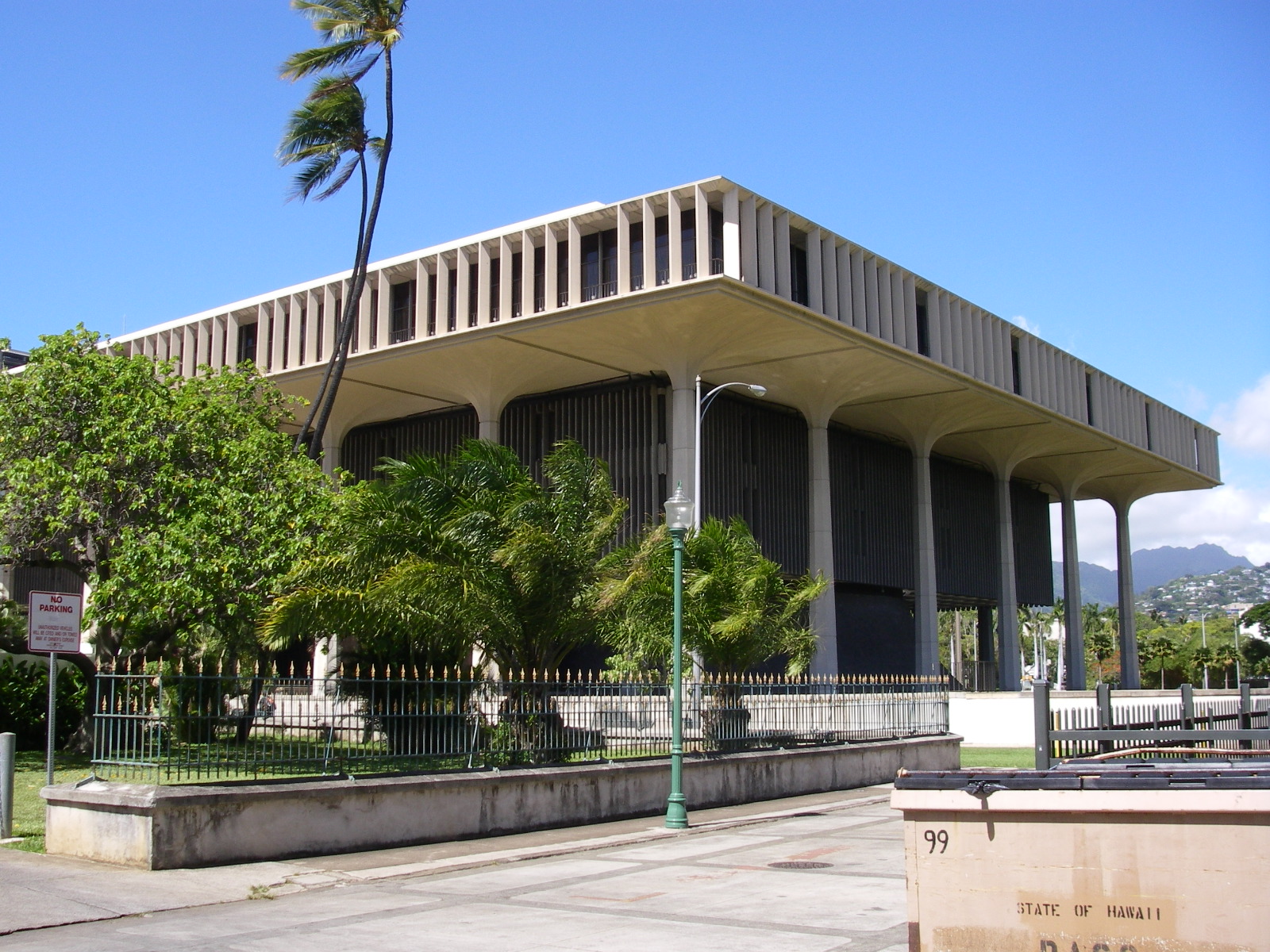
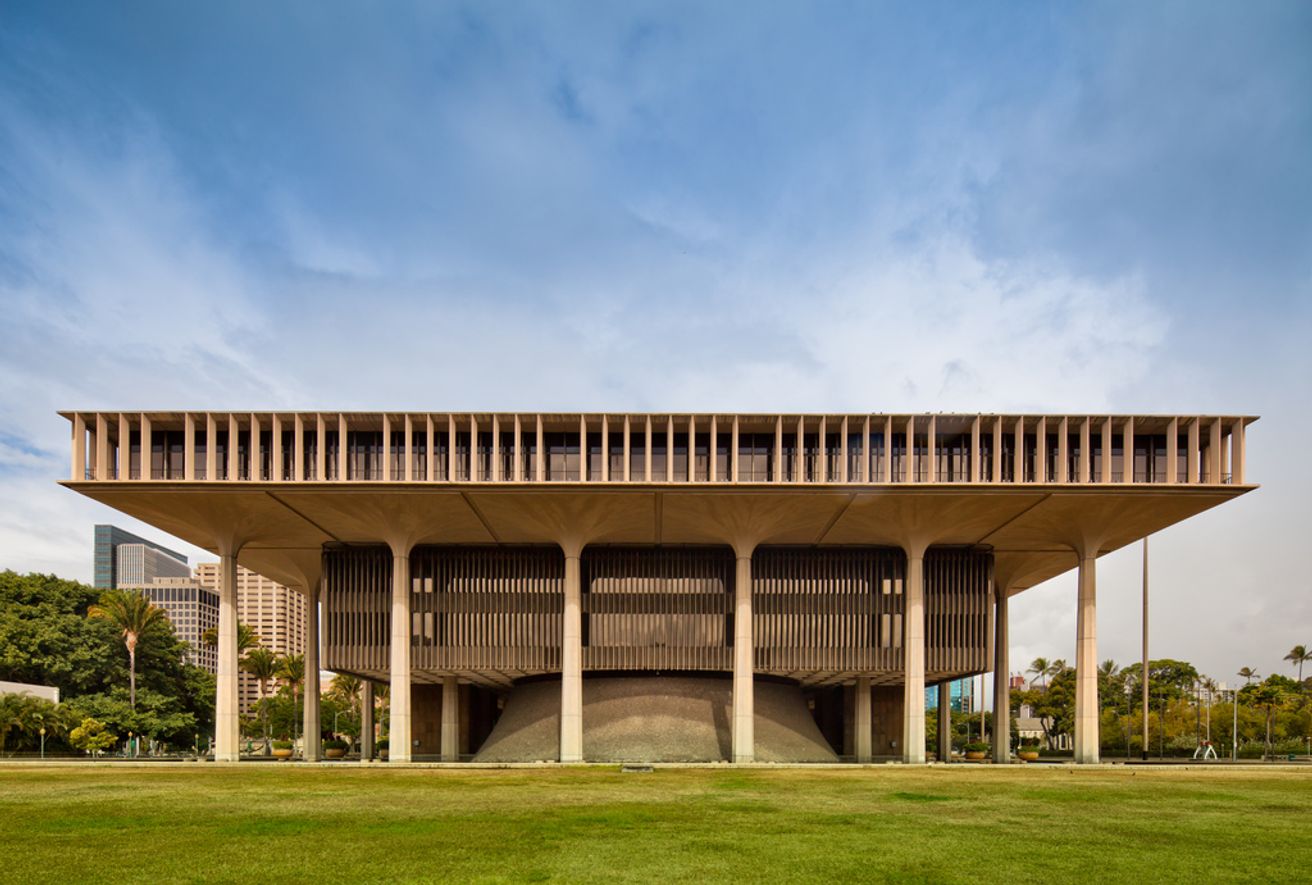
In stark contrast to the ornate Iolani Palace stands the Hawaii State Capitol. Completed in 1969, this landmark is a masterpiece of “Hawaiian International” architecture. Unlike traditional domed capitols found in other states, this building is designed to reflect the natural environment of the islands. The central atrium is open to the sky, allowing rain and sunlight to enter, symbolizing the transparency of government. The two legislative chambers are cone-shaped to represent volcanoes, and the supporting pillars are designed to look like palm trees. Surrounded by a reflective pool that mimics the Pacific Ocean, the capitol is a symbolic architectural tribute to the island’s geography.
Aliiolani Hale and the King Kamehameha Statue
Directly across from the palace is Aliiolani Hale, the current home of the Hawaii State Supreme Court. This building originally served as the seat of government for the kingdom. Standing proudly in front of it is the iconic King Kamehameha Statue. This gilded bronze figure depicts King Kamehameha I, the legendary leader who unified the Hawaiian Islands in 1810. Covered in gold leaf and draped in ceremonial lei during Kamehameha Day celebrations, this statue is one of the most photographed landmarks in Honolulu.
Military Landmarks and World War II History
The capital city of Hawaii is inextricably linked to the events of World War II. The landmarks located within the Pearl Harbor area and the surrounding hills are not just tourist sites; they are hallowed grounds that memorialize the bravery and sacrifice of a generation.
Pearl Harbor National Memorial
The Pearl Harbor National Memorial is the most visited landmark in the state. It encompasses several sites that document the surprise attack on December 7, 1941. The USS Arizona Memorial, a white bridge-like structure spanning the sunken hull of the battleship, is a powerful monument to the sailors who lost their lives. The design of the memorial is intentional, with a sag in the middle and peaks at the ends, representing initial defeat and ultimate victory.
Battleship Missouri Memorial
Moored just a short distance from the USS Arizona is the Battleship Missouri Memorial. Known affectionately as “Mighty Mo,” this vessel represents the end of the conflict. It was on the decks of the USS Missouri in Tokyo Bay that the Japanese Instrument of Surrender was signed, officially ending World War II. Together, these two landmarks—the USS Arizona and the USS Missouri—serve as “bookends” of the war in the Pacific.

National Memorial Cemetery of the Pacific
Located inside the Punchbowl Crater, an extinct volcanic tuff cone, the National Memorial Cemetery of the Pacific is a landmark of profound serenity and respect. Often referred to simply as Punchbowl, this site provides the final resting place for thousands of veterans from World War I, World War II, the Korean War, and the Vietnam War. The Honolulu Memorial at the top of the cemetery features the “Courts of the Missing,” where the names of those lost in battle and never recovered are etched into stone.
Natural Landmarks Defining the Capital’s Skyline
The geography of Honolulu is shaped by ancient volcanic activity, creating a skyline that is as much about mountain ridges and craters as it is about high-rise buildings. These natural landmarks are the defining features of the city’s identity.
Diamond Head State Monument
The most recognizable natural landmark in Hawaii is Diamond Head, or Leahi in the Hawaiian language. This volcanic tuff cone was formed about 300,000 years ago during a single, explosive eruption. British sailors in the 19th century named it Diamond Head because they mistook calcite crystals in the rocks for diamonds. Today, the Diamond Head State Monument offers a popular hiking trail that leads to the summit, providing panoramic views of Waikiki and the vast Pacific Ocean. The bunkers and tunnels found at the top are remnants of the island’s coastal defense system built in the early 20th century.
Mount Tantalus and Puu Ualakaa State Park
For a different perspective of the capital, Mount Tantalus provides a lush, emerald backdrop to the city. Part of the Ko’olau Range, this area is home to Puu Ualakaa State Park, which offers one of the most comprehensive views of Honolulu. From this vantage point, visitors can see from Diamond Head all the way to Pearl Harbor. The winding roads and tropical rainforest trails of Tantalus showcase the ecological diversity that exists just minutes away from the urban center.
Hanauma Bay Nature Preserve
Located on the eastern outskirts of the capital city, Hanauma Bay is a natural landmark that showcases the marine beauty of Oahu. Formed within a volcanic crater that was breached by the ocean, the bay is now a protected Nature Preserve. It is world-renowned for its coral reef and abundant marine life, including the Humuhumunukunukuapuaa, the state fish of Hawaii. As a landmark, it represents the state’s commitment to environmental conservation and the preservation of its natural resources.
Cultural and Religious Landmarks
Beyond the government and military sites, Honolulu is home to landmarks that celebrate the diverse cultural tapestry of the islands. These sites offer insight into the spiritual and educational foundations of the capital.
Bishop Museum: The State Museum of Natural and Cultural History
The Bernice Pauahi Bishop Museum, commonly known as the Bishop Museum, is the premier landmark for Polynesian history. Founded in 1889 by Charles Reed Bishop in honor of his wife, Princess Bernice Pauahi Bishop, the last descendant of the royal Kamehameha Dynasty, the museum houses the world’s largest collection of Hawaiian artifacts. The Hawaiian Hall, with its Victorian-era architecture and deep-red walls, is a landmark in itself, preserving the stories of the gods, the people, and the environment of Hawaii.
Kawaiahao Church
Often referred to as the “Westminster Abbey of the Pacific,” Kawaiahao Church was the first Christian church built on Oahu. Completed in 1842, the structure is unique because it was constructed using 14,000 giant coral blocks harvested from the ocean reefs. It served as the royal chapel for the Hawaiian Monarchy and was the site of many historic events, including the inauguration of kings and queens. The church’s clock, known as Kauikeaouli, still keeps time today, and the grounds remain a vital landmark of the capital’s religious history.
Aloha Tower
Once the tallest building in Honolulu when it was completed in 1926, the Aloha Tower served as a lighthouse and a welcoming beacon for travelers arriving by sea. Located at the Honolulu Harbor, it remains an enduring symbol of Hawaiian hospitality. The word “Aloha” is emblazoned on all four sides of the tower, greeting ships as they enter the port. In an era before commercial air travel, this landmark was the primary gateway to the islands, and it continues to be a historic focal point of the downtown waterfront.
Honolulu is a capital city unlike any other in the United States. Its identity is forged by a deep respect for its royal past, a solemn remembrance of its military trials, and a profound connection to its volcanic and oceanic surroundings. These landmarks do more than just define the geography of the city; they serve as the keepers of the stories that have shaped Hawaii into the unique and culturally rich state it is today. Whether one is standing on the heights of Diamond Head or walking the halls of Iolani Palace, the landmarks of the capital state offer a window into the soul of the Pacific.
LifeOutOfTheBox is a participant in the Amazon Services LLC Associates Program, an affiliate advertising program designed to provide a means for sites to earn advertising fees by advertising and linking to Amazon.com. Amazon, the Amazon logo, AmazonSupply, and the AmazonSupply logo are trademarks of Amazon.com, Inc. or its affiliates. As an Amazon Associate we earn affiliate commissions from qualifying purchases.