
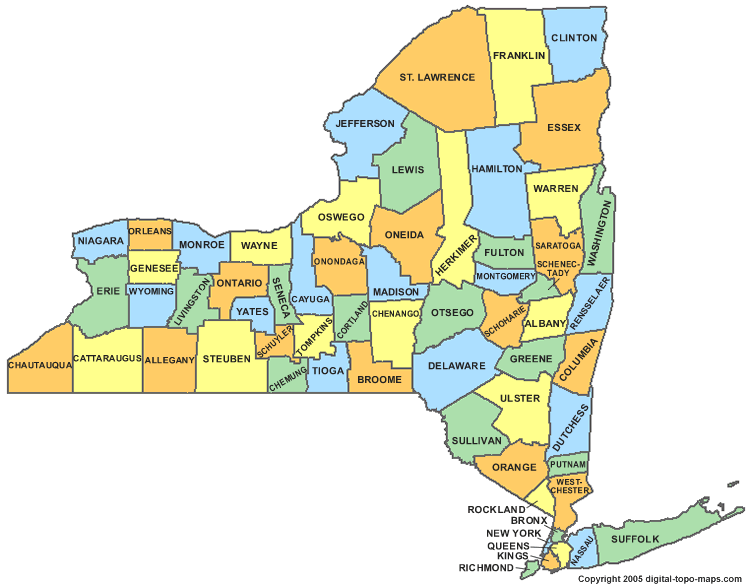
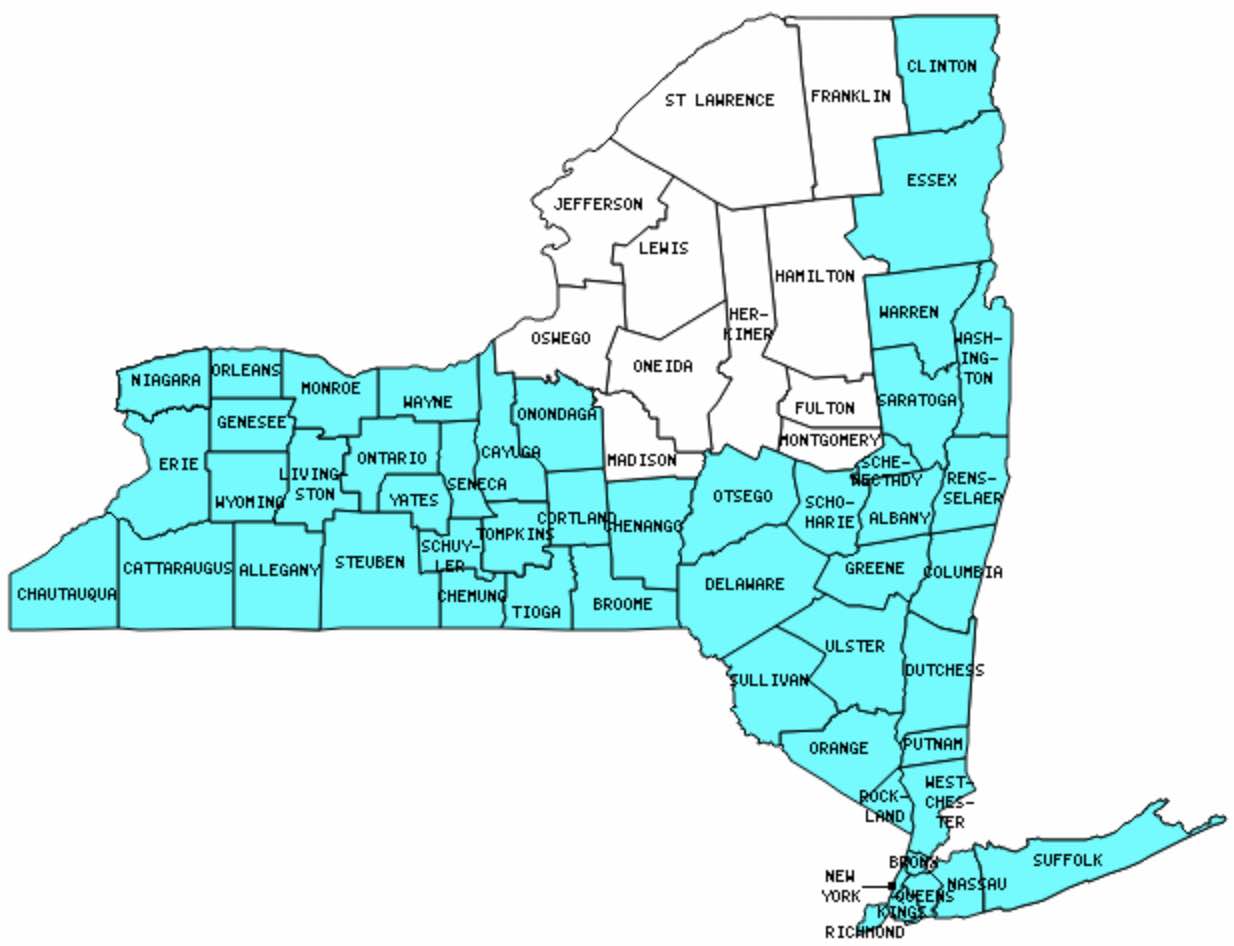
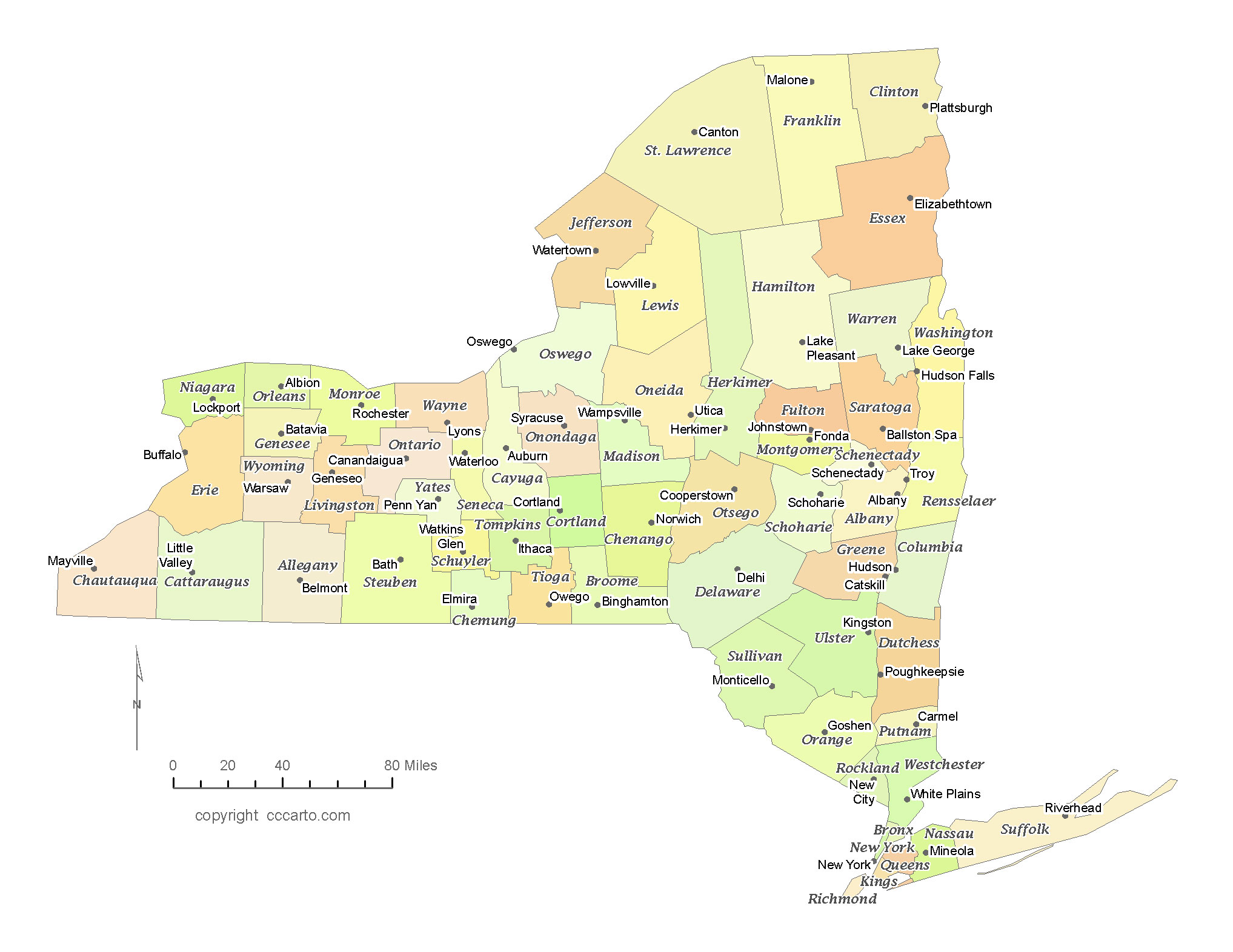
New York City, a global metropolis synonymous with towering skyscrapers, vibrant culture, and endless opportunity, is often thought of as a singular entity. However, when discussing its governmental and administrative structure, a more nuanced answer emerges. The question “What is the county for New York City?” delves into the historical, geographical, and administrative divisions that define this sprawling urban landscape. Unlike many other cities, New York City is not situated within a single county but is itself composed of five distinct counties, each with its own unique identity and history, all unified under the umbrella of the city government. These five counties are New York County (also known as Manhattan), Kings County (known as Brooklyn), Queens County (known as Queens), Bronx County (known as the Bronx), and Richmond County (known as Staten Island).
Understanding these county divisions is crucial for navigating the city’s administrative functions, legal frameworks, and even its cultural perceptions. Each borough, and by extension its corresponding county, possesses a distinct character shaped by its history, demographics, and development. From the financial heart of Manhattan to the diverse landscapes of Queens, these counties collectively form the multifaceted identity of New York City. This exploration will shed light on the significance of these county designations, their historical roots, and how they contribute to the overall experience of living in, visiting, or understanding New York City.
The Five Boroughs: A County-by-County Breakdown
The question of “What is the county for New York City?” is best answered by recognizing that New York City is comprised of five distinct boroughs, and each of these boroughs corresponds to a specific county. This unique administrative structure is a legacy of the consolidation of various independent cities, towns, and villages that came together to form the greater New York City in 1898. Before this consolidation, these areas operated as separate municipalities, often with their own county governments. The consolidation brought them under a single city government but maintained the underlying county structure for many purposes.
New York County: The Island of Manhattan
New York County, more commonly known as Manhattan, is the geographical and historical heart of New York City. It is an island situated between the Hudson River and the East River. Manhattan is renowned for its iconic skyline, featuring landmarks like the Empire State Building, Central Park, and Times Square. This borough is the epicenter of global finance, with Wall Street serving as its financial district. It is also a cultural powerhouse, home to world-class museums such as the Metropolitan Museum of Art and the Museum of Modern Art, as well as numerous theaters in the Broadway district.
The history of New York County dates back to the Dutch colonial era when it was known as New Amsterdam. Its strategic location made it a prime center for trade and commerce, a role it continues to fulfill today. While Manhattan is the smallest of the five boroughs by land area, it is densely populated and attracts millions of tourists annually, making it one of the most visited destinations in the world. The county government for New York County is largely subsumed by the New York City government, but the county designation remains important for legal and administrative purposes. Key attractions within New York County include Statue of Liberty, Ellis Island, One World Observatory, Rockefeller Center, and the Metropolitan Opera.
Kings County: The Heart of Brooklyn
Kings County, universally recognized as Brooklyn, is the most populous of New York City‘s five boroughs. Located to the southeast of Manhattan, across the East River, Brooklyn has transformed from a collection of independent towns and villages into a vibrant and diverse cultural hub. Historically, Brooklyn was a separate city before its consolidation with New York City in 1898. Its distinct identity is palpable, with a rich tapestry of neighborhoods, each offering a unique flavor of urban life.
Brooklyn is celebrated for its artistic communities, its burgeoning culinary scene, and its iconic landmarks. The Brooklyn Bridge, an engineering marvel, connects Brooklyn to Manhattan and offers breathtaking views of the city skyline. Prospect Park, designed by the same landscape architects as Central Park, provides a verdant oasis for residents and visitors. Neighborhoods like Williamsburg are known for their hipster culture and vibrant nightlife, while areas like DUMBO offer stunning waterfront views and art galleries. The Brooklyn Museum and the New York Aquarium are significant cultural institutions within Kings County. For those seeking authentic local experiences and a glimpse into the diverse fabric of New York City, Brooklyn is an essential destination.
Queens County: The Land of Diversity
Queens County, known simply as Queens, is the largest borough in New York City by land area and is renowned for its incredible diversity. It is situated to the east of Manhattan and Brooklyn, bordered by the East River and Long Island Sound. Queens is a microcosm of the world, with a population that speaks over 150 languages and dialects, reflecting its status as one of the most ethnically diverse urban areas on the planet. This diversity is a defining characteristic, evident in its vibrant neighborhoods, varied cuisines, and rich cultural traditions.
Queens is home to two of New York City‘s major airports: John F. Kennedy International Airport and LaGuardia Airport, making it a gateway for international travelers. The borough boasts a wealth of attractions, including the Flushing Meadows-Corona Park, site of the former 1939 World’s Fair and the current home of the Unisphere and the New York Hall of Science. For sports enthusiasts, Queens hosts the U.S. Open Tennis Championships at the USTA Billie Jean King National Tennis Center. The Museum of the Moving Image offers a fascinating exploration of film and television. Exploring Queens provides a unique opportunity to experience the globalized nature of New York City, with distinct cultural enclaves offering authentic culinary and cultural experiences.
Bronx County: The Birthplace of Hip-Hop
Bronx County, commonly referred to as the Bronx, is the only one of New York City‘s boroughs not located on an island, situated to the north of Manhattan. The Bronx holds a significant place in cultural history as the birthplace of hip-hop, a genre that has had a profound global impact. This borough, while often overlooked by tourists, offers a rich tapestry of history, culture, and community. Its transformation over the decades is a testament to the resilience and creativity of its residents.
Key landmarks and attractions in the Bronx include Yankee Stadium, the iconic home of the New York Yankees baseball team, a pilgrimage site for sports fans. The Bronx Zoo, one of the largest urban zoos in the world, and the New York Botanical Garden offer extensive natural escapes within the city. The Edgar Allan Poe Cottage provides a glimpse into the life of the renowned writer. The Bronx is also home to diverse neighborhoods like Arthur Avenue, often called the “real Little Italy,” offering authentic Italian food and culture. Exploring the Bronx reveals a dynamic borough with a strong sense of community and a significant cultural legacy.
Richmond County: The Quiet Borough of Staten Island
Richmond County, known as Staten Island, is the southernmost borough of New York City and the least populated. It is an island located in New York Harbor, southwest of Manhattan, separated from New Jersey by the Arthur Kill and Kill Van Kull. Staten Island offers a more suburban feel compared to the other boroughs, with more green space and a slower pace of life. It provides a unique perspective on New York City, a quieter counterpoint to the bustling energy of its counterparts.
The most famous way to experience Staten Island is by taking the free Staten Island Ferry, which offers spectacular views of the Manhattan skyline, the Statue of Liberty, and Ellis Island. The ferry departs from Manhattan‘s Whitehall Terminal and provides an excellent photographic opportunity. On Staten Island itself, visitors can explore the Snug Harbor Cultural Center & Botanical Garden, a historic site with museums and beautiful gardens. The Staten Island Museum showcases local history and art. For those looking to escape the intensity of the city and enjoy a more relaxed atmosphere with scenic views, Staten Island offers a welcome respite.
The Administrative Significance of County Designations
While the five boroughs are the primary identifiers for most residents and visitors of New York City, the underlying county structure retains administrative and legal significance. The consolidation in 1898 created a unified city government but did not abolish the counties. This means that each borough is also a county, and in some instances, the city government and county government functions are merged or operate in parallel. For instance, New York County is synonymous with Manhattan, and Kings County is synonymous with Brooklyn. The District Attorney for each borough also serves as the District Attorney for its corresponding county. This dual designation can sometimes lead to confusion, as the terms “borough” and “county” are often used interchangeably when referring to these areas within New York City.
Legal and Governmental Functions
County designations are particularly important in legal contexts. For example, court jurisdictions are often defined by county lines. When legal proceedings occur in Manhattan, they are considered to be within New York County. Similarly, crimes committed in Brooklyn fall under the purview of Kings County. Property records, zoning laws, and certain public services are also administered with county designations in mind. The Sheriff’s Department in New York City, for instance, operates on a borough-by-borough basis, with each sheriff responsible for their respective county. Understanding these county divisions is essential for anyone involved in legal matters or administrative processes within New York City.
Historical Context and Evolution
The current county structure of New York City is a direct result of its historical development. Before 1898, the areas that now constitute the boroughs were largely independent municipalities, each with its own governmental structure, including county-level administration. New York County, for example, has a history stretching back to the colonial era. Kings County was originally composed of several Dutch towns. The consolidation was a monumental event that aimed to streamline services, improve infrastructure, and create a more cohesive and powerful city. However, the historical boundaries and the established county frameworks were retained for their legal and administrative utility. This dual system reflects the complex evolution of New York City from a collection of disparate settlements into the global metropolis it is today. The preservation of these county lines, even within the unified city structure, provides a link to the past and ensures continuity in governance and legal frameworks.
In conclusion, the question “What is the county for New York City?” has a multifaceted answer. New York City is not a single county but is comprised of five counties, each corresponding to one of its five boroughs: New York County (Manhattan), Kings County (Brooklyn), Queens County (Queens), Bronx County (the Bronx), and Richmond County (Staten Island). This unique structure is a testament to the city’s rich history and its evolution into a global powerhouse. Each county, or borough, offers a distinct experience, contributing to the vibrant and diverse character of New York City as a whole. Whether you are a tourist exploring its iconic landmarks, a local navigating its diverse neighborhoods, or someone interested in its administrative intricacies, understanding these county divisions provides a deeper appreciation for this extraordinary urban landscape.
LifeOutOfTheBox is a participant in the Amazon Services LLC Associates Program, an affiliate advertising program designed to provide a means for sites to earn advertising fees by advertising and linking to Amazon.com. Amazon, the Amazon logo, AmazonSupply, and the AmazonSupply logo are trademarks of Amazon.com, Inc. or its affiliates. As an Amazon Associate we earn affiliate commissions from qualifying purchases.