
Planning a trip to the Grand Canyon, exploring the vibrant streets of Phoenix, or seeking tranquility in Sedona? One crucial piece of information often overlooked by travelers, but vital for a seamless experience, is understanding the local time. Unlike most of the United States, the state of Arizona observes a unique time zone practice that can catch even the most seasoned globetrotters by surprise. For the majority of the year, and indeed, for the majority of the state, Arizona does not observe Daylight Saving Time (DST). This means that while other states “spring forward” and “fall back,” Arizona consistently adheres to Mountain Standard Time (MST) year-round.
This distinct approach to time-keeping has significant implications for everything from flight schedules and tour bookings to hotel check-ins and coordinating with friends and family outside the state. It affects your entire travel itinerary, influencing when you plan your outdoor adventures, your dining reservations, and even your business interactions if you’re visiting for work. Understanding Arizona’s time zone isn’t just a matter of trivial knowledge; it’s a fundamental aspect of navigating the state efficiently and making the most of your travel, tourism, and accommodation choices. This guide delves into the intricacies of Arizona’s time, offering insights for planning your perfect escape and embracing the unique rhythm of the Grand Canyon State.

Decoding Arizona’s Unique Time Zone: Always MST
The perpetual adherence to Mountain Standard Time is a defining characteristic of Arizona’s time zone. This decision, primarily driven by the state’s extreme summer heat and a desire to maximize daylight hours for outdoor activities without the need for artificial adjustments, has shaped the daily life and rhythm of the region for decades. For travelers, it represents a key piece of information that can make or break logistical planning.
The Perpetual Mountain Standard Time (MST)
Most of Arizona remains on Mountain Standard Time (MST) throughout the entire year. This means that when the rest of the United States adjusts for Daylight Saving Time (DST) in the spring, Arizona effectively shifts its relationship with its neighboring states. During the standard time months (roughly November to March), Arizona aligns with other Mountain Standard Time states like Colorado, New Mexico, and Utah. However, once Daylight Saving Time begins, Arizona’s time becomes equivalent to Pacific Daylight Time (PDT), matching the clock in states like California and Nevada.
The primary reason for this unusual practice dates back to when DST was first widely adopted. Arizona’s intense summer heat means that daylight hours are already abundant and often too hot for outdoor activities during the peak afternoon sun. Shifting the clock forward would simply mean an extra hour of searing heat extending into the evening, which locals found undesirable. By not observing DST, the sun sets earlier in the evening during the summer months, allowing for more comfortable temperatures for evening activities and minimizing energy consumption for air conditioning during the hottest part of the day.
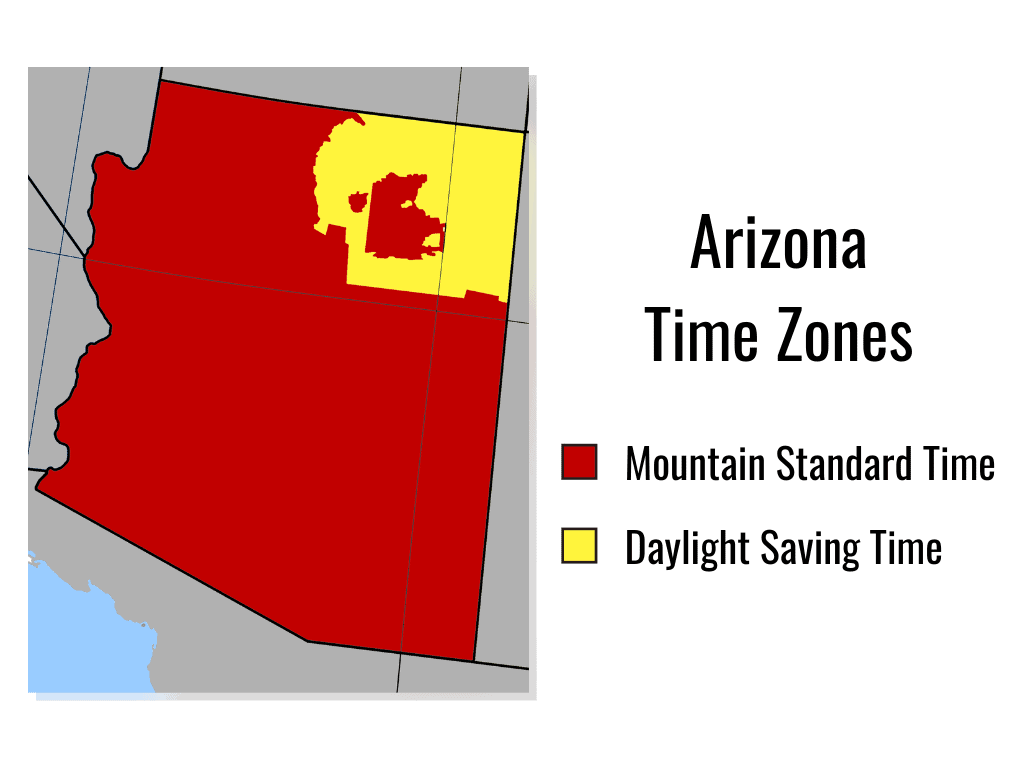
It is crucial to note one significant exception to this rule: the Navajo Nation. This large autonomous reservation, which extends into Utah and New Mexico as well as Arizona, does observe Daylight Saving Time. This means that if you are traveling through the Navajo Nation (for instance, visiting iconic landmarks like Antelope Canyon or Monument Valley), you will need to adjust your clock an hour forward during DST periods. This can create a unique scenario where driving a relatively short distance within Arizona requires a time adjustment, a detail often surprising to those unfamiliar with the region. Always confirm the local time when making arrangements, especially for guided tours within the reservation.
How Arizona’s Time Compares Seasonally
Understanding Arizona’s time relative to other states is essential for coordinating schedules, particularly for those traveling from nearby regions or managing remote work.
- During Standard Time (Roughly November to March): Arizona’s MST aligns perfectly with the time in states like Colorado, New Mexico, and Utah, which are also on MST. It is one hour ahead of Pacific Standard Time (PST) states such as California and Nevada.
- During Daylight Saving Time (Roughly March to November): This is when the distinction becomes most pronounced. While Colorado, New Mexico, and Utah spring forward to Mountain Daylight Time (MDT), Arizona stays on MST. This effectively means that Arizona’s time is then one hour behind MDT. Simultaneously, because California and Nevada spring forward to Pacific Daylight Time (PDT), Arizona’s MST matches their PDT.
For example, if you’re traveling from Los Angeles to Phoenix in July, there will be no time change. If you’re coming from Denver to Phoenix in July, you’ll gain an hour. Conversely, if you’re leaving Phoenix for Denver in July, you’ll lose an hour. This seasonal shift is a critical detail for anyone planning cross-state road trips, particularly those involving the busy borders with Nevada (home to the Hoover Dam and Lake Mead) or Utah.
Navigating Arizona’s Time for Seamless Travel & Tourism
The distinctive time zone in Arizona presents both challenges and opportunities for travelers. Mastering this nuance is key to enjoying a stress-free trip, ensuring you arrive on time for everything from adventure tours to dinner reservations. It impacts various facets of your journey, from the initial booking stages to your daily activities on the ground.
Planning Your Itinerary: Flights, Tours, and Attractions
When planning your Arizona adventure, always confirm times with the understanding that the state operates on MST year-round. This is especially crucial for flights and any pre-booked tours or activities.
- Flights: Most airlines and online travel agencies automatically adjust for local time zones, but it’s always wise to double-check arrival and departure times for flights into or out of major Arizona airports like Phoenix Sky Harbor International Airport (PHX) or Tucson International Airport (TUS). If you’re flying during the Daylight Saving Time period, be particularly mindful of connections through states that do observe DST.
- Guided Tours and Excursions: Many popular Arizona attractions, such as Grand Canyon National Park, Sedona’s Red Rocks, or jeep tours in Scottsdale, operate on Arizona’s consistent MST. However, tours that venture into the Navajo Nation, like visits to Antelope Canyon or Monument Valley, will follow the Navajo Nation’s adherence to Daylight Saving Time. This means a one-hour difference can occur when crossing into or out of the reservation during DST. Always confirm the specific time zone used by your tour operator. This local culture consideration is paramount to ensure you don’t miss your booked experience.
- Restaurant Reservations and Event Tickets: When booking dinner, theater tickets, or events in cities like Phoenix, Tucson, or Flagstaff, remember that these will always be on local Arizona MST. This consistent time zone simplifies local planning, but requires external visitors to adjust their internal clocks accordingly, especially if they are communicating with people outside Arizona.
Accommodation Considerations: Checking In and Out with Confidence
Accommodation bookings are another area where Arizona’s time zone requires attention. From luxury resorts in Scottsdale to charming bed and breakfasts in Sedona or long-term apartment rentals, check-in and check-out times are strictly local.
- Hotel Check-in/Check-out: Most hotels, resorts, villas, and apartments in Arizona will operate on MST for their posted check-in and check-out times. This consistency means you won’t have to worry about a sudden time shift affecting your arrival or departure from your lodging. However, if you are arriving from a neighboring state that observes Daylight Saving Time during the summer, ensure you factor in the one-hour difference when planning your arrival. For example, if you drive from Las Vegas (PDT) to Kingman (MST) in July, your clock won’t change, making the transition seamless in terms of time.
- Booking and Confirmation: When making online bookings for accommodation, the times displayed should automatically reflect the local Arizona time. Nevertheless, it’s a good practice to confirm the exact check-in time with the hotel directly, especially if you anticipate an early arrival or late departure. This ensures no miscommunication due to time zone differences. The ability to book, review, and compare various types of accommodation (from luxury suites to budget-friendly stays) is critical, and understanding time impacts scheduling arrival.
- Communication with Staff: If you need to communicate with hotel staff about special requests or arrival times while en route from a DST state, always remember to specify your time zone or ask them to confirm in Arizona MST. This simple precaution can prevent misunderstandings and ensure a smooth experience from booking to departure.
Lifestyle and Local Culture: Embracing Arizona’s Timeless Charm
Beyond the practicalities of travel logistics, Arizona’s consistent time zone subtly influences the local lifestyle, contributing to a unique rhythm that travelers can embrace. This “timeless charm” is woven into the fabric of daily life, affecting everything from when locals prefer to recreate to how businesses operate.
Maximizing Your Experience: Early Starts and Sunset Views
The absence of Daylight Saving Time has a tangible impact on how both residents and visitors experience the natural beauty and activities Arizona offers. The consistent clock setting means that during the long summer days, the sun rises and sets at a relatively consistent “clock time” from one day to the next, even as the actual amount of daylight changes.
- Early Morning Adventures: With sunrise often occurring earlier by the clock during the summer months (compared to what it would be under DST), locals and savvy travelers often make the most of the cool, crisp mornings. This is the ideal time for hiking the trails of Camelback Mountain in Phoenix, exploring the otherworldly landscapes of Saguaro National Park near Tucson, or embarking on a hot air balloon ride over the Sonoran Desert. Starting early allows you to beat the intense midday heat and enjoy the tranquility of nature.
- Spectacular Sunsets: Similarly, the earlier sunsets (compared to DST regions) mean that the breathtaking Arizona sunsets can be enjoyed at a more “socially convenient” hour. Imagine witnessing the vibrant hues over Sedona’s Red Rocks or the vast expanse of the Grand Canyon without having to wait until late into the evening. This makes evening dining, stargazing, or simply relaxing on a resort patio a more integrated part of the evening’s plans. Many tourism activities, from guided photography tours to evening wildlife viewing, are designed around these natural light cycles.
- Dining and Entertainment: Restaurants and entertainment venues in cities like Phoenix, Scottsdale, and Tucson often align their peak hours with these natural rhythms. Early bird specials might start earlier, and evening events can wrap up before it gets too late, contributing to a generally more relaxed lifestyle that prioritizes comfort and practicality in the desert environment. Local food experiences, from farm-to-table restaurants to authentic Mexican cuisine, are often best enjoyed as the sun dips below the horizon, creating a stunning backdrop.
Beyond the Clock: A Relaxed Pace of Life
The consistent time zone in Arizona can be seen as a reflection of a broader philosophy that values stability and natural rhythms over artificial adjustments. This translates into a generally more relaxed pace of life, particularly outside the bustling urban centers.
- Embracing the Natural Environment: Arizona’s time zone indirectly encourages a deeper connection with the natural environment. Without the biannual clock changes, there’s a certain predictability to daylight that allows people to plan their lives around the sun’s actual position, rather than an arbitrary clock time. This is especially true for outdoor enthusiasts who explore iconic landmarks such as the Petrified Forest National Park, Canyon de Chelly National Monument, or the Sonoran Desert Museum. Whether it’s budget travel for backpacking or luxury travel at a desert resort, the consistency simplifies planning.
- Cultural Harmony: Many of Arizona’s rich cultural experiences, from exploring historic mining towns like Jerome and Tombstone to visiting architectural marvels like Taliesin West or the Heard Museum in Phoenix, can be enjoyed without the added mental gymnastics of a time change. This fosters a sense of timelessness, where the focus remains on the experience itself rather than constantly calculating the hour. Even a visit to the Desert Botanical Garden feels more harmonious when your internal clock isn’t fighting an external adjustment.
- A Simpler Approach to Connectivity: For residents, the lack of DST simplifies everyday life and business interactions within the state. For visitors, once they understand this unique aspect, it contributes to a feeling of being on “desert time” – a slightly different rhythm that encourages relaxation and mindfulness. This extends to various aspects of lifestyle, whether you’re on a family trip, a business stay, or a solo adventure exploring the local culture and activities. It is a subtle but significant part of what makes Arizona a distinctive travel destination. Even when visiting a complex cultural site like the Four Corners Monument, which borders states with different time zone practices, understanding Arizona’s consistent stance helps clarify your itinerary.
In conclusion, while the question “What is the current time in Arizona?” might seem straightforward, its answer reveals a fascinating aspect of the state’s geography, culture, and approach to daily life. For any traveler or visitor, recognizing that Arizona largely remains on Mountain Standard Time (MST) year-round – with the notable exception of the Navajo Nation – is paramount for a smooth and enjoyable journey. From meticulously planning your travel itinerary, including flights and tours, to ensuring seamless accommodation check-ins, this knowledge is a valuable tool. Beyond the practicalities, embracing Arizona’s unique time zone also allows you to appreciate a lifestyle that harmonizes with its stunning natural environment, encouraging early morning explorations and leisurely sunset views. So, as you prepare for your adventure in the Grand Canyon State, remember to set your watch, or at least your expectations, to MST for a truly immersive and hassle-free experience.
LifeOutOfTheBox is a participant in the Amazon Services LLC Associates Program, an affiliate advertising program designed to provide a means for sites to earn advertising fees by advertising and linking to Amazon.com. Amazon, the Amazon logo, AmazonSupply, and the AmazonSupply logo are trademarks of Amazon.com, Inc. or its affiliates. As an Amazon Associate we earn affiliate commissions from qualifying purchases.