
The story of California is inextricably linked with a period of seismic change, a moment when dreams of instant riches drew people from across the globe to its rugged landscapes. This transformative era is known as the Gold Rush, a period that not only reshaped the Golden State but also left an indelible mark on the history of the United States. From its sudden inception to its profound and lasting impact, the California Gold Rush is a tale of human ambition, discovery, and the relentless pursuit of fortune.
The Spark of Discovery: From Sutter’s Mill to a Global Frenzy
The genesis of the California Gold Rush can be traced back to a seemingly insignificant event on a cold January morning in 1848. James W. Marshall, a carpenter working for John Sutter on a construction project, spotted a glint of yellow in the tailrace of the sawmill he was building at Coloma, on the American River. He had found gold. Initially, both Marshall and Sutter attempted to keep the discovery a secret, fearing it would disrupt their business and attract unwanted attention. However, news, like wildfire, has a way of spreading, and the secret of the California gold was soon out.

Word of the discovery reached San Francisco in March 1848, but it was met with considerable skepticism. Many dismissed the reports as fanciful tales. However, when Samuel Brannan, a prominent merchant and publisher, paraded through the streets of San Francisco with a vial of gold dust, shouting, “Gold! Gold! Gold from the American River!”, the skepticism evaporated. The lure of gold was too potent to ignore.
The official confirmation of the discovery by President James K. Polk in December 1848 served as the final catalyst. He announced the abundance of gold in California to Congress, officially acknowledging the find and legitimizing the burgeoning excitement. This announcement, coupled with existing economic hardships in other parts of the United States and abroad, ignited a feverish rush. Men from all walks of life – farmers, laborers, merchants, and even entire families – began to pack their belongings and embark on arduous journeys to California, hoping to strike it rich.
The term “Forty-Niners” was coined to describe those who flocked to California in 1849, the peak year of migration. These pioneers traveled by various routes: some braved the long, dangerous overland trails, crossing mountains and deserts; others opted for the sea, sailing around the tip of South America or taking the shorter, though still perilous, route via the Isthmus of Panama. Regardless of the path taken, the destination was the same: the promise of a golden future in the untamed wilderness of California. The initial discoveries were primarily made in the placer deposits along the rivers and streams of the Sierra Nevada foothills, making for accessible, albeit back-breaking, mining.
The Lure of Wealth: What Drew People to California?
The allure of the Gold Rush was multifaceted, extending beyond mere monetary gain. While the prospect of finding enough gold to secure a lifetime of financial freedom was undoubtedly the primary driver, other factors played significant roles:
- Escape from Hardship: Many individuals were escaping economic stagnation, debt, or limited opportunities in their home regions, both within the United States and internationally. California represented a fresh start, a chance to build a new life free from the constraints of their past.
- Adventure and Opportunity: For some, the Gold Rush was an epic adventure, a chance to explore uncharted territories and experience the thrill of the unknown. The spirit of the frontier, with its promise of self-reliance and opportunity, was a powerful draw.
- Social Mobility: The democratic nature of placer mining, where anyone with a pan and a shovel could potentially find gold, offered a rare opportunity for social mobility. It bypassed traditional social hierarchies and allowed individuals to rise based on their diligence and luck.
- The Dream of a New Life: Beyond wealth, people dreamed of establishing businesses, building communities, and shaping the future of a burgeoning new territory. The idea of being part of something historic and transformative was a potent motivator.
The rapid influx of people transformed California from a sparsely populated territory into a bustling, chaotic, and rapidly expanding region. The population surged from an estimated 15,000 in early 1848 to over 300,000 by 1852. This unprecedented population boom had profound consequences, laying the groundwork for California‘s eventual statehood.
Life in the Mining Camps: Hardship and Hope
The reality of life in the mining camps of the Gold Rush was far from the romanticized images often depicted. It was a world of relentless toil, challenging conditions, and constant uncertainty. The dream of easy wealth quickly gave way to the grim reality of back-breaking labor.
The Miner’s Daily Grind: From Pan to Sluice
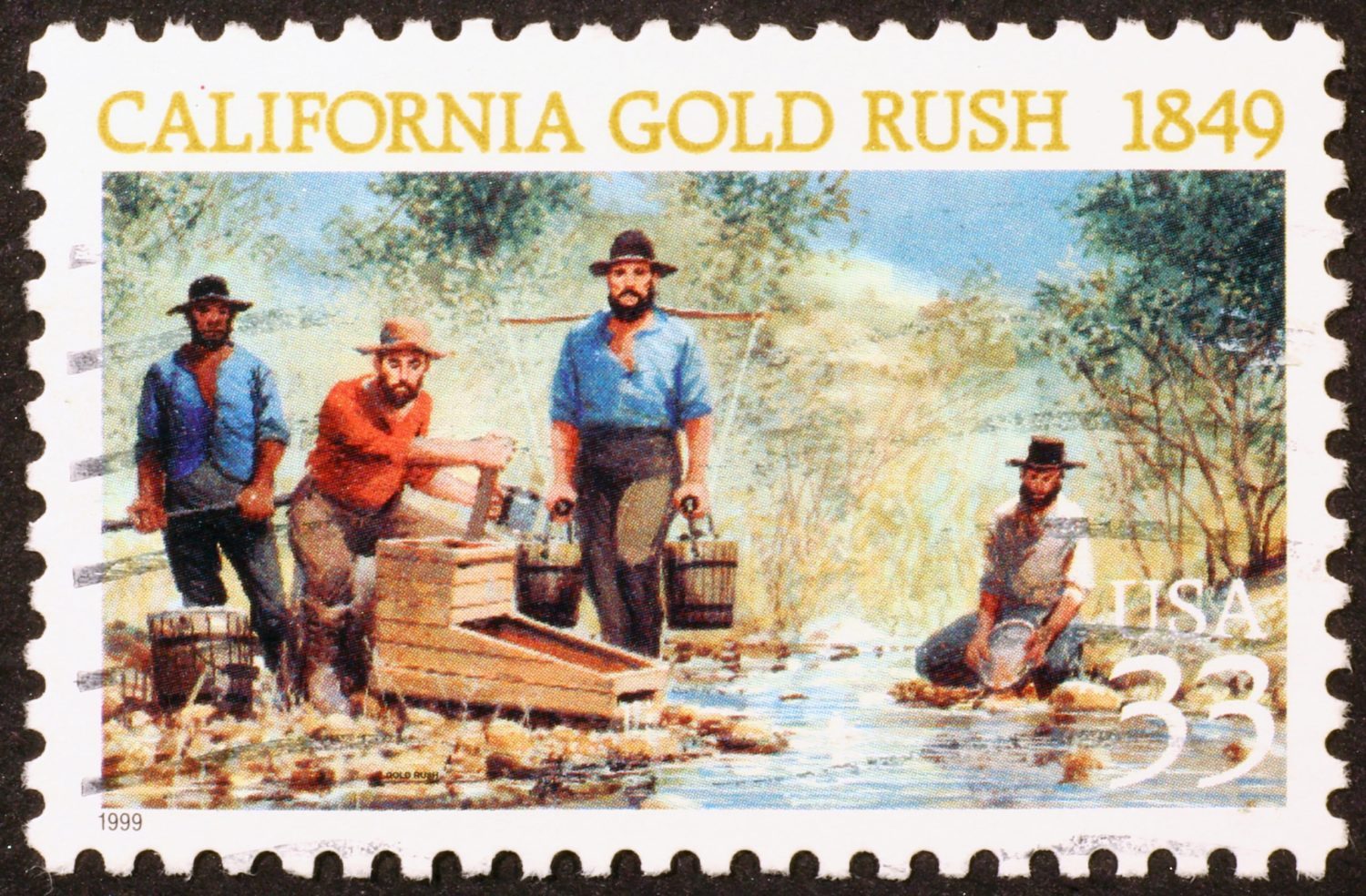
The earliest forms of gold extraction were the simplest: panning. Miners would scoop gravel and dirt from riverbeds into a pan, swirl it with water, and let the lighter materials wash away, leaving behind the heavier gold particles. This method was labor-intensive and yielded relatively small amounts of gold.
As easily accessible surface gold became scarcer, miners developed more sophisticated techniques. Sluice boxes, long wooden troughs with riffles, were used to capture gold from larger quantities of gravel. Water was channeled through the sluice, carrying the gravel, and the riffles would trap the heavier gold. For even greater yields, hydraulic mining emerged, using high-pressure water jets to blast away hillsides and wash the gold-bearing earth into the sluices. This method, while highly effective, had devastating environmental consequences, leading to massive erosion and sediment pollution.

The work was arduous, often performed in harsh weather conditions, with long hours spent wading in icy rivers or digging in unstable earth. Miners faced risks of injury from cave-ins, equipment malfunctions, and even violence. The diet was typically monotonous, consisting of beans, bacon, and hardtack, as fresh provisions were scarce and expensive.
The Social Fabric of the Camps: A Diverse and Dynamic Mix
The mining camps were incredibly diverse, attracting individuals from California, the United States, Europe, South America (particularly Chile and Mexico), Australia, and Asia (primarily China). This melting pot of cultures and backgrounds created a unique social environment.
While the initial camps were often informal gatherings, they quickly developed their own forms of organization and governance. Disputes over claims were common and could sometimes lead to conflict. In the absence of formal law enforcement, miners often established their own rules and mining districts, electing claim committees and vigilante groups to maintain order.
The Gold Rush also brought significant social changes and challenges. The influx of men created a skewed gender ratio, leading to the development of a frontier society where women, though often outnumbered, played crucial roles in establishing businesses, providing services, and building communities. The rapid growth of towns like Sacramento, San Francisco, and Stockton was directly fueled by the gold trade and the needs of the mining population.
However, the Gold Rush also exposed the darker aspects of human nature. Discrimination and prejudice were rampant, particularly against foreign miners. Chinese immigrants, who arrived in large numbers, faced increasing hostility and discriminatory laws, despite their significant contributions to the mining industry and the development of California.
The Lasting Legacy: How the Gold Rush Shaped California and Beyond
The California Gold Rush was a relatively short-lived period of intense activity, peaking by the mid-1850s. However, its impact was so profound that it fundamentally altered the course of California‘s history and left a lasting imprint on the United States.
Economic Transformation: From Wilderness to Prosperity
The most immediate and dramatic impact of the Gold Rush was on California‘s economy. The vast quantities of gold extracted not only enriched individuals but also provided a significant boost to the national economy. The wealth generated fueled investment, infrastructure development, and the growth of industries beyond mining.
The influx of people and capital spurred the rapid development of towns and cities. San Francisco, in particular, transformed from a small settlement into a major port city and commercial hub, becoming the gateway to California and a vital center for trade and finance. The demand for goods and services created opportunities for merchants, farmers, artisans, and entrepreneurs, laying the foundation for a diversified economy.
The Gold Rush also played a crucial role in the development of the United States‘ transcontinental railroad system. The need to transport goods and people to and from California made the construction of a railroad a national priority, culminating in the completion of the First Transcontinental Railroad in 1869, a monumental feat of engineering that further connected the nation.
Political and Social Evolution: Statehood and a New Frontier
The rapid population growth brought about by the Gold Rush accelerated California‘s path to statehood. The territory, which had been acquired from Mexico in 1848, quickly met the population requirements for statehood. In 1850, California was admitted to the Union as the 31st state, bypassing the usual territorial stage.
The Gold Rush also solidified California‘s identity as the “Golden State” and a land of opportunity. It fostered a spirit of innovation, entrepreneurship, and resilience that continues to define the state’s character. The myth of the self-made man, born from the prospect of striking gold, became a powerful narrative in the American consciousness.
Furthermore, the Gold Rush contributed to the westward expansion of the United States, opening up new territories for settlement and development. It was a pivotal event in the nation’s Manifest Destiny, shaping its geographical and cultural landscape.
While the individual fortunes made from gold panning were often fleeting, the collective impact of the Gold Rush was monumental. It transformed a remote outpost into a prosperous state, attracting diverse populations and fostering a spirit of ambition that continues to resonate today. The echoes of those who sought their fortune in the Sierra Nevada foothills can still be felt in the vibrant, dynamic, and ever-evolving spirit of California. The legacy of the Gold Rush is not just in the gold that was unearthed, but in the enduring narrative of discovery, aspiration, and transformation it inspired.
LifeOutOfTheBox is a participant in the Amazon Services LLC Associates Program, an affiliate advertising program designed to provide a means for sites to earn advertising fees by advertising and linking to Amazon.com. Amazon, the Amazon logo, AmazonSupply, and the AmazonSupply logo are trademarks of Amazon.com, Inc. or its affiliates. As an Amazon Associate we earn affiliate commissions from qualifying purchases.