
Rising quietly above the sweeping, golden vistas of the American Heartland, Mount Sunflower stands as the ultimate geographic zenith of the Sunflower State. While Kansas is universally and incorrectly stereotyped as being as flat as a pancake, the reality of its terrain is far more nuanced, gently tilting upward from the rolling lowlands of the east toward the majestic, high-altitude embrace of the Colorado border. For road-trippers, high-point collectors, and curious travelers alike, visiting this remote landmark offers a profound appreciation for the vast scale and subtle beauty of the Great Plains. Understanding the history, geography, and visitor experience of this unique natural landmark reveals why it remains a cherished destination for those traversing the American landscape.

Geographic Profile and Elevation of Mount Sunflower
Standing at an elevation of 4,039 feet (1,231 meters) above sea level, Mount Sunflower claims the title of the highest point in Kansas. However, despite its grand-sounding name, it is not a mountain in the traditional geological sense. There are no steep cliffs, jagged peaks, or towering evergreens that typically define alpine summits. Instead, it is a gently sloping rise located on the high plains of Wallace County, just a few miles from the Colorado state line.
The Illusion of the Great Plains
To the uninitiated traveler driving along Interstate 70 or rural U.S. Route 40, the landscape appears uniformly level. Yet, the entire state of Kansas is built upon a subtle incline. Starting near the Missouri River at an elevation of roughly 680 feet, the terrain steadily gains altitude at a rate of about ten feet per mile as one heads west. By the time travelers reach the western edge of the state, they have entered the shortgrass prairie region, where the high-altitude ecosystem mirrors that of the neighboring eastern slope of the Rocky Mountains.
Geological Context of Wallace County
Geologically speaking, Mount Sunflower is part of the broader High Plains section of the Great Plains physiographic province. The underlying bedrock consists largely of sedimentary layers deposited during the Tertiary period, overlaid by wind-blown loess and alluvial deposits. Over millions of years, erosion from ancient river systems carved gentle undulations into the landscape, leaving high points like this one as remnants of a higher, ancient plain that once stretched unbroken toward the west.
The Visitor Experience: What to Expect at the Summit
Visiting the highest natural point in Kansas is an unconventional and deeply rewarding tourism experience. Unlike national parks flanked by visitor centers and paved parking lots, Mount Sunflower offers an authentic, rustic encounter with the rural American West.
Reaching the Remote Destination
Getting to the site requires traveling along well-maintained rural gravel roads in Wallace County. The nearest settlement of significant size is Sharon Springs, a quiet agricultural community that serves as a gateway for travelers exploring the western tier of the state. As visitors approach the site, the vast expanse of the sky dominates the horizon, offering unobstructed views of endless pasturelands, dramatic cloud formations, and breathtaking prairie sunsets.
Quirky Landmarks and Art Installations
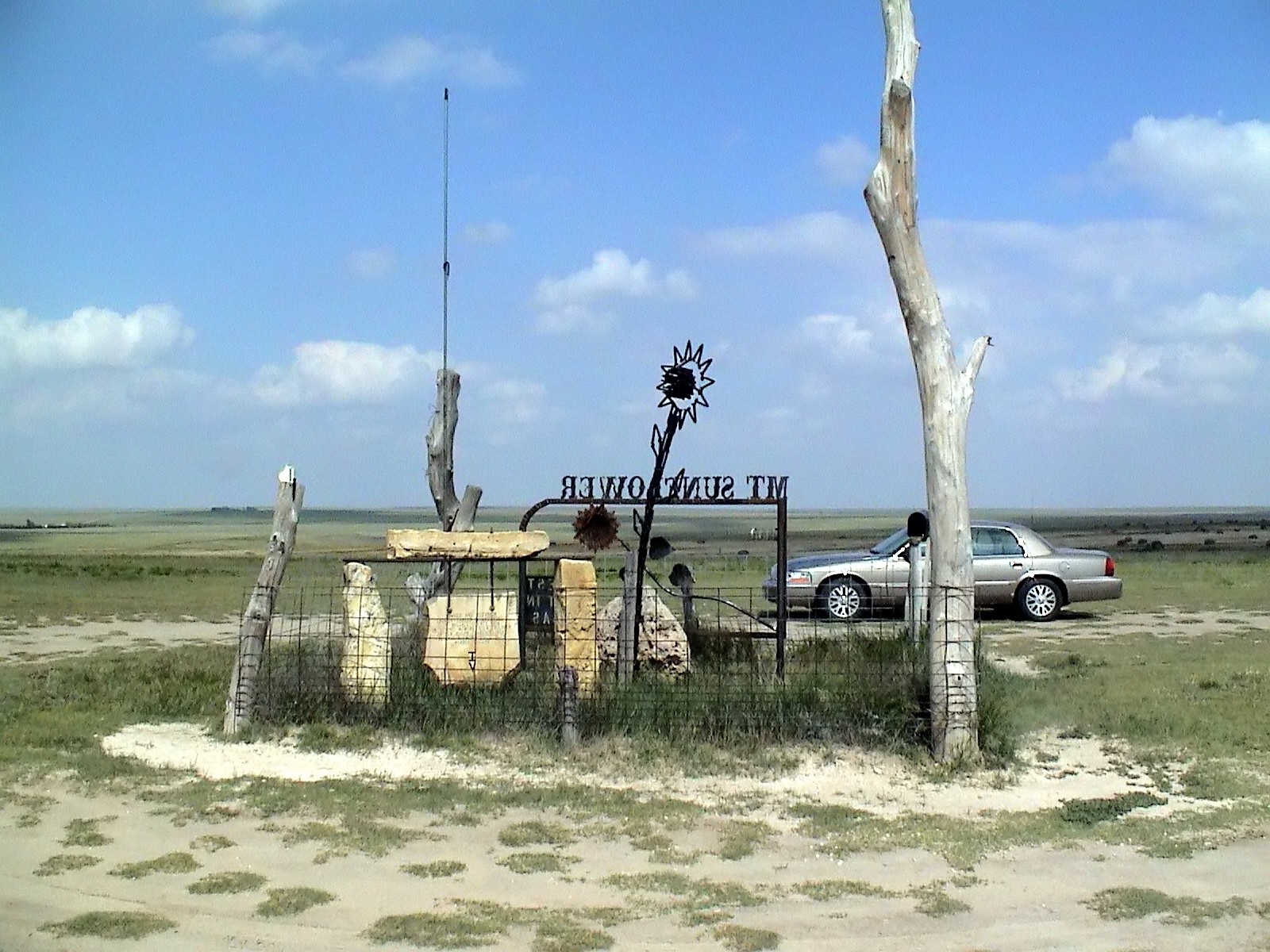
What Mount Sunflower lacks in sheer vertical relief, it more than makes up for in quirky charm and personality. The site is located on private land owned by the Harold family, who have generously kept it open to the public for decades. Visitors are greeted by a series of whimsical, handmade structures and sculptures that celebrate the spirit of the high plains:
- The Monument: A tall, rusted metal sculpture fashioned out of farm equipment and topped with a giant sunflower design marks the exact high point.
- The Mailbox: Like many famous high points and remote mountain passes around the world, there is a weather-worn mailbox containing a guestbook. Visitors from all fifty states and numerous countries have signed their names, chronicling their journeys across the plains.
- Picnic Areas and Rusting Artifacts: Scattered around the summit are vintage farm implements, old tractors, and rustic benches, creating an open-air museum vibe that highlights the agrarian history of Kansas.
Exploring the Surrounding Region and Attractions
While Mount Sunflower is the primary geographic draw for the area, the surrounding region in western Kansas and eastern Colorado features several remarkable historical and natural landmarks that enrich any itinerary.
Natural Wonders Near the High Point
The geography of western Kansas is surprisingly diverse for those willing to venture off the beaten path. A short drive away lies Little Jerusalem Badlands State Park, where visitors can marvel at an extraordinary array of chalk rock formations. These dramatic, towering spires and cliffs glow brilliantly in the sunlight, formed millions of years ago when the area was covered by an ancient inland sea known as the Western Interior Seaway.
Another nearby natural marvel is Monument Rocks, also known as the Chalk Pyramids. Designated as a National Natural Landmark, these breathtaking chalk formations rise up to 70 feet above the surrounding prairie floor, serving as silent sentinels of deep geological time and offering incredible photography opportunities, particularly during golden hour.
Historical Towns and Cultural Heritage
Travelers exploring the high plains can immerse themselves in the rich history of the American frontier by visiting nearby regional hubs such as Colby or Goodland. Goodland is famous for housing one of the world’s largest easels, featuring a giant reproduction of a Vincent van Gogh sunflower painting, tying back neatly to the floral theme of the state’s highest elevation. Additionally, the Prairie Museum of Art and History in Colby offers deep insights into pioneer life, featuring historic buildings, extensive art collections, and a wonderfully preserved 1930s-era farmstead.
Tips for High-Point Travelers and Road Trippers
Planning a successful trip to Mount Sunflower requires a bit of logistical preparation due to its remote location on the high plains of Wallace County.
Best Time to Visit
The ideal seasons for visiting western Kansas are spring and autumn. During these months, temperatures are generally mild, ranging comfortably in the 60s and 70s Fahrenheit, making outdoor exploration pleasant. Summer afternoons can bring intense heat and sweeping prairie winds, while winter weather can occasionally produce sudden snow squalls and icy road conditions on rural gravel paths.

Essential Travel Advice
- Check Vehicle Status: Ensure your vehicle has adequate fuel and good tire tread before heading out onto rural gravel roads, as services can be few and far between.
- Respect Private Property: Because Mount Sunflower sits on private land, visitors must practice good stewardship, pack out all trash, and respect the landowner’s hospitality.
- Embrace Connectivity: Cell phone coverage can be spotty in the far western reaches of the state, so downloading offline maps before departure is highly recommended.
Ultimately, standing atop the highest point in Kansas is about much more than reaching an altitude number on a map. It is an exercise in perspective, inviting travelers to slow down, look out across the vast, uninterrupted ocean of grass and sky, and discover the hidden wonders that lie quietly off the interstate highway.
LifeOutOfTheBox is a participant in the Amazon Services LLC Associates Program, an affiliate advertising program designed to provide a means for sites to earn advertising fees by advertising and linking to Amazon.com. Amazon, the Amazon logo, AmazonSupply, and the AmazonSupply logo are trademarks of Amazon.com, Inc. or its affiliates. As an Amazon Associate we earn affiliate commissions from qualifying purchases.