
The iconic track “Hotel California” by the Eagles stands as one of the most enigmatic and enduring songs in rock history. Released in 1976, its haunting melody, intricate guitar solos, and cryptic lyrics have captivated audiences for decades, sparking countless debates and interpretations about its true meaning. Far more than just a catchy tune, “Hotel California” delves into complex themes that resonate deeply with the human experience, particularly the allure and disillusionment associated with aspiration, excess, and the pursuit of a specific lifestyle.
At its core, the song appears to be a sophisticated allegory, a journey from naive optimism to a sobering confrontation with reality. It invites listeners to ponder the price of paradise, the deceptive nature of glamour, and the inescapable traps of a life built on superficiality. While the Eagles themselves, particularly Don Henley and Glenn Frey, have offered their perspectives over the years, the song’s poetic ambiguity ensures its legacy as a subject of continuous fascination, making it a perfect example of how art can reflect and critique the culture from which it springs. This exploration will delve into the most prevalent theories, examining how the lyrics intertwine with the themes of travel, accommodation, luxury, and the elusive promise of the California dream.
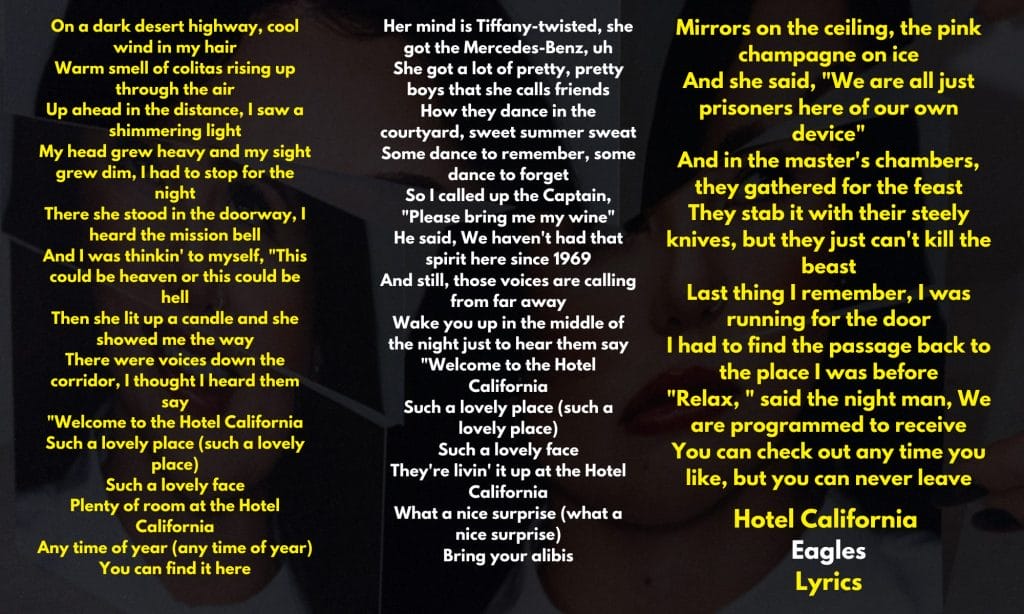
A Journey into the Heart of the California Dream (and Nightmare)
The narrative of “Hotel California” begins with a weary traveler, exhausted from a long desert drive, stumbling upon a seemingly idyllic haven. This opening immediately sets a tone familiar to anyone embarking on a journey or seeking a new destination: the hope of finding solace and excitement. Yet, from the first verse, a subtle sense of unease permeates the lyrics, hinting that this destination is not what it seems. The song masterfully captures the dual nature of the “American Dream,” particularly as it manifested in 1970s California: a place of unparalleled opportunity and beauty, but also of profound superficiality and dark temptations.
The Allure and Deception of Golden State Glamour
California, and specifically Los Angeles and Hollywood, represented the pinnacle of aspiration for many during the era. It was a promised land of sunshine, celebrity, and unfettered success, drawing countless dreamers from across the globe. The Eagles themselves were products of this migration, having moved to Los Angeles to pursue their musical ambitions. Their experiences, much like those of many others, involved a realization that beneath the glossy veneer of the golden state lay a culture of excess, cutthroat competition, and moral decay.
The lyrics vividly paint this picture. “Warm smell of colitas, rising up through the air” could refer to a native flower, but is often interpreted as a euphemism for marijuana, immediately introducing an element of indulgence. The “pink champagne on ice” and “mirrors on the ceiling” evoke an image of lavishness, a common feature of luxury hotels and resorts designed for hedonistic escapes. However, this opulent facade quickly reveals its darker implications. The smiling receptionist, the beautiful women, and the seemingly welcoming atmosphere are juxtaposed with phrases like “we haven’t had that spirit here since nineteen sixty nine,” suggesting a loss of innocence or a departure from a more genuine past. This narrative speaks directly to the experience of a tourist or a newcomer drawn to a glamorous destination, only to discover a hollow core beneath its captivating exterior. The initial promise of an unforgettable travel experience turns into a chilling realization that the destination might be consuming them.

Symbolism of the Ominous Hotel
The “Hotel California” itself is, without a doubt, the central symbol of the song. While many have searched for a literal establishment that inspired the track—with popular candidates ranging from the majestic Beverly Hills Hotel to the art deco elegance of the Argyle Hotel on Sunset Boulevard—Don Henley has consistently clarified that the hotel is a metaphor. It embodies the excesses of the music industry and the broader California lifestyle of the 1970s.
This metaphorical hotel serves as a chilling representation of a luxurious trap. For anyone interested in hotels and accommodation, the concept of a grand, inviting resort that secretly ensnares its guests is particularly evocative. The descriptions—”mirrors on the ceiling, the pink champagne on ice” alongside “how they dance in the courtyard, sweet summer sweat”—paint a picture of decadent revelry. Yet, these elements contribute to the protagonist’s growing sense of unease. The mirrors could symbolize narcissism or the constant scrutiny of public life, while the endless party suggests a relentless pursuit of pleasure that ultimately becomes draining. The line “we are all just prisoners here, of our own device” is perhaps the most direct explanation of the hotel’s symbolic function: it is a prison constructed by one’s own desires and ambitions. The quest for success, wealth, or a glamorous lifestyle can lead one into a gilded cage, where the very amenities designed for comfort become instruments of confinement. The hotel, in this sense, becomes a landmark of a psychological state, a monument to the pitfalls of unchecked ambition within a tourism-driven dream factory.

Decadence, Addiction, and the Music Industry’s Golden Cage
Beyond the broader critique of the California dream, “Hotel California” is widely interpreted as a scathing commentary on the excesses of the music industry and the perils of addiction prevalent in Hollywood during the 1970s. The band had witnessed firsthand the intoxicating blend of fame, wealth, and readily available substances that could quickly consume even the most grounded individuals. This interpretation delves into the darker side of the “Lifestyle” theme, exploring how luxury and freedom can morph into entrapment and dependence.
The Seductive Trap of Excess
The lyrics are replete with imagery that supports the interpretation of the song as a narrative about drug addiction, particularly cocaine, which was rampant in Los Angeles music circles. The “warm smell of colitas” could be seen as an initial, seemingly harmless indulgence. However, the progression of the narrative suggests a deeper, more insidious hold. The ease with which one “checks in” to the Hotel California mirrors the seductive initiation into a world of excess. The line “you can check out any time you like, but you can never leave” is arguably the most poignant and widely quoted phrase, serving as a powerful metaphor for addiction. It encapsulates the feeling of being trapped by a habit or a destructive lifestyle that, while initially chosen, ultimately strips away one’s freedom.
The characters within the song also contribute to this interpretation. The “feast” and the “wine” that the ‘Master’ orders for the guests, alongside the chilling “they stab it with their steely knives, but they just can’t kill the beast,” evoke a sense of a ritualistic, unending cycle of indulgence. The “beast” could symbolize the addiction itself, an insatiable hunger that, despite attempts to conquer it, always resurfaces, pulling the individual back into its grasp. This portrayal serves as a cautionary tale for anyone pursuing a life of luxury and pleasure without considering the potential costs, transforming what might begin as a desirable “experience” into a harrowing, inescapable plight. It offers a stark contrast to the idyllic portrayals often found in travel guides, highlighting the hidden dangers beneath a glamorous surface.
A Metaphor for the Entertainment Machine
Another powerful interpretation positions the Hotel California as a stand-in for the music industry itself—a glitzy, glamorous entity that promises fame and fortune but often devours those who enter its gates. The Eagles rose to monumental fame in the 1970s, experiencing firsthand the pressures, demands, and often dehumanizing aspects of being a mega-successful band. The song can be seen as their artistic expression of the disillusionment that came with achieving the very success they had so eagerly pursued.
The imagery of the hotel staff “programmed to receive” and the seemingly endless, chaotic “dance in the courtyard” reflects the relentless, often artificial, nature of the entertainment business. Musicians and artists are often treated as commodities, their creativity and personal lives consumed by the demands of their careers and the public eye. The line “we are all just prisoners here, of our own device” perfectly articulates the sense of being trapped by one’s own creation or success. Once you achieve a certain level of fame, it becomes incredibly difficult to step away, to reclaim a normal life, or to escape the expectations and demands of the industry. It’s a “golden cage” where the comforts and luxuries of success ironically become the bars that confine you. This interpretation speaks to the “Lifestyle” of celebrity, where the pursuit of a dream destination, in this case, a successful music career, leads to a profound sense of loss and entrapment, even amidst unparalleled wealth and privilege.
The Band’s Perspective and Enduring Legacy
While the multi-layered interpretations of “Hotel California” contribute significantly to its mystique, the insights from the Eagles members themselves provide a crucial anchor for understanding its intended meaning. Their explanations, coupled with the song’s timeless appeal, solidify its place not just as a musical masterpiece, but as a significant cultural commentary that continues to resonate with new generations.
Unveiling the Eagles’ Intentions
Don Henley, the primary lyricist for “Hotel California,” has been quite consistent in his explanation: the song is an allegory about the dark underbelly of the American dream and the excesses of the California lifestyle, particularly in Los Angeles and Hollywood during the mid-1970s. He described it as “a metaphor for the hedonism and self-destruction of the rock and roll lifestyle in Los Angeles at the time.” Both Henley and Glenn Frey emphasized that the song was a commentary on the transition from the idealism of the 1960s to the cynicism and materialism of the 1970s.
The “Hotel California” itself, according to Henley, represents a state of mind, a place where people checked in to live out their fantasies but often found themselves ensnared by superficiality and vice. It was never meant to be a literal hotel, nor was it a narrative about a Satanic cult, a popular but unfounded theory. The band aimed to critique a particular culture—one that promised endless sunshine and opportunity but delivered a spiritual wasteland for many. This artistic statement critiques the very notion of a perfect destination, suggesting that even the most alluring places can hide profound emptiness. It’s a powerful lesson for anyone traveling or seeking a new accommodation experience: the true nature of a place often lies far beneath its polished surface.
Why the Mystery Persists
Despite the band’s clarifications, “Hotel California” continues to be a subject of intense speculation, and its ambiguity is precisely what gives it enduring power. The lyrics are crafted with poetic nuance, allowing for multiple layers of interpretation that speak to various human anxieties and aspirations. Its universal themes—the search for belonging, the pitfalls of desire, the loss of innocence, and the struggle for freedom—ensure its relevance across generations and cultures.
The song’s evocative imagery and narrative structure also contribute to its lasting appeal. It tells a story, albeit a symbolic one, that listeners can connect with on a deeply personal level. The “dark desert highway,” the “ghosts of their past,” and the haunting final declaration that “you can check out any time you like, but you can never leave” create a vivid, unsettling atmosphere that stays with the listener long after the music fades. This narrative quality makes it a potent cultural landmark in itself, a piece of art that invites endless exploration and discussion. For those passionate about travel and tourism, the song ironically mirrors the search for an ultimate destination—a place that promises everything but may ultimately demand too much. The Eagles’ masterpiece serves as a perennial reminder that sometimes, the most captivating journeys are those that lead us to profound, even uncomfortable, truths about ourselves and the world we inhabit.
“Hotel California” remains a touchstone for discussions about the music industry, the American psyche, and the timeless human struggle between aspiration and consequence. Its legacy is not just in its musical brilliance, but in its profound capacity to provoke thought, challenge perceptions, and keep listeners endlessly searching for deeper meaning within its haunting refrain.