
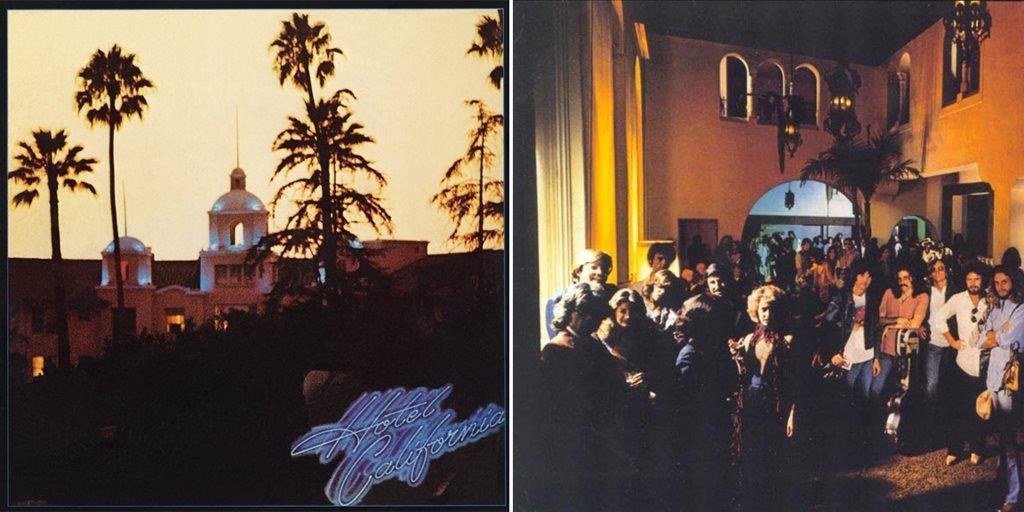
The iconic track “Hotel California” by the Eagles stands as one of the most enigmatic and enduring songs in music history. Released in 1976 as the title track from their album of the same name, its haunting melody, evocative lyrics, and extended guitar solo have captivated generations. Yet, for all its fame, the precise meaning behind the song remains a subject of widespread debate and fascination. Is it a literal story of a bizarre encounter at a real hotel, a commentary on the darker side of the American Dream, or perhaps something even more profound about the human condition? By delving into the band members’ perspectives, the song’s lyrical imagery, and its cultural context, we can unravel the layers of interpretation that have made “Hotel California” a timeless masterpiece.
From the very first strum of Don Felder‘s acoustic guitar and Joe Walsh‘s complementary electric arpeggios, listeners are drawn into a narrative seemingly set in a mysterious, opulent yet sinister establishment. The lyrics, primarily penned by Don Henley with contributions from Glenn Frey and Felder, paint a vivid picture of a weary traveler driving through the desert at night, drawn to the seductive glow of a hotel on the horizon. What follows is a surreal journey through a world of excess, illusion, and a palpable sense of entrapment. This narrative lends itself perfectly to themes explored on websites dedicated to travel, hotels, tourism, and lifestyle, as it touches upon both the allure and potential pitfalls of exotic destinations and lavish accommodations. The song invites us to ponder the true cost of luxury and the seductive nature of a lifestyle that promises everything but delivers an unsettling sense of captivity.

Unpacking the Lyrics: More Than Just a Hotel Stay
The enduring appeal of “Hotel California” lies largely in its lyrical ambiguity, allowing for a multitude of interpretations that resonate with personal experiences and broader societal concerns. While some initially took the song at face value, imagining a real, albeit bizarre, hotel somewhere in California, the band members themselves have consistently clarified that the song is a metaphor. It serves as a potent allegory for a range of human experiences and societal observations, making it far richer than a simple travelogue.
The Lure of California: A Golden State Illusion
At its core, “Hotel California” is often seen as a critical commentary on the American Dream, particularly as it manifested in California during the 1970s. California, especially Los Angeles, was perceived as the land of opportunity, sunshine, and limitless possibilities. Millions flocked there seeking fame, fortune, and a new beginning. The song captures this initial allure perfectly: “On a dark desert highway, cool wind in my hair / Warm smell of colitas, rising up through the air / Up ahead in the distance, I saw a shimmering light / My head grew heavy and my sight grew dim / I had to stop for the night.” This opening evokes the seductive promise of a utopian destination, drawing travelers in with its shimmering facade.
However, the lyrics quickly pivot to reveal a darker reality. The beautiful exterior of the hotel, and by extension, the perceived paradise of California, masks a more sinister underbelly. The lines “Her mind is Tiffany twisted, she got the Mercedes bends” immediately introduce themes of superficiality and material obsession, prevalent in a place like Hollywood. The phrase “colitas” itself, often interpreted as slang for marijuana, hints at the prevalent drug culture. The initial dream turns into a nightmare as the traveler realizes escape is impossible: “You can check out any time you like, but you can never leave.” This chilling refrain encapsulates the feeling of being trapped by the very dream one pursued, a powerful message for anyone who has ever felt overwhelmed by the pursuit of an aspirational lifestyle. It serves as a cautionary tale for those drawn to destinations promising eternal bliss, only to find themselves entangled in unexpected complexities.

The Music Industry: A Golden Cage
Another prominent interpretation, especially favored by Don Henley, views the song as an allegory for the cutthroat and often soul-crushing nature of the music industry in Los Angeles. The Eagles themselves experienced meteoric success, but also the immense pressures, temptations, and moral compromises that came with it. The “Hotel California” becomes a metaphor for the music business itself – a place that offers incredible highs but demands a heavy toll.
Lines like “Welcome to the Hotel California / Such a lovely place (Such a lovely place) / Such a lovely face” could be seen as the industry’s initial charm, luring in hopeful artists with promises of stardom and luxury. The “pink champagne on ice” and the “spirits of the Hotel California” symbolize the excessive lifestyle, the endless parties, and the readily available vices that can derail even the most talented individuals. The “master” who “summoned their guests” and the “feast they laid so fine” can be interpreted as the powerful executives and record labels dictating terms to artists. The most poignant line, “We haven’t had that spirit here since nineteen sixty-nine,” is particularly telling, suggesting a loss of innocence or genuine artistic integrity within the industry following the countercultural peak of the late 1960s. The industry, like a lavish resort, can become a golden cage, offering unparalleled amenities while subtly eroding one’s freedom and identity. This perspective offers a fascinating parallel to the sometimes-glamorous, sometimes-isolating world of high-end resorts and exclusive travel experiences, where the line between indulgence and entrapment can blur.
The Band’s Intent: Decadence and Disillusionment
While interpretations abound, the band members, particularly Don Henley and Glenn Frey, have been quite vocal about their intended message. They consistently emphasized that the song was a social and political statement, reflecting their disillusionment with the excesses they witnessed around them.
Don Henley’s Vision: A Dark Fable of Excess
Don Henley famously described “Hotel California” as “our interpretation of the high life in Los Angeles and the whole country.” He elaborated that it was a story about “a loss of innocence,” a cautionary tale about succumbing to the temptations of wealth, fame, and hedonism. The hotel itself, he suggested, could be anywhere that promises an escape or a dream but ultimately delivers a form of spiritual imprisonment.
The lyrics are replete with imagery of decadence: “Mirrors on the ceiling, the pink champagne on ice.” These lines paint a picture of opulent hotel suites and lavish parties, places where inhibitions are shed and desires are indulged. However, this indulgence comes at a cost. The “beast” in the “master’s chamber,” the “steely knives,” and the final inability to leave, all symbolize the psychological and moral degradation that can accompany an unchecked pursuit of pleasure and success. This resonates strongly with the themes of luxury travel and lifestyle; while exotic destinations and five-star accommodations offer unparalleled experiences, they can also expose travelers to environments of extreme excess, potentially leading to a sense of detachment or disillusionment with reality. The song serves as a vivid exploration of the psychological landscape of such experiences, reflecting on both the allure and the potential dangers of a certain kind of “lifestyle.”
Glenn Frey’s Contribution: The “Welcome to the Machine”
Glenn Frey, who co-wrote the lyrics, often framed the song as a narrative of “a guy checking out the Los Angeles lifestyle.” He noted that the band members, having moved from various parts of the United States to Los Angeles, witnessed firsthand the transformative, often corrupting, effects of the city’s glamorous yet superficial culture. For Frey, the song was about the “dark underbelly of paradise,” the illusion that California was a land where everyone could make it big, only to find themselves ensnared in a system that consumed them.
The song’s structure, with its inviting opening and chilling conclusion, mirrors this journey from hope to despair. It’s an immersion into an environment that initially seems welcoming (“Such a lovely place, such a lovely face”) but gradually reveals its true, terrifying nature. This theme of a seemingly perfect destination that turns out to be anything but is a powerful narrative, applicable not only to the music industry but also to certain tourist traps or exclusive resorts that promise an idyllic escape but deliver an isolating or overly commercialized experience. The phrase “You can check out any time you like, but you can never leave” becomes particularly haunting in this context, suggesting that once one fully immerses in a certain lifestyle or destination, the psychological imprint remains, making a true return to one’s former self impossible.
Enduring Legacy and Broader Interpretations
Beyond the specific commentaries on California or the music industry, “Hotel California” has resonated with audiences worldwide because it taps into universal anxieties about consumerism, addiction, and the search for meaning in a materialistic world. Its powerful imagery and narrative structure allow it to transcend its immediate context, becoming a timeless piece of art.
Religious and Existential Metaphors
Some interpretations delve into more abstract, even spiritual or existential realms. The “Hotel California” has been seen as a representation of hell, purgatory, or a spiritual trap. The “beast” in the master’s chamber and the “steely knives” could symbolize demonic forces or the darker aspects of human nature. The endless loop of checking in but never leaving echoes themes of eternal damnation or an inescapable cycle of suffering. This perspective adds another layer to the song’s complexity, transforming it from a social critique into a profound philosophical statement on human free will and destiny.
Moreover, the song’s narrative of a solitary traveler seeking respite, only to find themselves caught in a surreal nightmare, can be seen as an allegory for life itself—a journey where one often encounters seductive illusions and unexpected challenges. The experience of booking accommodation in a foreign land, for instance, can sometimes mirror this, where initial expectations are met with surprising realities, whether delightful or dismaying. The song explores the boundaries between perceived reality and the often unsettling truth, making it a powerful piece that encourages introspection.
The Power of Place and Atmosphere
The concept of a “hotel” as a setting is intrinsically linked to travel and accommodation, and the song masterfully uses this familiar backdrop to create an unsettling atmosphere. A hotel is typically a transient place, a temporary refuge for travelers. The irony of the “Hotel California” is that it transforms this transient space into a permanent prison. This inversion amplifies the sense of dread and highlights the idea that even places designed for comfort and escape can become sources of entrapment.
The song’s genius lies in its ability to evoke a specific sense of place—a luxurious, sun-drenched, yet ultimately sterile and menacing environment. It serves as a stark reminder that beneath the glittering surface of even the most coveted destinations, there can be hidden complexities and shadows. For those interested in tourism and exploring new destinations, “Hotel California” serves as a metaphorical landmark—a famous place whose allure masks deeper, perhaps darker, truths about the human experience within grand settings. It invites travelers to look beyond the brochures and explore the authentic, sometimes challenging, realities of their chosen adventures and the accommodations that house them.
Ultimately, “Hotel California” is a complex tapestry of themes: the deceptive allure of the American Dream, the perils of unchecked ambition and hedonism, the dark side of the music industry, and a general commentary on human vulnerability to temptation and illusion. While the Eagles provided their own interpretations, the song’s enduring power lies in its ability to spark individual reflection, inviting each listener to explore their own “Hotel California” – whether it be a personal struggle, a societal critique, or a cautionary tale about the destinations we choose and the lifestyles we pursue. Its place in music history is secure, not just for its melodic brilliance, but for its profound, unsettling, and eternally relevant message.