
Rising from the desert floor like a celestial body fallen to earth, the Sphere has permanently altered the skyline of Las Vegas. While the city is no stranger to architectural grandiosity—boasting replicas of the Eiffel Tower and the Great Pyramid—this structure represents a paradigm shift in how we define a modern landmark. It is not merely a venue; it is a feat of engineering, a masterpiece of digital art, and a testament to the future of human entertainment. Located just east of the The Venetian Resort in Nevada, this $2.3 billion project has become the most photographed and talked-about landmark in the United States since its completion.
The Architectural Vision and Engineering Marvel
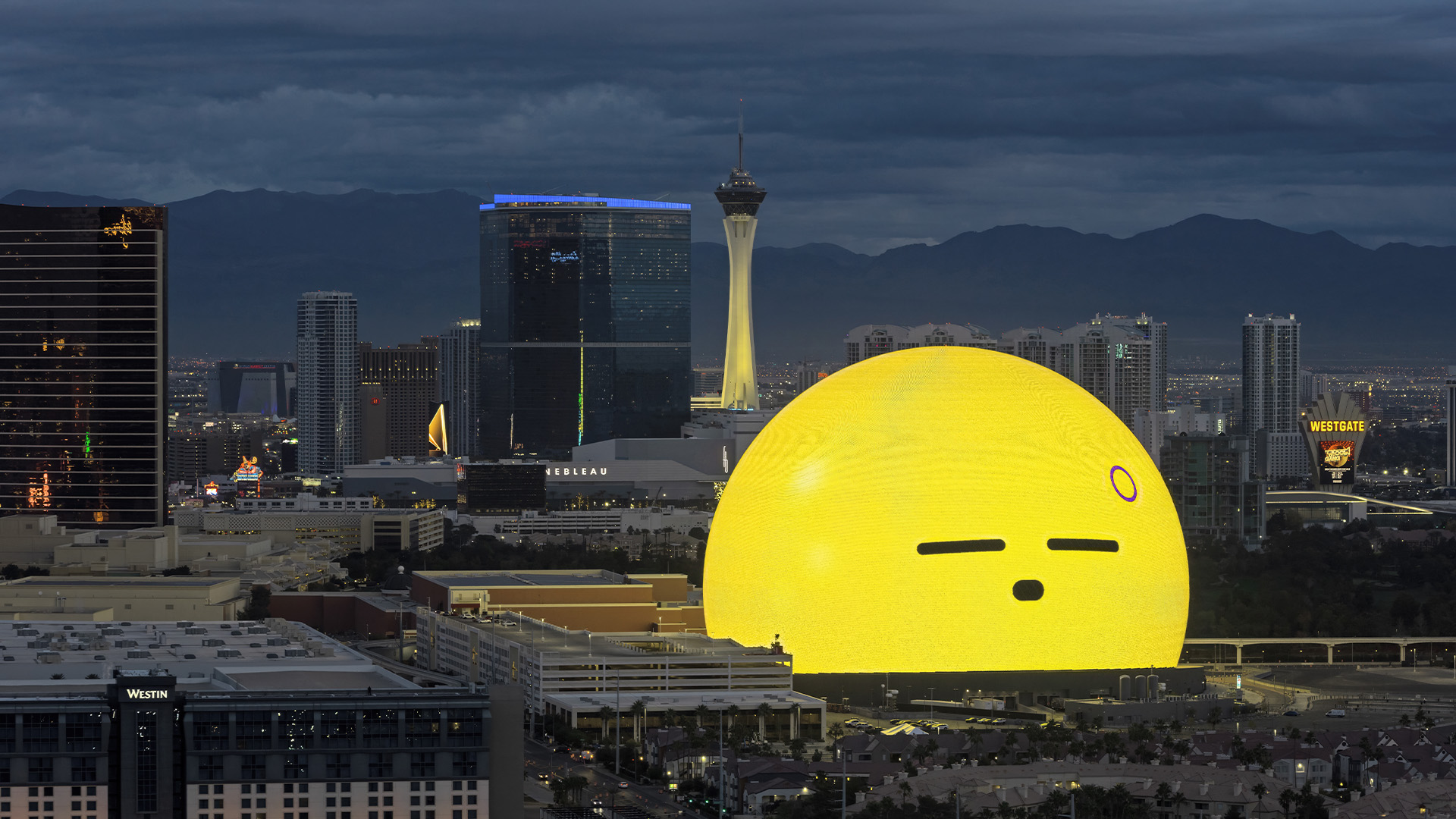
To understand the Sphere, one must first appreciate the sheer scale of its physical presence. As the largest spherical structure on the planet, it stands 366 feet tall and 516 feet wide. The project was born from the collaboration between Madison Square Garden Entertainment and the global architectural firm Populous, known for designing some of the most iconic sports stadiums in the world.
Redefining the Skyline of Nevada
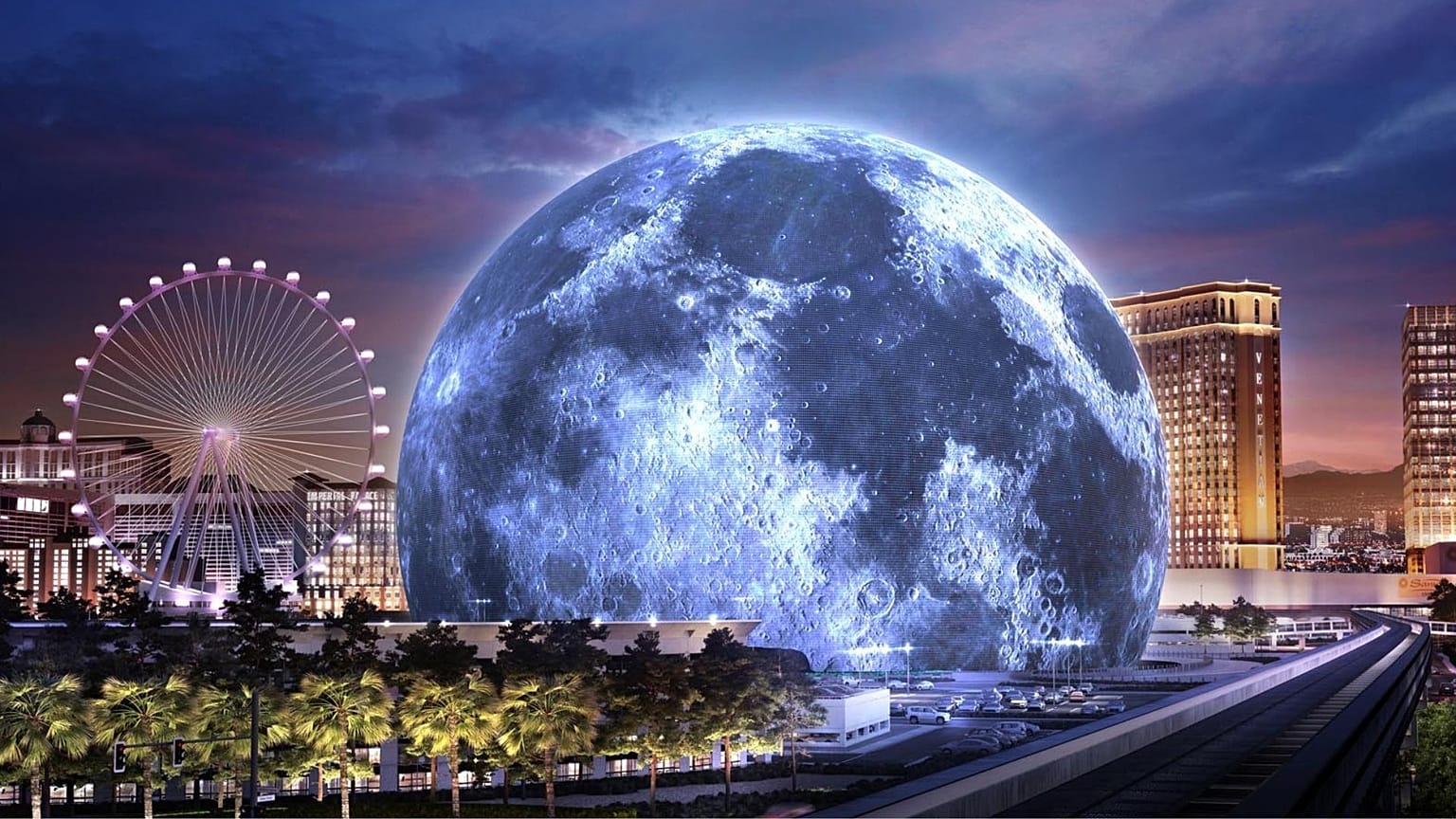
The Sphere is positioned in the heart of Las Vegas, a city already crowded with visual noise. Yet, it manages to dominate its surroundings. Unlike the traditional rectangular skyscrapers or the themed facades of neighboring resorts, the Sphere utilizes a geodesic design that is as functional as it is aesthetic. The exterior, known as the Exosphere, is covered in approximately 1.2 million LED pucks, each capable of displaying 256 million colors. This makes the building a living, breathing landmark that can transform from a realistic moon to a blinking eyeball or a swirling vortex of abstract art.
The Engineering Behind the Curve
Constructing a perfect sphere on such a massive scale required unprecedented engineering solutions. The structure’s frame is composed of four concrete cores tied together with 9,700 tons of structural steel. One of the most significant challenges was the placement of the 1,000-ton steel compression ring at the apex of the structure. To achieve this, engineers utilized the DEMAG CC-8800, the fourth-largest crawler crane in the world, which had to be transported from Belgium to Nevada. This level of precision ensures that the landmark is not only a visual marvel but also an enduring piece of infrastructure capable of withstanding the desert heat and high winds of the United States.
Historical Context and the Evolution of a Landmark
The journey of the Sphere began in 2018, when James Dolan, the executive chairman of Madison Square Garden, envisioned a venue that would move beyond the limitations of traditional arenas. While the project faced delays due to global supply chain issues and the complexities of its proprietary technology, its opening in 2023 marked a historic moment for Las Vegas.
Collaboration and Innovation
The partnership between Madison Square Garden Entertainment and Populous was essential in bridging the gap between entertainment and architecture. The goal was to create a landmark that could host a variety of content, from cinematic experiences to live concerts. During its development, the project also sought to expand internationally, with plans initially discussed for a sister site in London, emphasizing the global ambition behind the brand. Although the London project faced regulatory hurdles, the Las Vegas original stands as the blueprint for future urban landmarks.
Overcoming Modern Challenges
Building a landmark in the 21st century is vastly different from the eras that produced the Statue of Liberty or the Empire State Building. The Sphere had to navigate complex environmental regulations and technological integration that didn’t exist decades ago. The budget for the project nearly doubled during its construction, eventually reaching over $2 billion, making it the most expensive entertainment venue in Las Vegas history. This investment reflects a gamble on the idea that architecture can be the primary draw for a destination, rather than just a container for activities.

Immersive Technology: The Interior Experience
While the exterior of the Sphere captures the attention of the world, the interior is where the true landmark status is solidified. It is designed to be the most immersive environment ever created, utilizing “4D” technologies that engage all the senses.
The 16K LED Screen
Inside the Sphere, visitors are greeted by a wraparound LED screen that is the size of three football fields. With a 16K by 16K resolution, it is the highest-resolution LED screen in existence. This screen creates an “augmented reality” experience without the need for goggles or headsets. When a film like Postcard from Earth, directed by Darren Aronofsky, is projected, the scale is so immense that the boundary between the viewer and the image disappears. This technological feat places the Sphere in a league of its own, far surpassing the visual capabilities of any other landmark in the United States.
The Science of Sound and Haptics
A landmark of this caliber requires an equally impressive auditory experience. The Sphere features a specialized audio system called “Sphere Immersive Sound,” powered by Holoplot. This system uses “beamforming” technology to deliver crystal-clear audio to every seat in the house, regardless of its location. Furthermore, the venue is equipped with 10,000 haptic seats that vibrate in sync with the on-screen action, and environmental effects such as wind, scent, and temperature changes. This multi-sensory approach redefines what it means to “visit” a landmark, turning a passive observation into an active, lived experience.
The Sphere’s Role as a Global Cultural Icon
Since its grand opening, which featured a residency by the legendary Irish rock band U2, the Sphere has become a cultural touchstone. It represents a new era of “experiential architecture,” where the building itself is the performer.
Cultural Impact and Live Performances
The choice of U2 to inaugurate the venue was intentional. The band has a long history of pushing the boundaries of live performance technology, making them the perfect fit for a venue that demands innovation. Following U2, other major acts like Phish and Dead and Company have utilized the Sphere to create visual spectacles that would be impossible in a traditional stadium. For the city of Las Vegas, the Sphere provides a sophisticated counterpoint to the classic “glitz” of the Las Vegas Strip, attracting a diverse audience interested in both art and technology.
Comparing the Sphere to Other Las Vegas Landmarks
When placed alongside other iconic sites in Nevada, the Sphere stands out for its lack of historical baggage. While the Bellagio Fountains evoke a sense of timeless elegance and the Stratosphere Tower offers a traditional vantage point of the city, the Sphere is purely futuristic. It does not look back at the history of Rome or Paris for inspiration; instead, it looks forward to the digital age. It has quickly joined the ranks of the High Roller and the Hoover Dam as a “must-see” architectural achievement in the region.
Conclusion: The Future of Architectural Landmarks
The Sphere in Las Vegas is more than just a giant screen or a concert hall. It is a landmark that challenges our perceptions of space, light, and sound. By combining the precision of modern engineering with the limitless possibilities of digital art, it has set a new standard for what a public structure can be.
As we look toward the future, the Sphere serves as a beacon of what is possible when technology and architecture converge. It has turned Nevada into a testing ground for the next generation of human experience. Whether viewed from a plane landing at Harry Reid International Airport or experienced from within its haptic seats, the Sphere remains a breathtaking reminder of human ingenuity. It is, without question, the most significant landmark built in the United States in the 21st century, ensuring that the spirit of Las Vegas continues to evolve and inspire the world.
LifeOutOfTheBox is a participant in the Amazon Services LLC Associates Program, an affiliate advertising program designed to provide a means for sites to earn advertising fees by advertising and linking to Amazon.com. Amazon, the Amazon logo, AmazonSupply, and the AmazonSupply logo are trademarks of Amazon.com, Inc. or its affiliates. As an Amazon Associate we earn affiliate commissions from qualifying purchases.