
Navigating the regulations surrounding vehicle window tinting in Alabama can be a perplexing task for both residents and visitors. While adding tint to your vehicle’s windows can enhance privacy, reduce heat, and protect your interior from UV damage, Alabama, like many states, has specific laws governing its application. Understanding these legalities is crucial to avoid citations and ensure your vehicle complies with state statutes. This guide delves into the specifics of Alabama’s window tint laws, offering clarity for those planning a road trip through the state or simply looking to tint their vehicle legally.
Understanding Alabama’s Window Tint Laws
Alabama’s tint laws are primarily concerned with the amount of light that can pass through the vehicle’s windows. This measurement is known as Visible Light Transmission (VLT). The lower the VLT percentage, the darker the tint. The laws are designed with safety in mind, ensuring that law enforcement officers have adequate visibility into vehicles for traffic stops and to assess potential threats.
General VLT Guidelines
In Alabama, the following VLT percentages are generally permitted:
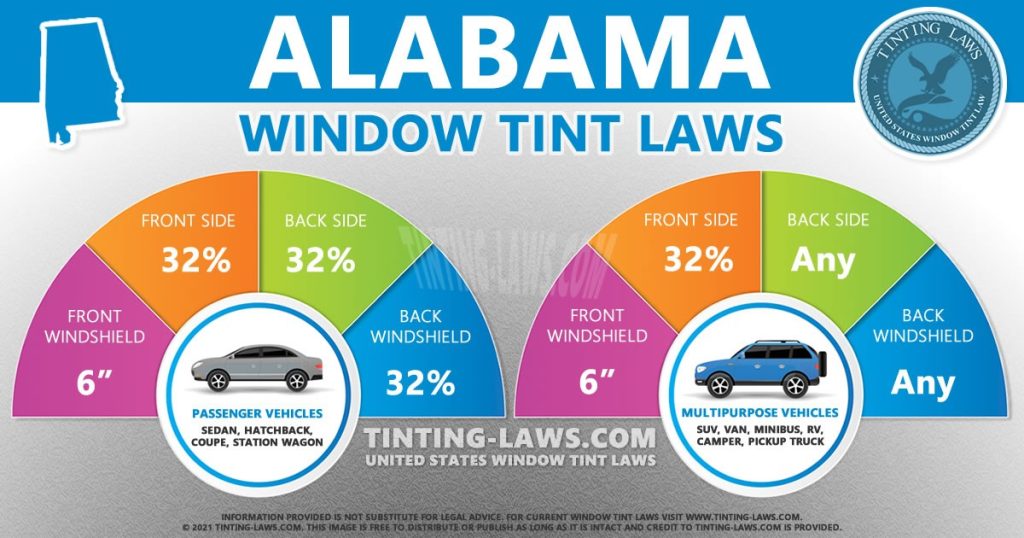
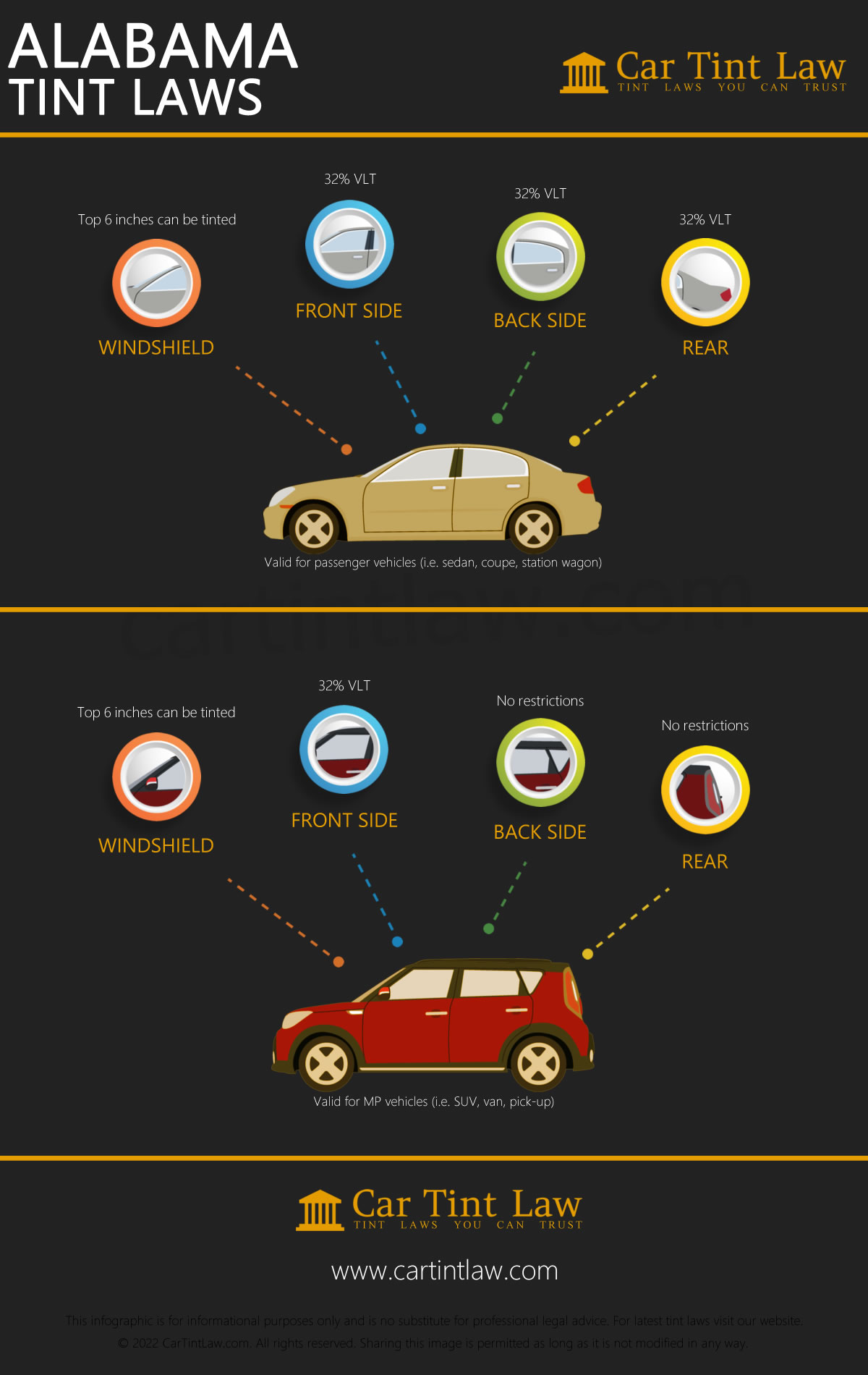
- Front Windshield: Tint is permitted on the top portion of the windshield, typically the AS-1 line, which is an area usually marked on the windshield. The amount allowed is generally 6 inches from the top. Full windshield tinting is illegal.
- Front Side Windows: These windows, including the driver and front passenger sides, must allow at least 35% of light to pass through. This means the tint cannot be darker than 35% VLT.
- Rear Side Windows and Rear Window: For these windows, Alabama law allows for darker tinting, down to 20% VLT. This provides a greater degree of privacy for passengers in the rear of the vehicle.
It is important to note that these are the general rules. There are specific exceptions and nuances that apply, particularly concerning medical exemptions.
Medical Exemptions
Alabama law does recognize that certain individuals may require darker window tint for medical reasons. Conditions such as severe light sensitivity (photophobia) or certain skin conditions may necessitate a higher level of UV protection than standard legal tint provides.
To obtain a medical exemption, an individual must typically provide a certification from a licensed physician or optometrist. This certification must detail the specific medical condition and explain why darker tint is medically necessary. The exempted individual will then carry this documentation with them in their vehicle at all times. It’s crucial to understand that obtaining and using a medical exemption requires adherence to specific procedures outlined by Alabama law to be considered valid. This typically involves having the exemption documented and available for law enforcement to inspect.
Color and Reflectivity Restrictions
Beyond VLT percentages, Alabama law also addresses the color and reflectivity of window tint. While specific color restrictions are not as prominently detailed as VLT, highly reflective tints are generally discouraged and can be subject to penalties. The intention behind these restrictions is to prevent tints that could cause glare or be excessively distracting to other drivers.
The focus remains on ensuring that the tint does not impede visibility for other road users or law enforcement. Therefore, while a dark tint might be permissible in terms of VLT, if it is excessively reflective, it could still be deemed illegal.
The Importance of Compliance
Adhering to Alabama’s window tint laws is not merely about avoiding a ticket; it’s about contributing to road safety. Overly dark tint can obscure a driver’s vision, especially in low-light conditions, and make it difficult for law enforcement officers to assess the situation inside a vehicle during a stop.
Consequences of Non-Compliance
Violating Alabama’s window tint laws can result in traffic citations, which often come with fines. In some cases, repeated offenses or blatant disregard for the law might lead to more significant penalties. Law enforcement officers have the authority to issue tickets, and in some instances, you may be required to have the illegal tint removed before you can proceed.
Ensuring Legal Tint Installation
To ensure your vehicle’s window tint is compliant with Alabama law, it is highly recommended to use reputable and professional tinting services. Experienced installers are knowledgeable about the current state regulations and can advise you on the best tint options that meet both your aesthetic preferences and legal requirements.
When getting your vehicle tinted, always ask the installer about their understanding of Alabama’s tint laws. A professional installer will be able to guide you on the VLT percentages allowed for each window and ensure that the materials used are certified and legal for use in the state.
Resources for Verification
While this article provides a comprehensive overview, laws can evolve. For the most up-to-date and definitive information on Alabama’s window tint laws, it is advisable to consult official state resources. This might include:
- The Alabama Law Enforcement Agency (ALEA)
- Your local law enforcement agency
- Statutes and codes of Alabama
Consulting these official sources ensures you are working with the most current legal standards.
Navigating Alabama’s Roads with Legal Tint
For travelers planning a visit to Alabama, understanding these tint laws is especially important. Whether you are driving your own vehicle or renting one, ensure that any tinting complies with state regulations. This foresight can save you from unexpected legal issues and allow you to enjoy your journey through the beautiful state of Alabama, from the historic streets of Montgomery to the pristine beaches of Gulf Shores.
Road Trip Preparedness
When planning a road trip that includes driving through Alabama, a quick check of your vehicle’s window tint can prevent future headaches. If you’re unsure about the VLT of your current tint, you can have it professionally measured at a tint shop.
Rental Vehicles
If you are renting a vehicle for your travels in Alabama, pay attention to any existing tint. While rental companies typically ensure their vehicles comply with local laws, it’s always wise to be aware. If you plan to tint a rental vehicle, this is generally not permitted without the rental company’s explicit consent and may void your rental agreement.

Conclusion
Alabama’s window tint laws are designed to balance the benefits of window tinting with the imperative of public safety and visibility. By understanding the permissible VLT percentages for different windows, the conditions for medical exemptions, and the importance of avoiding excessively reflective tints, vehicle owners can ensure their compliance. Choosing professional installation and staying informed about any changes in legislation are key steps to enjoying the advantages of window tinting legally within the state of Alabama. This knowledge empowers drivers to make informed decisions, maintain road safety, and avoid unnecessary citations while exploring all that Alabama has to offer, from its vibrant cities to its scenic landscapes.
LifeOutOfTheBox is a participant in the Amazon Services LLC Associates Program, an affiliate advertising program designed to provide a means for sites to earn advertising fees by advertising and linking to Amazon.com. Amazon, the Amazon logo, AmazonSupply, and the AmazonSupply logo are trademarks of Amazon.com, Inc. or its affiliates. As an Amazon Associate we earn affiliate commissions from qualifying purchases.